
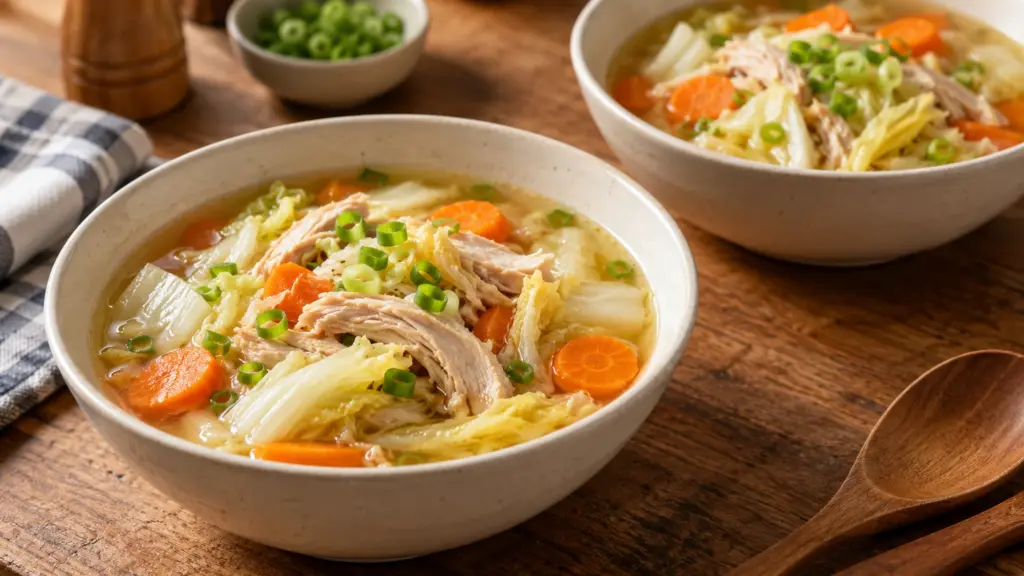
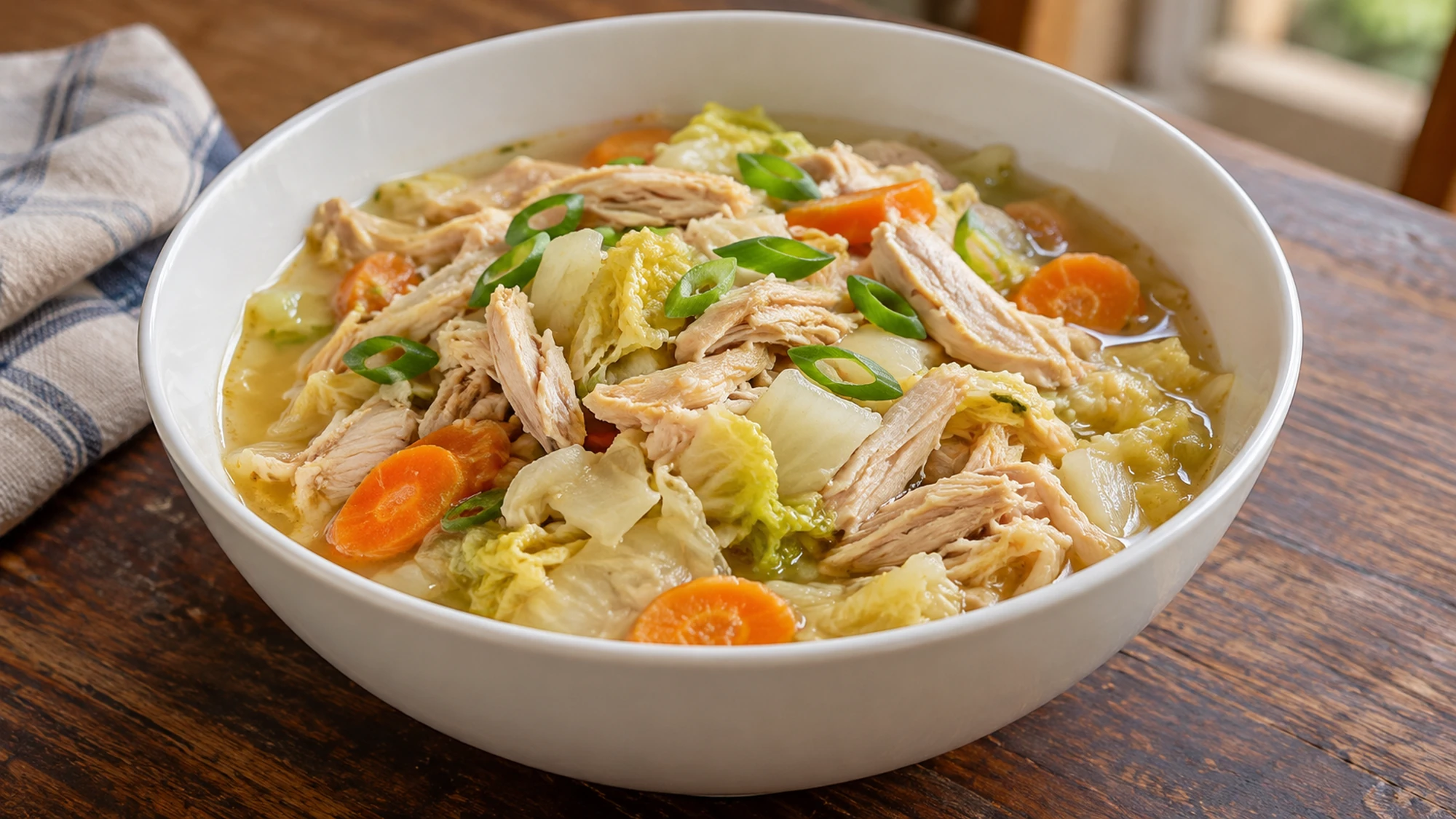
Waterless chicken and cabbage soup starts with a full pot of food but no poured-in broth. Napa cabbage, apple and onion give off moisture under a tight lid, while a whole chicken adds juices of its own. After a slow cook, the bottom of the pot holds a concentrated liquid that can be ladled with the tender vegetables and shredded meat.
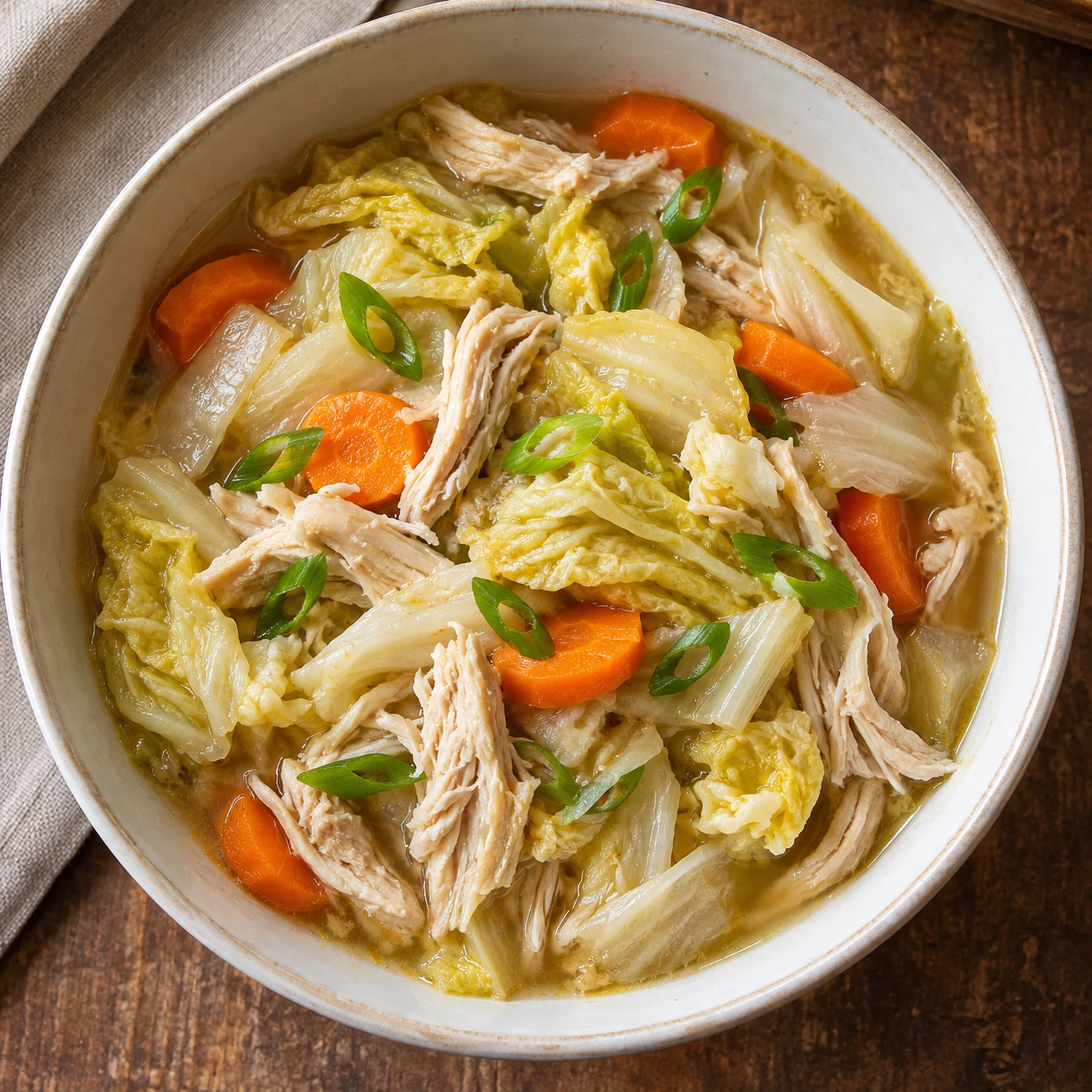
The heavy pot, thick cabbage layer and gentle burner setting matter more than any promise of a fixed amount of broth.
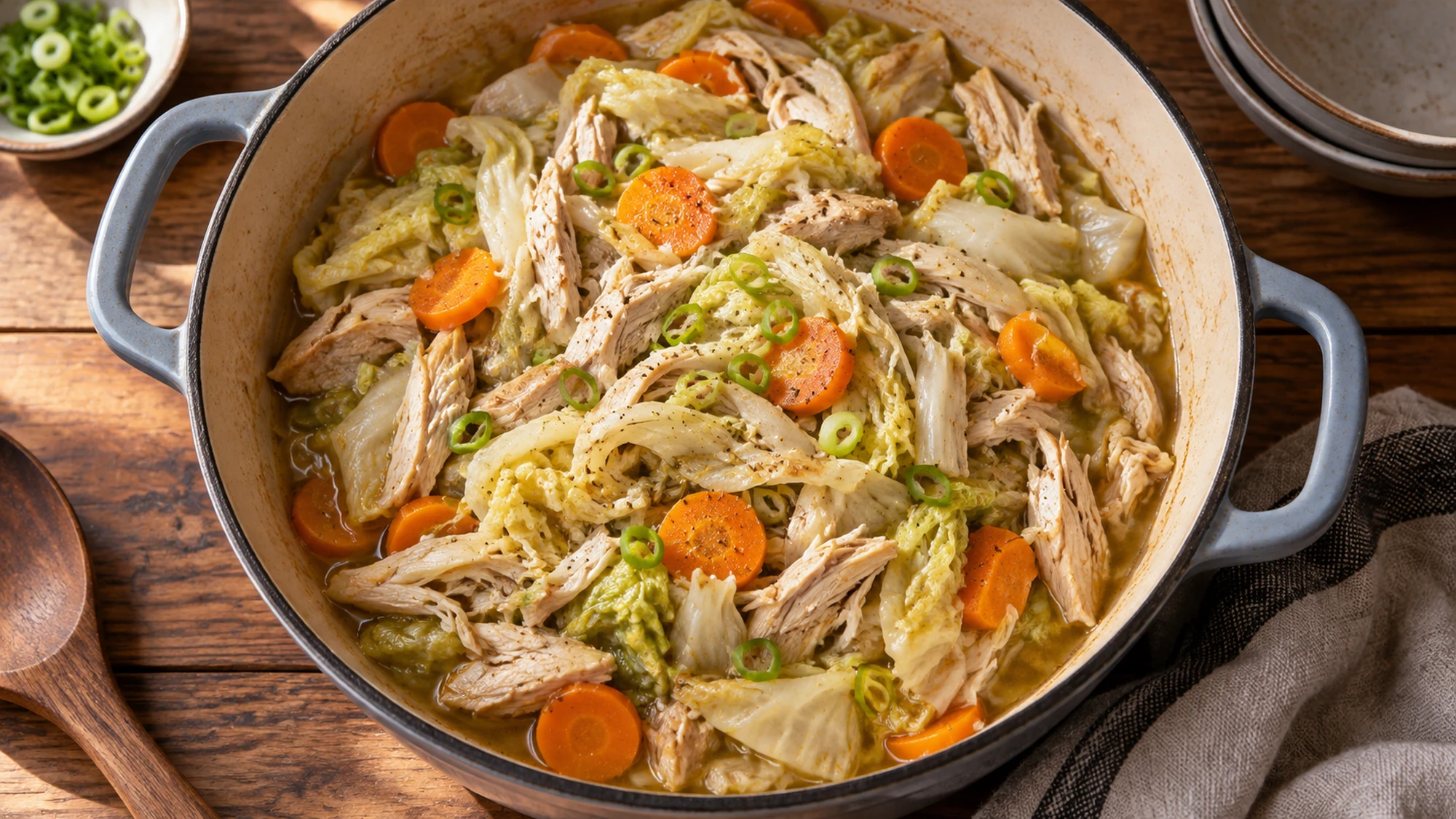
The first move is to cover the pot base generously with cabbage. Chicken should sit on that moist bed rather than against bare metal. Apple adds a faint sweetness; ginger gives a quiet warmth, and carrot and onion round out the broth. There is no added water at the start, but this is a stovetop method for a heavy Dutch oven, not a dry pressure-cooker program.
I check the pot briefly after the first twenty minutes. If liquid is collecting, close the lid and let the gentle simmer work. If the bottom is drying or starting to scorch, lower the heat and add a small splash of water rather than burning dinner. That rescue makes the batch no longer strictly waterless; focus on a safe, edible result.
Serving suggestions for waterless chicken and cabbage soup
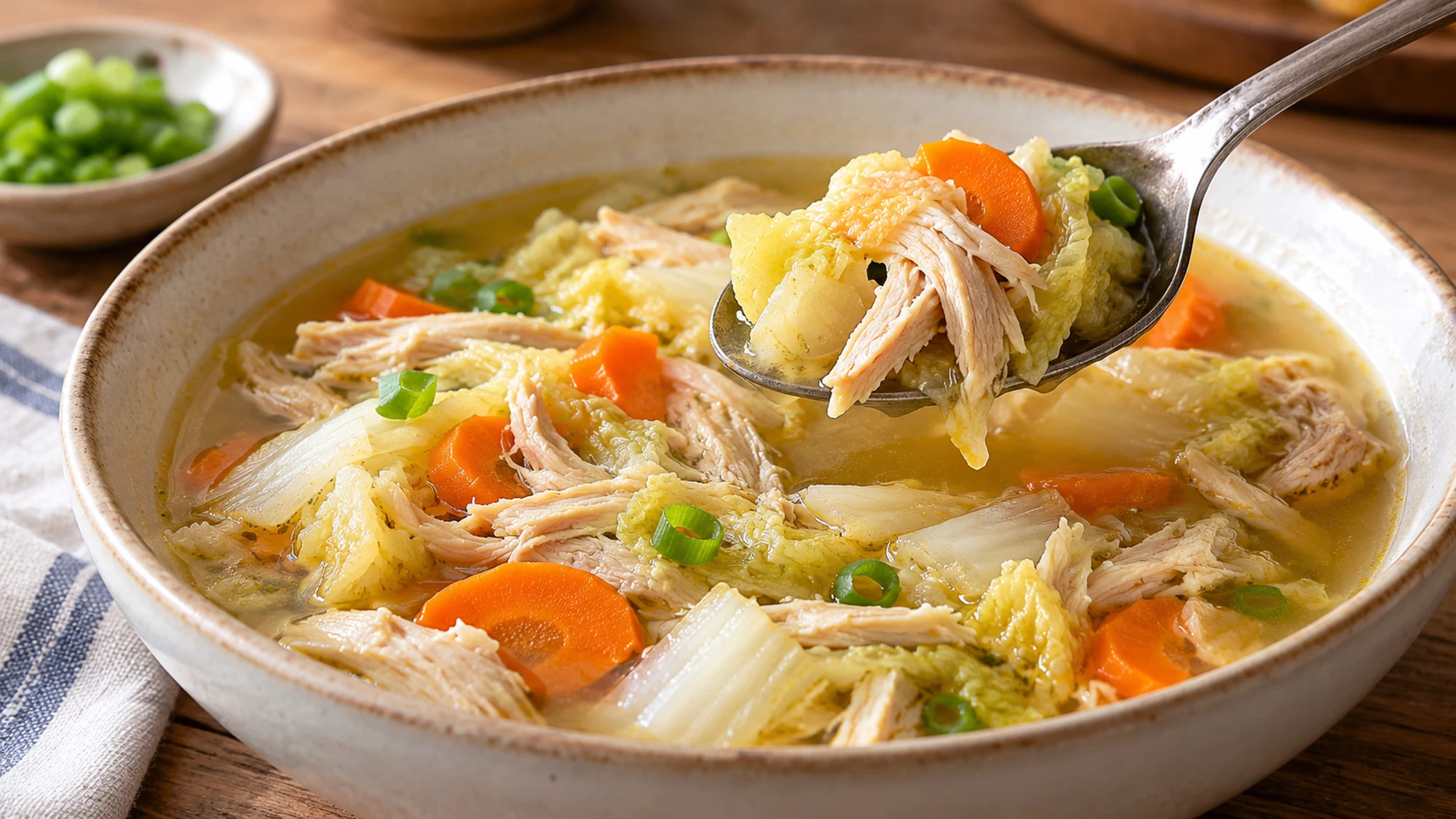
Remove the cooked chicken, pull the meat from the bones and return it to the pot. Spoon a fair share of cabbage, carrots and chicken into each of six bowls before distributing the broth. The natural liquid may be modest and intense rather than a large clear pool; its amount varies with your cabbage, chicken and lid. Sliced scallions add a fresh bite.
A small serving of rice can absorb some of the savory juices if you want a heartier meal, though rice is not included in the card’s nutrition. For another way to cook cabbage, Dishora’s cabbage and white bean skillet has browned edges and lemon rather than a covered-pot broth.
Ladle the meat and vegetables first so every bowl gets the good parts, then share out whatever broth the pot has made.
Variations and ways to manage the pot
Napa cabbage is useful here because its pale ribs and leaves soften and release moisture. Green cabbage can be used, but it may give less liquid; add more sliced onion or apple and watch the pot sooner. Bone-in chicken pieces can also work, but the meat and broth yield will change and the cooking time must be guided by the thermometer.
The Eat With Carmen no-water soup uses a similar cabbage-and-chicken base, while Cook With Dana shows another variation with extra aromatics. Those are useful examples of how the vegetables supply the liquid. This Dishora card uses its own amounts and includes an early dry-pot check.
If the broth seems greasy after shredding, skim the visible fat from the surface. If you want more liquid in the bowl, you can add a little hot water after cooking and season again, but the soup will taste less concentrated. Keep that an optional serving adjustment rather than hiding added liquid in the waterless method.
Watch the pot, not just the clock: moisture, gentle heat and the chicken’s measured temperature tell you when to move on.
Health benefits and food safety
Chicken supplies most of the protein in this bowl, and the cabbage, carrot, onion and apple add vegetables and fruit. A sixth of this recipe is estimated at about 300 calories and 34 grams of protein. Those figures depend strongly on how much meat the bird yields and whether you keep the skin or skim fat, so treat them as planning estimates.
The USDA chicken guidance calls for a thermometer reading of 165°F in the thickest parts. Check the breast and thigh away from bone. A long simmer alone is not proof. Handle the hot chicken carefully and remove bones before returning shredded meat to the soup.
Refrigerate leftovers in shallow containers within two hours of cooking, or one hour when the room exceeds 90°F. Keep them at 40°F or colder and use within three to four days, following the USDA leftovers guidance. Reheat to 165°F.
A thermometer makes the chicken question easy to answer, and shallow containers make the leftovers easier to cool.
Let the ingredients make the broth
This soup asks for patience rather than many steps. Layer the cabbage well, set the chicken above it, use low heat and give the lid room to trap steam. When the meat is safe and tender, shred it back into the juices and taste the broth before adding any extra salt. The result is a cozy bowl whose flavor comes directly from what went into the pot.
Waterless Chicken and Cabbage Soup Recipe

Ingredients
- 900 g Napa cabbage about 2 lb, washed and roughly cut; use pale ribs and leaves
- 1 firm sweet apple about 180 g, cored and sliced
- 200 g yellow onion about 1 large, sliced
- 150 g carrots about 2 medium, sliced
- 20 g fresh ginger about a 1-inch piece, thinly sliced
- 1 3-to-3 1/2-lb whole chicken 1.4–1.6 kg, giblets removed; pat dry, do not rinse
- 1 teaspoon fine salt about 6 g, then adjust to taste
- 1/4 teaspoon ground black pepper
- 2 scallions about 20 g, thinly sliced for serving
Equipment
- 6- to 8-quart heavy Dutch oven with tight-fitting lid
- Instant-read food thermometer
- Tongs and cutting board
- Knife and large serving spoon
Instructions
- Use a 6- to 8-quart heavy Dutch oven with a snug lid. Put the washed Napa cabbage across the bottom in a thick, even layer. Scatter the apple, onion, carrots and ginger over it. Do not put the chicken directly against the bare pot.
- Set the chicken on the vegetables. Sprinkle with the measured salt and pepper. Cover tightly. Do not add water or stock at the start.
- Set the pot over low to medium-low heat. Within 20–25 minutes, briefly lift the lid to confirm the bottom is moist and a little liquid is collecting, then reseal. If the bottom is dry or beginning to scorch, turn down the heat and add 2 tablespoons water; never continue heating a dry pot. This rescue step changes the batch from strictly waterless.
- Continue covered at a gentle simmer for about 75–100 minutes total, adjusting heat to avoid vigorous boiling. Check the thickest breast and thigh areas with a food thermometer, avoiding bone; both must reach at least 165°F (74°C). If below that, cover and continue cooking, checking again.
- Move the chicken to a tray and let it cool enough to handle. Remove skin and bones, shred the meat, and return the meat to the pot. Skim excess fat if desired. Taste the naturally concentrated broth and adjust salt. Ladle chicken, cabbage, vegetables and broth into six bowls and finish with sliced scallions.
Nutrition
Video
Notes
Tried this recipe?
Let us know how it turned out!Emily Parker is DISHORA’s recipe-writing persona, bringing a warm, practical voice to everyday cooking. Her focus is simple ingredients, comforting flavors and clear steps that make a dish feel approachable. From cozy dinners to something sweet, Emily’s recipes invite readers to try something delicious and make it their own.