
Ingredients
Soup
- 900 g Napa cabbage about 2 lb, washed and roughly cut; use pale ribs and leaves
- 1 firm sweet apple about 180 g, cored and sliced
- 200 g yellow onion about 1 large, sliced
- 150 g carrots about 2 medium, sliced
- 20 g fresh ginger about a 1-inch piece, thinly sliced
- 1 3-to-3 1/2-lb whole chicken 1.4–1.6 kg, giblets removed; pat dry, do not rinse
- 1 teaspoon fine salt about 6 g, then adjust to taste
- 1/4 teaspoon ground black pepper
- 2 scallions about 20 g, thinly sliced for serving
Equipment
- 6- to 8-quart heavy Dutch oven with tight-fitting lid
- Instant-read food thermometer
- Tongs and cutting board
- Knife and large serving spoon
Instructions
- Use a 6- to 8-quart heavy Dutch oven with a snug lid. Put the washed Napa cabbage across the bottom in a thick, even layer. Scatter the apple, onion, carrots and ginger over it. Do not put the chicken directly against the bare pot.
- Set the chicken on the vegetables. Sprinkle with the measured salt and pepper. Cover tightly. Do not add water or stock at the start.
- Set the pot over low to medium-low heat. Within 20–25 minutes, briefly lift the lid to confirm the bottom is moist and a little liquid is collecting, then reseal. If the bottom is dry or beginning to scorch, turn down the heat and add 2 tablespoons water; never continue heating a dry pot. This rescue step changes the batch from strictly waterless.
- Continue covered at a gentle simmer for about 75–100 minutes total, adjusting heat to avoid vigorous boiling. Check the thickest breast and thigh areas with a food thermometer, avoiding bone; both must reach at least 165°F (74°C). If below that, cover and continue cooking, checking again.
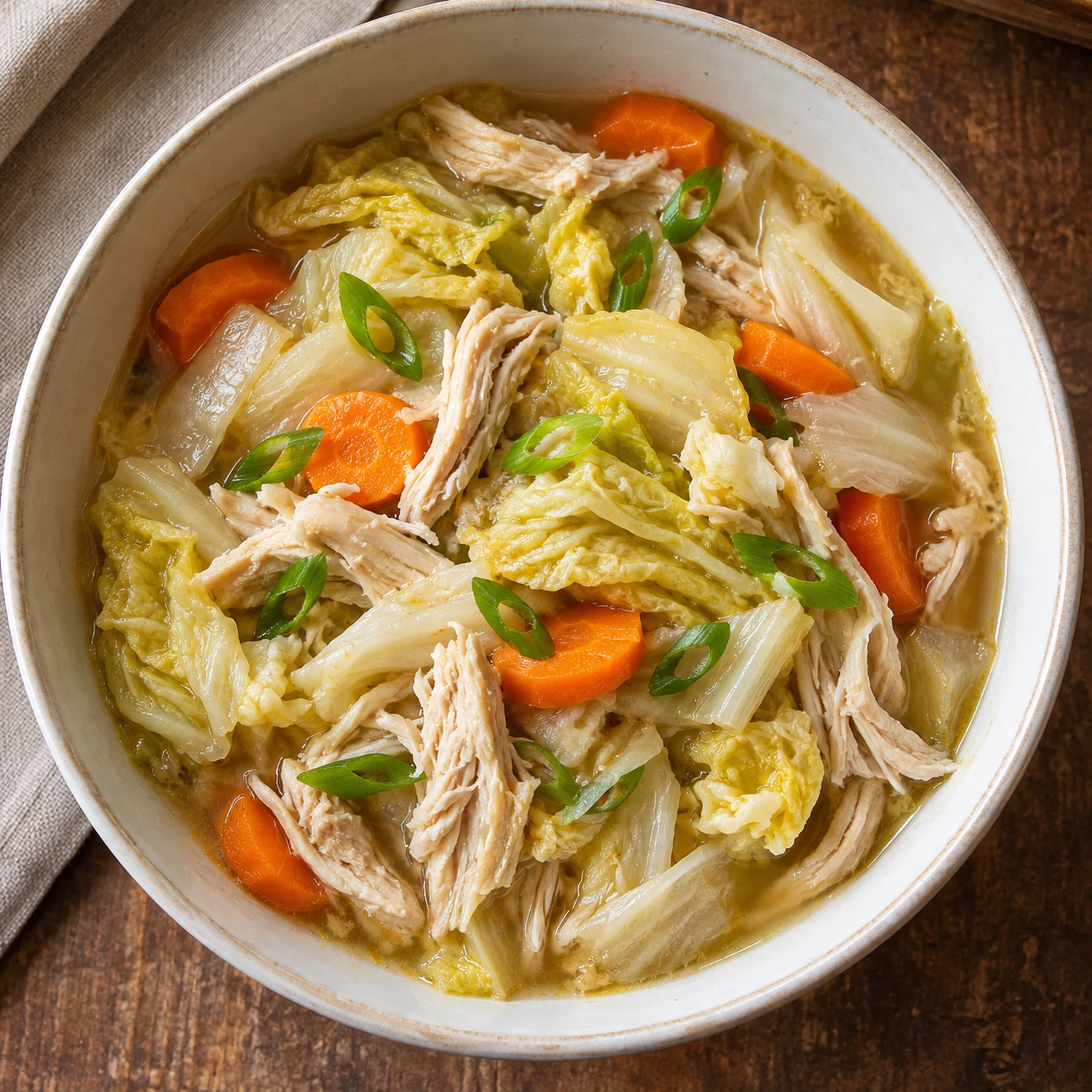
- Move the chicken to a tray and let it cool enough to handle. Remove skin and bones, shred the meat, and return the meat to the pot. Skim excess fat if desired. Taste the naturally concentrated broth and adjust salt. Ladle chicken, cabbage, vegetables and broth into six bowls and finish with sliced scallions.
Nutrition
Serving: 1bowlCalories: 300kcalCarbohydrates: 11gProtein: 34gFat: 14gSaturated Fat: 4gSodium: 460mgFiber: 2.5g
Video
Notes
No-water technique: The amount of broth depends on cabbage moisture, chicken size, burner heat and lid fit. A heavy pot and a thick Napa cabbage bed matter. Check briefly after 20–25 minutes. If the base is drying or scorching, lower heat and add 2 tablespoons water; food and pot safety come first, and that batch is no longer strictly waterless. This stovetop method is not an instruction for a pressure cooker, which may have minimum liquid requirements.
Chicken safety: Do not rinse raw poultry. Use a thermometer in the thickest parts, away from bone, and cook until both breast and thigh reach 165°F (74°C). Time alone cannot prove doneness. Remove bones carefully before serving.
Storage: Divide leftovers into shallow containers and refrigerate within 2 hours (1 hour above 90°F/32°C) at 40°F (4°C) or below. Use within 3–4 days; reheat leftovers to 165°F (74°C).
Nutrition: Approximate per sixth using edible cooked meat and vegetables, with some fat skimmed. Whole-chicken yield, whether skin is served, and broth distribution can materially change calories and fat. The estimate includes the measured salt.
Cost: Illustrative US$12.90 batch from chicken US$8.00, Napa cabbage US$2.50, apple US$0.80, onion US$0.50, carrots US$0.30, ginger US$0.30, scallions/seasoning US$0.50. Excludes tax, delivery and energy.
Video: Food Wishes demonstrates the no-water broth principle. Follow this card's measured produce, dry-pot check and thermometer guidance.
