
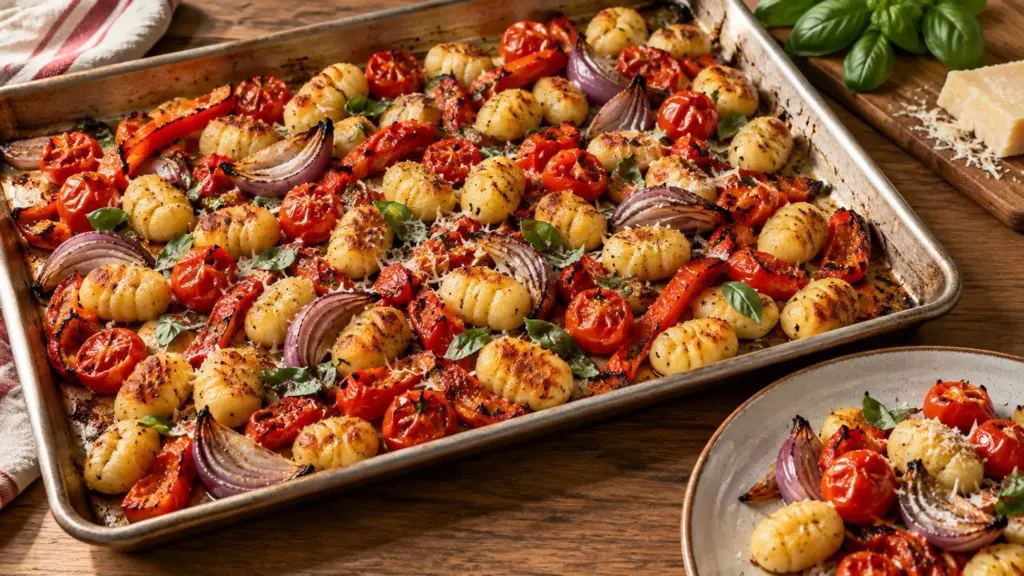
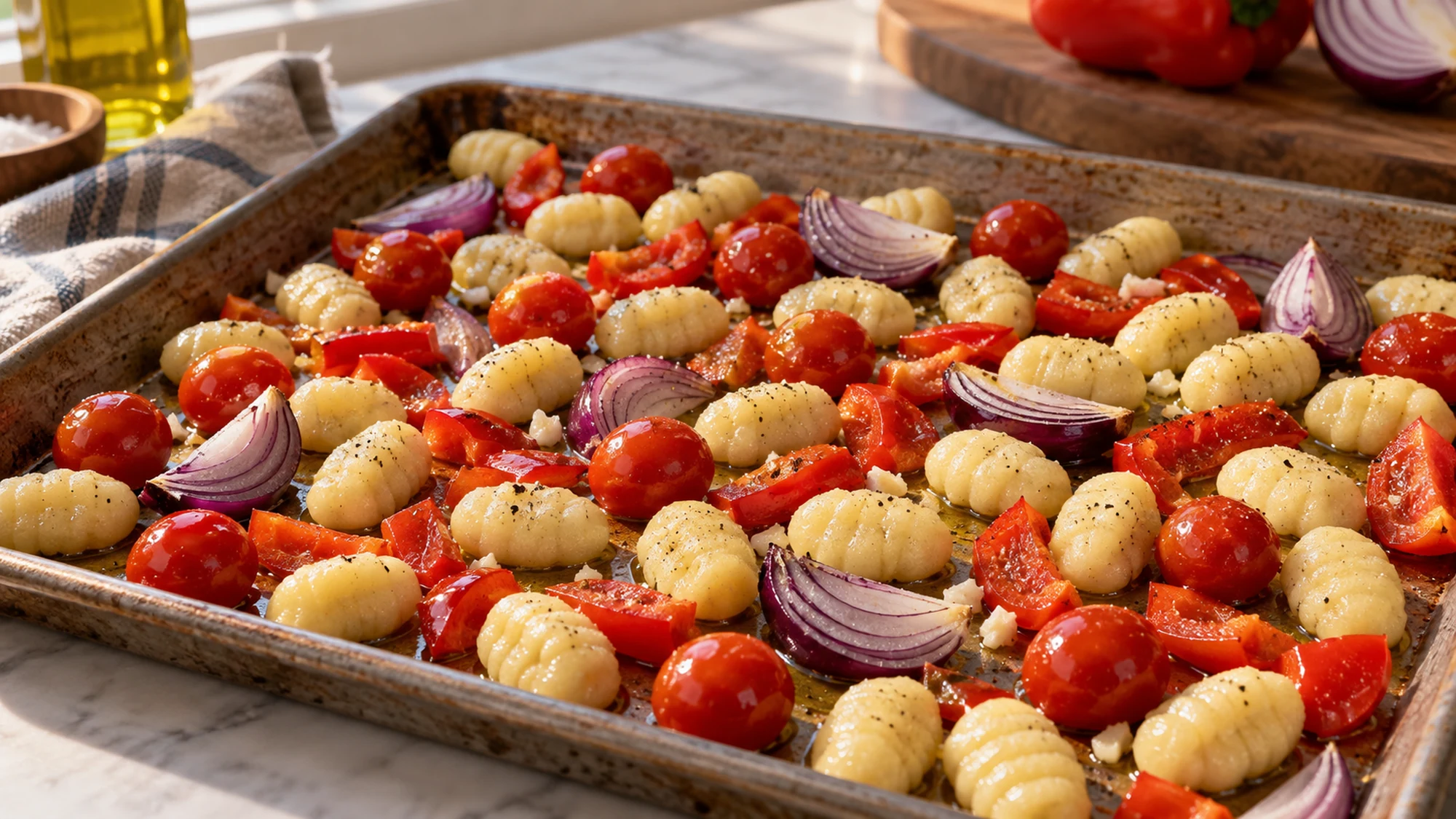
A package of gnocchi does not have to send you reaching for the pasta pot. Sheet-pan gnocchi roasts directly with tomatoes, pepper and onion, developing golden edges while the vegetables soften into a loose, juicy coating. Basil and a light Parmesan finish keep the pan bright and savory without turning it into a cream-sauce dinner.
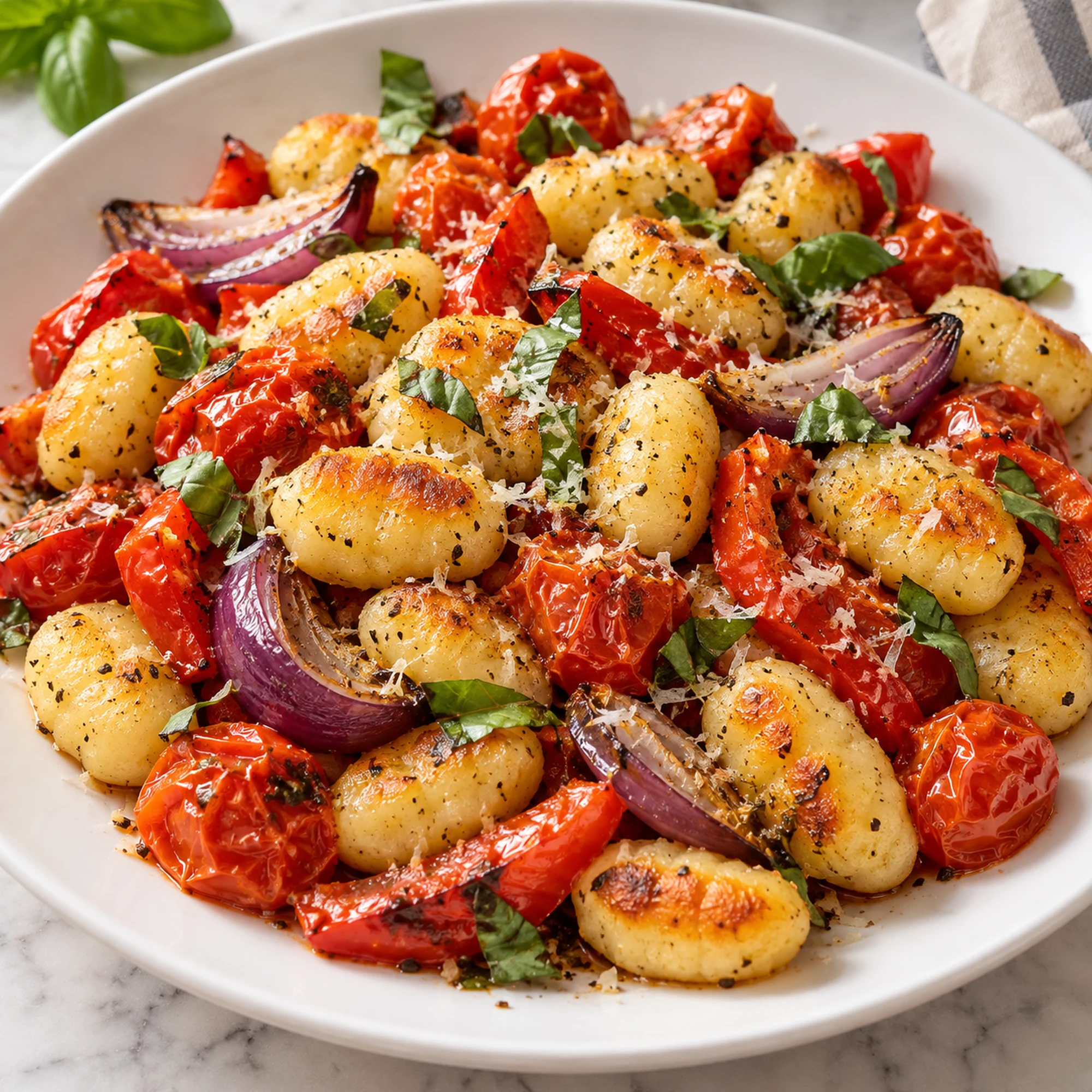
Use shelf-stable potato gnocchi, spread everything in a single layer and roast in a fully heated oven. Toss once so more surfaces touch the hot pan, then stop when the gnocchi are tender inside and the tomatoes have burst.
The texture differs from boiled gnocchi: the outside has a little chew and browning, rather than being uniformly soft. I prefer that contrast with the juicy tomatoes. A metal sheet pan provides room for the pieces to spread; crowding them into a small dish encourages a wetter result.
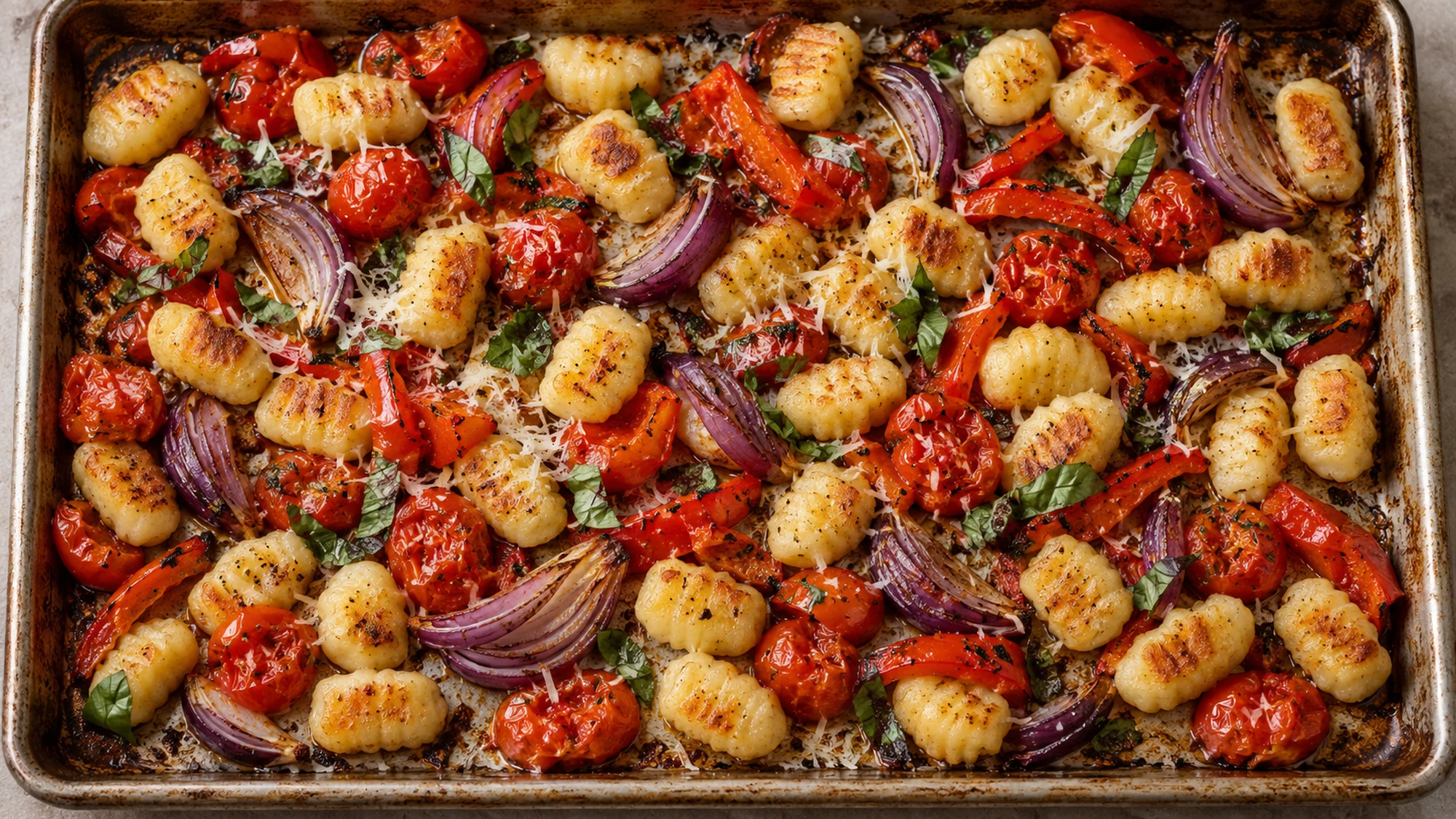
Serving suggestions for sheet-pan gnocchi
Bring the pan to the table while the gnocchi are warm, after folding in the basil and Parmesan. Share the tomato juices evenly among four portions. The vegetables provide a coating rather than a deep pool of sauce, so a shallow bowl works particularly well.
- Add a crisp side. A simple lettuce or cucumber salad gives the browned gnocchi a cool contrast. Keep the dressing light, especially if you add more cheese at the table.
- Build a more substantial meal. Offer cooked white beans, roasted chicken or another protein alongside. These are serving options rather than ingredients included in the base recipe.
- Use the juices. Scoop up the soft tomato pieces and the small amount of liquid beneath them. That is part of the finished pan, not something to drain away before serving.
- Refresh leftovers gently. Refrigerate promptly and use within three to four days. Reheat to 165°F (74°C), adding a little water if the tomatoes have been absorbed. An oven can restore some browned texture, though it will not exactly reproduce the fresh pan.
Serve promptly and distribute both the gnocchi and vegetables. A good bowl should include golden pieces, soft peppers and enough tomato to keep each bite interesting.
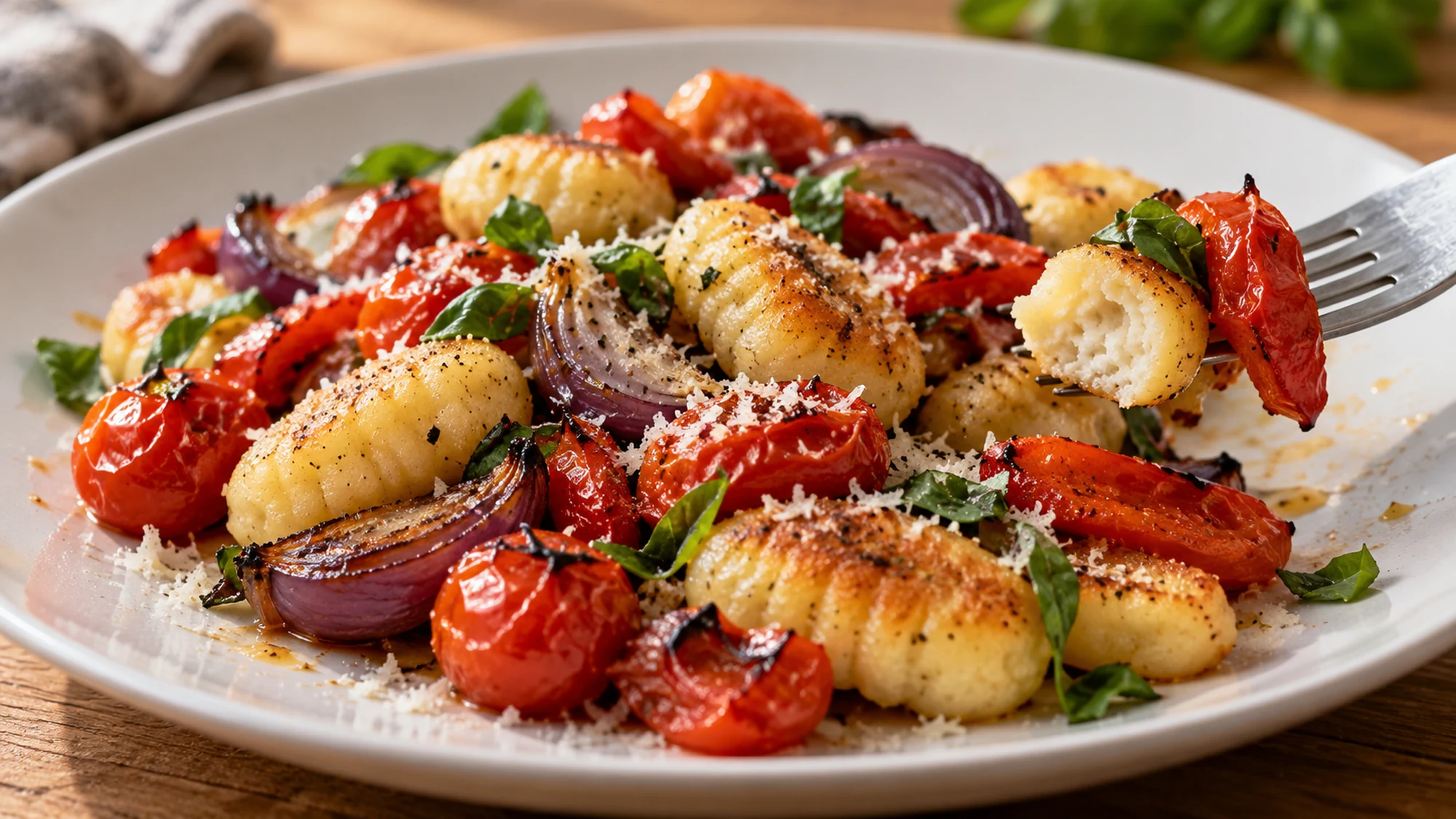
Variations without a boiling step
Start with the shelf-stable potato gnocchi specified in the card. Refrigerated, frozen and cauliflower versions can behave differently and are not automatically interchangeable. I would make the basic pan once before changing the product that gives the recipe its name.
- Change the pepper color. Yellow or orange bell pepper can replace red in the same amount. Keep the pieces a similar size so they soften on the same schedule.
- Add heat at the end. A pinch of crushed red pepper flakes can join the basil and cheese. This lets you control the heat without hiding the sweet roasted pepper flavor.
- Choose cheese to suit the table. Parmigiano Reggiano supplies a savory finish; omit it for a dairy-free version and check the gnocchi label. For a vegetarian meal, choose a cheese made with suitable rennet.
- Keep a saucier dinner separate. If creamy tomato sauce is what you want, baked feta pasta is a better starting point than pouring cream over this pan halfway through roasting.
Protect the single layer and keep wet additions restrained. Golden edges depend on exposed surfaces; the sheet pan cannot brown food that is piled underneath another ingredient.
Health benefits and ingredient choices
Tomatoes, pepper and onion add vegetable variety, while olive oil and Parmesan contribute richness. Gnocchi are primarily a starchy part of the meal, with nutrition that varies by brand. The dish can fit into a balanced dinner, but roasting does not make a serving unlimited or automatically high in protein.
- Look at the package. Packaged potato gnocchi differ in sodium, ingredients and portion guidance. Use the label when you want a closer nutrition estimate for your own pan.
- Choose the portion deliberately. The recipe is divided into four servings. Added beans, meat, bread or extra cheese change the final plate and should be counted separately.
- Check relevant allergens. Many potato gnocchi contain wheat, and some contain egg. Parmesan contributes milk. A potato-based name does not establish gluten-free or egg-free suitability.
Let the vegetables share the bowl with the gnocchi, and add a protein or side when that suits the meal. Clear ingredients and a useful portion are more informative than a sweeping healthy-dinner promise.
Motivation conclusion: give the pan some space
Set the oven heating before you open the packages, cut the vegetables to manageable sizes and use the full surface of the sheet pan. There is no second pot to drain. Finish with basil while the tomatoes are still warm, and you have a dinner built around a pleasing contrast: browned gnocchi and vegetables that have softened without disappearing.
Sheet-Pan Gnocchi Recipe

Ingredients
- 1 lb shelf-stable potato gnocchi 454 g; use a product suitable for oven roasting, not frozen or cauliflower gnocchi
- 1 lb cherry tomatoes 454 g, washed and dried
- 1 red bell pepper 150 g after trimming, cut into 1-inch pieces
- 1 small red onion 150 g, cut into thin wedges
- 3 tbsp olive oil
- 3 garlic cloves 12 g, thinly sliced
- 1 tsp dried oregano
- 0.5 tsp fine salt adjust for the gnocchi brand
- 0.25 tsp ground black pepper
- 0.25 cup torn fresh basil about 6 g
- 0.25 cup finely grated Parmesan 25 g; use vegetarian-rennet cheese if needed
Equipment
- 18-by-13-inch rimmed metal sheet pan
- Mixing bowl
- Spatula, knife and cutting board
Instructions
- Heat the oven to 425°F (220°C). Separate any gnocchi stuck together. In the bowl, toss unboiled gnocchi, tomatoes, pepper, onion and sliced garlic with oil, oregano, salt and black pepper.
- Spread on the sheet pan in a single layer. Use a second pan if your tray is smaller or the mixture is deeply crowded; divide it evenly. Do not add water or cover with foil.
- Roast for 15 minutes. Turn the gnocchi and vegetables with the spatula, then roast 10–15 minutes more until gnocchi have golden edges and tender centers, the pepper softens and some tomatoes burst. Taste one gnocchi carefully; cook a little longer if its center is still firm. Avoid scorching exposed garlic.
- Scatter basil and Parmesan over the hot tray. Toss gently with the tomato juices, taste the seasoning and divide into four portions. Serve promptly for the best contrast of golden edges and tender centers.
Nutrition
Video
Notes
Tried this recipe?
Let us know how it turned out!Emily Parker is DISHORA’s recipe-writing persona, bringing a warm, practical voice to everyday cooking. Her focus is simple ingredients, comforting flavors and clear steps that make a dish feel approachable. From cozy dinners to something sweet, Emily’s recipes invite readers to try something delicious and make it their own.