
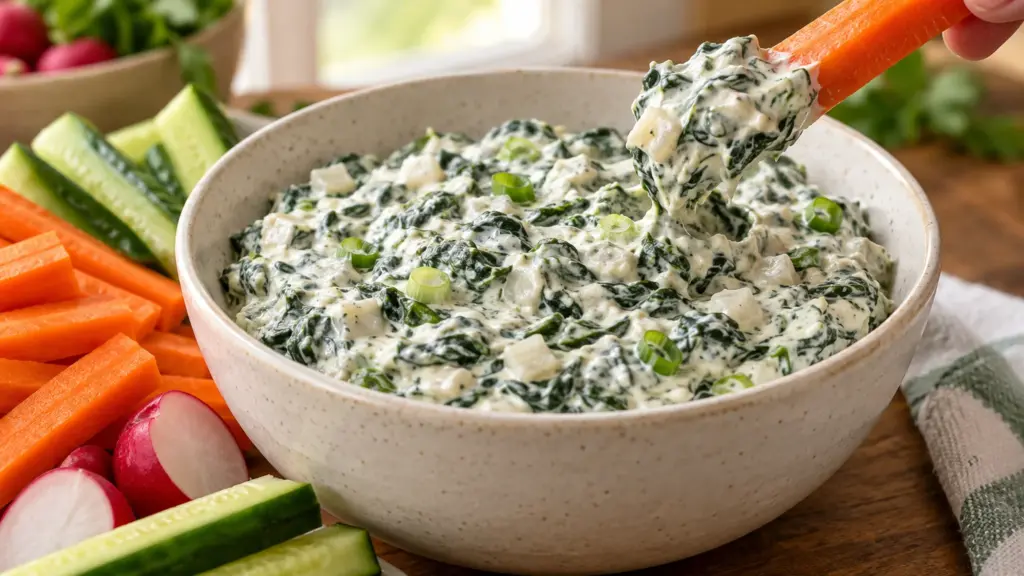
A bowl of spinach dip can start creamy and end up with a watery ring if the greens bring too much liquid. This spinach dip recipe cooks, cools and squeezes frozen chopped spinach before it meets sour cream, mayonnaise and vegetable seasoning. Water chestnuts and green onion add small crisp bites to the chilled, scoopable mixture.
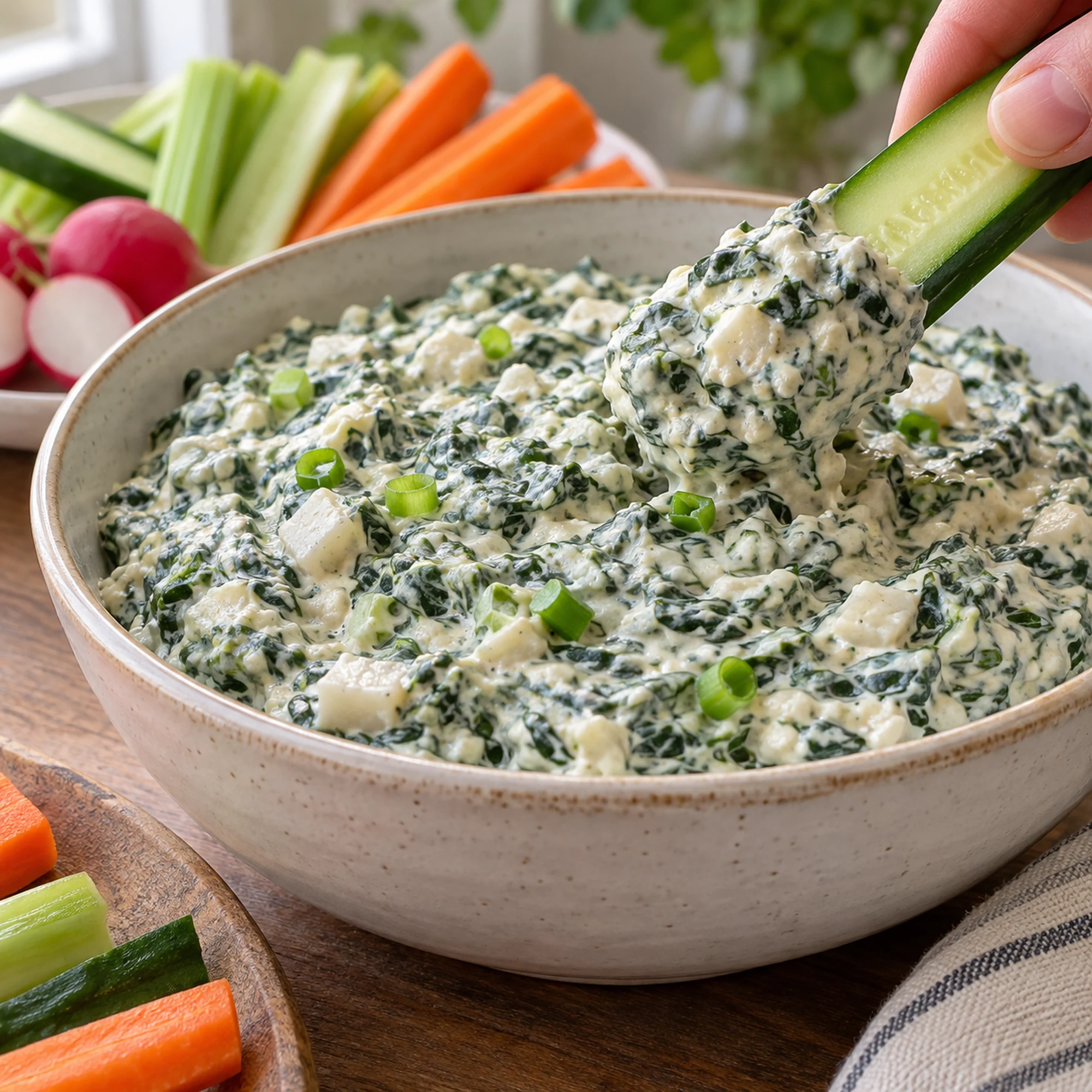
Squeeze the cooked spinach thoroughly, mix it into the creamy base and refrigerate the dip for at least two hours. Stir before serving and keep the bowl cold, with the dippers ready separately.
This is a cold spinach dip, without a melted cheese topping or artichokes. I prefer a simple serving bowl because it is easy to replace with a chilled second bowl when people linger over snacks. The short preparation still needs its chilling stage; the refrigerator is helping the dried seasoning soften into the dip.
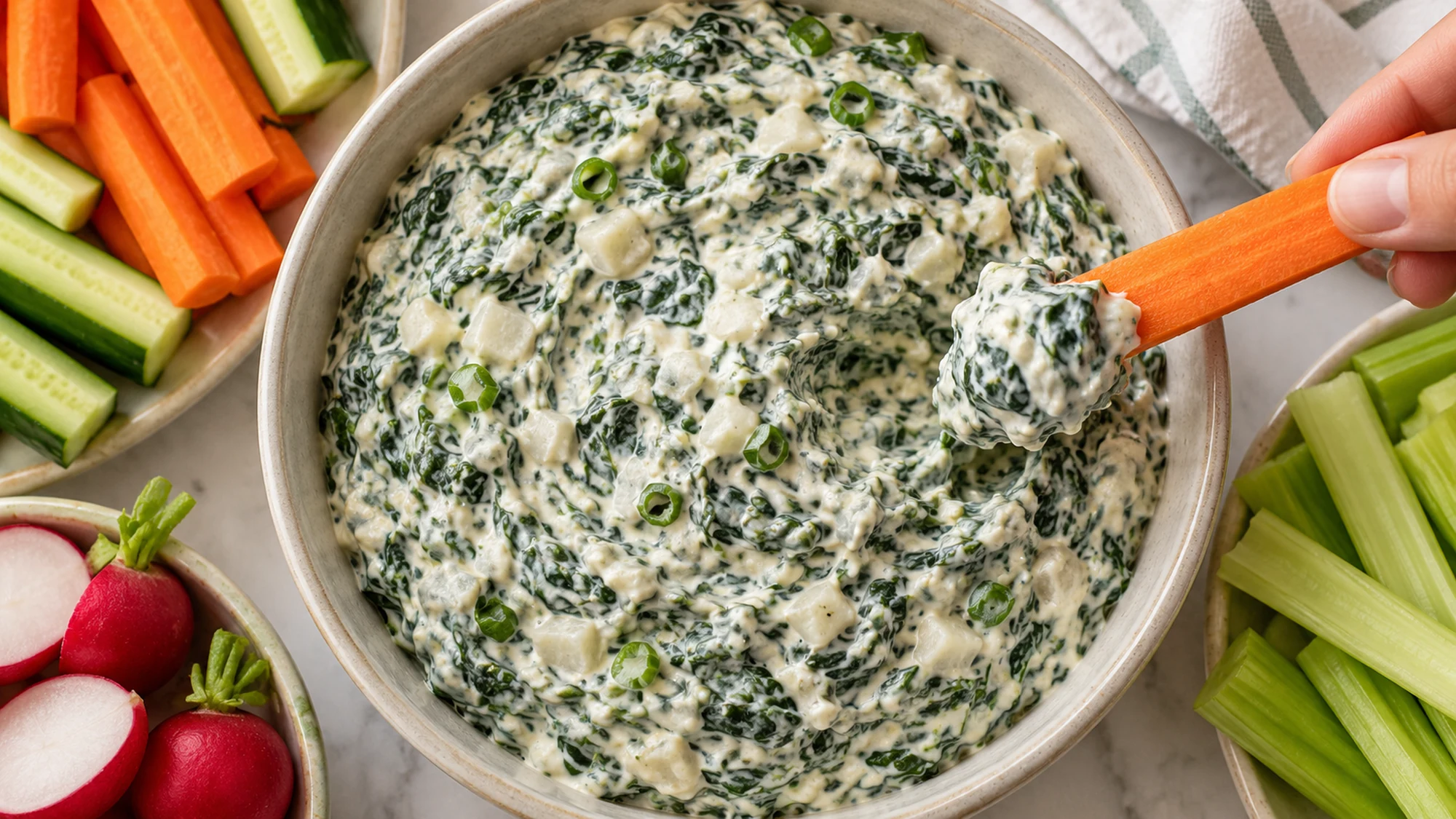
Serving suggestions for a spinach dip recipe
Give the chilled dip a good stir, then spoon a small portion into the serving bowl. Keep the rest covered in the refrigerator and refill with a fresh chilled portion as needed. Keep the whole batch safely chilled.
- Offer sturdy vegetables. Carrot sticks, cucumber slices and pepper strips can scoop the thick mixture without collapsing. Dry washed vegetables well so water does not collect around the dip.
- Add bread or crackers. Cubes of crusty baguette bring a chewy contrast, while plain crackers offer a crisp bite. Keep either option separate until it is picked up for dipping.
- Use a bread bowl only at serving. Fill it shortly before people eat so the interior does not become soggy in the refrigerator. An ordinary bowl gives the same dip without a second item to carve.
- Keep the cold-chain timing clear. Refrigerate at 40°F (4°C) or below. Limit cumulative room-temperature time to two hours, or one hour above 90°F (32°C), and discard dip that exceeds that limit.
Serve a small cold bowl and replenish it from the refrigerator. The dip should stay creamy, while the crisp dippers remain dry and separate.
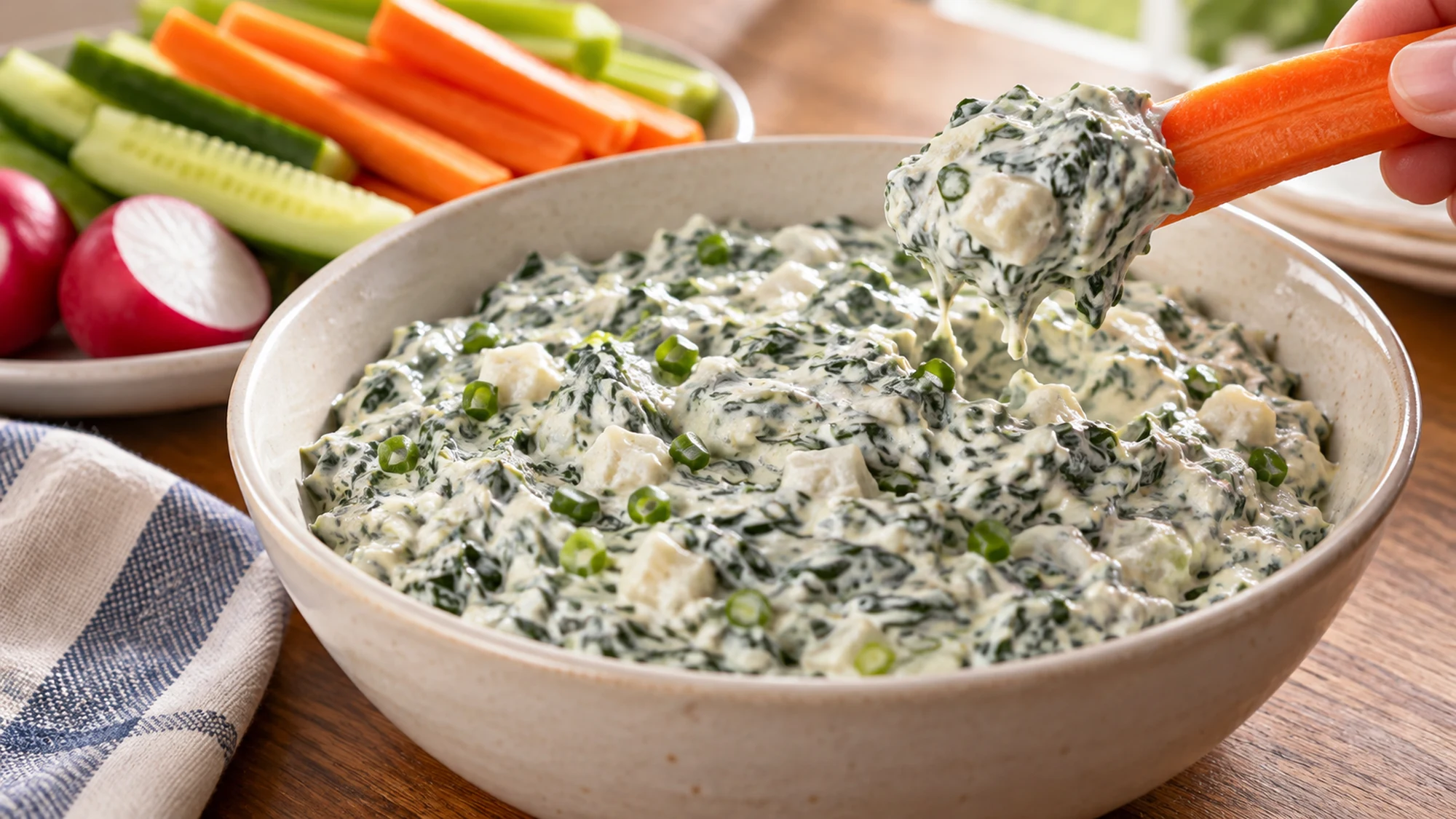
Variations after the spinach is squeezed
The spinach’s moisture is the first thing to manage, whatever flavor adjustments you choose. A spoonful of extra seasoning cannot fix a watery base. I would make the basic dip first and taste it after chilling, when the dried vegetables have softened.
- Leave out water chestnuts. They are optional and contribute a mild crunch. The dip remains creamy without them, but it loses those little crisp pieces.
- Adjust the onion. Use the stated green onion or omit it for a milder version. Adding a large quantity of raw onion changes the flavor more dramatically than a small garnish.
- Try a yogurt-based change cautiously. Thick plain Greek yogurt can replace the sour cream for a tangier version, but it does not taste or behave identically. Keep the mayonnaise and spinach drainage unchanged on your first attempt.
- Use the intended seasoning. Vegetable recipe mix is not the same as a concentrated bouillon cube. Different packets contain different salt levels, so a substitution needs its own taste check.
Taste the fully chilled dip before adding more salt or seasoning. Time changes the dried mix’s flavor and texture, so the freshly mixed bowl is not its final state.
Health benefits and a realistic dip portion
Spinach contributes a vegetable ingredient, but sour cream and mayonnaise make this a rich dip. A green color does not establish a low-calorie snack or a large vegetable serving. The amount of dip and the choice of dippers both shape the finished snack.
- Use the stated portion. The card makes sixteen roughly quarter-cup servings. Several spoonfuls and repeated refills are a different amount from one measured portion.
- Count the accompaniments. Vegetables, bread and crackers have different nutritional contributions. The dip’s estimate excludes the dippers.
- Read the product labels. Mayonnaise commonly contains egg, sour cream contains milk, and the vegetable mix may contain wheat, soy or other allergens. Check the packages used for the actual bowl.
- Keep leftovers safely chilled. Store promptly, use within three days and follow an earlier package limit when applicable. Freezing can change the creamy texture, so make a practical batch instead.
Enjoy the dip in a clear portion and choose the dippers that suit the snack. Its creamy texture is part of the appeal, and that can be acknowledged without an exaggerated health claim.
Motivation conclusion: squeeze first, chill next
Cook the spinach before the creamy ingredients leave the refrigerator, then cool it thoroughly and squeeze until it no longer drips freely. Give the mixed bowl its full chilling time. With the vegetables cut and a small serving bowl ready, the final preparation is simply a stir and a scoop.
Spinach Dip Recipe

Ingredients
- 1 10-oz package frozen chopped spinach 284 g
- 1 16-oz container sour cream 454 g
- 1 cup mayonnaise about 232 g
- 1 1.4-oz packet Knorr Vegetable Recipe Mix 40 g; check allergens and current label
- 1 8-oz can water chestnuts drained and finely chopped; about 142 g drained
- 3 green onions about 45 g, thinly sliced
Equipment
- Saucepan or microwave-safe bowl
- Colander and clean towel
- Mixing bowl and spoon
- Knife and cutting board
Instructions
- Cook frozen chopped spinach according to its package directions, using a saucepan or microwave-safe bowl. Drain in a colander and allow to cool until safe to handle, about 10 minutes.
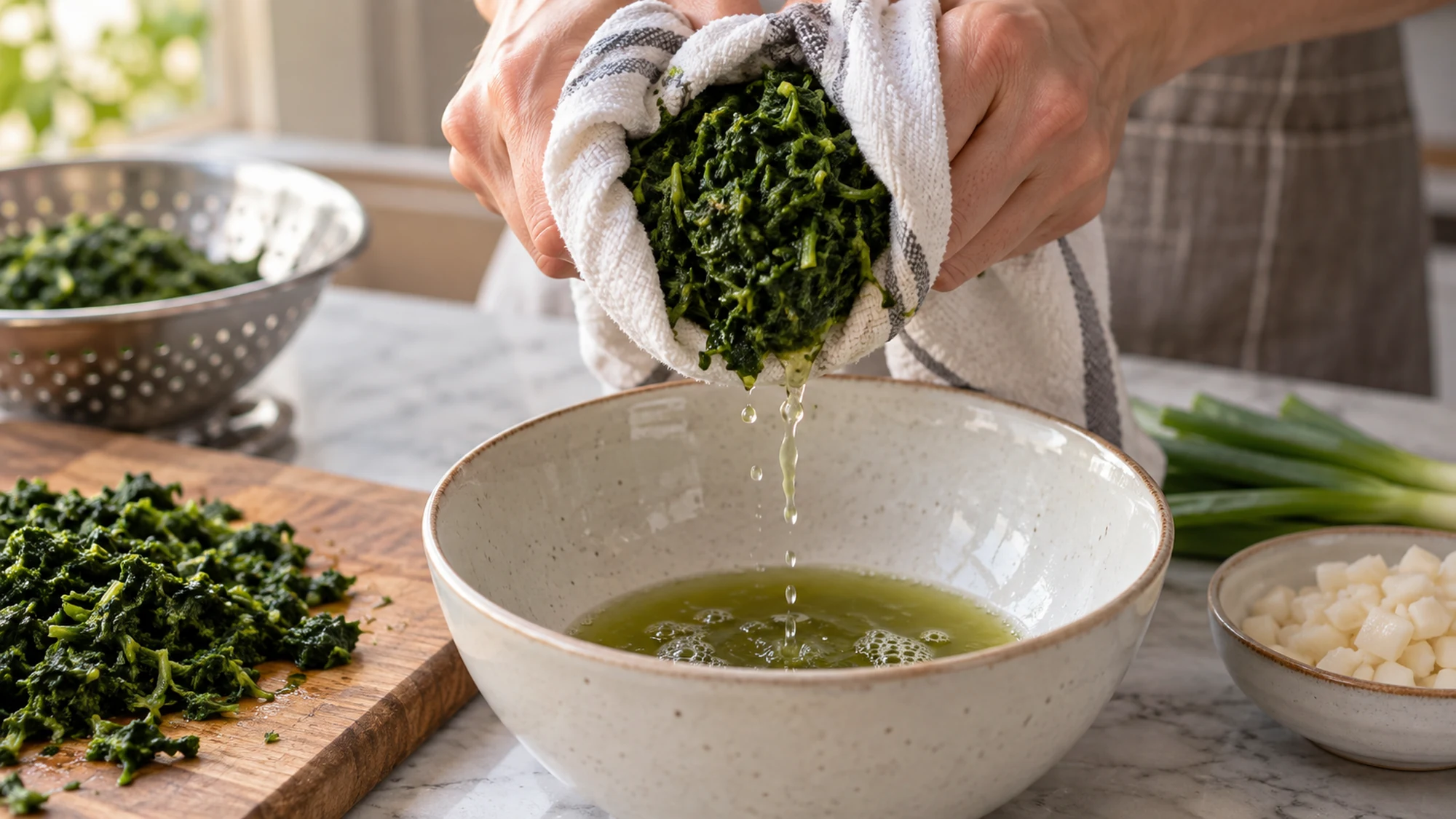
- Gather the cooled spinach in a clean towel and squeeze out as much liquid as possible. Loosen the compact spinach and chop any long pieces. Wet spinach will thin the dip.
- Stir sour cream, mayonnaise and vegetable recipe mix in the bowl. Fold in squeezed spinach, chopped water chestnuts and green onions until evenly distributed.
- Cover and refrigerate for at least 2 hours to soften the seasoning vegetables and develop flavor. Stir again, then serve cold with optional vegetable sticks or bread. Yield is about 4 cups, divided into sixteen roughly ¼-cup portions.
Nutrition
Video
Notes
Tried this recipe?
Let us know how it turned out!Emily Parker is DISHORA’s recipe-writing persona, bringing a warm, practical voice to everyday cooking. Her focus is simple ingredients, comforting flavors and clear steps that make a dish feel approachable. From cozy dinners to something sweet, Emily’s recipes invite readers to try something delicious and make it their own.