
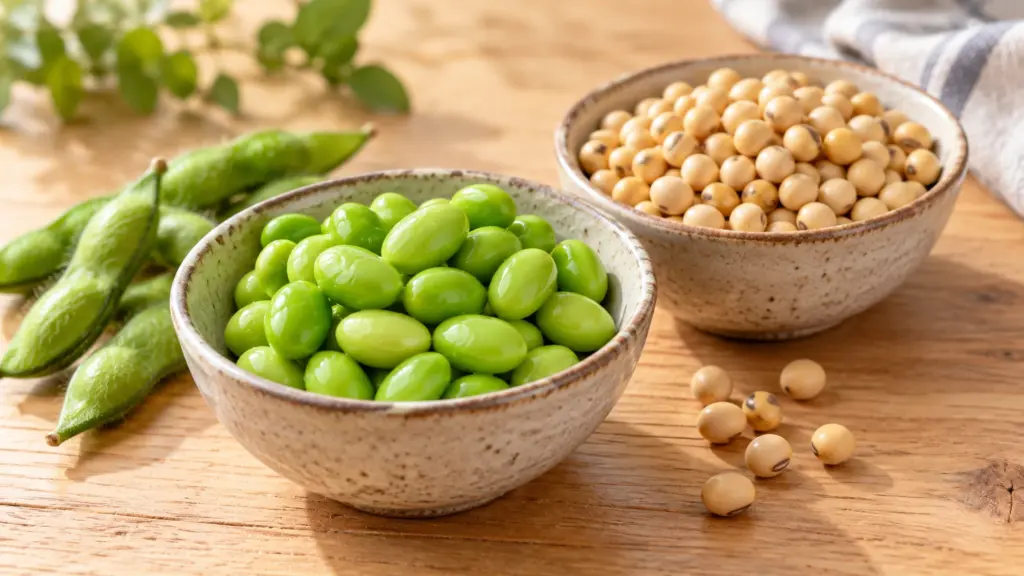
A bag of green edamame and a jar of pale dry beans may look like unrelated purchases. Both can be soybeans, but the stage of harvest and the way they are prepared change what you should do with them.
Soybeans are legumes used as whole beans and in foods such as tofu, tempeh and soy milk. Edamame is the young green form. Choose the form for your meal, cook whole soybeans properly, and check labels because soy is a major food allergen.
I’d begin with plain frozen shelled edamame if convenience is the main goal. It offers a clear introduction to the ingredient without asking you to learn a long soaking routine or buy a shelf of unfamiliar sauces.
Soybeans and edamame are connected, but not identical
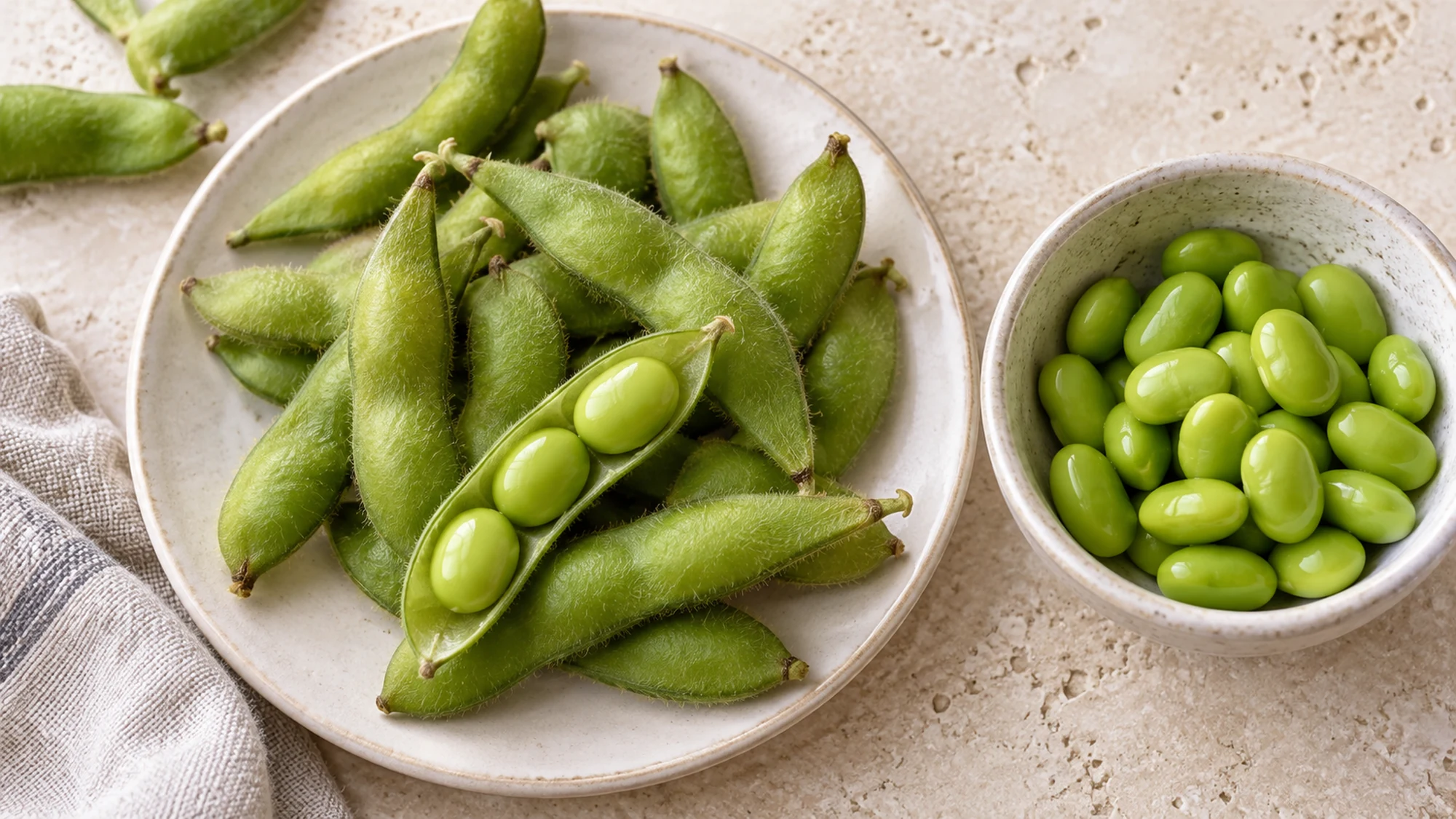
Edamame is harvested while its seeds and pods are still green. Mature soybeans are allowed to develop further; the dry beans commonly sold for cooking are often pale yellow. University of Minnesota Extension’s soybean guidance describes edamame as vegetable soybeans and makes two useful points: do not eat the hairy pods, and do not eat soybeans raw.
Think of the difference as a shopping decision. Green edamame gives you a tender, gently chewy bean; mature dry beans need the preparation specified for that product. One is not a minute-for-minute substitute for the other.
- In the pod: cook as directed, then remove the beans to eat; discard the fibrous pods.
- Shelled edamame: convenient for bowls and salads, but follow the package cooking directions.
- Dry mature beans: buy food-grade beans and use their soaking and cooking instructions.
Choose the soy food for the texture you want
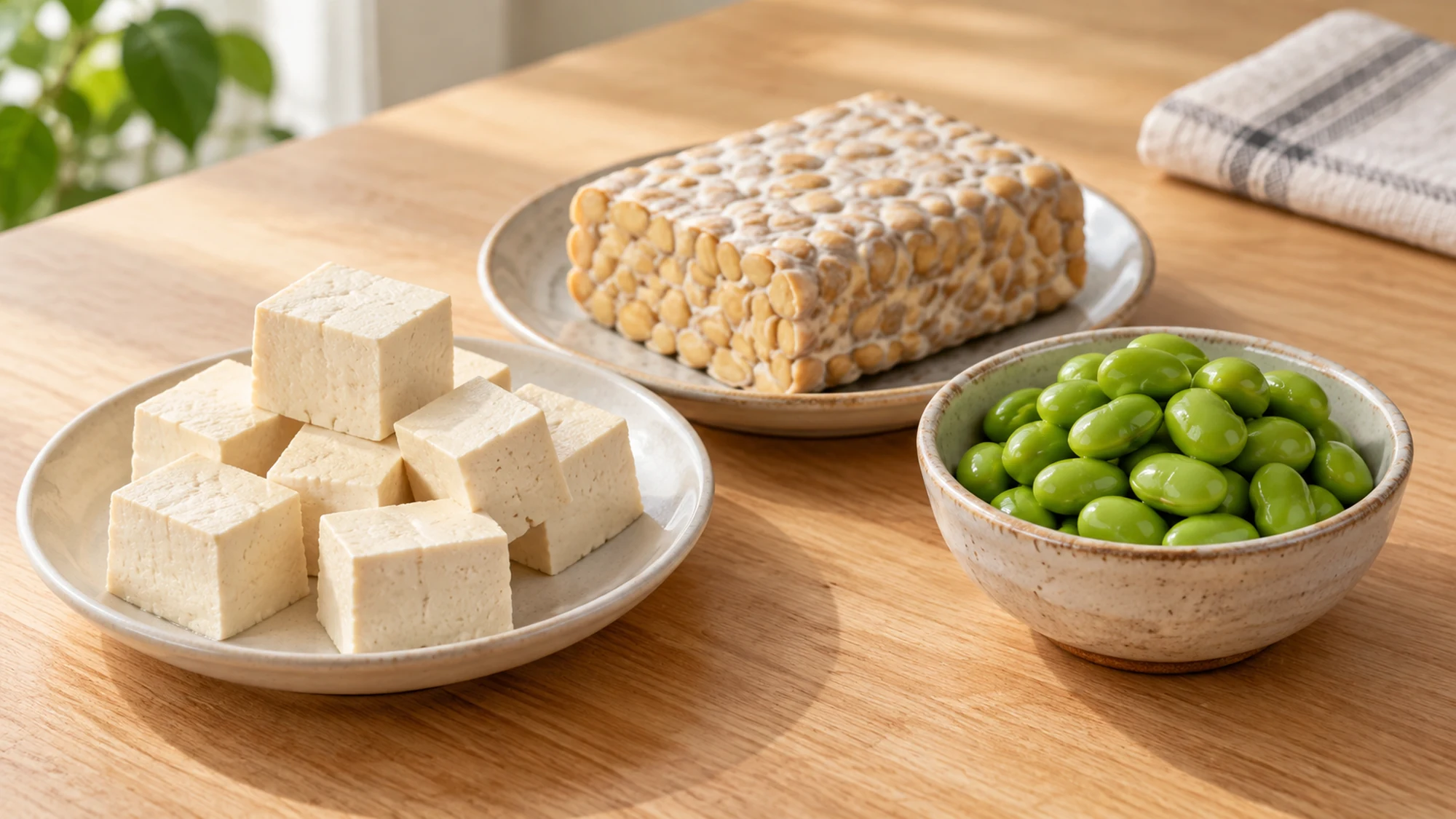
The word soy covers a varied group of foods, not a single texture or nutritional profile. Tofu can be silky or firm; tempeh has a compact structure with visible beans. Sauces and pastes belong in the seasoning part of the kitchen rather than taking the place of a bowl of beans.
| Form | Useful role | Check before using |
|---|---|---|
| Edamame | Beans for bowls, salads or a side | Pod or shelled; package cooking directions |
| Mature whole beans | Hearty bean dishes | Dry versus already cooked |
| Tofu | Soft or firm protein ingredient | Firmness, flavorings and storage label |
| Tempeh | Slices or crumbles with a firmer bite | Other grains and preparation directions |
| Soy sauce or miso | Concentrated seasoning | Sodium, other ingredients and allergens |
Start with the texture and job you need. A fermented seasoning and a whole soybean have different roles on the plate.
What soybeans contribute to a meal
MedlinePlus describes soy as a source of plant protein. Whole beans also contribute fiber, while the numbers for tofu, beverages and seasonings depend on processing and formulation. Compare the actual Nutrition Facts rather than borrowing a nutrient count from a different soy food.
Health claims need a narrower lens. NCCIH reports that replacing other proteins with soy protein may lower cholesterol slightly. That does not establish a guaranteed result from adding edamame to lunch, and research on concentrated supplements is not interchangeable with ordinary food.
- Compare like with like: the same weight or clearly stated serving size.
- Check added sodium in seasoned beans, sauces and ready-made products.
- For a soy beverage, examine fortification and added sugars instead of assuming every carton is equivalent.
Use soybeans as one practical food choice in a varied diet. Their nutrient contribution is more useful than a sweeping hormone, detox or disease-prevention promise.
Make whole soybeans easier to use
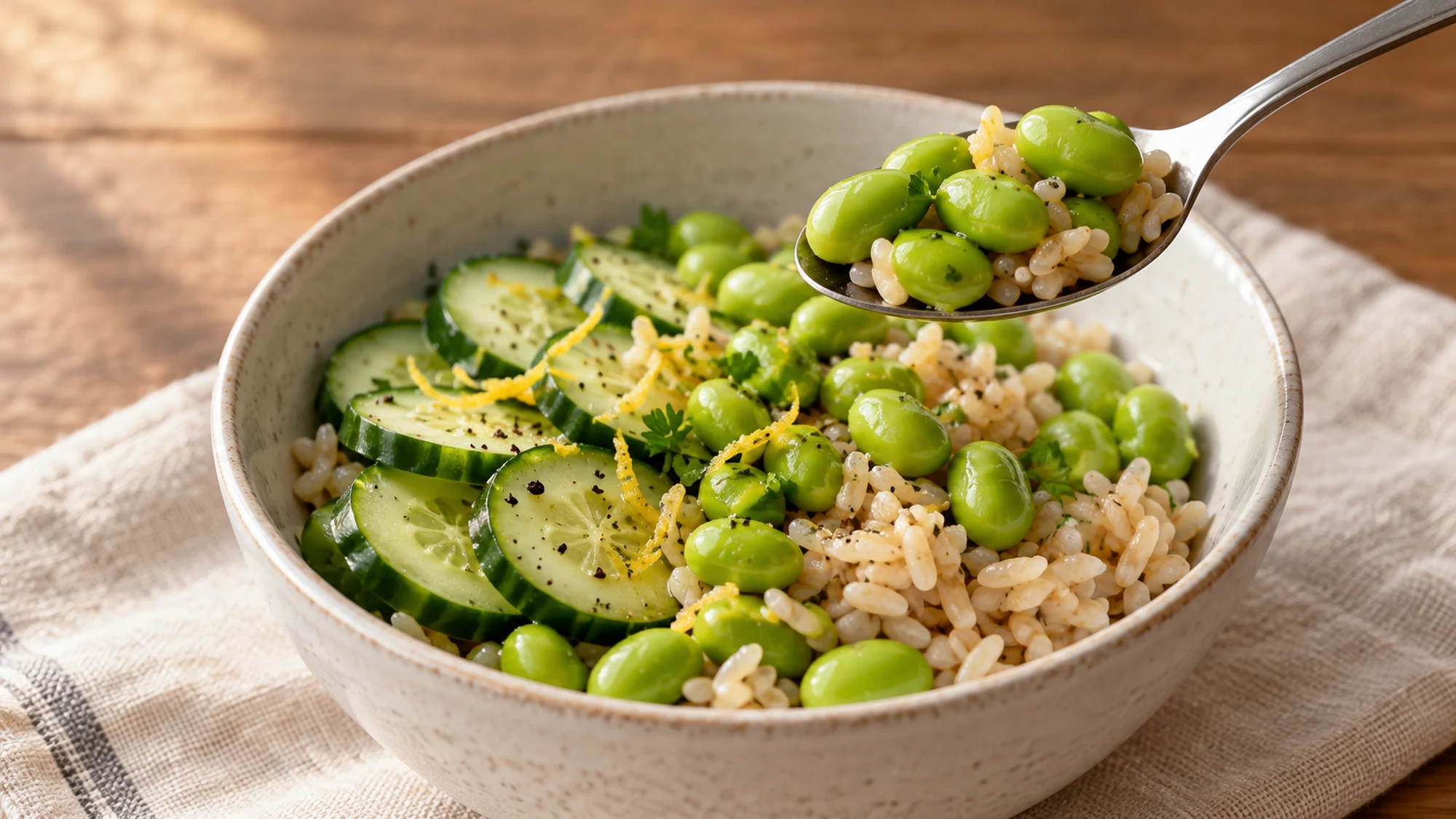
Follow the package instructions even when frozen edamame looks bright and ready to eat. Drain cooked beans before adding them to a salad so excess water does not thin the dressing. For an example of that kitchen role, see our edamame crunch salad, which pairs the beans with finely cut cabbage.
I prefer contrasting their gentle bite with something crisp or acidic: cucumber, cabbage or a little citrus. You can also add prepared beans to a grain bowl or soup. These are serving ideas, not a replacement for the cooking directions on the food you bought.
- Buy shelled beans when you want to skip removing pods.
- Keep plain beans and strongly seasoned products as separate choices when planning a dish.
- Use the product’s storage guidance, and refrigerate prepared food promptly.
Who should pay closer attention to soy
Soybeans are one of the major food allergens identified by the FDA’s packaged-food label guidance. A familiar name such as tofu or edamame does not remove that concern. Read the full ingredients and explain a soy allergy clearly when someone else prepares the food.
NCCIH also notes possible digestive effects and interactions with certain medicines. If you have been told to limit soy or are considering a concentrated soy supplement, discuss the specific product with your clinician. There is no need to turn a straightforward food guide into a one-size-fits-all medical plan.
Choose a soy food you enjoy, prepare it as directed and keep individual allergies and medical advice in view.
Sources
- University of Minnesota Extension: Growing Beans, Soybeans Section
- MedlinePlus: Soy
- NCCIH: Soy
- FDA: Have Food Allergies? Read the Label

Emily Parker is DISHORA’s recipe-writing persona, bringing a warm, practical voice to everyday cooking. Her focus is simple ingredients, comforting flavors and clear steps that make a dish feel approachable. From cozy dinners to something sweet, Emily’s recipes invite readers to try something delicious and make it their own.