
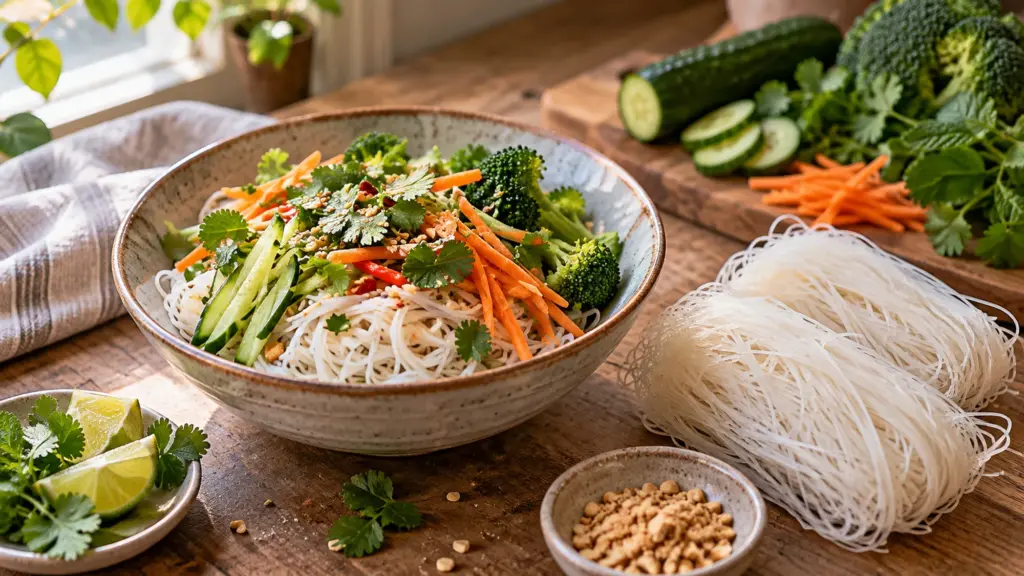
A noodle that works beautifully in a brothy bowl may fall apart in a long stir-fry. Choosing gluten free noodles starts with the ingredient list, but it also helps to know what you want the finished strands to do.
Gluten-free noodles can be made from rice, corn, buckwheat or other gluten-free ingredients. Check the complete package and an explicit gluten-free claim when strict avoidance matters; a noodle’s color, shape or name does not establish its gluten status.
I’d choose the noodle for the meal before choosing the sauce. That small decision makes the package directions easier to follow and gives you a clearer idea of the texture to expect.
Start with ingredients, then the label
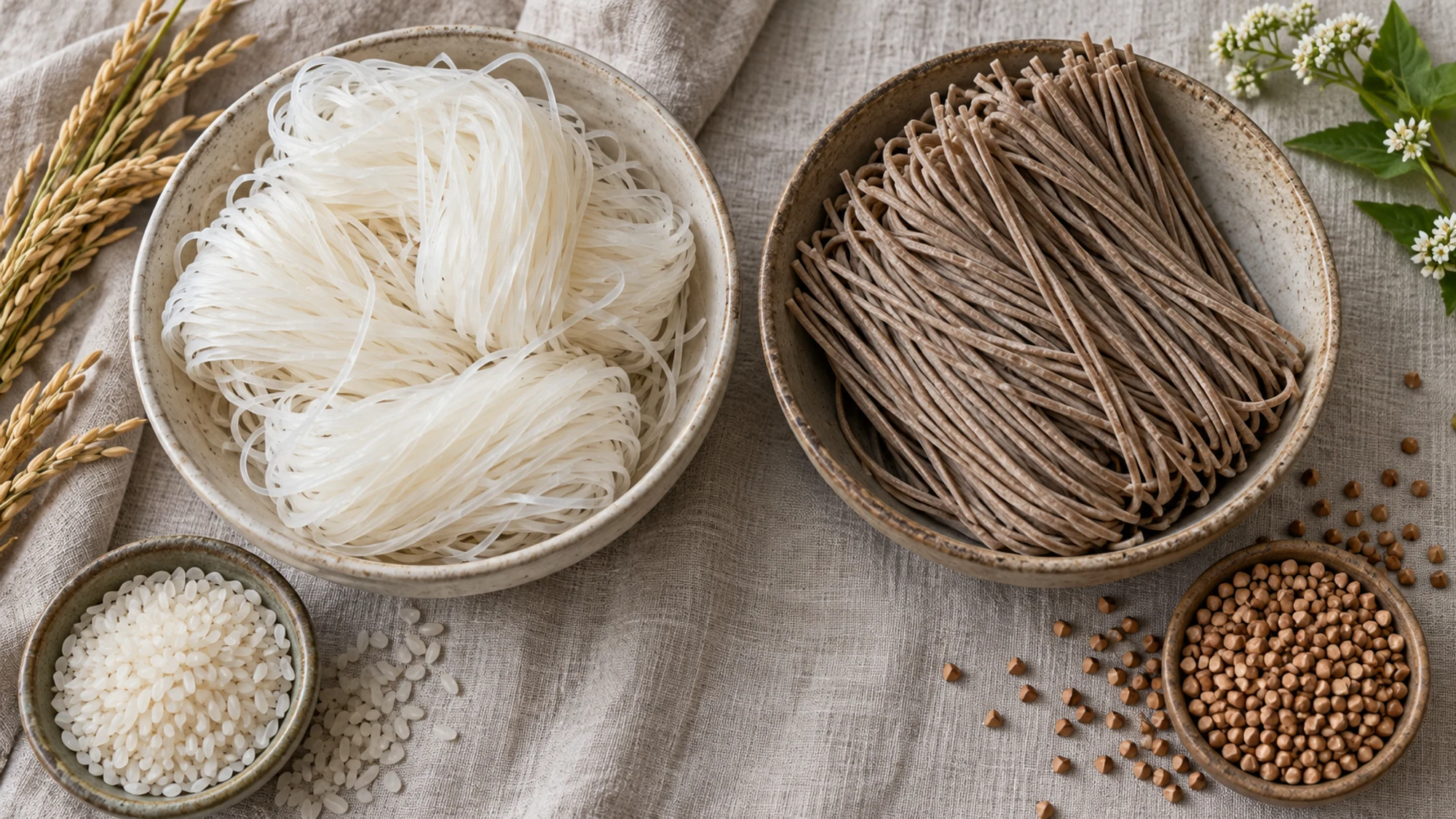
The Celiac Disease Foundation lists rice, corn, buckwheat and several starches among naturally gluten-free foods. A processed noodle may combine several ingredients, though, and cross-contact during production is a separate issue.
Read the actual package rather than assuming “rice,” “buckwheat” or “wheat-free” answers every question. Under the FDA’s gluten-free labeling rule, a gluten-free claim has specific requirements, including less than 20 parts per million of gluten.
Check flavor packets separately from plain noodles. An instant noodle cup or meal kit can include seasonings, sauces and other allergens that a plain bundle does not contain.
Match gluten free noodles to the meal
Think in noodle families rather than expecting one product to replace every wheat noodle. Thickness and the manufacturer’s formulation can matter as much as the headline ingredient.
The table suggests starting points for shopping, with a package check still needed for each choice. It does not identify a brand or certify a dish as gluten free. When comparing labels, use the same dry serving weight; a cooked portion weighs more after taking up water.
| Type | What to look for | Meal fit to consider |
|---|---|---|
| Rice noodles | Rice-based ingredients; gluten-free claim | Soups, salads or stir-fries, depending on thickness |
| Corn/rice pasta | A labeled gluten-free blend | Tomato sauces and familiar pasta dishes |
| Buckwheat-based soba | No wheat in the blend; gluten-free claim | Broth or chilled noodle bowls |
| Starch/glass noodles | Exact starch and any added ingredients | Translucent strands for suitable soups or salads |
For a tomato-based pairing, DISHORA’s pomodoro sauce guide offers a simple basil-and-tomato approach. Check all ingredients used in your own meal when gluten avoidance is required.
Soba is the label trap worth knowing
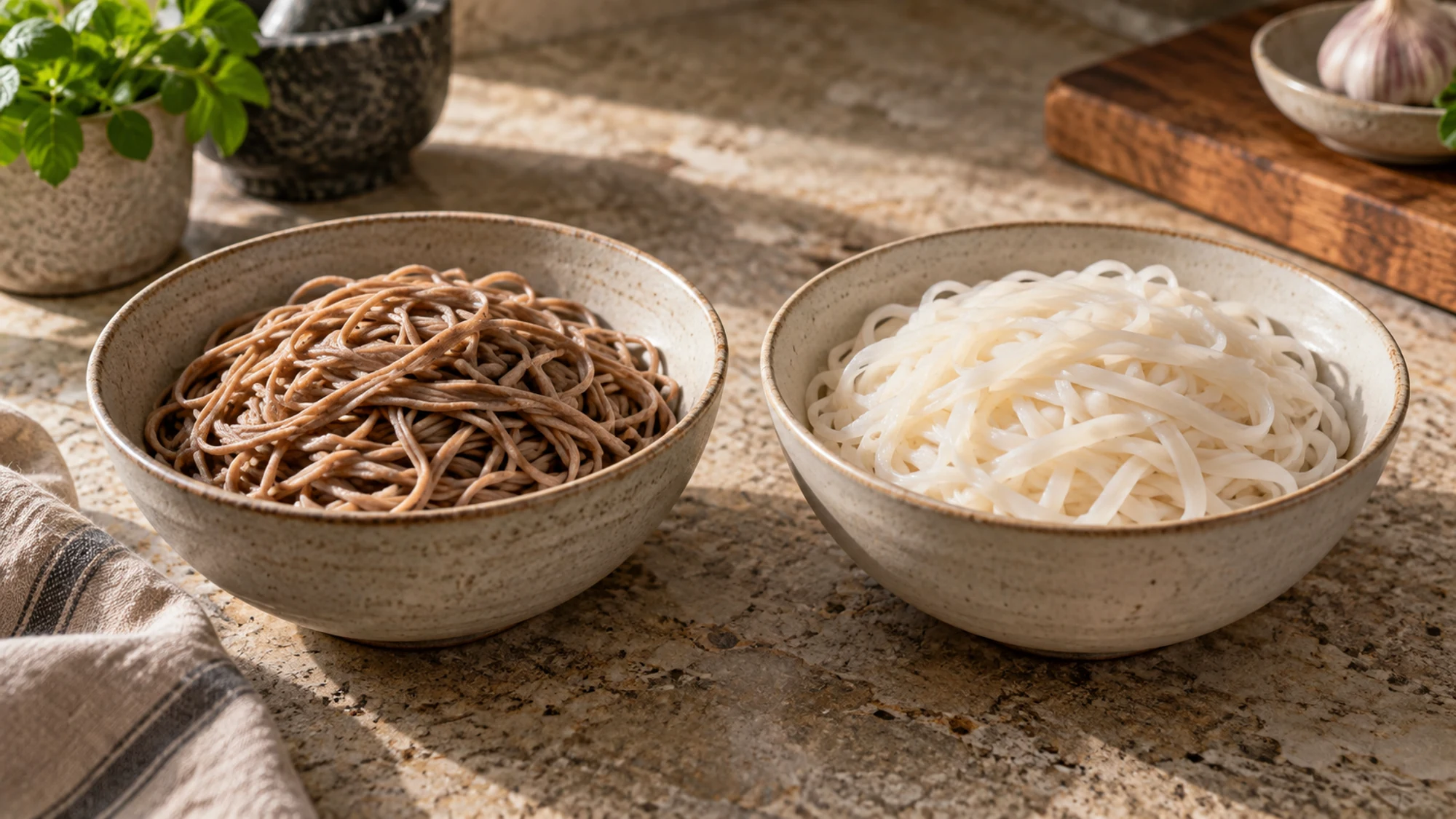
Buckwheat itself is not wheat, but soba can contain both. For example, Simply Asia Japanese Style Soba Noodles lists wheat flour alongside buckwheat flour.
By comparison, Lotus Foods Buckwheat & Brown Soba Rice Noodles combines brown rice flour and buckwheat flour and is marketed as gluten free. The contrast shows why the current ingredient list is more useful than treating all soba as one category.
Texture improves when you follow the package
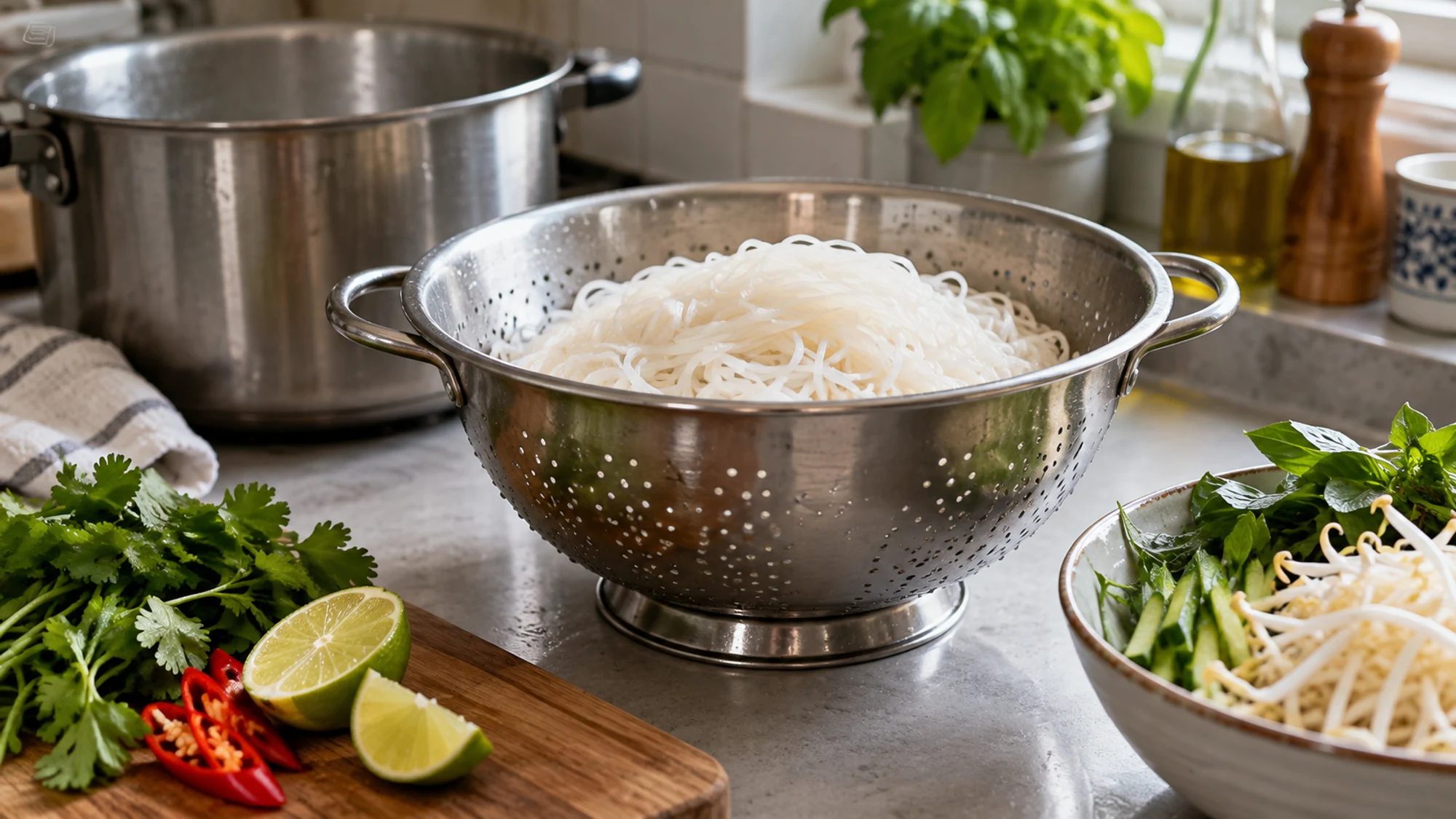
There is no universal cooking time for gluten-free noodles. Thai Kitchen Thin Rice Noodles specifies an off-heat soak of 3–5 minutes, whereas the Lotus Foods soba product calls for boiling and then a cold rinse.
Those are product examples, not instructions for every rice or buckwheat noodle. Rinsing, soaking and boiling serve different purposes, so use the directions on the bag you actually bought.
- Read whether the product needs soaking or boiling before heating the water.
- Check a strand for the texture you want as the suggested time approaches.
- Have the sauce or broth ready so drained noodles are not left waiting in a clump.
- Allow for further softening if the noodles will continue cooking in a hot sauce or broth.
I prefer checking one strand to relying only on the clock. A little attention at the end is usually more useful than trying to rescue noodles that have already lost their structure. A note about the brand and the texture you liked can make the next bowl easier to repeat.
Keep the noodle bowl gluten free
NIDDK explains that gluten cross-contact can happen during preparation and serving. For strict gluten avoidance, use fresh cooking water and clean utensils and draining equipment rather than reusing water from wheat pasta.
Check broth, marinades, soy sauce and toppings too. At a restaurant, ask about the noodle ingredients and preparation process, since a gluten-free noodle alone does not describe the whole dish.
Choose a clearly labeled product that suits the dish, follow its own directions and check everything that joins the bowl. For nutrition comparisons, read protein, fiber and serving size separately from the gluten-free claim.
Sources
- Celiac Disease Foundation: gluten-free foods and label checks
- FDA: gluten and food labeling
- Simply Asia: wheat-containing soba ingredients
- Lotus Foods: buckwheat and brown rice soba
- Thai Kitchen: thin rice noodles and preparation
- NIDDK: celiac disease and cross-contact

Emily Parker is DISHORA’s recipe-writing persona, bringing a warm, practical voice to everyday cooking. Her focus is simple ingredients, comforting flavors and clear steps that make a dish feel approachable. From cozy dinners to something sweet, Emily’s recipes invite readers to try something delicious and make it their own.