
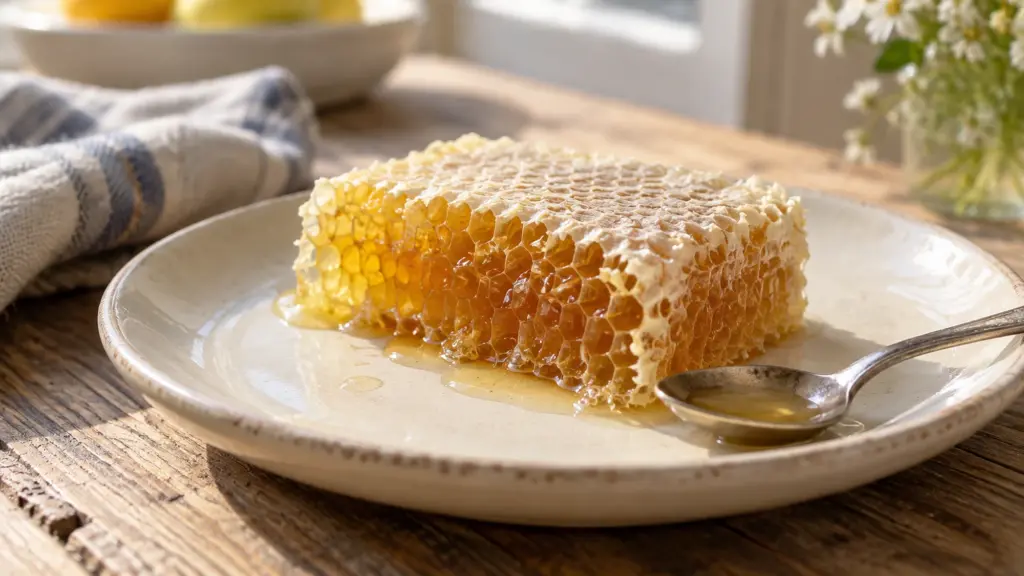
A little square of honey comb can stop a cheese-board conversation in its tracks. The honey is familiar; that delicate waxy framework is the part that makes everyone pause with a cracker in hand.
Yes, honey comb sold for eating contains edible honey and beeswax. Start with a small piece and enjoy the honey-filled cells with toast, cheese or yogurt. Like all honey, it must never be given to babies younger than 12 months.
I’d choose a small portion for a first taste: enough to notice the soft chew and floral sweetness without committing your entire slice of toast to wax. The pleasure is the texture, rather than a promise of extraordinary health benefits.
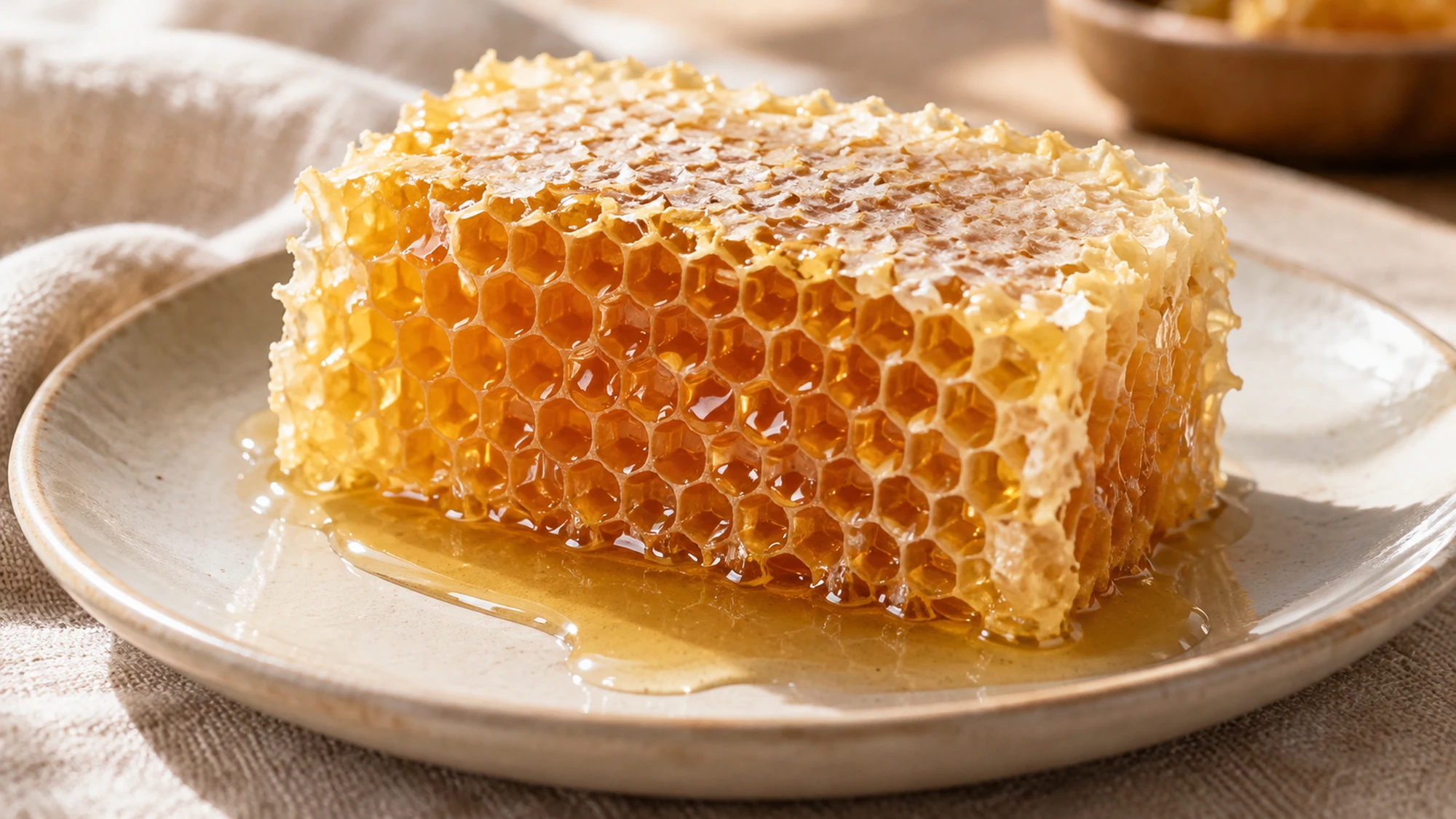
What exactly is honey comb?
The familiar spelling is “honeycomb”; “honey comb” refers to the same hexagonal beeswax structure. For the table, look for comb honey sold as food. It is honey still contained in the comb, rather than liquid honey extracted from the cells.
Purdue Extension’s guide to honey confirms that both honey and comb are edible. This is quite different from honeycomb candy, the airy, crunchy sugar confection also called sponge candy; the names overlap, but the foods do not.
Cut comb is typically a piece of the intact structure. A jar of liquid honey containing pieces of comb is another format. The following comparison helps you buy the texture you want.
| Format | What you get | Useful for |
|---|---|---|
| Comb honey | Honey in edible wax cells | Small bites and cheese boards |
| Liquid honey | Honey separated from the comb | Drizzling and mixing |
| Cut comb in liquid honey | Comb pieces plus liquid honey | Both textures in one jar |
| Honeycomb candy | Aerated cooked sugar confection | A crunchy sweet; not beeswax comb |
How to eat honey comb without a waxy mouthful
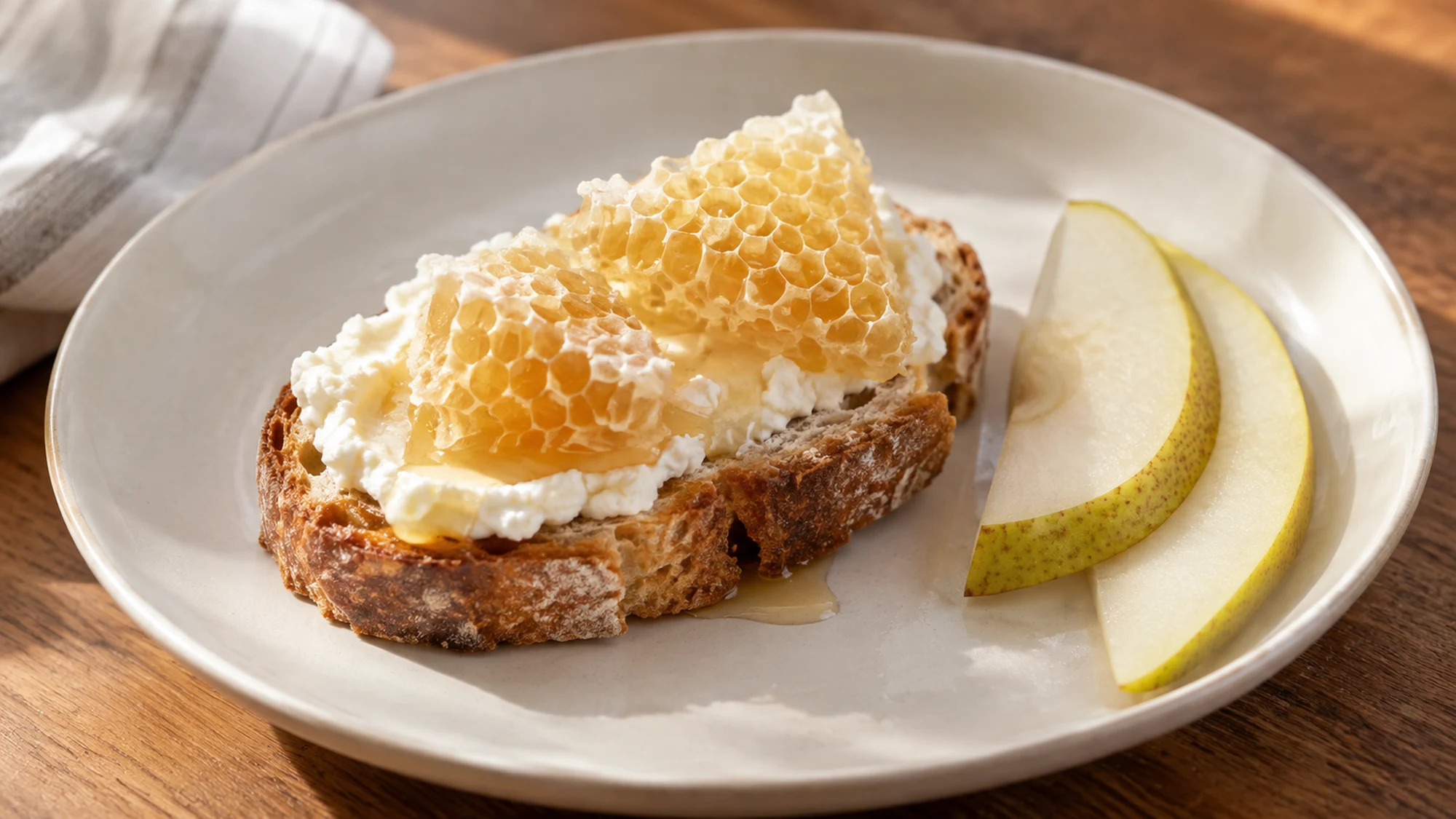
Cut off a small piece with a clean knife and take a modest bite. The honey releases first; the thin wax remains chewy. You do not need to melt the comb before eating it, and a smaller piece is easier to combine with another food.
I prefer a little savory contrast, such as mild cheese on toast, because the salt gives that concentrated sweetness somewhere to land. Add the comb after toasting, keeping its delicate structure visible rather than stirring it into the pan.
- Set a thin piece on warm toast or a cracker with cheese.
- Spoon a little over plain yogurt, keeping the portion small.
- Pair with sliced pear or apple for fresh texture.
- Offer liquid honey instead when someone dislikes the wax.
Is honey comb healthier than liquid honey?
The comb changes the eating experience; it does not turn honey into an unrestricted health food. FDA’s added-sugars guidance includes sugars from honey, even when the package contains a single ingredient.
A serving of comb includes variable amounts of honey and wax, so a precise calorie claim needs that product’s label and serving weight. Neither a pale comb nor the word “raw” establishes a special medical benefit. Choose it for its flavor and texture, and treat it as a sweet addition.
A small serving can be enjoyable without needing a health halo. The comb is an interesting way to eat honey, not evidence that the sugar no longer counts.
Who should avoid it, and what should you buy?
CDC says not to give honey before 12 months because of infant botulism risk. That warning includes honey inside comb; it does not become suitable for a baby because it looks fresh or comes directly from a beekeeper.
Buy comb specifically intended for human consumption from a food seller. Do not substitute craft beeswax, a hive frame or unknown old comb. For wrapped cut-comb honey, USDA grading standards describe qualities such as sound packaging, thin light-colored comb and freedom from objectionable flavors or odors.
Check the seller’s label and ask about an unusual smell or damaged container. If you have a known allergy to honey or bee-derived food products, avoid experimenting with comb until your clinician advises you.
Store the rest and serve it simply
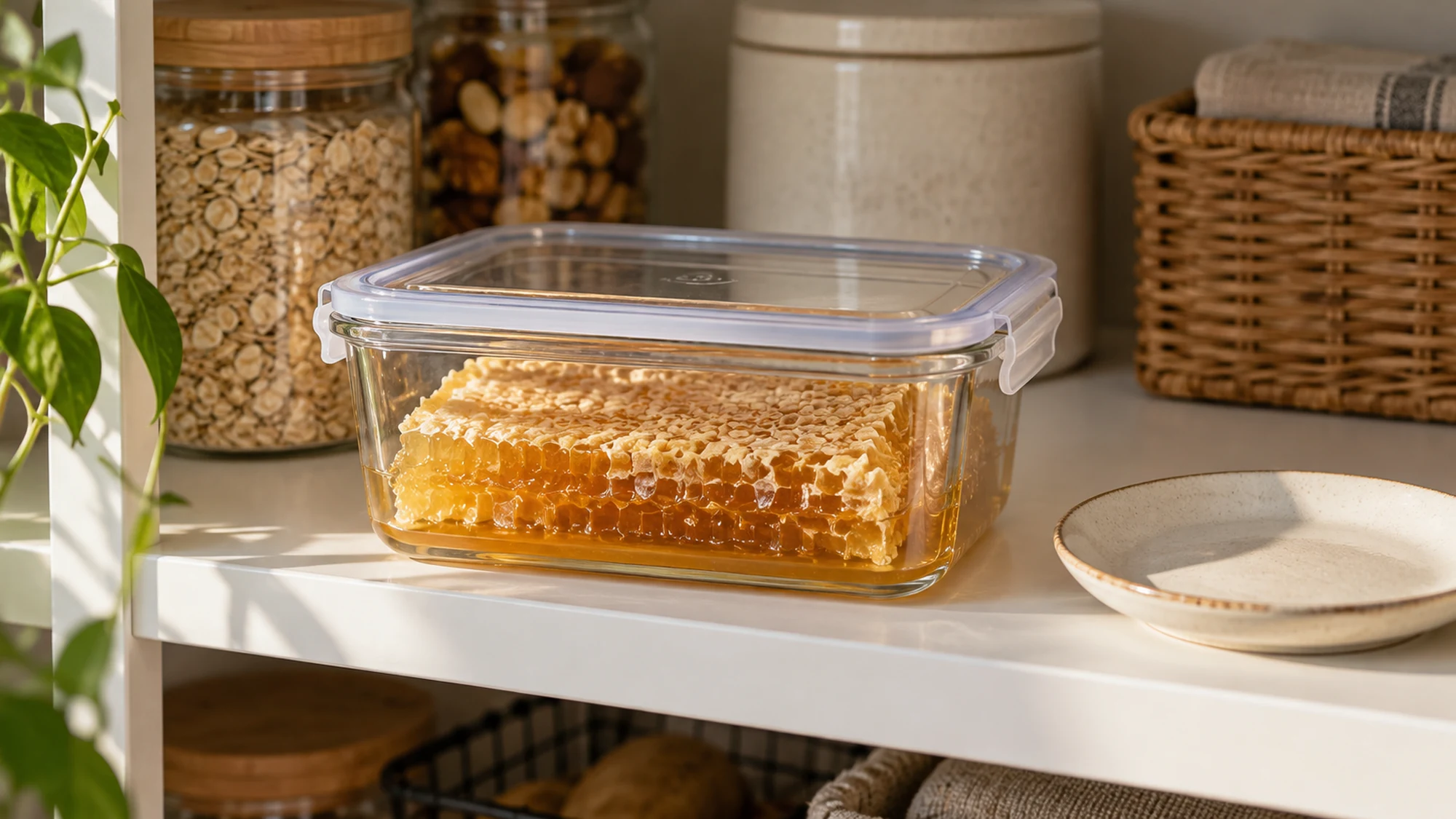
Keep the remaining comb covered in its food-safe container and follow the producer’s storage instructions. Use a clean, dry utensil, and serve a separate portion instead of returning cheese-covered or yogurt-covered pieces to the package. Honey may crystallize naturally, as Purdue’s honey storage leaflet explains; a grainier texture is not automatically proof of spoilage.
For an easy pairing, start with the plain version in our guide to making yogurt at home. Add a small piece at serving time so the honey, creamy yogurt and gentle chew stay distinct.
Choose food-grade honey comb, serve a little and let its texture do the talking. Keep the infant warning clear, and save the rest according to the producer’s directions.

Emily Parker is DISHORA’s recipe-writing persona, bringing a warm, practical voice to everyday cooking. Her focus is simple ingredients, comforting flavors and clear steps that make a dish feel approachable. From cozy dinners to something sweet, Emily’s recipes invite readers to try something delicious and make it their own.