
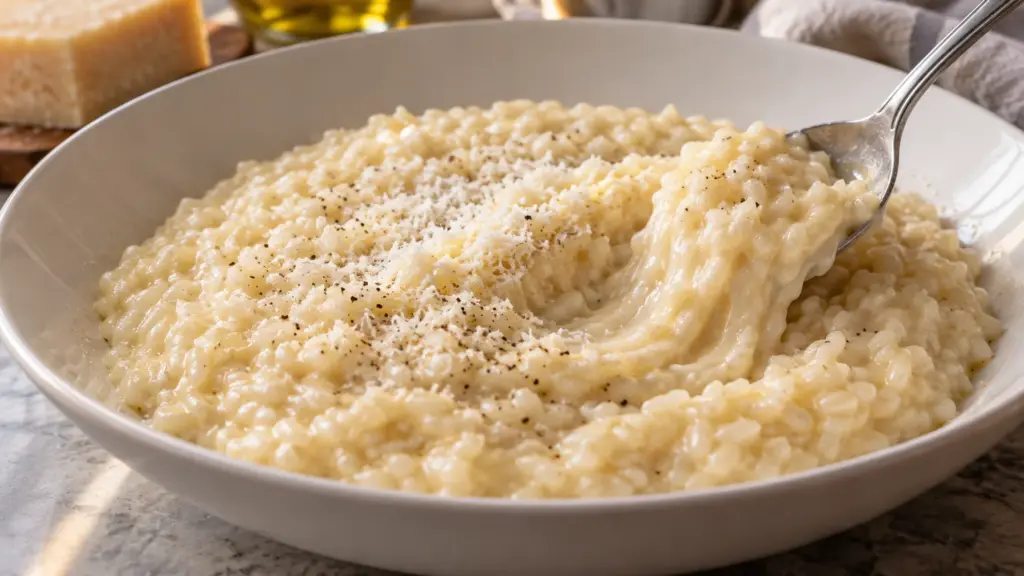
Some dinners ask for a little time beside the stove and reward you with a bowl that feels wonderfully settled. Risotto belongs in that group. This Parmesan version keeps the flavor simple: sweet softened onion, savory broth, butter, and cheese around tender rice with a small, pleasant bite.
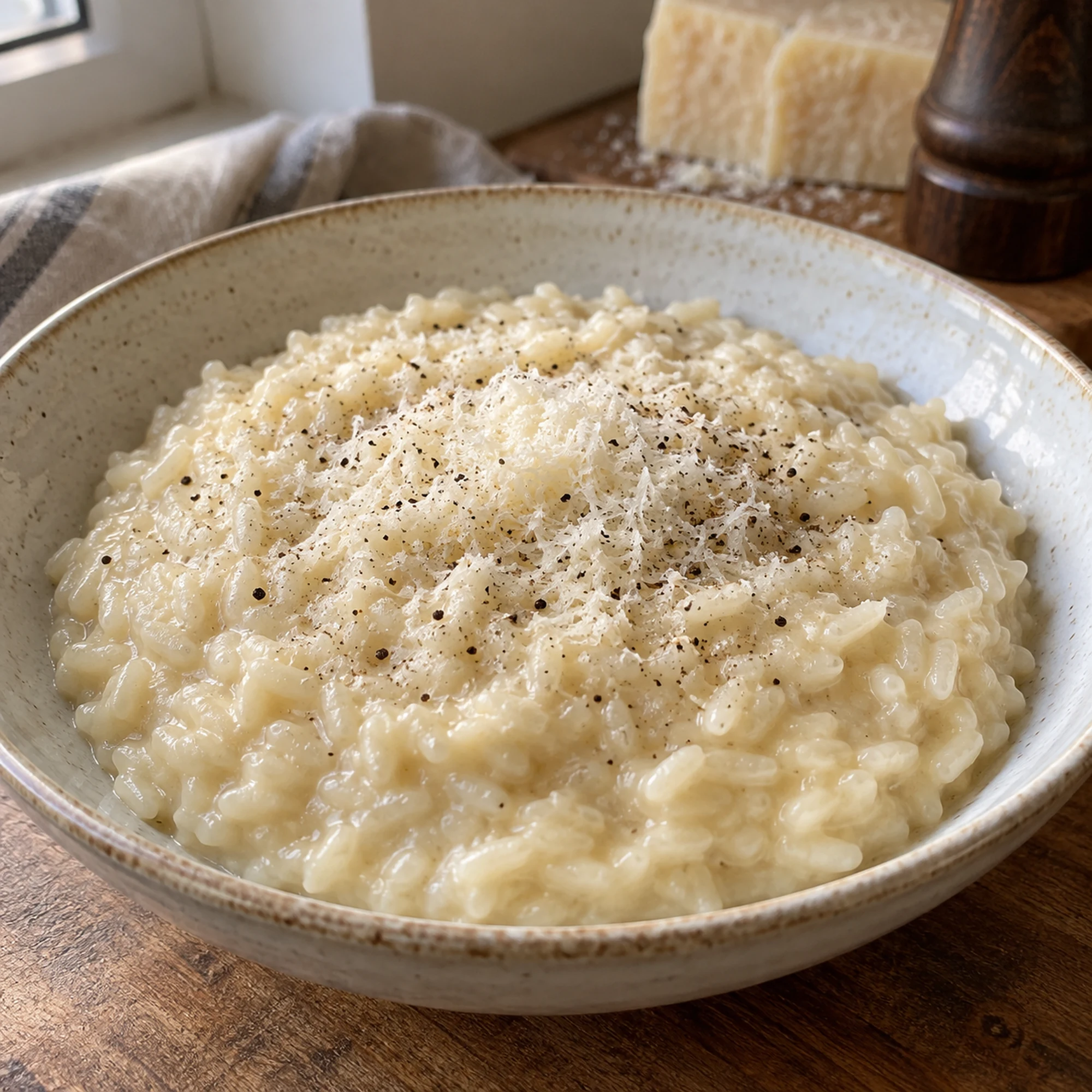
Creamy risotto comes from the rice and the gradual addition of hot broth. Finish with Parmesan off the heat, keep the mixture loose, and bring it straight to the table.
I prefer a plain version when learning the texture because nothing hides the rice. Choose Arborio rice rather than instant rice, and keep the broth warm. The card below makes four moderate portions without cream or wine. Expect some attentive stirring, but there is no need to work the spoon like a workout.
Serving suggestions
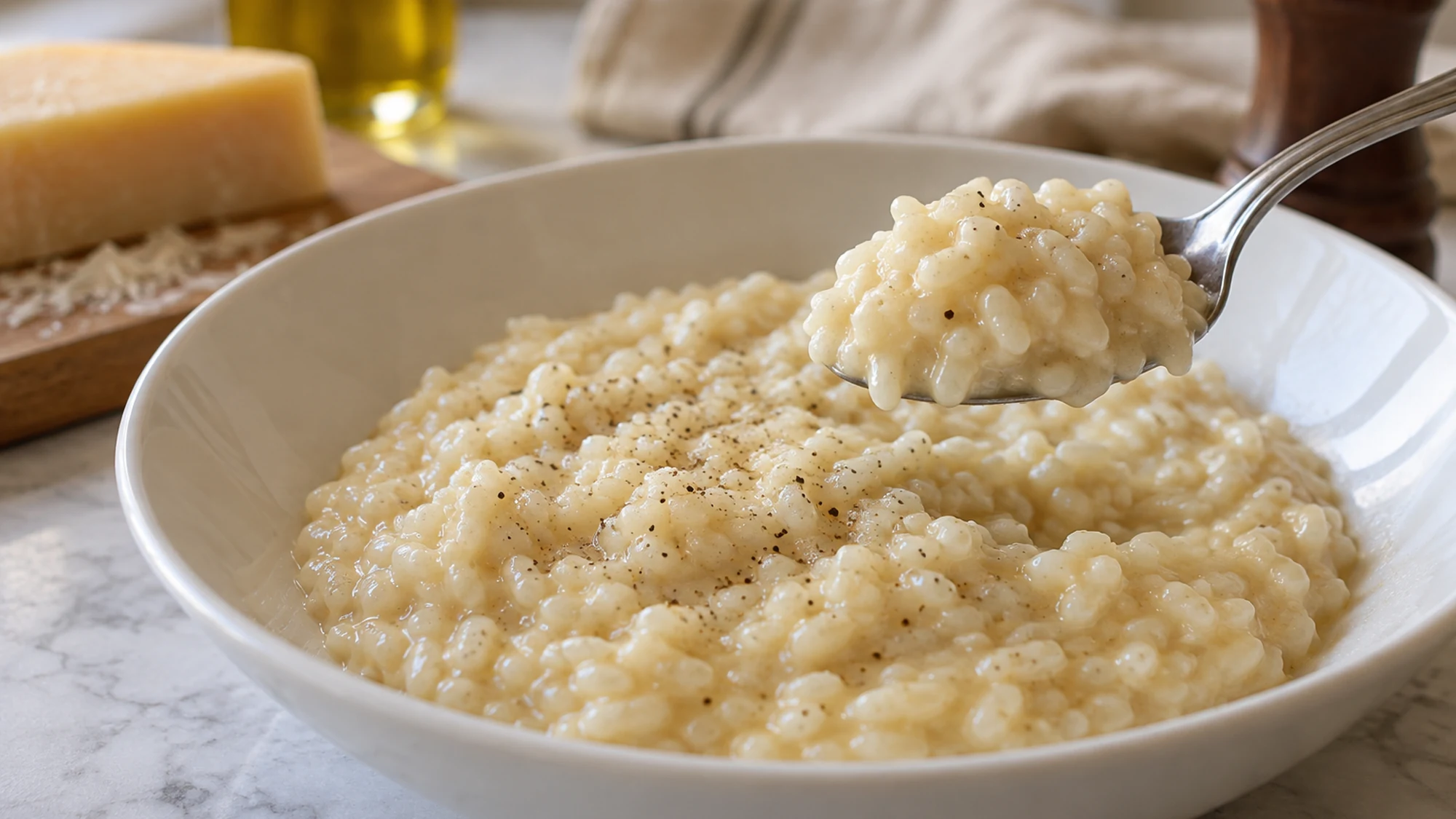
Warm shallow bowls help preserve that lovely flowing texture. Spoon the risotto in and give the underside of each bowl a gentle tap; it should spread slightly rather than sit in a stiff mound. Put everything else on the table before the rice finishes, because it thickens as it stands.
A crisp green salad with a sharp lemon dressing makes a useful partner. Roasted asparagus, broccoli, or green beans add color and a different bite. If you want a larger dinner, serve a smaller scoop alongside simply cooked chicken or fish, with the rice acting as the soft, savory part of the plate.
For another rice dinner, try the different cooking approach in chicken and chorizo paella. Risotto needs a creamy finish; paella aims for a more separate grain. Giving each dish its own texture is more useful than treating every rice recipe alike.
Have the bowls and side dishes ready first. Risotto is at its most inviting when it moves from the saucepan to the table without a long wait.
Variations
The plain Parmesan base leaves room for small changes. Fold in cooked peas at the end, or spoon separately browned mushrooms over individual bowls. Cooking mushrooms separately prevents their released liquid from making the rice unpredictable. A little lemon zest can brighten the finish without turning the whole dish into lemon rice.
Use low-sodium vegetable broth so you can judge the seasoning after the cheese goes in. Chicken broth also works if a meat-free meal is not your aim. Traditional Parmigiano Reggiano uses animal rennet, so choose a clearly labeled vegetarian hard cheese when that matters to your table.
Avoid changing to brown rice and expecting the same timing. Its bran layer changes both cooking time and texture. If the finished risotto becomes too thick, a small splash of hot broth is the practical adjustment. I would make that correction before adding more butter; looseness and richness solve different problems.
Change the toppings freely, but keep the rice variety, hot broth, and final texture in mind. A good variation still lets the grains feel tender and distinct.
Health benefits
Rice contributes carbohydrate, while the cheese adds some protein and calcium. This is still a buttery, cheese-finished rice dish, so portion size and the rest of the plate matter more than a health label. Adding vegetables beside it brings more variety without changing the creamy base everyone came for.
Broth and aged cheese can both contribute considerable sodium. Taste before adding extra salt, and compare broth labels if you are keeping an eye on sodium. The recipe contains milk from butter and Parmesan. Rice is naturally gluten-free, but check broth and cheese packaging when avoiding gluten or other allergens.
Build a balanced plate around the risotto with vegetables and any extra protein you enjoy. Let the recipe be a satisfying part of dinner.
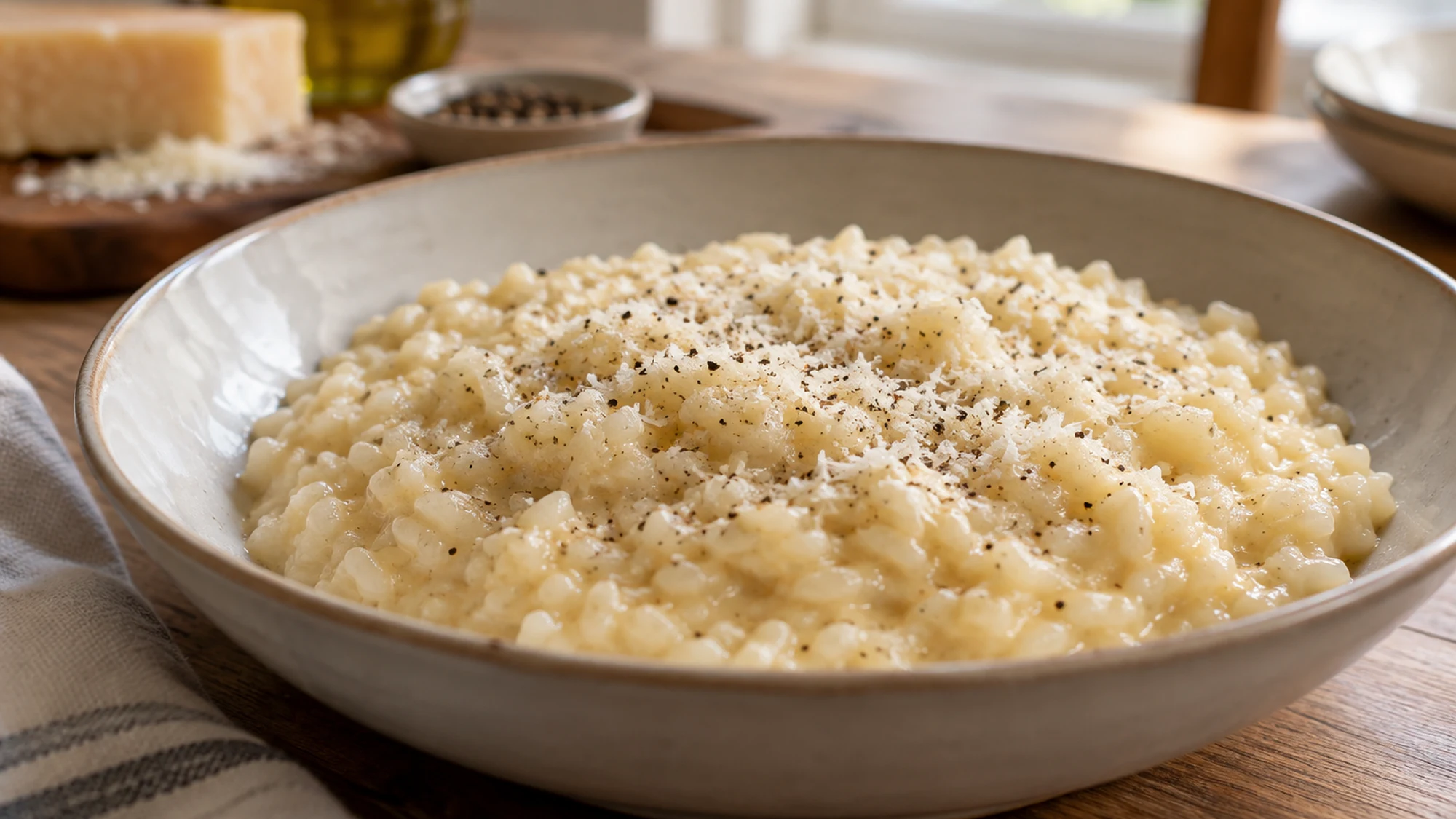
Make time for a bowl of risotto
The most helpful habit is tasting a grain near the end. It should feel tender with a slight center resistance, not chalky or crunchy. Keep a little broth back for the final adjustment, and remember that the cheese will thicken the mixture further.
If you have leftovers, refrigerate them promptly in a shallow covered container, within two hours of cooking, and use within two days. Reheat thoroughly with a splash of water or broth. The texture will be softer and thicker than a freshly finished pan, but it can still make a comforting lunch.
Start with this simple Parmesan risotto and pay attention to the rice. A warm bowl and a creamy, gently flowing finish are plenty of reason to cook.
Risotto Recipe

Ingredients
- 1½ cups Arborio rice
- 4¼ cups low-sodium vegetable broth Keep hot; have a little extra hot water available if needed
- 1 small white onion Finely chopped
- 2 tbsp olive oil
- 3 tbsp unsalted butter Cut into pieces
- ¾ cup finely grated Parmesan cheese About 75 g
- ¼ tsp fine salt Or to taste, depending on broth and cheese
- ¼ tsp black pepper
Equipment
- 1 Wide heavy saucepan About 3-quart capacity
- 1 Small saucepan For the warm broth
- 1 Wooden spoon
- 1 Ladle
- 1 Grater
- 1 Kitchen knife and cutting board
- 1 set Measuring cups and spoons
Instructions
- Warm the vegetable broth in a small saucepan over low heat; keep it hot but not boiling while you cook the rice.
- Heat the olive oil in a wide heavy saucepan over medium-low heat. Add the chopped onion and cook for 5–7 minutes, stirring, until soft and translucent without browning.
- Add the Arborio rice and stir for about 2 minutes, until the grains are hot and lightly translucent at the edges. Do not rinse the rice first.
- Add about ½ cup hot broth and stir frequently until mostly absorbed. Continue adding broth in small ladlefuls, letting each addition mostly absorb before adding more. Keep a gentle simmer. Begin tasting after 16 minutes; cook about 18–22 minutes total, until tender with a slight bite and no chalky center. If broth runs out, use hot water as needed.
- Remove from the heat. Stir in the butter and Parmesan until creamy. Add enough remaining hot broth to make the risotto loose and gently flowing. Taste, add salt as needed and the black pepper, rest for 1 minute, and serve immediately in warm bowls.
Video
Notes
Tried this recipe?
Let us know how it turned out!Emily Parker is DISHORA’s recipe-writing persona, bringing a warm, practical voice to everyday cooking. Her focus is simple ingredients, comforting flavors and clear steps that make a dish feel approachable. From cozy dinners to something sweet, Emily’s recipes invite readers to try something delicious and make it their own.