
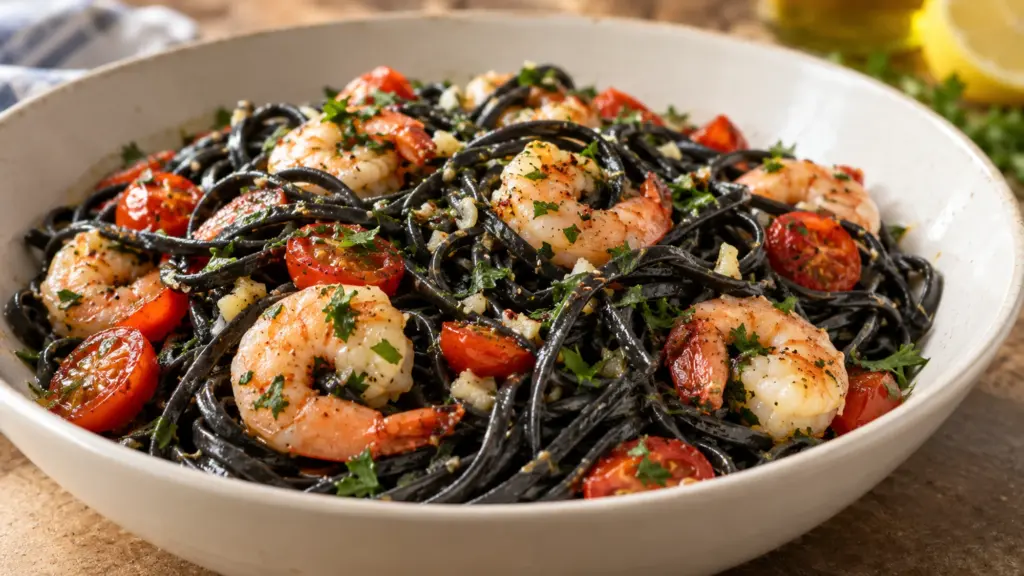
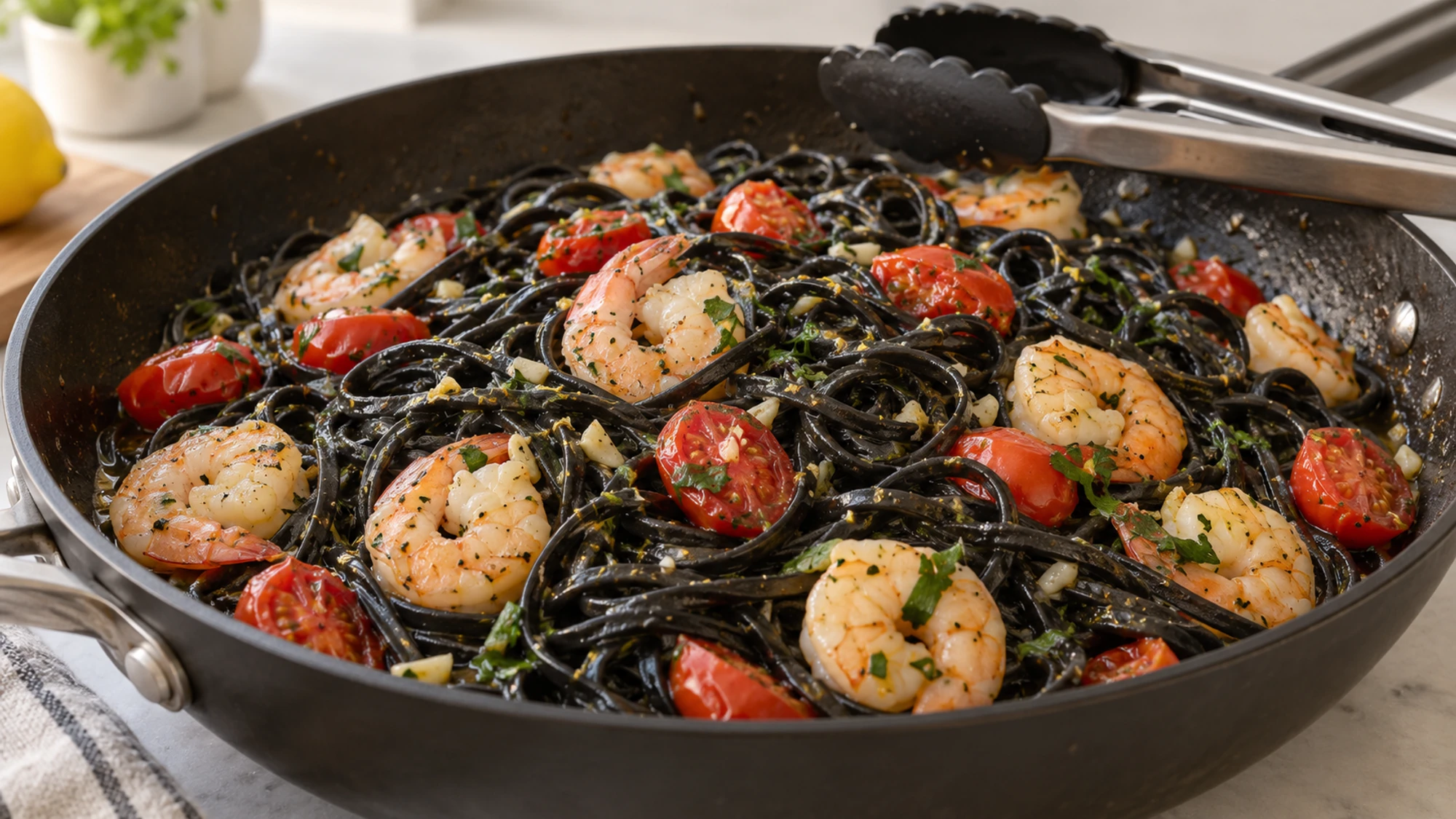
A box of black pasta can make dinner feel a little mysterious before the water even boils. Squid ink pasta is simply pasta colored and flavored with squid or cuttlefish ink; this version pairs store-bought linguine with shrimp, cherry tomatoes, garlic and lemon for a clear, savory seafood dinner.
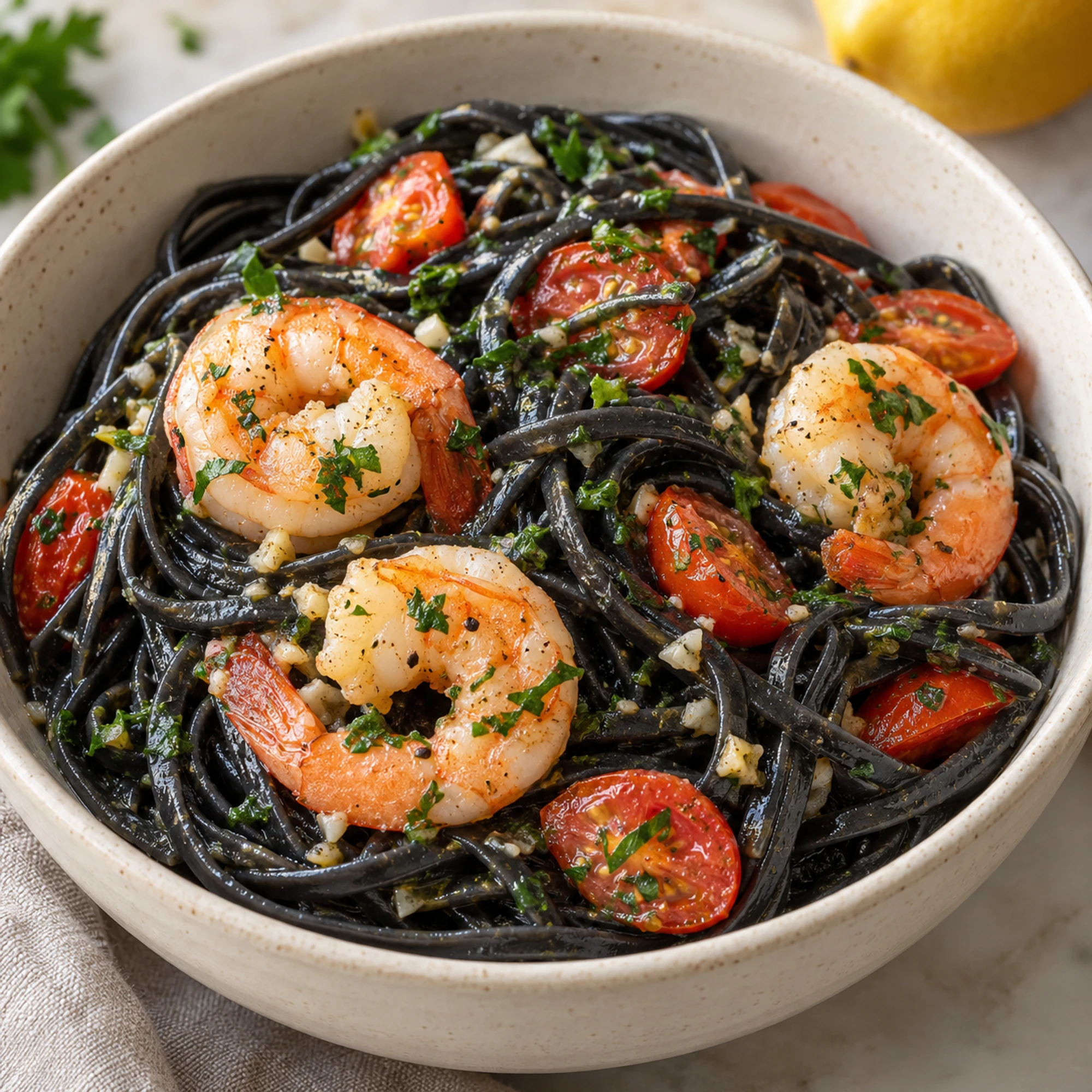
Keep the sauce light and save some pasta water. The black strands, sweet shrimp and softened tomatoes need a gentle coating, while lemon added at the finish brings brightness without hiding the seafood.
I prefer dried squid ink linguine here because the package gives you a dependable cooking guide and the long strands show the sauce beautifully. You do not need separate ink packets or a pasta machine. Check the ingredient label: some black pastas contain egg, and the ink’s animal origin matters when cooking for guests.
The useful trick is managing two different clocks. Pasta needs enough time to become tender with a little bite; shrimp needs only a brief cook. Taking the shrimp out of the skillet while the tomatoes soften prevents it from spending the entire dinner becoming rubbery.
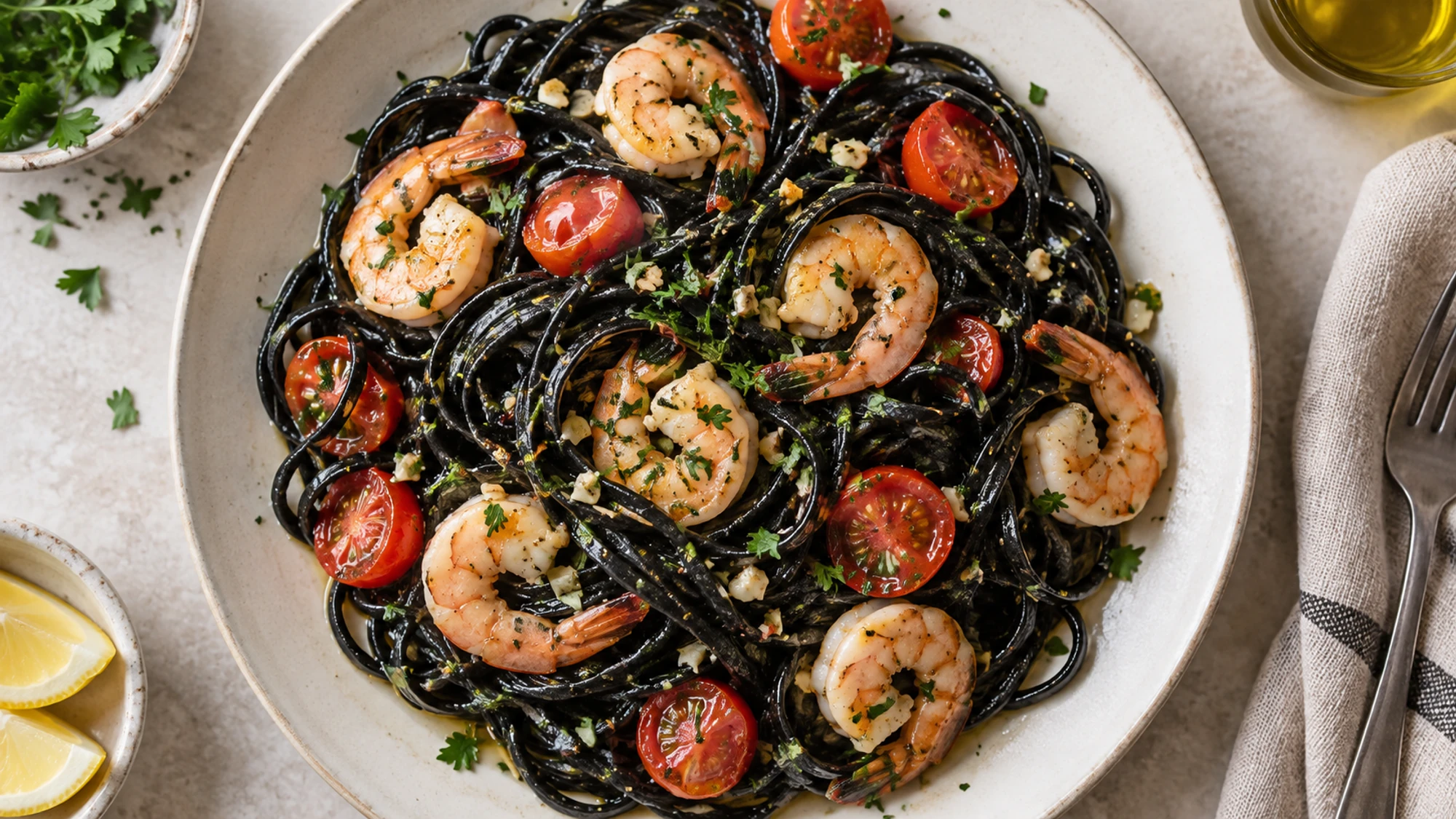
Serving suggestions for squid ink pasta
Serve this pasta as soon as it is tossed, in shallow bowls that keep the shrimp and tomatoes within easy reach. The sauce should look glossy rather than oily, with a little moisture clinging to the strands instead of gathering in a puddle.
- Add a crisp green salad with a mild lemon dressing. Peppery greens contrast nicely with the pasta, but a heavily sweetened dressing can compete with the tomatoes.
- Set out lemon wedges for individual adjustment. Taste your bowl before squeezing: the recipe already includes citrus, and a sharp second dose can overwhelm the shrimp.
- Keep bread optional and simple. A small piece can collect the remaining sauce without turning this into a bread-and-pasta obstacle course.
- For another tomato-forward pasta night, try Dishora’s baked feta pasta. It gives you a creamy oven-made option with a different flavor profile.
Give the pasta a fresh, crunchy companion and let diners adjust the lemon. Serve promptly so the sauce stays loose and the shrimp keeps its tender texture.
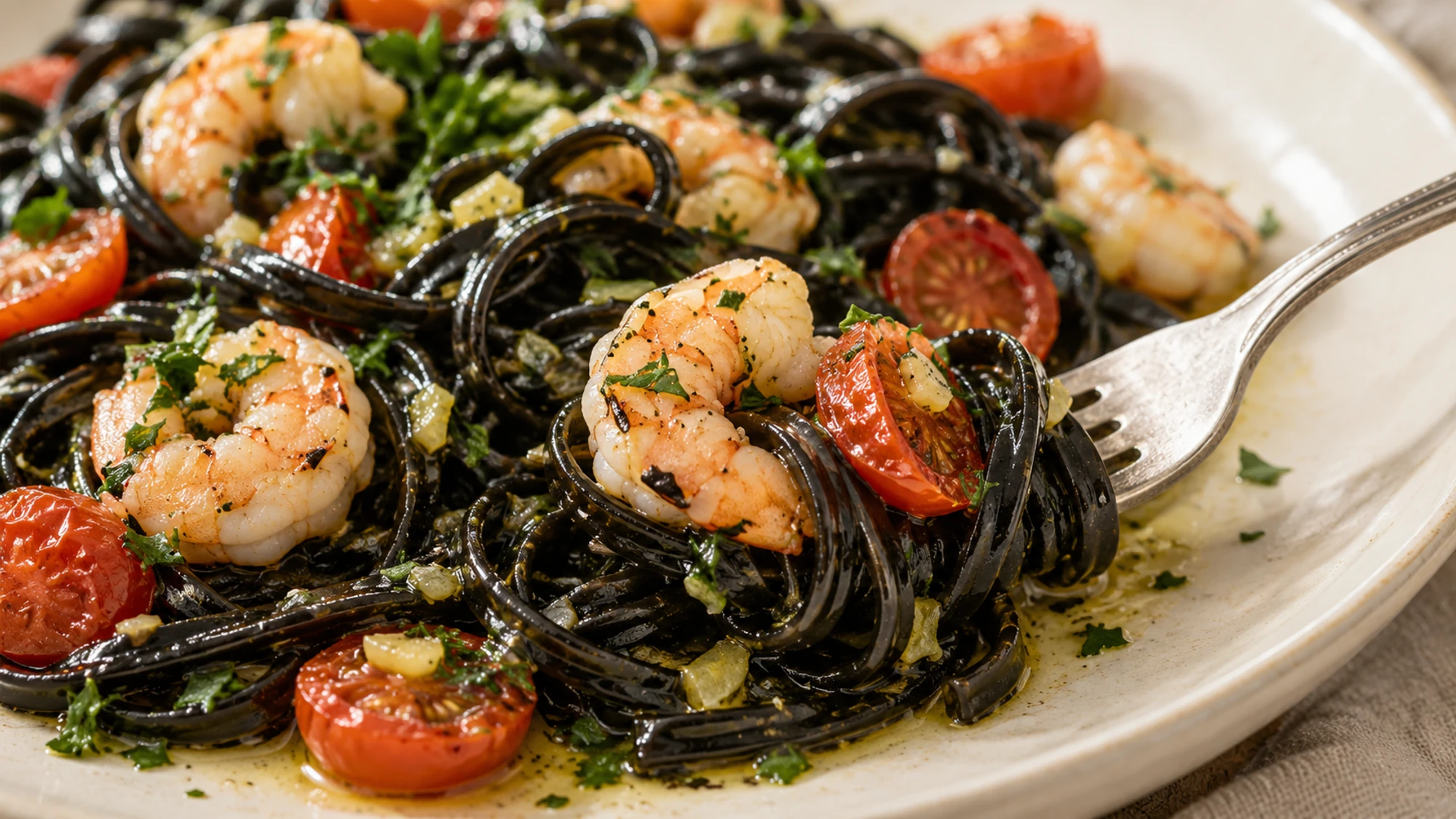
Variations that keep the sauce balanced
Squid ink pasta is already visually distinctive, so I would change one supporting ingredient at a time. A little heat or a different herb can work; a large splash of cream creates a heavier dish and covers the delicate seafood flavor.
- Use regular linguine when black pasta is unavailable. The cooking method still works, but the color and subtle marine flavor will change.
- Add a small pinch of red pepper flakes with the garlic for gentle warmth. Keep it modest if you want the shrimp’s sweetness to remain noticeable.
- Swap parsley for a little torn basil. Add it near the end so its fresh aroma survives, and expect a more herbal, tomato-focused finish.
- Use thawed frozen shrimp, patted thoroughly dry. Excess surface water makes the pan steam and dilutes the tomato juices before they can concentrate.
Keep the original light sauce as your starting point. Change the pasta, heat or herb thoughtfully, and adjust cooking times to the ingredient you actually use.
Health benefits in the context of the meal
Shrimp contributes protein, while the pasta supplies carbohydrates and the tomatoes add produce to the bowl. Olive oil adds fat and helps carry flavor. Those ingredients can fit a varied meal; the black color itself is not evidence that this pasta has exceptional health benefits.
- Portions matter. The card makes four servings, and its nutrition estimate includes the full measured oil rather than assuming none reaches the plate.
- Choose sides according to your appetite. Extra vegetables add variety; they do not need to be used to compensate for eating pasta.
- Check allergens carefully. This dish includes wheat, shrimp and squid or cuttlefish ink; pasta brands may also contain egg.
Enjoy the combination for its food and flavor. Read labels, keep the serving estimate realistic and treat the vegetables, pasta and seafood as parts of the same meal.
A little organization makes the finish easier
Have the tomatoes cut, garlic chopped and lemon ready before the skillet heats. Once the shrimp begins cooking, there is very little spare time for hunting through the refrigerator. The final toss should feel like bringing prepared pieces together, not starting a second recipe.
- Use the package’s pasta timing as your guide, then taste a strand before draining.
- Follow the seafood cooking cues: shrimp flesh should be pearly or white and opaque.
- Keep the seafood handling basics in mind when thawing and storing shrimp.
The payoff is a striking bowl built from familiar kitchen decisions: moderate heat, a little reserved water and a bright final squeeze. Start with the measured recipe, then let your own preference guide the lemon and pepper at the table.
Squid Ink Pasta Recipe

Ingredients
- 12 oz dried squid ink linguine 340 g; check package for egg and seafood ingredients
- 1 lb raw large shrimp 454 g, thawed, peeled and deveined; tails may be left on for presentation or removed
- 10 oz cherry tomatoes 283 g, halved
- 3 tablespoons extra-virgin olive oil divided
- 4 cloves garlic about 12 g, minced
- 1 lemon finely zest, then measure 2 tablespoons juice; wedges from remainder optional
- 2 tablespoons fresh parsley about 8 g, chopped
- 1/4 teaspoon fine salt for shrimp; pasta cooked in unsalted water
- 1/4 teaspoon black pepper
- 1/2 cup reserved pasta cooking water add only as needed
Equipment
- Large pasta pot and colander
- 12-inch skillet
- Heatproof measuring cup
- Tongs, knife, cutting board and fine grater
Instructions
- Pat the thawed shrimp dry. Halve the tomatoes, mince the garlic and chop the parsley. Finely grate the lemon zest without the white pith, then measure 2 tablespoons lemon juice. Bring a large pot of unsalted water to a boil.
- Cook the squid ink linguine according to its package directions until just al dente. Before draining, reserve 1/2 cup cooking water in a heatproof cup. Drain without rinsing; time this to finish as the tomatoes soften.
- Meanwhile heat 1 tablespoon olive oil in a large skillet over medium-high heat. Add the shrimp in one layer and season with the salt and black pepper. Cook about 1–2 minutes per side, depending on size, until the flesh is pearly or white and opaque throughout. Transfer to a clean plate.
- Reduce the skillet to medium heat. Add the remaining 2 tablespoons oil and garlic; stir for about 30 seconds until fragrant, without browning. Add the tomatoes and cook 4–5 minutes, stirring, until their edges soften and release some juice.
- Add the drained pasta and 2 tablespoons reserved water to the skillet. Toss gently for 1 minute, adding more water a tablespoon at a time until lightly coated. Fold in the cooked shrimp, lemon zest, measured lemon juice and parsley; warm briefly without prolonged simmering. Divide into four portions and serve immediately.
Nutrition
Notes
Tried this recipe?
Let us know how it turned out!Emily Parker is DISHORA’s recipe-writing persona, bringing a warm, practical voice to everyday cooking. Her focus is simple ingredients, comforting flavors and clear steps that make a dish feel approachable. From cozy dinners to something sweet, Emily’s recipes invite readers to try something delicious and make it their own.