
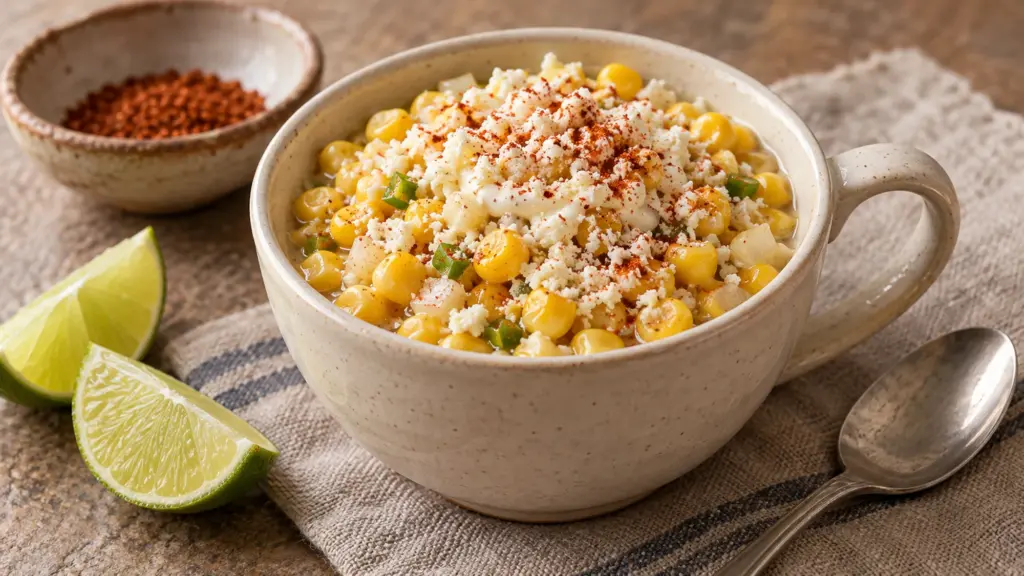
A warm cup of esquite brings sweet corn, tangy lime, salty cheese, and a little chile together in one spoonful. This version gently simmers fresh kernels with onion, keeping them juicy instead of charred. A modest topping of mayonnaise and Cotija gives the corn a creamy finish without covering up its sweetness.
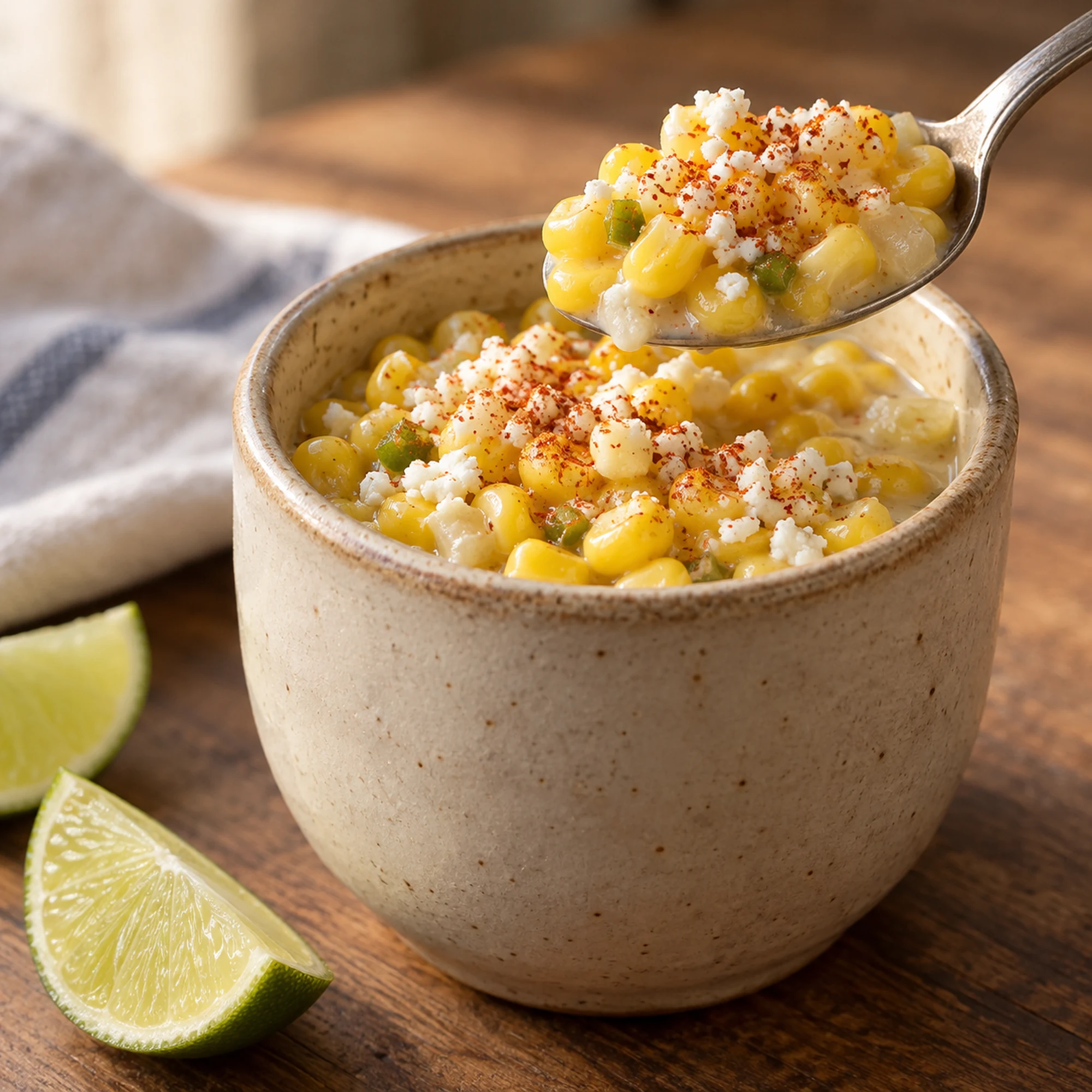
Keep a little cooking liquid with the corn: that warm, savory spoonful is part of the pleasure.
The recipe makes four snack portions, ready in about thirty minutes. It uses fresh sweet corn commonly sold in US supermarkets, whose tenderness differs from the firmer corn used in many Mexican preparations. Check a kernel as it cooks; the right stopping point is tender with a pleasant bite, rather than an arbitrary extra few minutes.
An optional sprig or two of epazote brings a distinctive herbal aroma to the saucepan. Remove the sprigs before serving. If you cannot find the herb, leave it out; the onion, lime, and corn still make a satisfying combination. The complete quantities and method are in the card below.
Serving suggestions
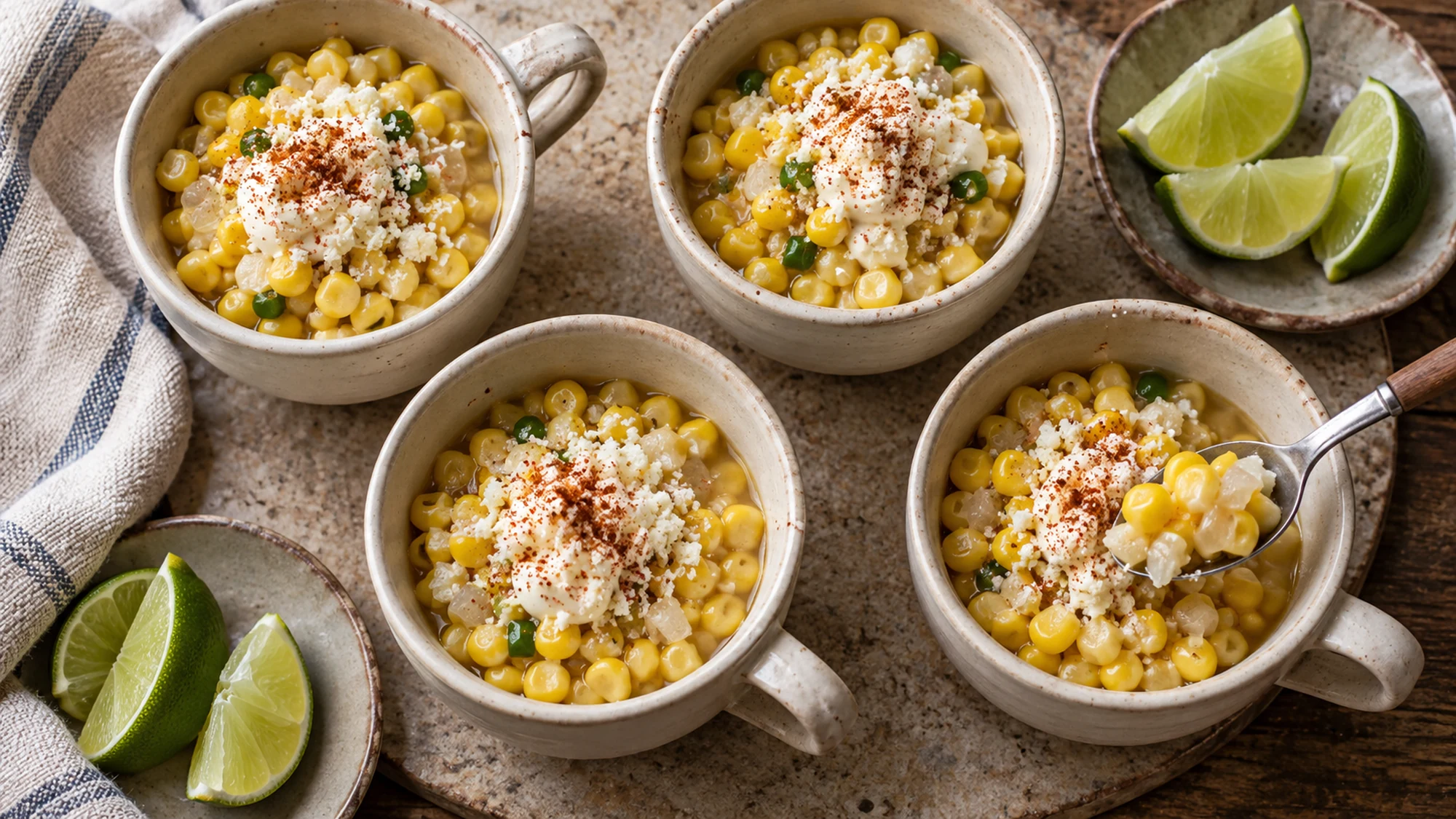
Divide the warm corn between four sturdy cups or small bowls, taking a little broth with each portion. Add the toppings just before serving so the cheese stays crumbly and the mayonnaise softens against the warm kernels. Small spoons make these comfortable to eat at the table or during an informal gathering.
For a longer meal, serve a corn cup before sopa de lima, or set it alongside tacos, grilled vegetables, or beans. Keep the portions smaller when several dishes share the table. A lime wedge and a separate dish of chile powder let guests adjust their own finish.
If serving buffet style, keep the corn hot and set out small amounts of refrigerated toppings, refreshing them as needed. Avoid leaving the assembled cups at room temperature for hours. Refrigerate leftovers promptly, within two hours, and store corn and toppings separately when possible.
Finish each cup at the table so everyone gets the balance of lime, cheese, and heat they enjoy.
Variations
For a gentler cup, omit the optional serrano and pass the chile powder separately. Removing the pepper’s seeds and membranes can reduce some heat, but peppers still vary. If cooking for people who dislike heat, skipping the fresh pepper is more dependable than guessing how mild one will be.
Frozen corn is a practical alternative when fresh ears are unavailable. Use the same measured amount of kernels, follow any package cooking instructions, and then check the tenderness in the saucepan. Expect a different texture from freshly cut corn. Canned corn needs draining and a shorter warming period; do not apply the fresh-corn timing automatically.
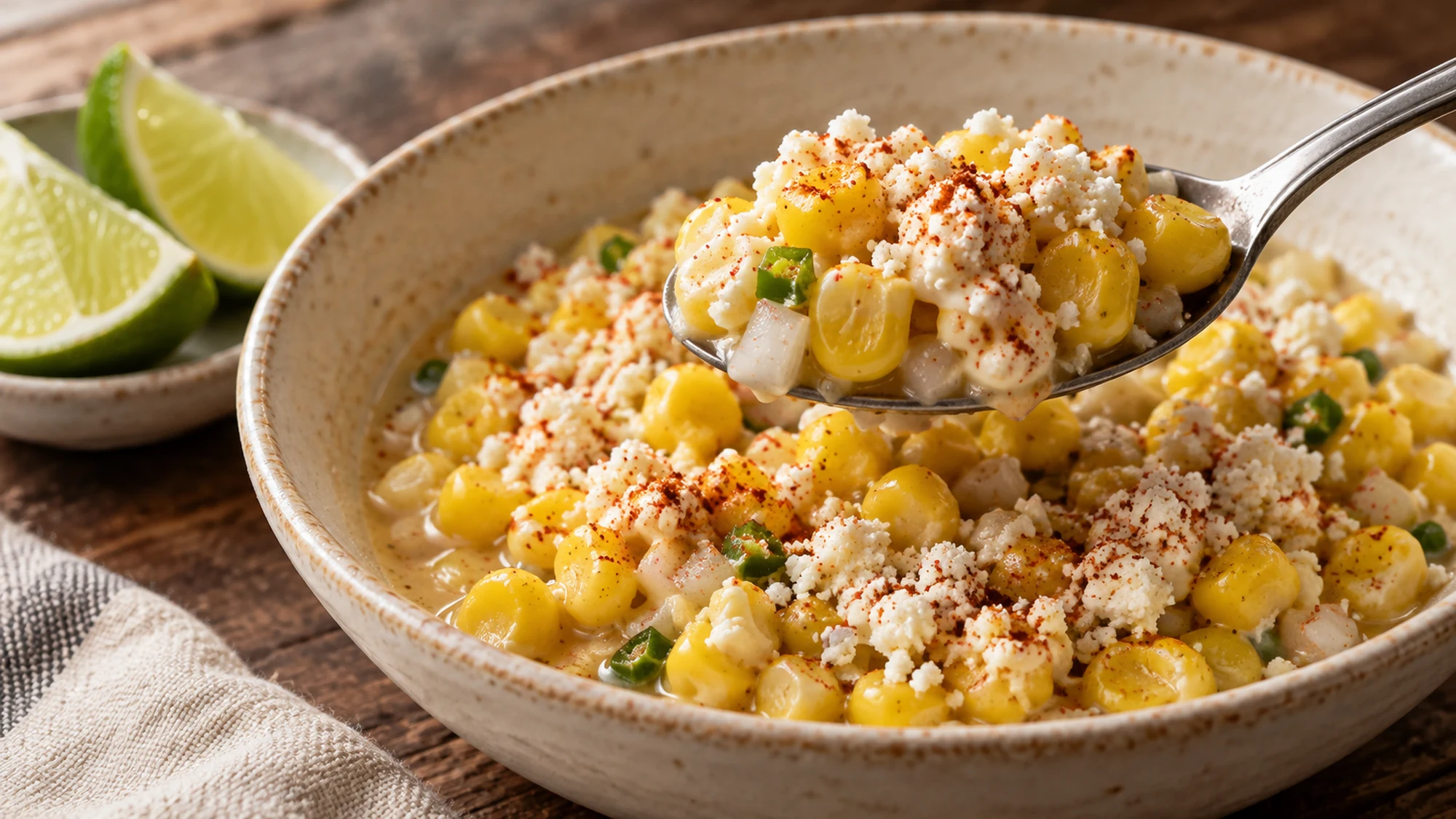
Mexican crema can replace the mayonnaise for a tangier finish, changing the flavor and allergen profile. Cotija contributes a salty, crumbly topping; if choosing a substitute cheese, start with less and taste. A dairy-free version needs both a butter replacement and a cheese alternative, with labels checked.
Change one topping at a time, then taste before adding more salt or chile.
Health benefits
Corn contributes carbohydrate for energy and some dietary fiber. This is a snack or side dish with dairy and a creamy topping, so its overall nutrition depends on the portion and finishing choices. It does not need a detox claim or a promise about weight loss to deserve a place at the table.
Using measured toppings makes their contribution easier to understand. Cheese and added salt both affect sodium, while butter and mayonnaise add fat. Choose a smaller portion if that suits your meal, or pair the corn with beans and vegetables for more variety. Individual dietary needs and product labels matter more than a broad healthy label.
The standard recipe contains milk and usually egg through mayonnaise. Check the mayonnaise, cheese, and seasoning labels for other allergens. When reheating leftover corn, heat it thoroughly until steaming hot, then add fresh chilled toppings. Use refrigerated leftovers within three to four days.
Enjoy the corn for its flavor, and let portion size and the rest of the meal guide your choices.
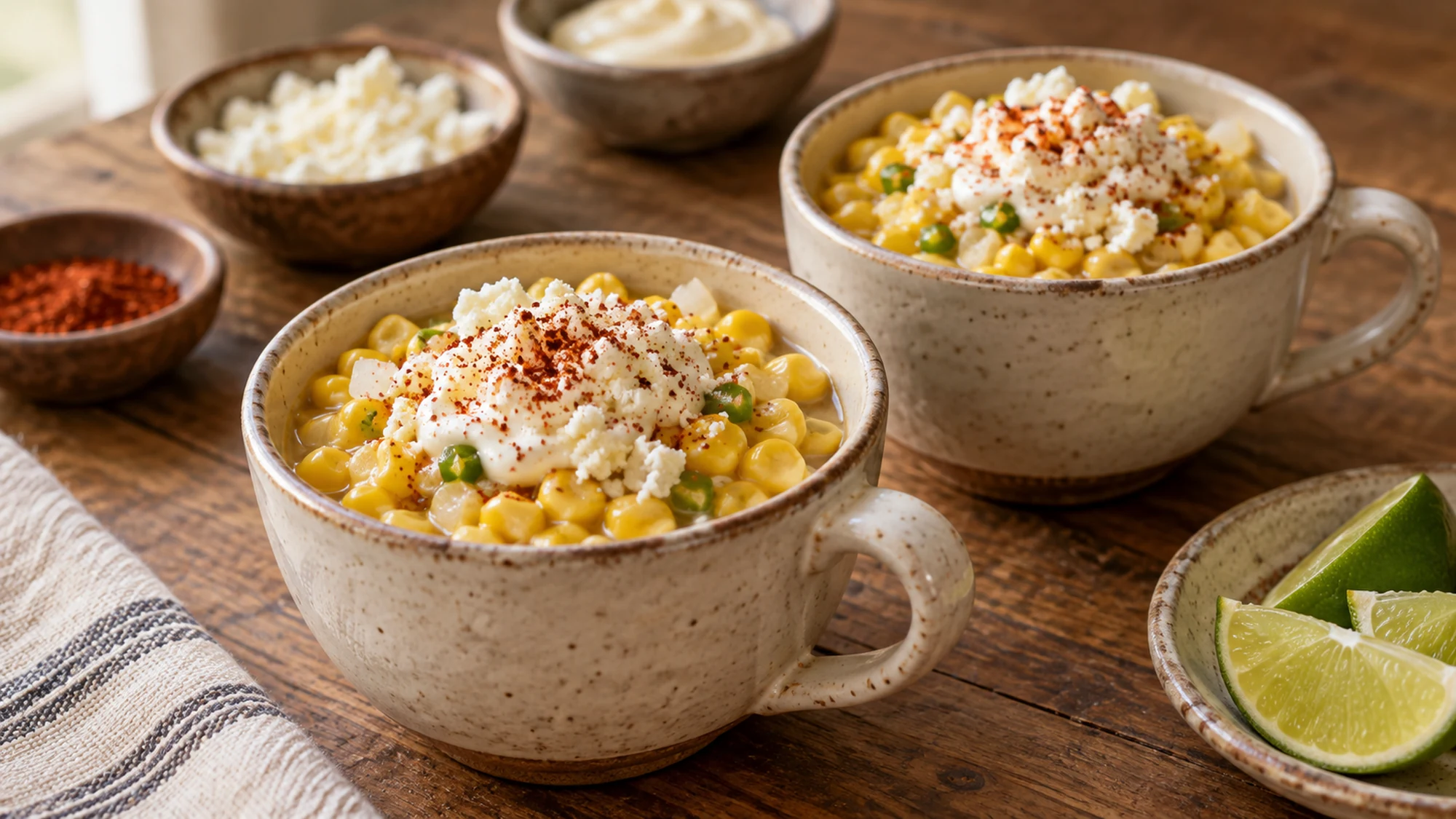
Make a warm cup to share
Start with good corn and a few small topping dishes. Once you have tasted the first warm spoonful, adjusting the lime and chile is straightforward. Save this esquite recipe for a casual supper, and use the card below to keep the quantities consistent from one batch to the next.
A saucepan of tender corn and a bright squeeze of lime can make a simple gathering feel welcoming.
Esquite Recipe

Ingredients
- 4 cups fresh sweet corn kernels cut from about 6 husked ears; measure after cutting
- 1 tbsp unsalted butter
- 0.25 cup white onion finely chopped
- 1 serrano chile optional; seeded and finely chopped
- 2 sprigs fresh epazote optional; remove before serving
- 1 cup water
- 0.25 tsp fine salt
- 2 tbsp mayonnaise
- 0.25 cup Cotija cheese finely crumbled
- 2 tbsp fresh lime juice about 1 lime
- 0.25 tsp ground chile piquin divide between cups; use less for milder heat
Equipment
- 1 Medium saucepan with lid
- 1 Wide bowl
- 1 Stable cutting board and chef’s knife
- 1 Wooden spoon
- 1 Set measuring cups and spoons
- 4 Serving cups or small bowls
Instructions
- Stand each husked corn ear upright in a wide bowl on a stable cutting board and carefully slice downward to remove the kernels; measure 4 cups.
- Melt the butter in a medium saucepan over medium heat. Add the onion and optional chopped serrano; cook, stirring, for about 3 minutes until softened without browning.
- Add the measured corn, water, salt, and optional epazote sprigs. Bring to a simmer, cover, and cook gently for 8–12 minutes, stirring occasionally, until the sweet corn is tender with a little bite. Add a small splash of water if the pan dries before the corn is tender. Remove the epazote sprigs.
- Divide the warm corn and a little cooking liquid between 4 cups. Top each with one-quarter of the mayonnaise, Cotija, lime juice, and chile piquin. Serve immediately with spoons.
Video
Notes
Tried this recipe?
Let us know how it turned out!Emily Parker is DISHORA’s recipe-writing persona, bringing a warm, practical voice to everyday cooking. Her focus is simple ingredients, comforting flavors and clear steps that make a dish feel approachable. From cozy dinners to something sweet, Emily’s recipes invite readers to try something delicious and make it their own.