
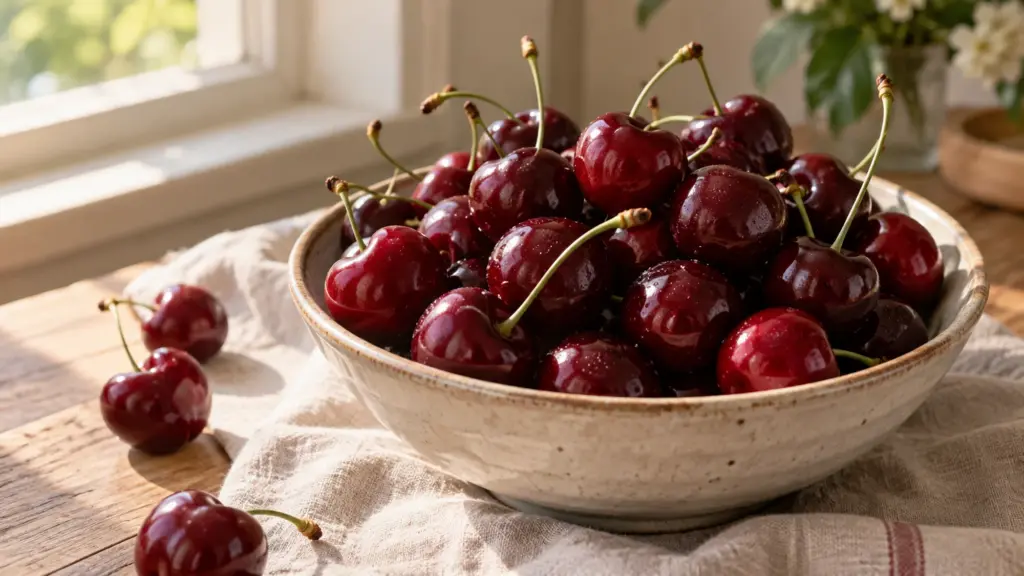
A bowl of cherries brings crisp skins, juicy flesh and a practical question: are cherries good for you, or just another fruit with an oversized reputation? The everyday nutritional case is easier to make than the promises about sleep, recovery and miracle fixes.
Yes, cherries can be a nutritious part of a varied diet. Whole sweet cherries provide fiber, vitamin C and potassium. Research on specific benefits often uses tart-cherry juice or concentrates, so it should not be treated as proof that a bowl of fresh cherries prevents or treats disease.
What a cup of sweet cherries contributes
University Hospitals’ nutrient reference gives these rounded amounts for one cup of raw sweet cherries without pits. Actual fruit size, variety and how closely the cup is packed affect your portion.
| Nutrient | Reference amount |
|---|---|
| Energy | 91 calories |
| Carbohydrate | 23.2 g |
| Fiber | 3.0 g |
| Vitamin C | 10 mg |
| Potassium | 322 mg |
This is a reference portion, not a requirement to finish a cup whenever you eat cherries. The fruit supplies carbohydrate as well as nutrients; your needs depend on the rest of the meal and your own circumstances.
Whole fruit, juice and sweetened cherries differ
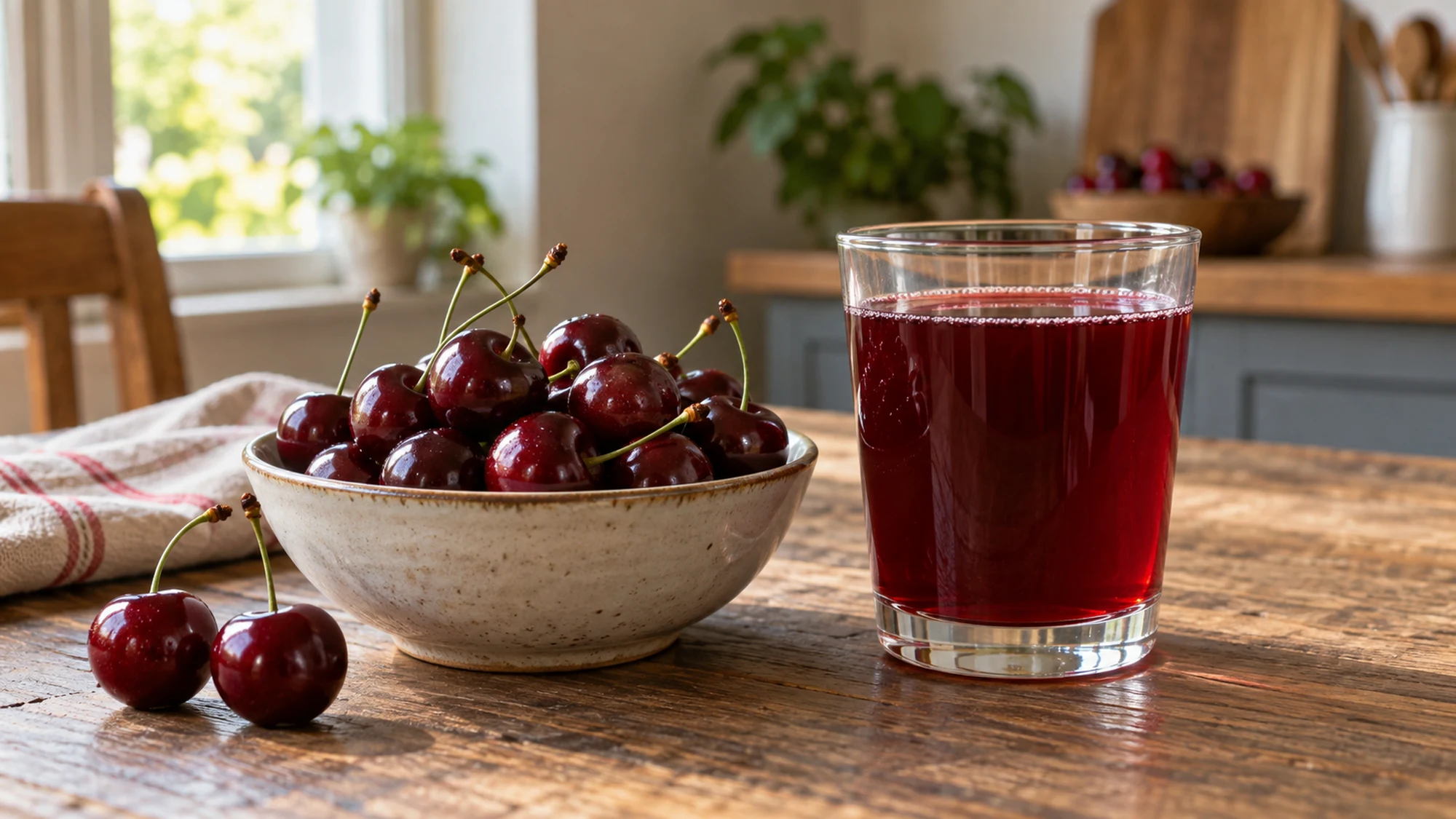
The CDC favors whole fruit for its fiber and notes that many fruit juices contain little or none. A juice, a dried-fruit handful and a bowl of fresh cherries should not share the same nutrition estimate.
- Fresh or plain frozen: Useful whole-fruit options; check frozen products for added ingredients.
- Dried: Compare the actual serving and added-sugar information rather than measuring it like fresh fruit.
- Canned or jarred: Read whether cherries are packed in juice, syrup or a sweetened preparation.
- Juice or concentrate: Follow the product’s serving directions; a small amount of concentrate is different from ready-to-drink juice.
Sweet cherries commonly eaten fresh and tart cherries used in many studies are related foods with different flavors and compositions. A product being more sour does not automatically make it a better choice for your health.
I’d buy the form that fits how I plan to eat it. Fresh cherries are lovely for their juicy bite; a concentrate deserves a label check rather than a whole-fruit halo.
What the sleep and recovery research really shows
A 2018 review of human cherry studies included sweet and tart cherries plus products such as juice, powder and concentrate. Many studies were short, and the preparations and outcomes differed. That makes sweeping claims about everyday fruit portions difficult.
In a 2018 placebo-controlled crossover sleep trial, eight completers over age 50 with insomnia consumed tart-cherry juice or placebo for two weeks per intervention. Some sleep measures improved, but this small, specific study does not establish fresh sweet cherries as an insomnia treatment.
- A change in a laboratory marker is not the same as proven disease prevention.
- Results in a particular athlete group do not guarantee recovery benefits for everyone.
- Persistent sleep trouble, pain or other symptoms deserve appropriate care rather than reliance on fruit products.
Build an ordinary serving you enjoy
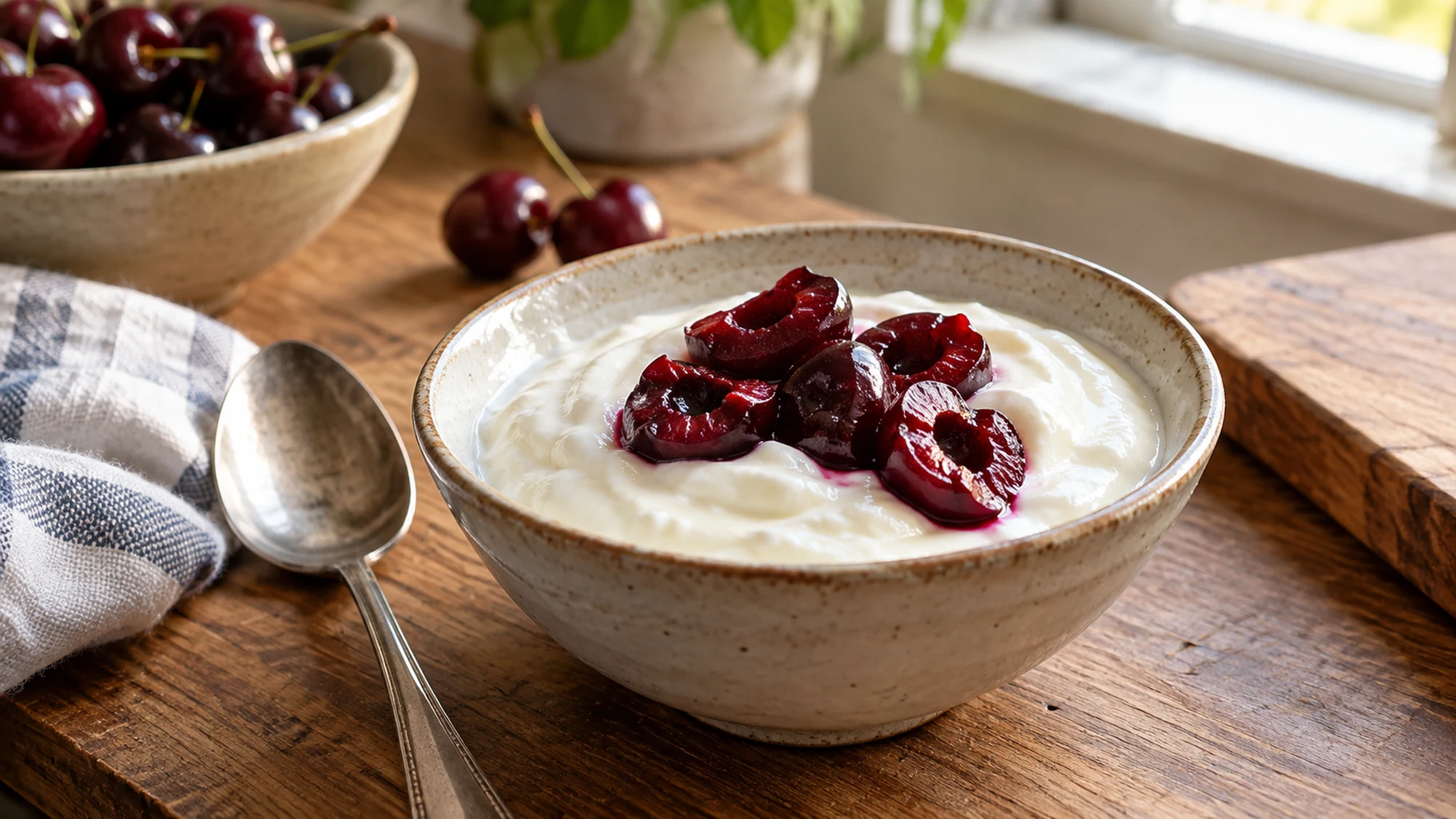
Start with a bowl or measured portion that suits your appetite. Pitted cherries can go beside oats, into plain yogurt or alongside a meal. You do not need to reproduce a research dose to make them worth eating.
For a dessert option, serve pitted cherry halves alongside DISHORA’s yogurt biscuit cups. The cookie layers and fruit play different roles; adding cherries does not turn the finished dessert into a clinical intervention.
- Compare portions consistently if you are tracking carbohydrate.
- If a large helping leaves you uncomfortable, try less rather than treating more as automatically better.
- Rotate cherries with other fruits instead of asking one seasonal food to cover every nutritional need.
I prefer a small bowl of cherries I want to eat to a large glass of juice taken as a chore. Flavor is a perfectly useful reason to include fruit.
Wash, pit and keep them chilled
The FDA recommends rinsing produce under plain running water, without soap or produce wash. Use clean hands and utensils, remove damaged areas, and keep perishable produce refrigerated at 40°F (4°C) or below.
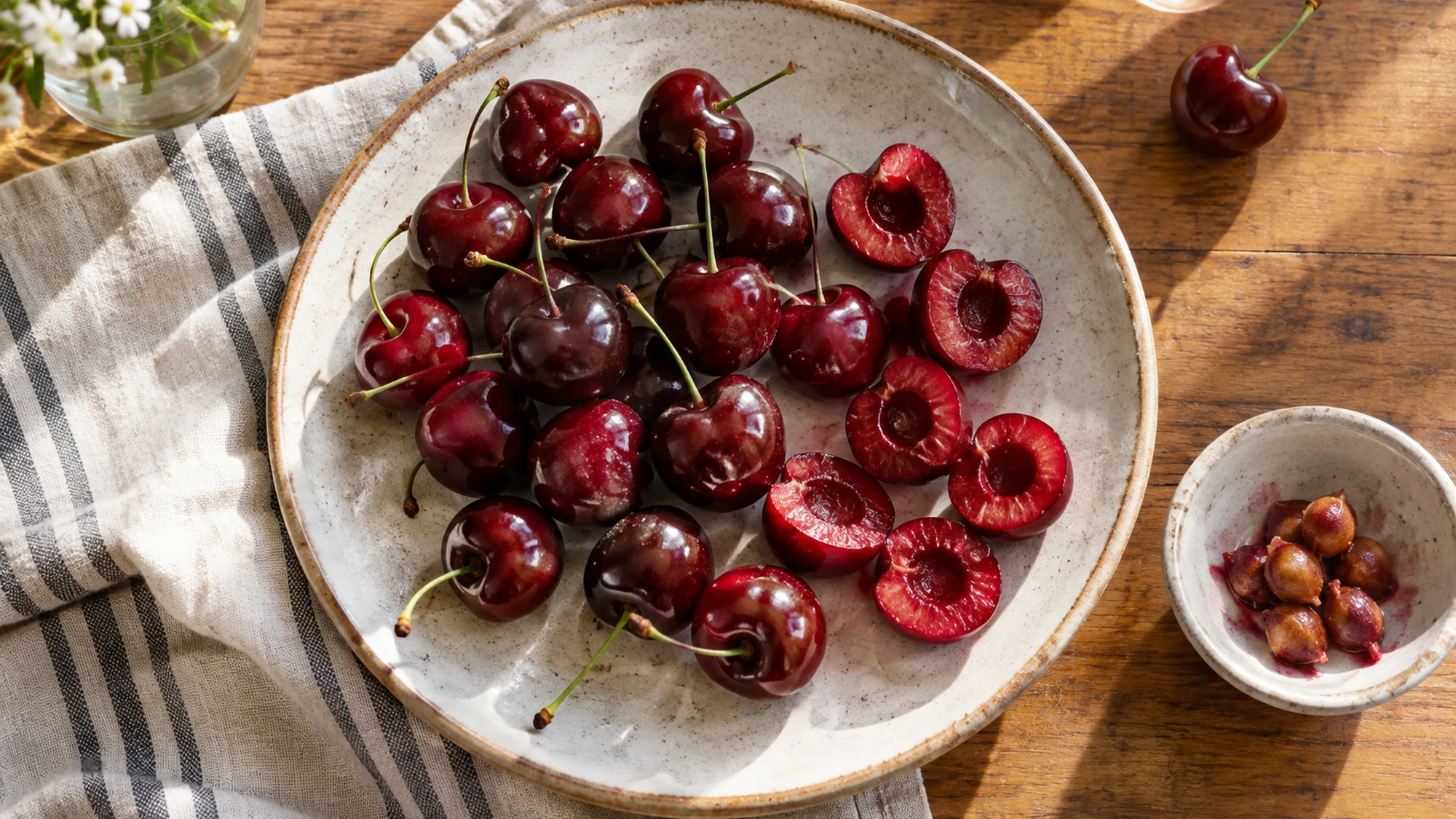
Remove pits before mixing cherries into yogurt or a shared dish, and check each prepared piece. A small dish for discarded pits keeps preparation tidy and makes it easier to separate the edible fruit from the waste.
Cherries earn their place as enjoyable whole fruit with useful nutrients. Choose a portion and form that work for you, keep preparation safe, and leave the strongest health promises where they belong: under careful scrutiny.
Sources
- University Hospitals: cherry nutrition
- CDC: whole fruit and juice
- Kelley and colleagues: cherry review
- Losso and colleagues: sleep pilot trial
- FDA: produce preparation

Emily Parker is DISHORA’s recipe-writing persona, bringing a warm, practical voice to everyday cooking. Her focus is simple ingredients, comforting flavors and clear steps that make a dish feel approachable. From cozy dinners to something sweet, Emily’s recipes invite readers to try something delicious and make it their own.