
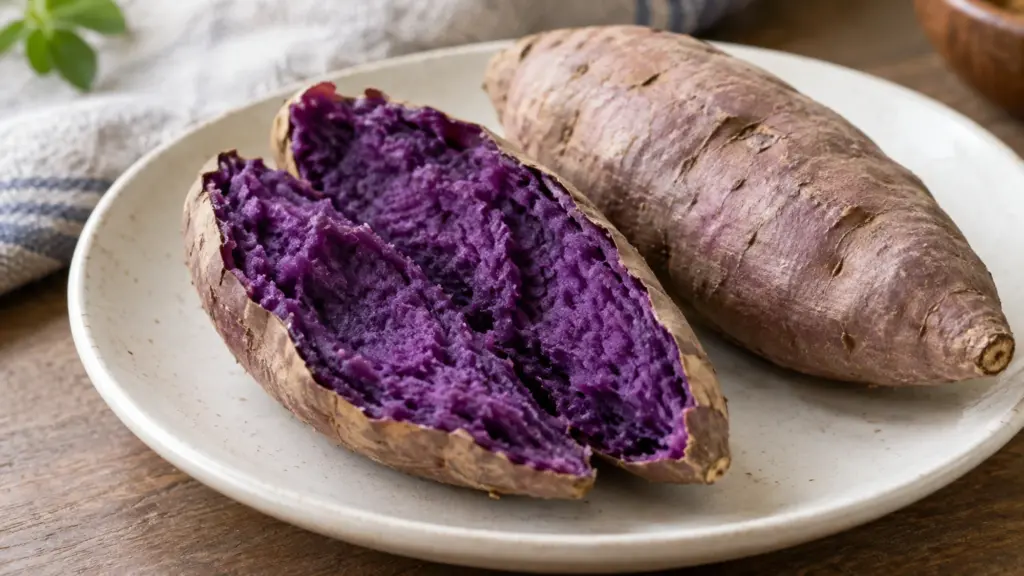
Cut into a purple sweet potato and an ordinary dinner ingredient suddenly looks ready for a party. Before choosing it for a mash, a roasted side or a dessert, though, it helps to know which root you have. Purple flesh is a clue to color, not a complete ingredient label.
A purple sweet potato is a purple-fleshed variety of Ipomoea batatas. It is different from ube, a true yam called Dioscorea alata. Its purple pigments are anthocyanins; their presence does not establish that eating the root prevents or treats disease.
I’d start with one or two roots and keep the first serving simple. That gives the actual sweetness and texture a chance to decide where the next batch belongs.
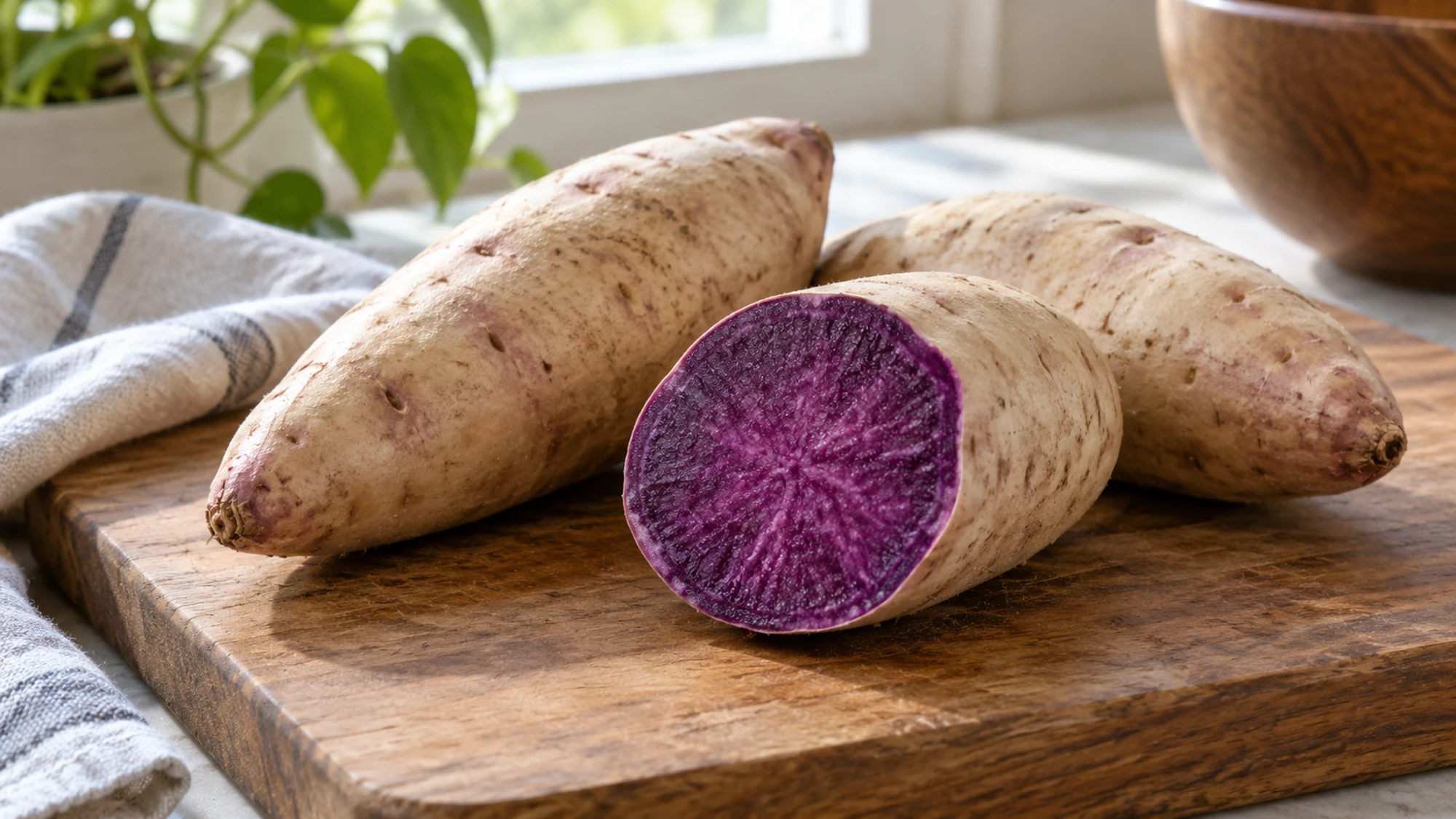
Purple sweet potato and ube are different ingredients
The University of Hawaiʻi’s Okinawan sweetpotato guide describes a pale-skinned root with violet-purple flesh and a gently sweet, creamy cooked interior. Other purple-fleshed sweet potatoes can have darker skins, so shopping by outside color alone is unreliable.
| Ingredient | Useful distinction |
|---|---|
| Purple sweet potato | Ipomoea batatas; several purple-fleshed varieties exist. |
| Okinawan sweet potato | A pale-skinned, purple-fleshed sweet potato. |
| Ube | Dioscorea alata, a true yam; not the same plant. |
| Purple-colored dessert | May contain a root, an extract, coloring or a mixture; read the ingredients. |
The Hawaiʻi ʻUlu Cooperative explains the botanical difference from ube. A substitution may work in some dishes, but sweetness, moisture and flavor can change. For a recipe written around one particular root, confirm the ingredient before treating the names as synonyms.
What does the purple color mean?
A 2019 review of purple sweet potato anthocyanins describes the compounds responsible for the pigment and research into their chemistry and biological activity. A laboratory antioxidant measurement is a property measured under test conditions, not a demonstrated benefit from an ordinary serving.
A 2026 systematic review on anthocyanin-rich foods and body weight included seven purple-sweet-potato studies, all in rodents. Its pooled analysis of three purple-sweet-potato experiments did not establish a consistent weight-reducing effect. Those findings cannot justify promising weight loss in people.
I prefer enjoying the color without giving it a medical job. A varied meal does not need every ingredient to arrive with a treatment claim.
Choose roots for the texture you want
Look for firm roots with intact skin, avoiding soft or decaying areas. Pick a similar size when cooking several together; a narrow root and a very thick one are unlikely to soften at exactly the same moment. The Hawaiʻi guide’s selection advice is a useful starting point.
- For a smooth mash, judge tenderness through the center before breaking up the flesh.
- For pieces that keep their shape, check them as they soften rather than waiting for the edges to collapse.
- For a new variety, taste a plain cooked piece before deciding how much sweetness or richness to add.
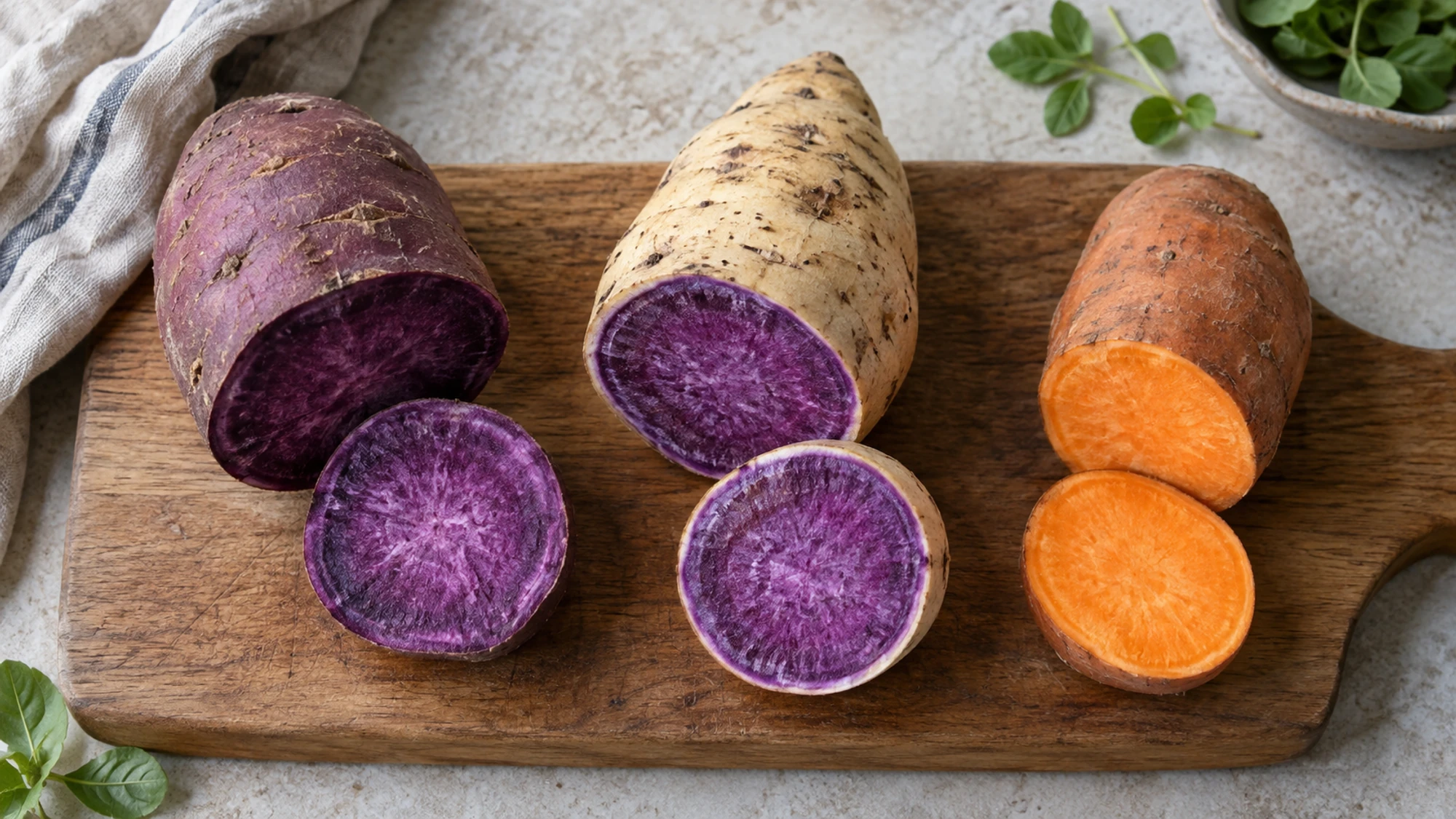
The shade of purple cannot tell you whether the center is done. Use the texture required by the dish: a soft interior for mashing or tender pieces that still hold together for a bowl. A dramatic color deserves an equally pleasant bite.
Store raw purple sweet potato with airflow
NC Cooperative Extension recommends a cool, dry place for uncooked sweet potatoes, rather than the refrigerator. Household refrigeration can damage their eating quality, including flavor and the texture of the center. Avoid treating a hot, sunny counter as cool storage, either.
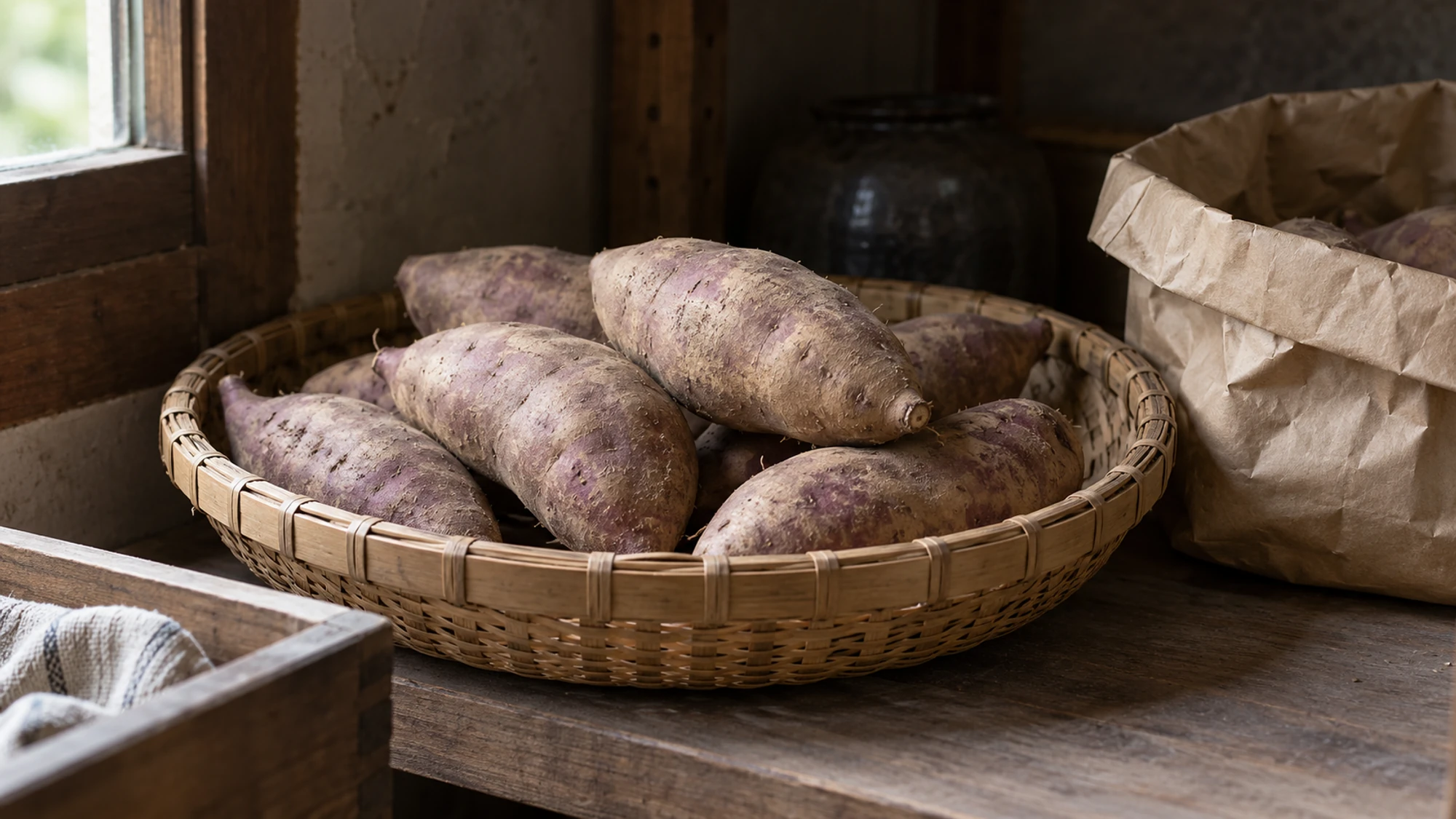
An open basket or breathable bag makes it easier to keep the roots dry and notice a soft spot early. Buy an amount you can use while the roots remain sound, rather than assuming one storage life fits every kitchen or every root’s condition.
Let the flavor guide the meal
For a savory plate, I’d choose a modest drizzle of olive oil and something bright or herbaceous alongside the root. For a sweeter direction, start with its natural sweetness before adding a rich topping. These are choices about balance, not a promise that one preparation is automatically healthier.
Our camotes en dulce shows a distinct sweet-potato dessert approach with cinnamon syrup; a different variety may change the texture and cooking time. For a contrasting side, chickpea cucumber salad brings a crisp, lemony element.
Check the variety, choose firm roots and cook for the texture your meal needs. Purple sweet potato can earn its place through flavor and color, with no exaggerated health promise required.
Sources
- University of Hawaiʻi: Okinawan sweetpotato.
- Hawaiʻi ʻUlu Cooperative: sweet potato and ube.
- Li and colleagues: anthocyanin research review, 2019.
- Anthocyanin-rich foods and obesity: systematic review, 2026.
- NC Cooperative Extension: sweet potato storage.

Emily Parker is DISHORA’s recipe-writing persona, bringing a warm, practical voice to everyday cooking. Her focus is simple ingredients, comforting flavors and clear steps that make a dish feel approachable. From cozy dinners to something sweet, Emily’s recipes invite readers to try something delicious and make it their own.