
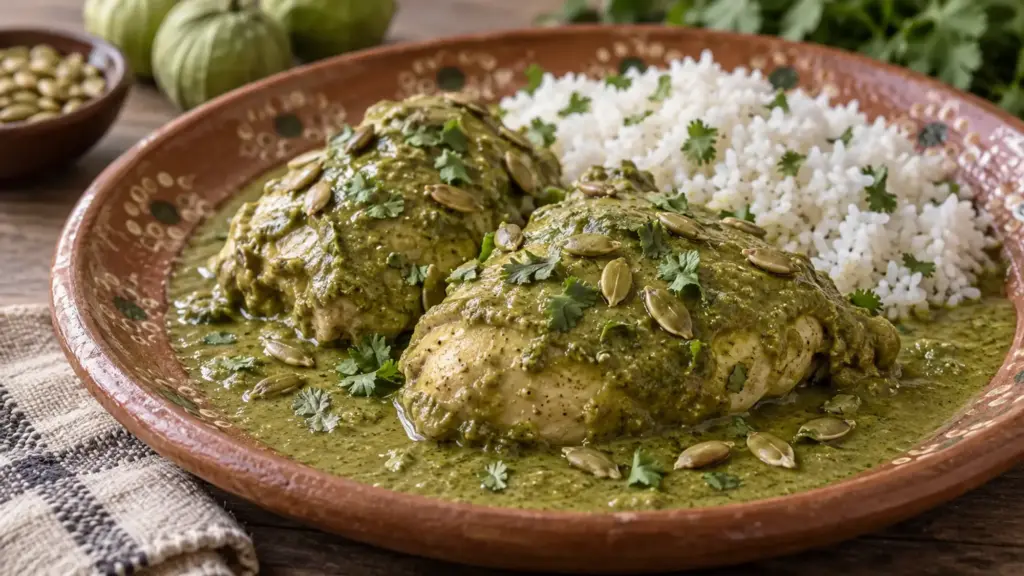
A pan of green sauce can look familiar until you taste the toasted pumpkin seeds behind it. Pipián verde is a Mexican sauce built around those seeds, tomatillos, chiles and herbs. In this version, it coats tender chicken thighs and sits beside plain rice, which gives the tangy, nutty sauce room to speak for itself. The sauce should be thick enough to cling, yet loose enough to spoon.

Toast the pepitas gently, blend them with softened tomatillos and herbs, then simmer the sauce before adding chicken. If it tightens too much, thin it with broth a little at a time.
I would choose bone-in, skinless thighs for this plate: they stay moist through the covered simmer and leave a savory broth for the sauce. A poblano gives a mild green-chile note; a small serrano is optional if you want more heat. The goal is a muted, lively green, not a neon sauce or a paste that hides the chicken.
Serving suggestions
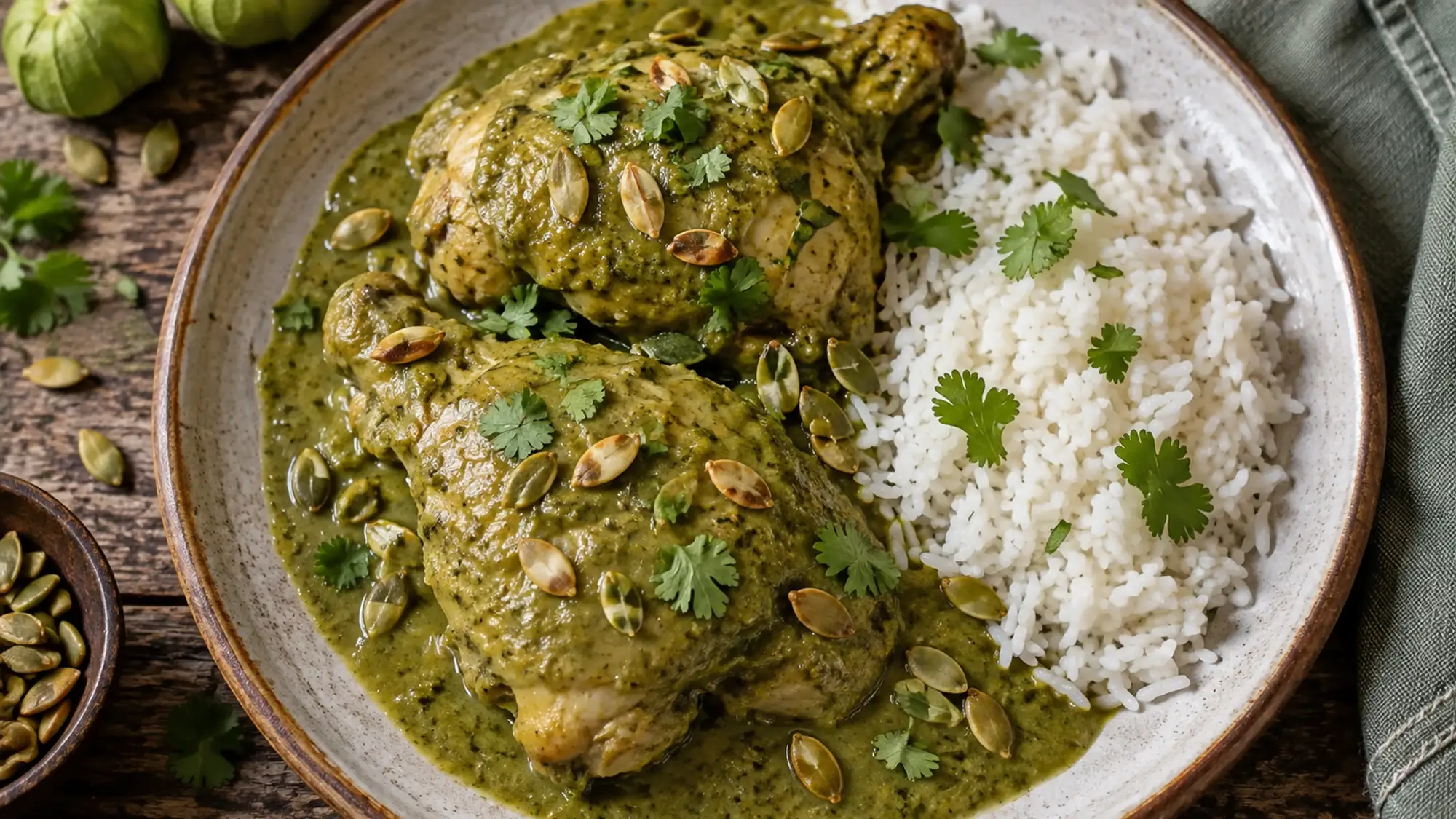
Spoon the pipián over the chicken only after checking that the thickest part has reached 165°F. Serve it with warm white rice so each bite can catch some sauce. Keep the rice plain; adding too much competing seasoning makes it harder to notice the pepitas, cilantro and bright tomatillos. A few extra toasted seeds can add contrast on top.
- For a simple plate: Give each person a thigh, half a cup of rice and a generous spoonful of sauce. Set lime wedges nearby if you like a brighter finish.
- For guests: Bring the chicken and sauce to the table in the same warm dish, with the rice on the side, so the sauce does not disappear into the grains before serving.
- For leftovers: Store rice separately from chicken and sauce in shallow containers. Reheat thoroughly, loosening the sauce with a spoonful of broth or water.
Plain rice and a final scatter of pepitas let the rich, tangy green sauce stay the main event.
Variations
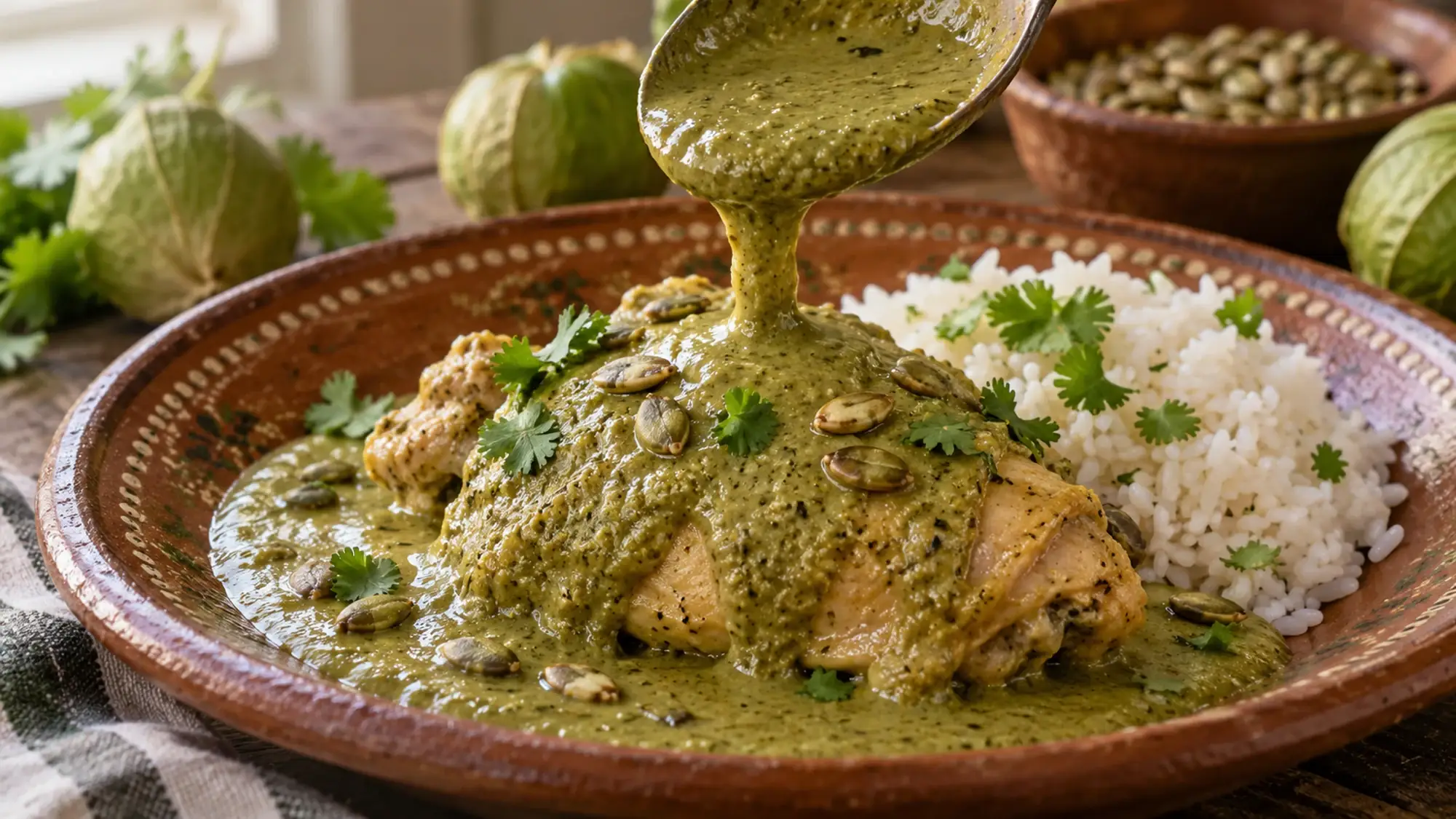
Pipián changes from kitchen to kitchen. This version keeps the pumpkin seed base clear and the heat adjustable. I prefer to taste the blended sauce before the chicken goes in, because it is easier to correct the balance at that stage. Tomatillos bring tartness; roasted onion and garlic add sweetness; broth changes the thickness without masking either.
- Choose the heat: Omit the serrano for a mild version, or add part of it to the blender and taste before adding the rest.
- Change the herb: Use some parsley with the cilantro if you want a softer herbal edge. Keep the total herb amount similar so the sauce stays balanced.
- Use boneless thighs: They cook faster, so start checking the chicken earlier and rely on a thermometer rather than a fixed simmer time.
Keep the toasted pepitas and tomatillos; adjust chile, herbs and broth to suit the heat and texture you want.
Health benefits
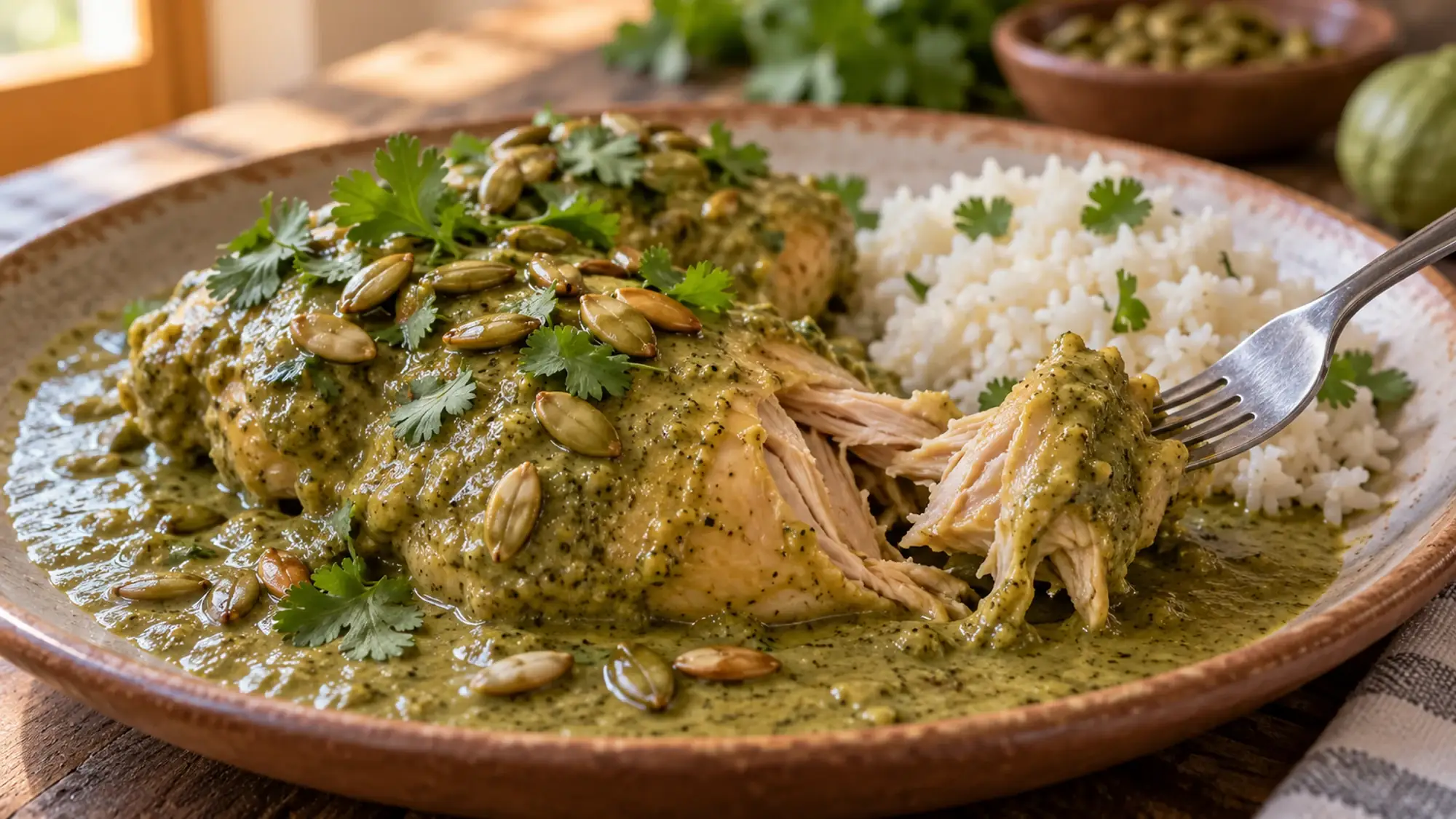
Pumpkin seeds contribute unsaturated fat, protein and minerals, and the chicken supplies protein. Tomatillos, peppers, onion and herbs add vegetable ingredients to the sauce. Rice provides carbohydrates that make the plate filling. These are useful food components, but the nutrition of the finished serving depends on the size of the chicken thigh, the amount of sauce and how much rice you add.
- Measure the plate: One thigh with about half a cup of rice and a quarter of the sauce is the intended serving here.
- Watch sodium: Choose unsalted pepitas and low-sodium broth if available, then season after the sauce has simmered.
- Handle chicken safely: Use a food thermometer at the thickest part, away from bone, and reheat leftovers to 165°F.
This dish brings protein, seeds and vegetables together; portion the sauce and rice according to the meal you are building.
Motivation conclusion
The step that makes this dinner memorable is not complicated: listen for the pepitas to begin popping, then keep them moving so they toast without scorching. Once blended with the tomatillos, the sauce takes on a gentle nutty depth that plain green salsa cannot offer. Make the rice while the chicken simmers, taste the sauce before serving, and add broth if it needs to flow. I would save a spoonful of sauce for the final plate rather than scrape the pan clean too early.
Pipián Verde Recipe

Ingredients
- 4 bone-in, skinless chicken thighs about 2 lb total
- 1 cup raw hulled unsalted pepitas about 130 g
- 12 ounces tomatillos husked and rinsed
- 1 poblano chile stemmed and seeded
- 1 serrano chile optional, to taste
- 1/2 white onion cut into wedges
- 2 cloves garlic peeled
- 1 cup cilantro leaves and tender stems loosely packed
- 2 cups low-sodium chicken broth divided, plus more if needed
- 1 tablespoon neutral oil
- 1/2 teaspoon fine salt plus more to taste
- 2 cups cooked white rice warmed, for serving
Equipment
- Large oven-safe skillet or broiler pan
- Blender
- Wide heavy skillet with lid
- Food thermometer
Instructions
- Set a dry skillet over medium heat. Add pepitas and stir 3 to 5 minutes until some puff and begin to pop; do not brown them deeply. Transfer to a plate.
- Broil the tomatillos, poblano, optional serrano, onion and garlic on a lined pan for 8 to 12 minutes, turning once, until softened with some charred spots. Let cool slightly.
- Blend the toasted pepitas, softened vegetables, cilantro and 1 1/2 cups broth until very smooth. Add a little more broth if the blender needs help.
- Pat chicken dry. Heat oil in a wide heavy skillet over medium-high heat and brown thighs for about 3 minutes per side. Transfer to a plate; they are not cooked through yet.
- Pour the sauce into the skillet, add salt and simmer 5 minutes, stirring. Return the chicken and any juices. Cover and simmer gently 25 to 30 minutes, or until the thickest part of each thigh reaches 165°F, avoiding the bone when measuring. Thin sauce with remaining broth as needed.
- Taste the sauce for salt. Divide warm rice among four plates, add one thigh each and spoon over the pipián.
Nutrition
Notes
Tried this recipe?
Let us know how it turned out!Emily Parker is DISHORA’s recipe-writing persona, bringing a warm, practical voice to everyday cooking. Her focus is simple ingredients, comforting flavors and clear steps that make a dish feel approachable. From cozy dinners to something sweet, Emily’s recipes invite readers to try something delicious and make it their own.