
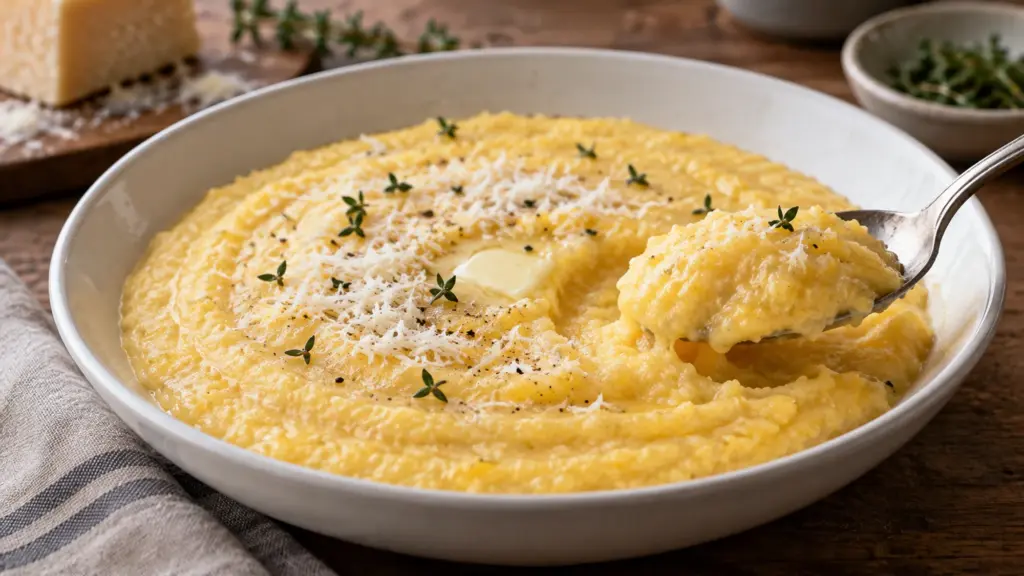
A pot of cornmeal can go from loose and silky to stubbornly thick while you set the table. This polenta keeps its soft, spoonable texture by starting with plenty of water and adding the cheese only after the grains have cooked through. It is a simple, savory base with enough Parmesan to taste like itself, whether you serve it alone or beneath a saucy main.
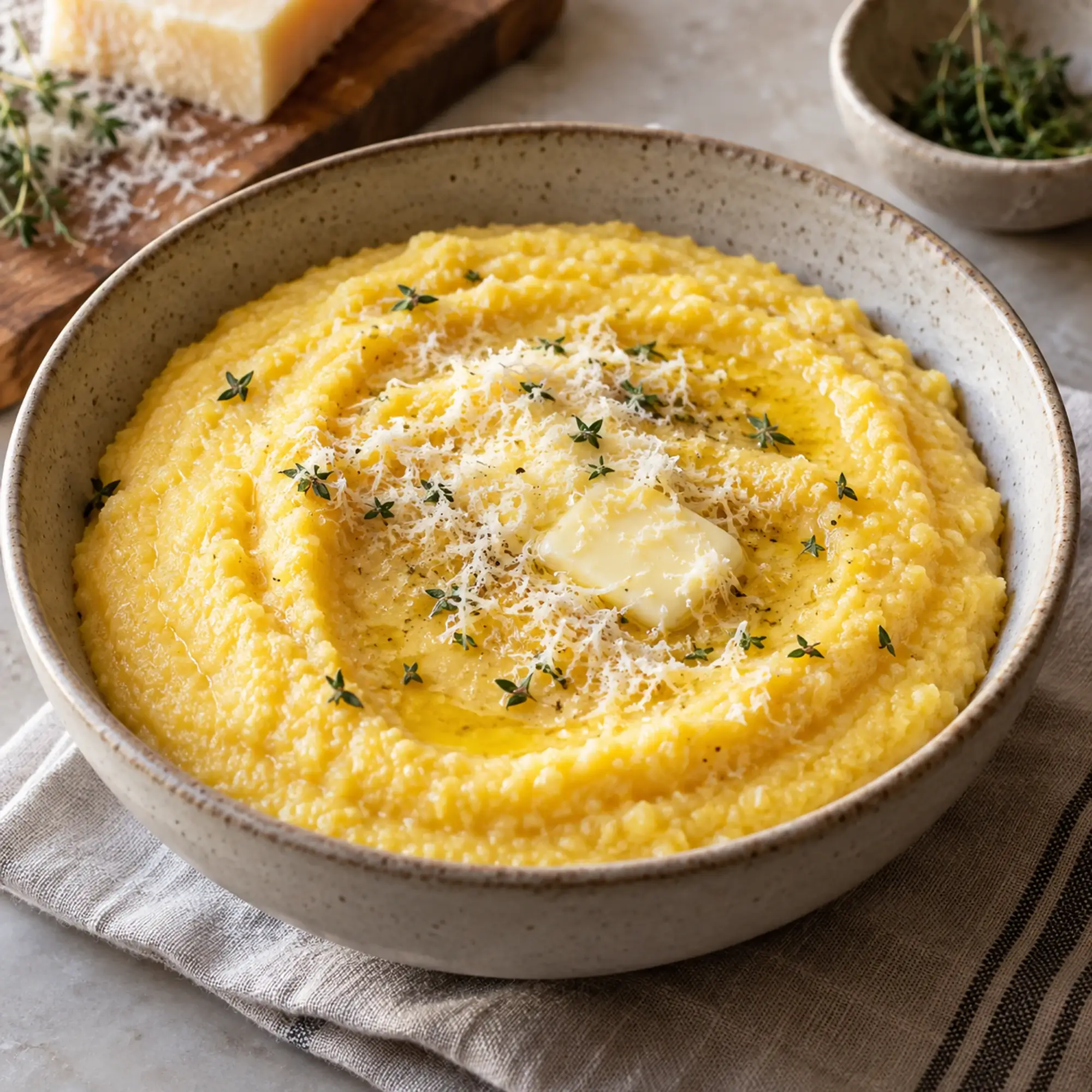
For creamy polenta, give the cornmeal time to hydrate. Whisk it into hot water gradually, simmer gently, and loosen it with a splash more water if the spoon starts to stand upright.
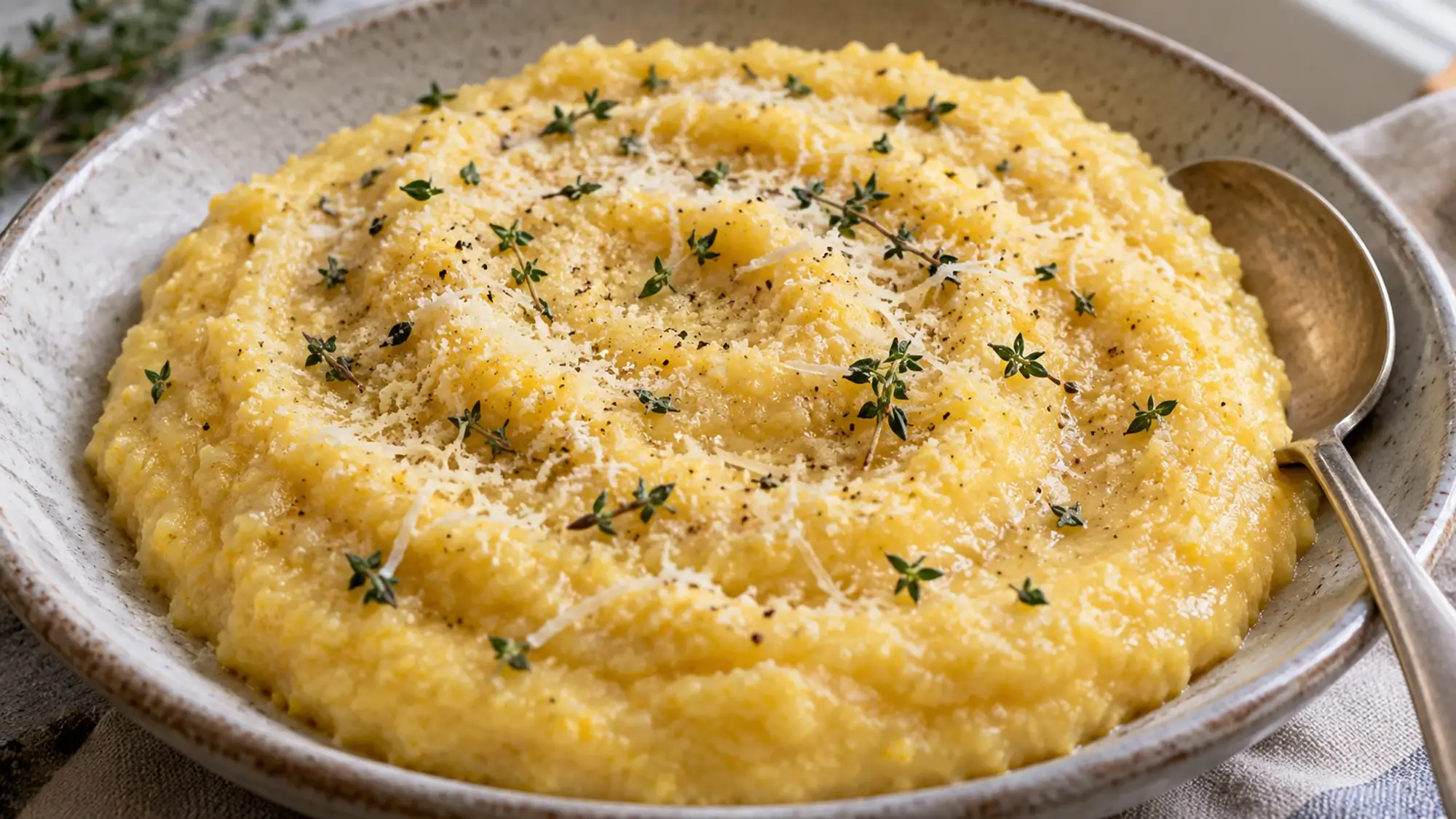
I prefer medium-ground cornmeal here: it develops a gentle bite without turning the bowl gritty. Butter rounds out the corn flavor, while finely grated Parmesan melts through evenly. The finished polenta should settle back into the bowl when you lift a spoonful. If it holds stiff peaks, a little hot water and a few stirs will bring it back.
Serving suggestions
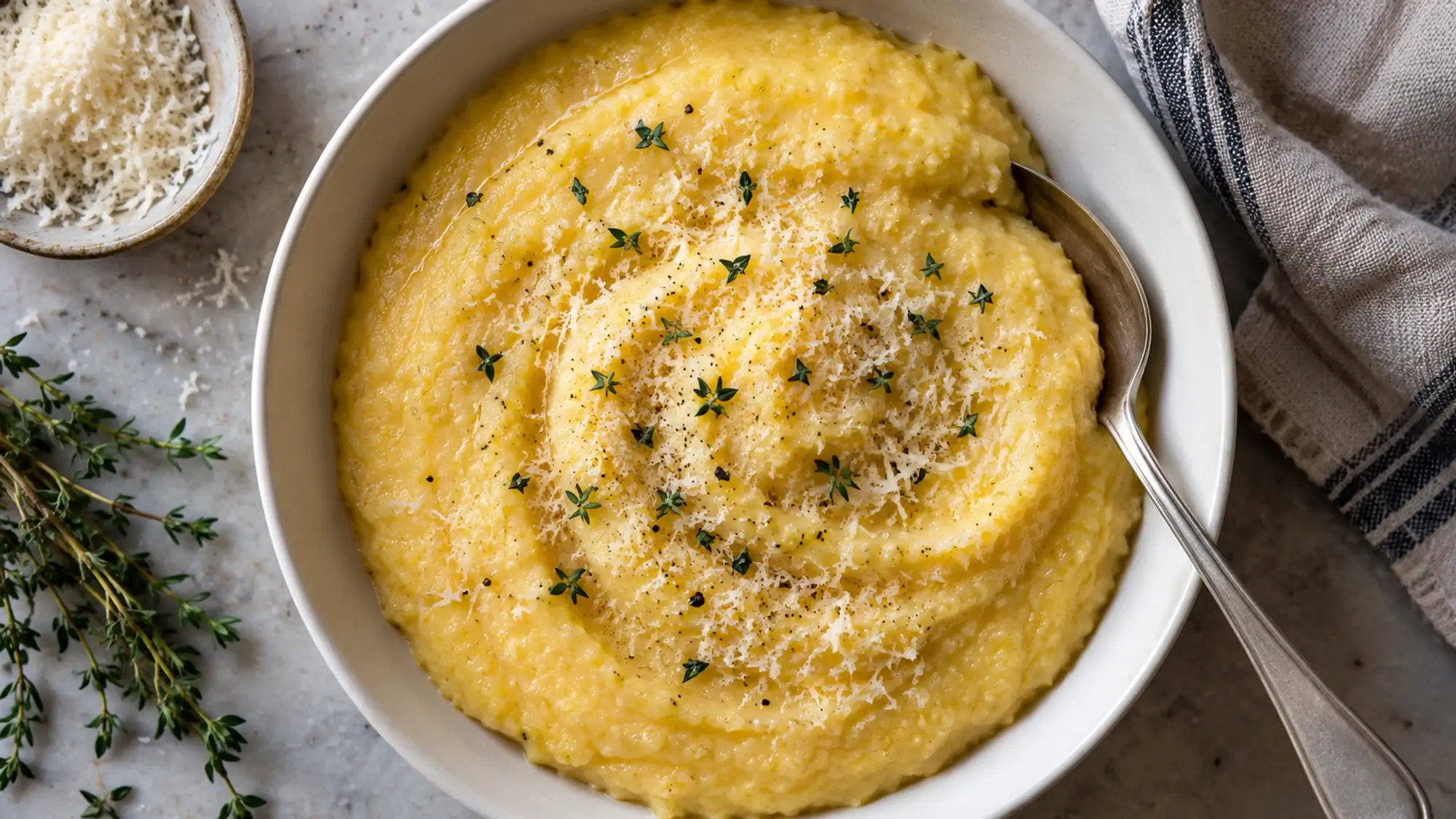
Serve polenta as soon as the butter and cheese have melted. Spoon it into warm bowls and let it spread naturally instead of packing it into a mound. The soft surface welcomes tomato sauce, roasted vegetables or a little braising liquid. For a quiet supper, a spoonful with sautéed greens and a soft egg makes the bowl feel complete without burying the corn flavor.
- For a vegetable plate: Add garlicky mushrooms or roasted peppers just before serving so their juices stay distinct from the polenta.
- With a hearty main: Set a smaller scoop beside chicken or beans; the polenta catches sauce particularly well.
- For leftovers: Chill the polenta in a shallow dish. It will firm up, and you can slice and pan-sear it the next day rather than trying to restore exactly the original texture.
Serve it loose for the creamiest result; use chilled leftovers when you want firm slices with crisp edges.
Variations
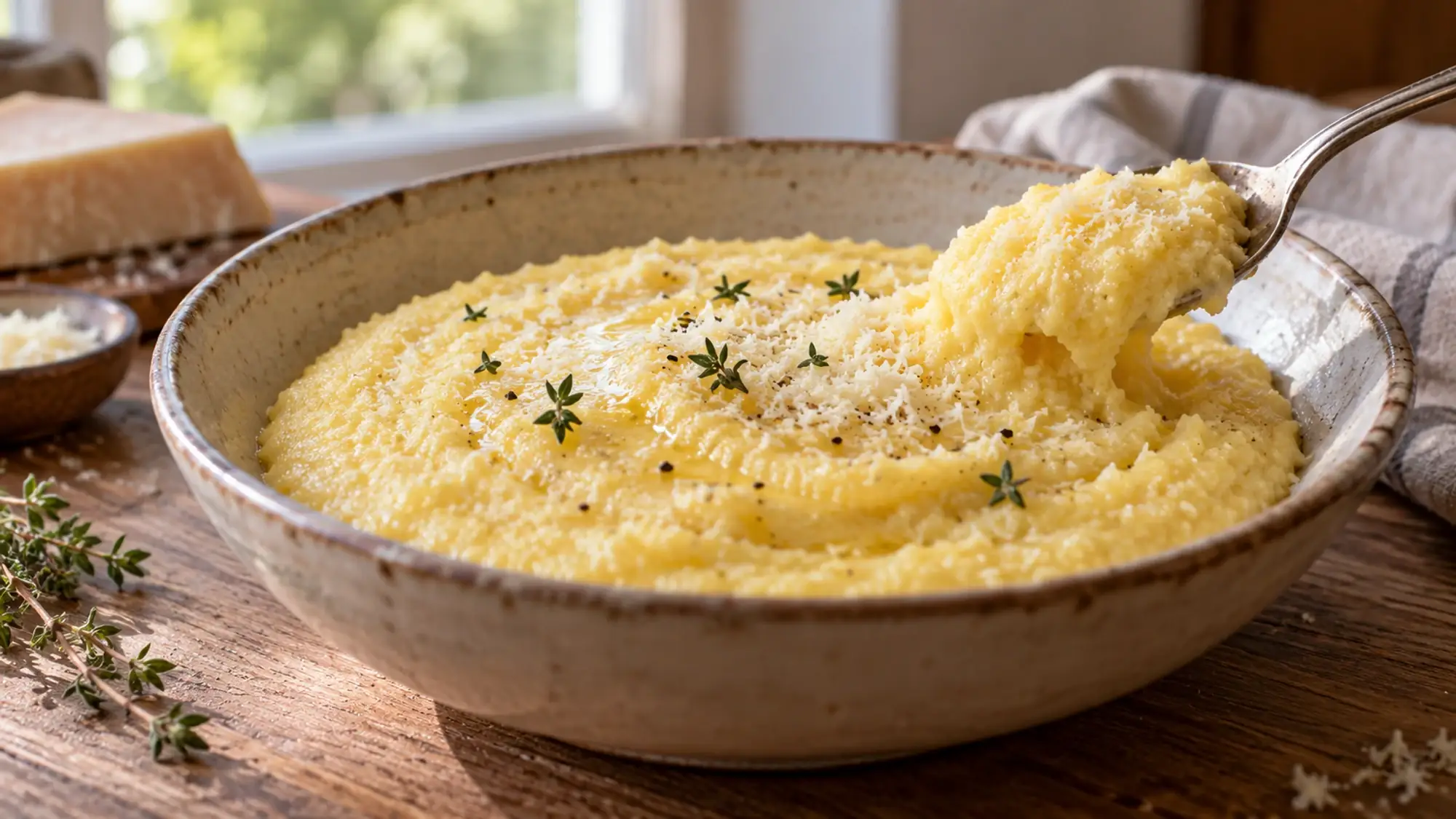
This recipe is a useful starting point, but the liquid and final seasoning can change the mood. I would make one adjustment at a time so you can still tell what the cornmeal is doing. Different grinds absorb water at different rates, so follow the visual cue more closely than the clock: tender grains and a flowing spoonful are the target.
- Use broth: Replace up to half the water with unsalted vegetable or chicken broth for a more savory base, then taste before adding extra salt.
- Make it lighter: Reduce the butter to one tablespoon and finish with the same Parmesan. The bowl will be less rich but still pleasantly creamy.
- Add herbs at the end: Stir in a little chopped thyme or parsley just before serving. Long cooking dulls their fresh scent.
Keep the gentle simmer and adjust the liquid as needed; the finishing flavors are flexible, but tender cornmeal is essential.
Health benefits
Polenta is made from cornmeal, so it contributes carbohydrates that make it a satisfying base for a meal. The Parmesan adds some protein and calcium, while butter gives richness in a small amount. This is still a side dish rather than a complete plate; pairing it with vegetables and a protein source gives you a broader mix of nutrients and textures.
- Portion with purpose: The recipe makes four side servings. A larger bowl can be a main course when topped with beans, eggs or another substantial ingredient.
- Mind the seasoning: Parmesan brings its own saltiness. Taste after stirring it in before reaching for the salt shaker.
- Match your needs: Use a clearly labeled gluten-free cornmeal if cross-contact matters, and check the cheese if you need a vegetarian rennet option.
The useful strength of polenta is its versatility: combine this creamy corn base with vegetables and protein to build the meal you need.
Motivation conclusion
The best reason to make this polenta is the way it turns a simple pot into a warm, adaptable supper base. Keep a kettle of hot water nearby, stir just often enough to prevent sticking, and let the grains tell you when they are tender. Finish with butter and Parmesan, then carry the pot to the table while the surface is still soft. I would rather add a splash of water at the last minute than serve a stiff bowl out of loyalty to a measured ratio.
Polenta Recipe

Ingredients
- 1 cup medium-ground polenta or coarse cornmeal about 160 g
- 5 cups water plus hot water as needed
- 3/4 teaspoon fine salt adjust after adding cheese
- 2 tablespoons unsalted butter
- 1/2 cup finely grated Parmesan about 50 g
- 1/4 teaspoon freshly ground black pepper
- 1 teaspoon fresh thyme leaves optional, for serving
Equipment
- Medium heavy-bottomed saucepan
- Whisk
- Wooden spoon
Instructions
- Bring 5 cups water and the salt to a gentle boil in a medium heavy-bottomed saucepan.
- Lower the heat slightly. Sprinkle in the polenta in a slow stream while whisking constantly, so it disperses without lumps.
- Reduce to a low simmer. Cook 30 to 35 minutes, stirring frequently and scraping the bottom and sides, until the grains are tender and the mixture is creamy. Add hot water a few tablespoons at a time if it thickens before the grains soften.
- Remove from heat. Stir in butter, Parmesan and pepper. Taste and adjust salt. Add enough hot water to make the polenta settle softly into a bowl.
- Spoon into warm bowls immediately and scatter with thyme, if using.
Nutrition
Notes
Tried this recipe?
Let us know how it turned out!Emily Parker is DISHORA’s recipe-writing persona, bringing a warm, practical voice to everyday cooking. Her focus is simple ingredients, comforting flavors and clear steps that make a dish feel approachable. From cozy dinners to something sweet, Emily’s recipes invite readers to try something delicious and make it their own.