
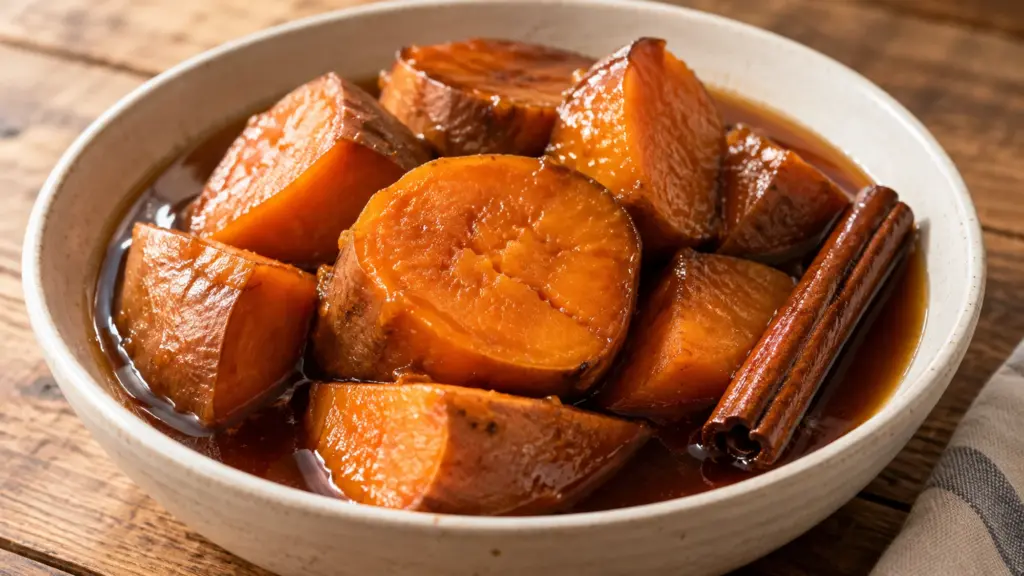
A pot of sweet potatoes can smell like dessert long before dinner is finished. Camotes en dulce takes that familiar root in a deeply comforting direction: tender pieces simmered in piloncillo syrup with cinnamon. This Mexican-style version keeps the ingredient list short and lets the syrup do the flavoring, without an oven or a marshmallow in sight.
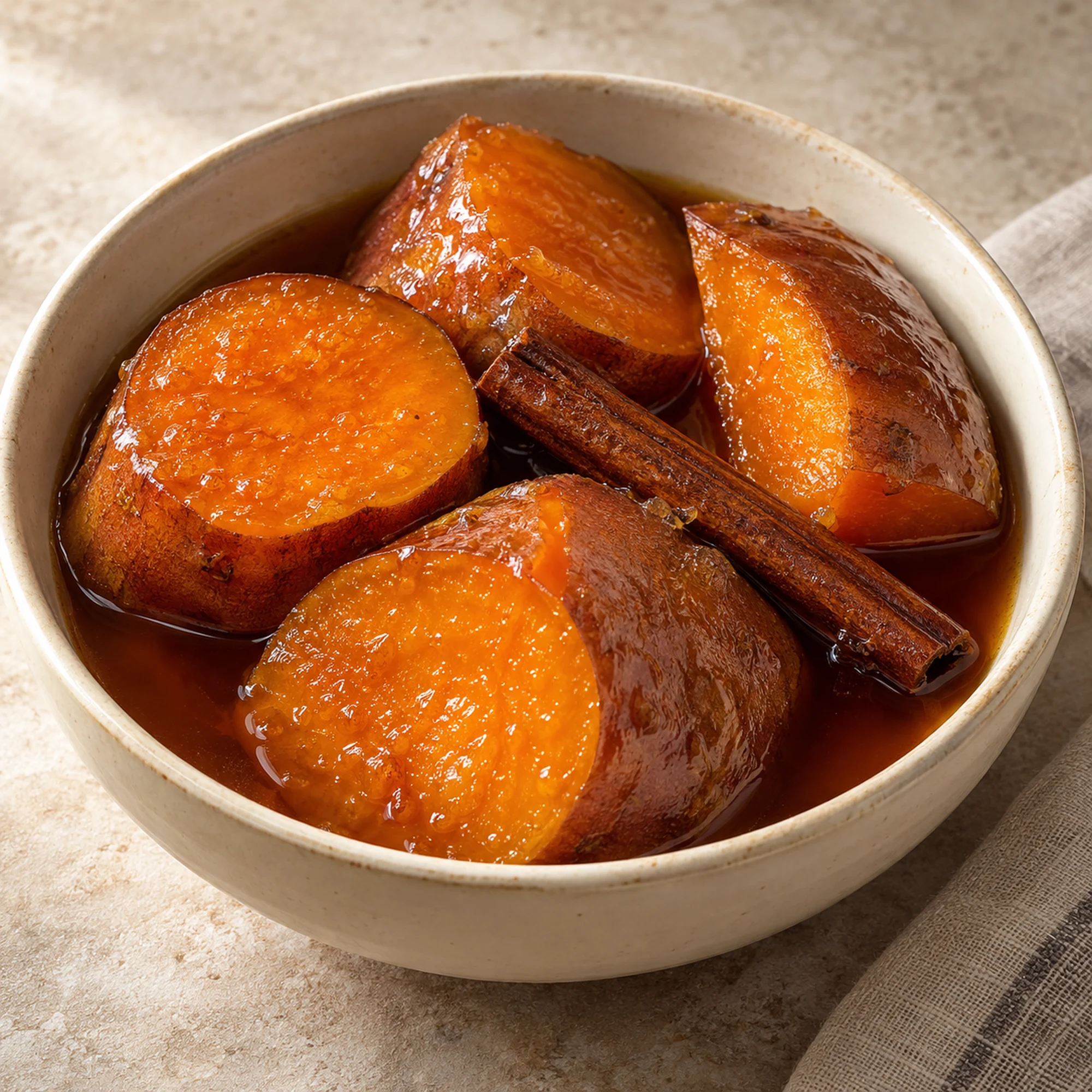
The useful trick is to judge the potatoes and syrup separately. Lift out the pieces as soon as a knife slips through easily, then reduce the liquid if it still looks watery. You get soft centers without stirring your dessert into a mash.
Serving suggestions
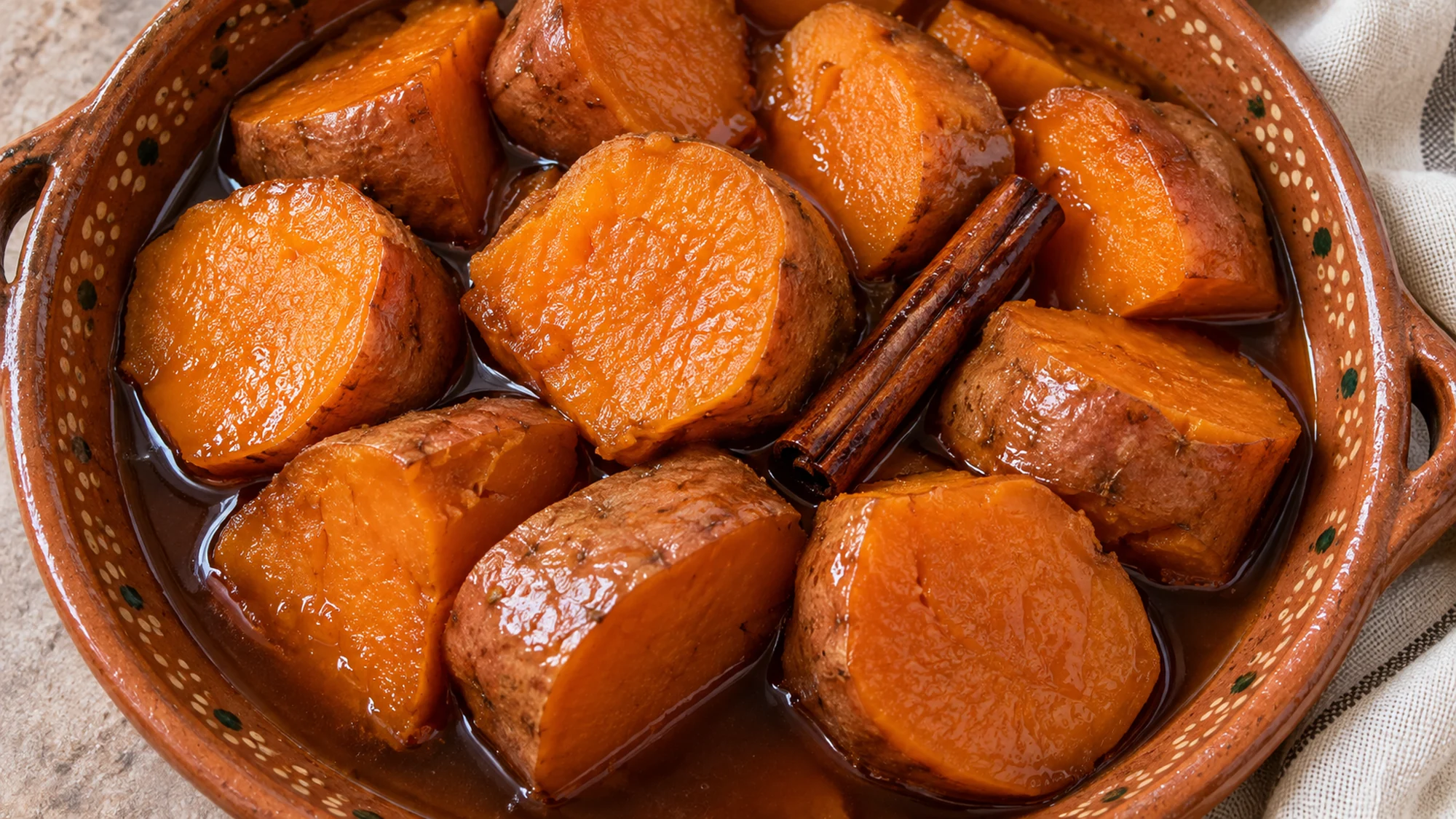
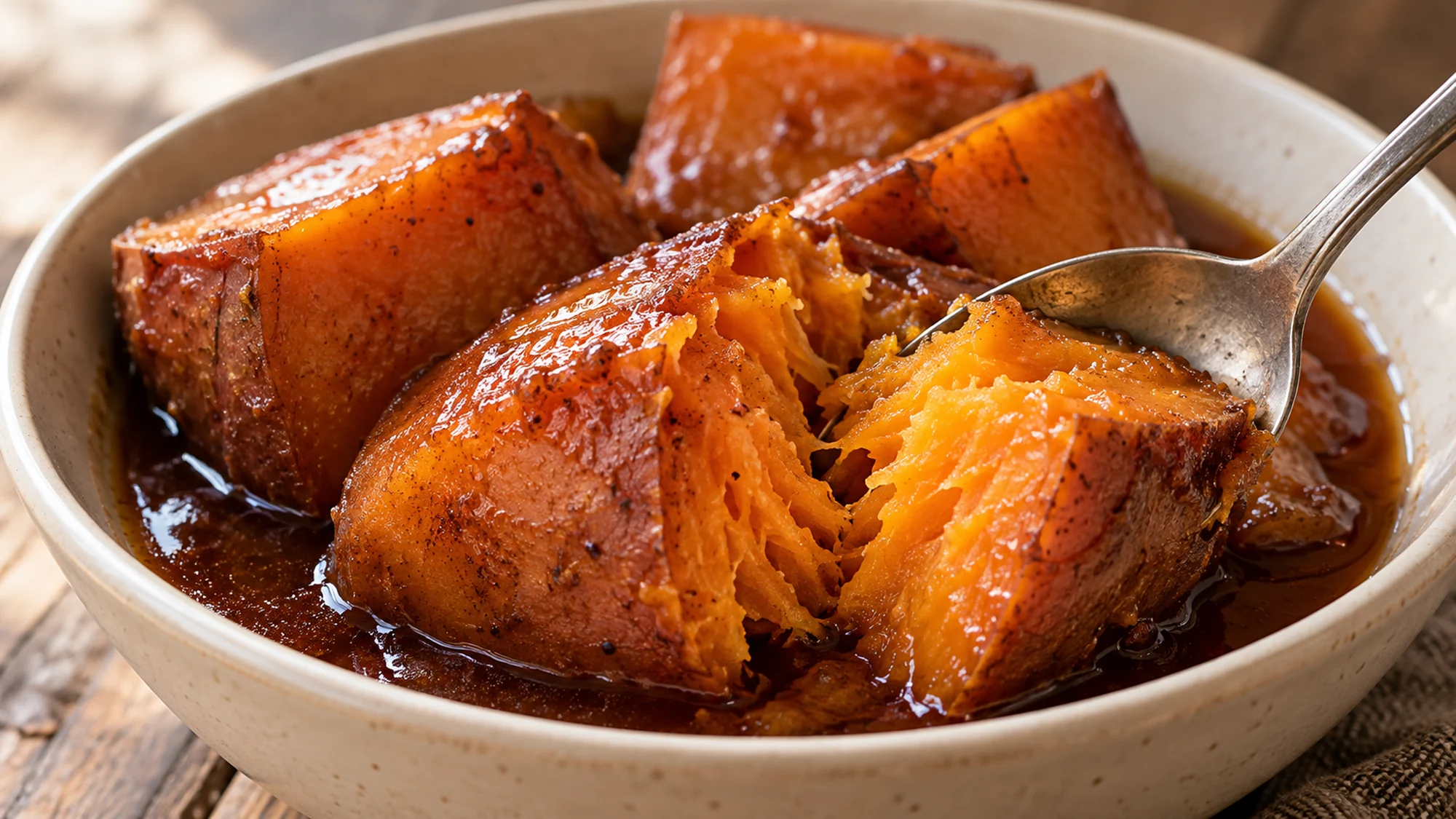
Serve camotes en dulce warm in shallow bowls, with a little syrup spooned around each portion. The liquid thickens as it cools, so give it a few minutes before deciding that it needs another round on the stove. I prefer a modest spoonful of syrup first; you can always add more, while a flooded bowl is harder to adjust.
- Keep the pieces generous. The skin helps support the tender flesh, and diners can eat it or leave it behind. A dessert spoon is more useful here than a knife and fork.
- Offer cold milk separately if you enjoy a cooling contrast. Plain yogurt is another option, though its tang changes the character of the dessert and neither addition is included in the recipe estimates.
- For an afternoon pairing, try a small cup of café de olla. It shares the cinnamon-and-piloncillo flavors, so consider how much sweetness you want across both.
- Refrigerate leftovers in shallow covered containers within two hours, or one hour in heat above 90°F. Keep for three to four days at 40°F or colder, and reheat portions to 165°F.
Save the potatoes with their syrup so the surfaces stay moist. Add a splash of water when reheating if the chilled syrup has become too thick; gentle heat is kinder to the soft pieces than vigorous stirring.
Variations
Piloncillo is unrefined cane sugar, often sold in cones, with a deeper flavor than white sugar. Weigh it rather than relying on “one cone,” because cone sizes vary. Mexican canela is a lovely choice for the cinnamon stick; its softer bark and gentle fragrance suit this uncomplicated syrup. I would keep the first batch simple before adding a whole spice cupboard.
- No piloncillo? Use the same weight of dark brown sugar. The molasses note will be different, but the substitution still makes a flavorful syrup. Panela and piloncillo are useful names to recognize when shopping.
- For a lightly spiced variation, add one whole clove with the cinnamon and remove it before serving. A small strip of orange zest is another option; avoid the bitter white pith.
- Orange-fleshed sweet potatoes give the familiar color shown here. White or purple varieties can work, but their texture and timing differ, so let tenderness guide you.
- Prefer peeled pieces? Peel after washing and handle the cooked chunks especially gently. Avoid tiny cubes, which can soften before the syrup has time to concentrate.
Change one element at a time. Keeping the cut size consistent and checking the largest piece will help more than chasing an exact minute on the timer.
Health benefits
Sweet potatoes contribute fiber and potassium, while orange varieties supply beta-carotene that the body can convert to vitamin A. Those nutrients remain worth recognizing in a dessert, but they do not cancel out the added sugar. Piloncillo is still sugar, rather than a nutritionally free substitute for it. The bowl can simply be something sweet you enjoy.
- The estimated nutrition assumes all the syrup is divided among six servings. Leaving some behind changes the amount of sugar and energy actually eaten.
- The base recipe contains no added butter or oil. Milk, yogurt or other toppings change its nutrition and may introduce allergens.
- Sweet potatoes and true yams are different plants; this sweet-potato guide explains the distinction and the nutrients in different varieties.
Think of this as a sweet-potato dessert with useful nutrients, not a treatment or a shortcut to better health. Choose a portion that suits your appetite and the rest of your meal.
Motivation conclusion
There is something satisfying about a recipe whose finishing cue is visible: a spoonful of syrup that lightly coats the potatoes instead of running off like water. Keep the heat gentle, resist unnecessary stirring, and let the cooked pieces rest while the sauce catches up. That small bit of attention is what makes this simple pot of camotes en dulce feel complete.
Camotes en Dulce Recipe

Ingredients
- 900 g orange-fleshed sweet potatoes about 2 lb; skin on
- 225 g piloncillo about 8 oz; weigh the cone
- 1 Mexican cinnamon stick about 3 inches long
- 4 cups water 960 ml, plus a splash if needed
Equipment
- Wide heavy 4-quart pot with lid
- Knife and cutting board
- Vegetable brush
- Measuring jug and kitchen scale
- Heatproof spoon and slotted spoon
Instructions
- Scrub the sweet potatoes under running water, trim the ends and cut into roughly 2-inch chunks, leaving the skins on. Cut very wide pieces in half so they are similar in size.
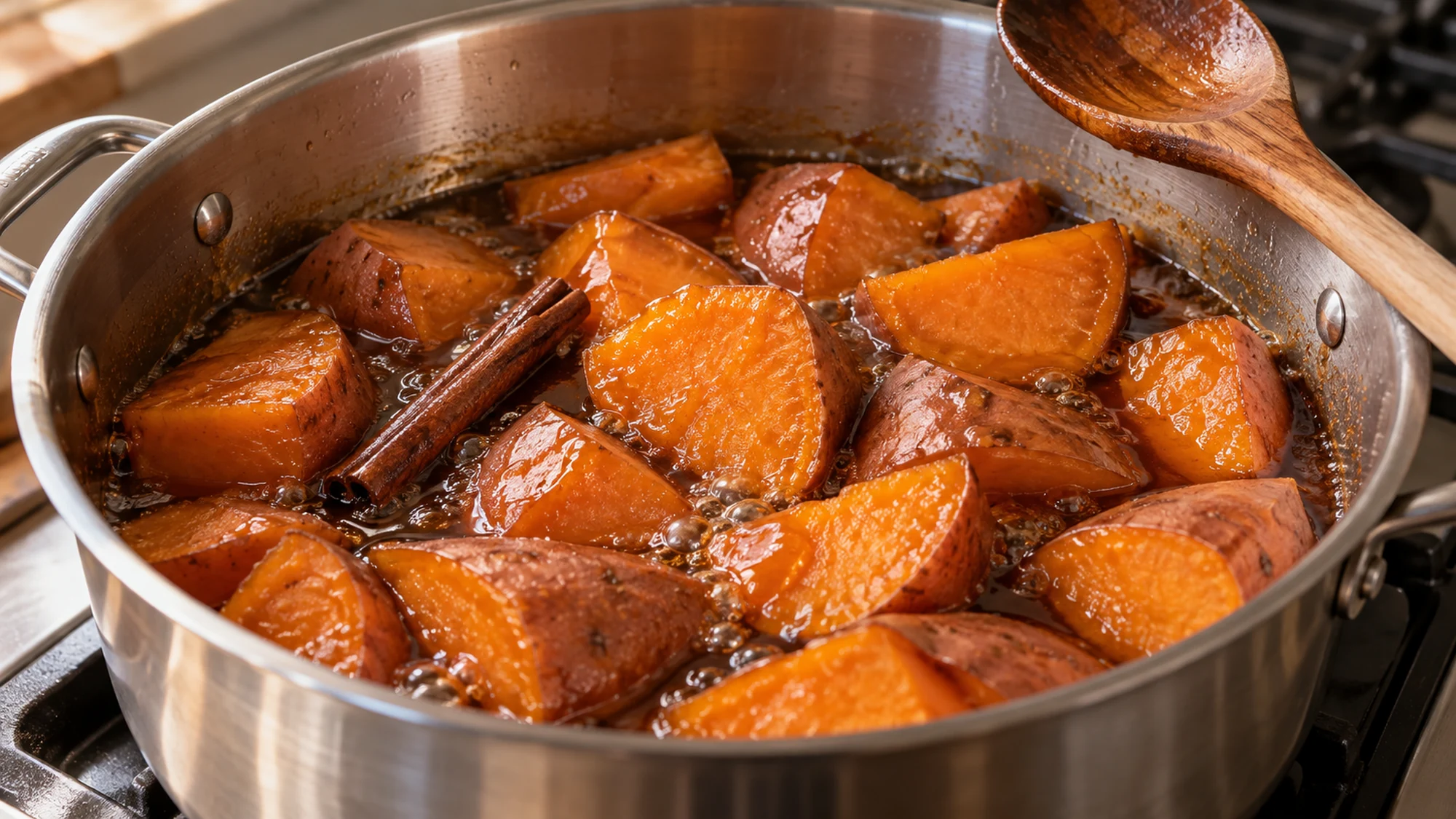
- Put the piloncillo, cinnamon stick and 4 cups water in a wide heavy 4-quart pot. Bring to a gentle boil, then simmer, stirring occasionally, until the sugar dissolves, about 10 minutes.
- Add the sweet potato chunks carefully to the hot syrup. Cover and simmer gently for 25–35 minutes, turning the pieces once with a spoon, until a small knife slides through the largest piece easily. Check the pot occasionally; add a splash of water if the liquid reduces too much before the potatoes soften.
- Lift the tender pieces onto a plate with a slotted spoon if the syrup is still thin. Simmer the liquid uncovered for 5–15 minutes, until it lightly coats a spoon, watching closely toward the end. Do not reduce it to sticky candy; it thickens further as it cools. Cooking time varies with pot width and heat.
- Return the sweet potatoes to the syrup and spoon the syrup gently over them without vigorous stirring. Remove the cinnamon stick. Rest off the heat for 5 minutes, then divide into six portions and serve warm with as much of the syrup as you like.
Nutrition
Notes
Tried this recipe?
Let us know how it turned out!Emily Parker is DISHORA’s recipe-writing persona, bringing a warm, practical voice to everyday cooking. Her focus is simple ingredients, comforting flavors and clear steps that make a dish feel approachable. From cozy dinners to something sweet, Emily’s recipes invite readers to try something delicious and make it their own.