
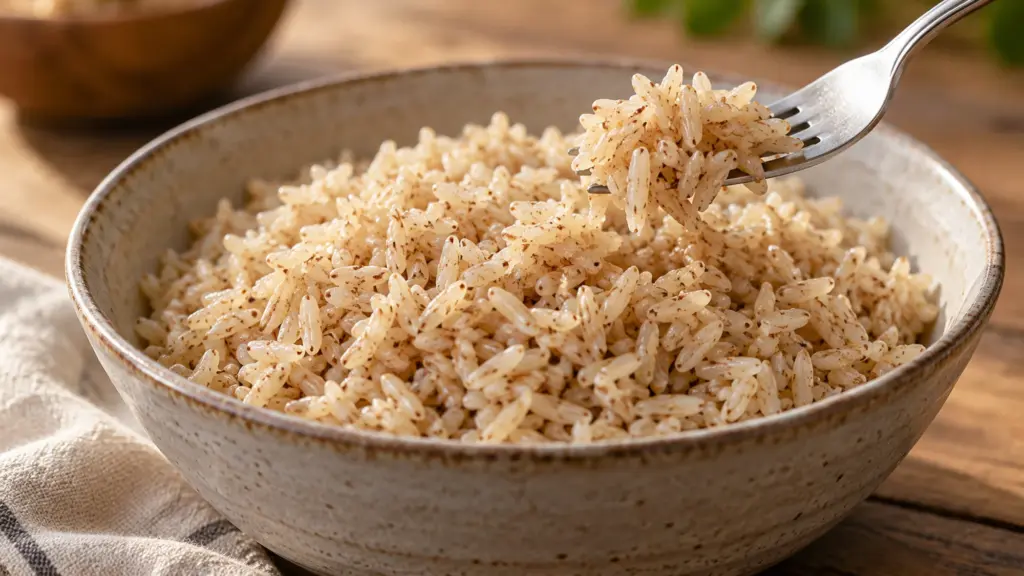
Brown rice is most useful when its grains are tender enough for dinner and separate enough to spoon into a bowl. If you are wondering how to cook brown rice without a gummy bottom or a hard center, this recipe uses plenty of boiling water, a quick drain, and a covered rest off the heat. The rice keeps a gentle chew while excess moisture escapes.
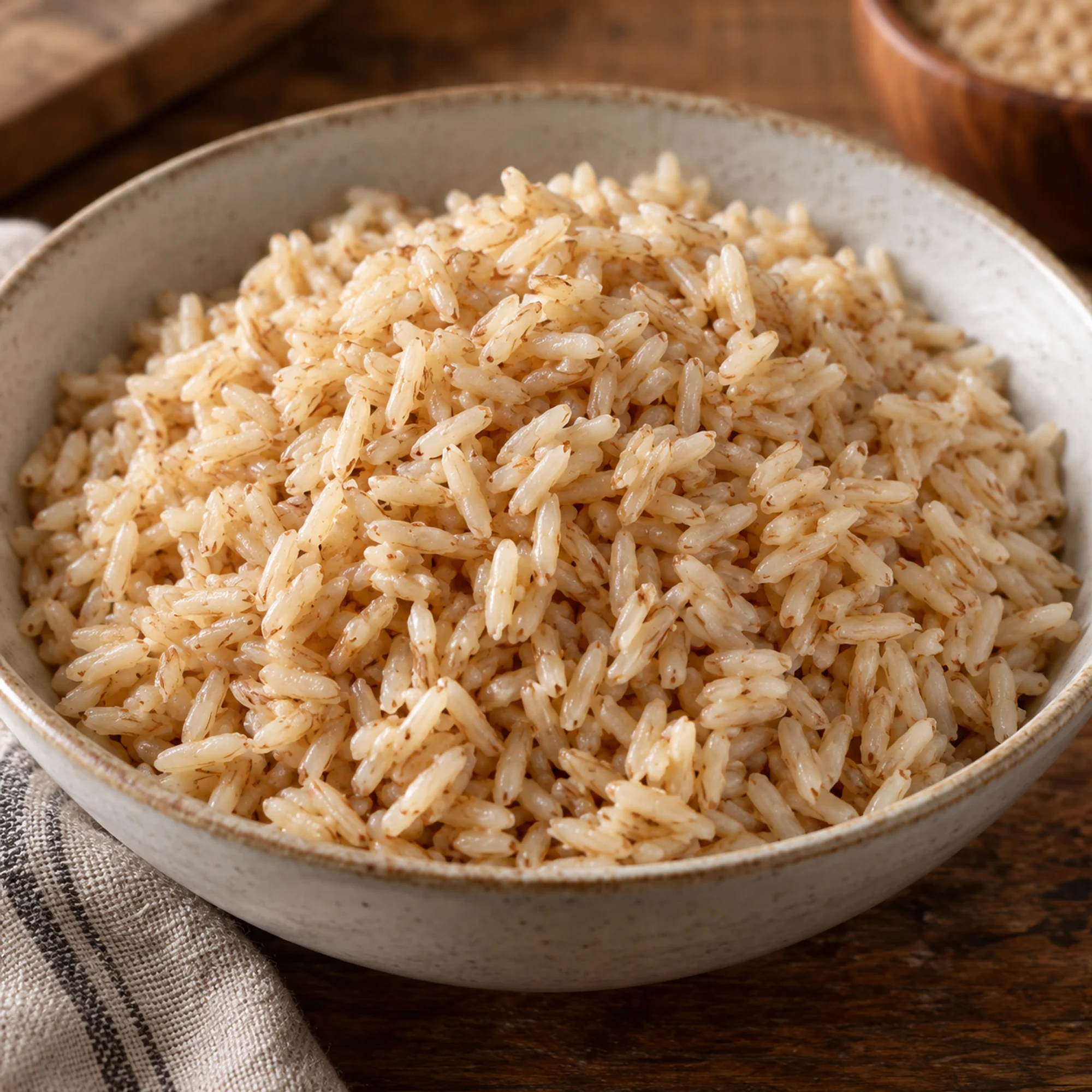
Taste a grain before draining, then give the hot rice its covered rest. Tenderness is the cue to watch, because brown rice varieties do not all finish at the same minute.
I prefer this method for regular long-grain brown rice when I want a plain, flexible side. There is no butter or oil in the measured base, so it can go under a savory sauce, into a grain bowl, or beside vegetables without another flavor competing.
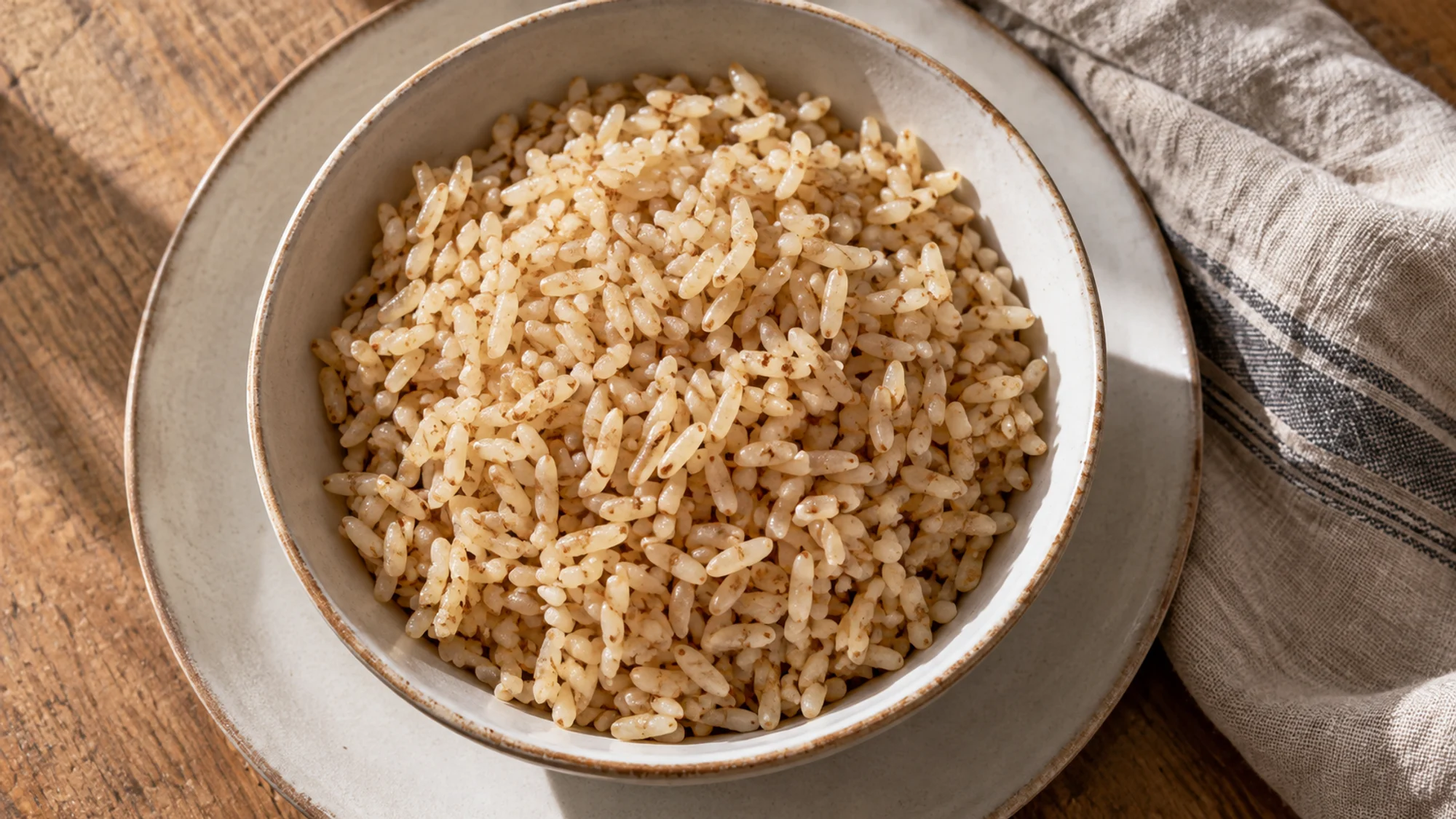
Serving suggestions for brown rice
Fluff the finished rice gently with a fork and serve it warm. Lift the grains rather than pressing them into the pot. A loose mound catches sauce well while keeping the rice’s nutty flavor and pleasant chew noticeable.
Use it as a base for cooked chicken, beans, tofu, or roasted vegetables. Dishora’s rotisserie chicken rice bowl is one idea for building a meal around a cooked grain. I like adding a cool, crunchy vegetable beside the warm rice for a little contrast.
The batch makes about three cups, enough for four modest servings. Divide extra portions into shallow containers soon after cooking rather than leaving the saucepan on the counter. Small portions cool faster and are easier to reheat for another meal.
For a simple side, serve the rice plain and let the main dish supply the seasoning. You can add a squeeze of lemon or chopped herbs to your own portion, keeping the rest of the batch flexible.
Keep the grains loose, serve them warm, and let the rest of the meal choose their flavor direction.
Brown rice variations
The measured method uses regular long-grain brown rice. Short-grain brown rice has a different texture, and instant or quick-cooking rice has already been processed for speed. Check the package rather than using the same timing for every product labeled brown rice.
Salt can be reduced or omitted if the rice is going under a salty sauce. Because the cooking water is drained, it is difficult to predict exactly how much seasoning stays in the grains. I would taste the finished rice with the food it will accompany before adding more.
A little olive oil or butter can be folded in after fluffing as a separate variation. Add it to the portion you are serving rather than the whole batch if you want to use the remaining rice in a different dish.
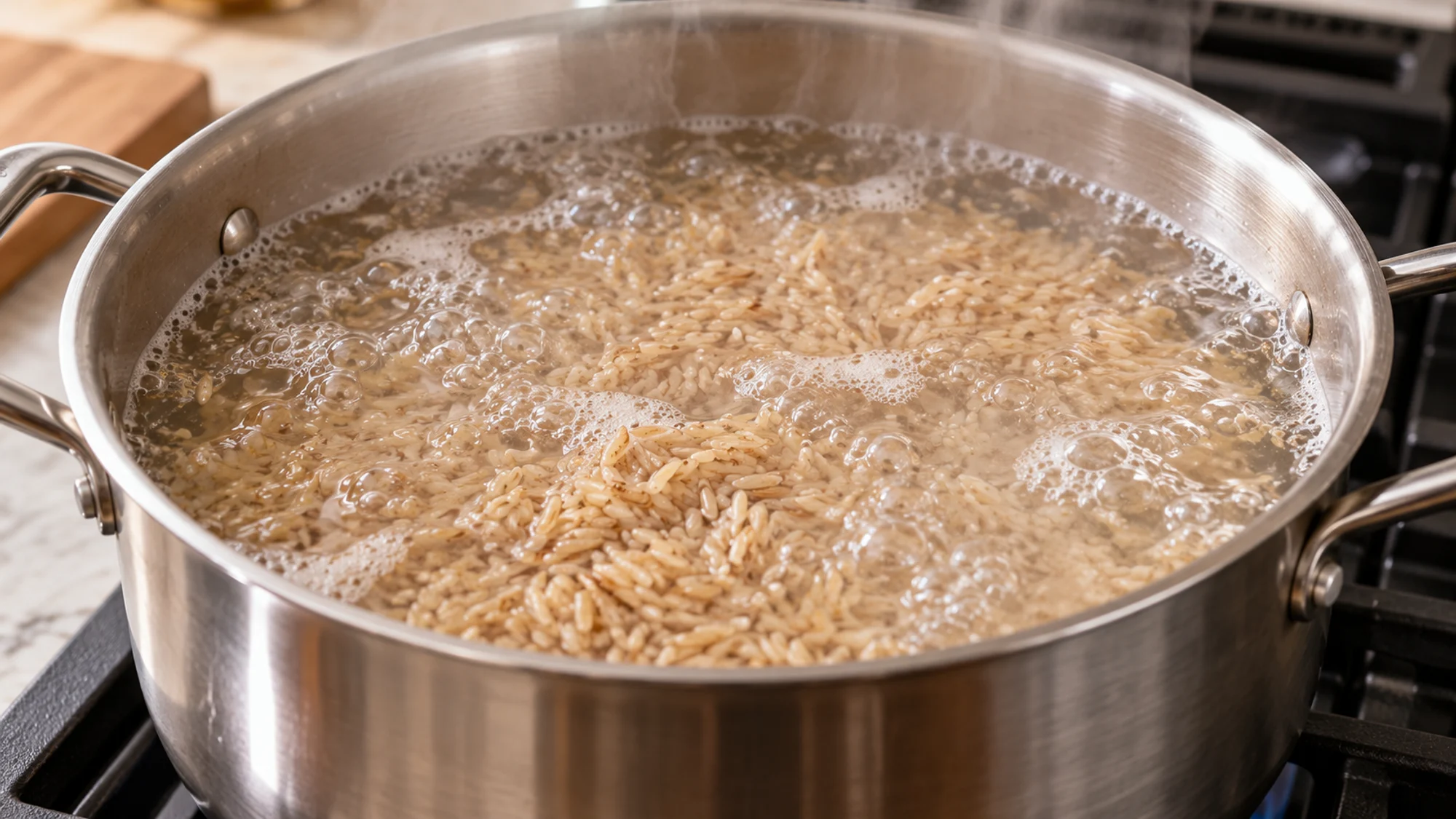
If a grain still has a hard center at the first check, continue boiling and taste again after a few minutes. Keep enough water in the saucepan so the rice moves freely. Draining before it is tender will not be fixed by the short covered rest alone.
Choose the rice type first, then use a tasted grain to decide when it is ready to drain.
Health benefits and balance
Brown rice is a whole grain because it retains the bran and germ. It contributes fiber along with energy for the meal. The whole-grain guide explains how brown rice can fit among a variety of grain choices.
Pair the rice with vegetables and a protein food rather than expecting it to make a complete meal by itself. A plain batch is useful because it can support many different plates. Portions can be adjusted to appetite and the other foods being served.
Cooked rice needs prompt refrigeration. Spread leftovers into shallow containers, refrigerate within two hours, and reheat thoroughly to 165°F. This leftover handling guide covers cooling and reheating. A pot left at room temperature for hours should not be treated as safe meal prep.
Whole grains add variety, and prompt chilling keeps a useful batch ready for another meal.
Motivation conclusion
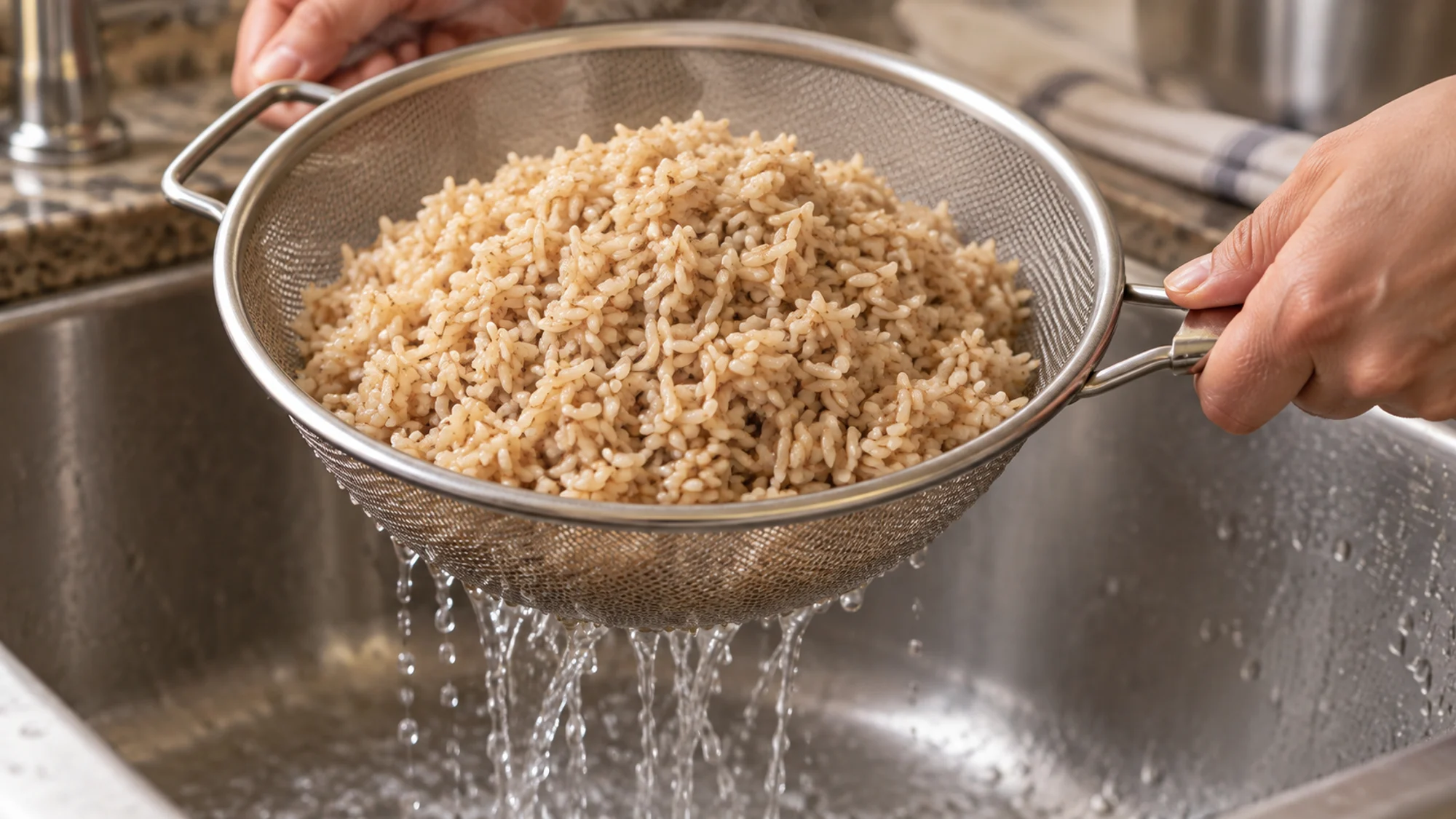
Set the strainer near the sink before the rice is ready. That makes the draining step calm and quick, and the rice can return to the warm empty pot while it is still hot. Have the lid ready so the covered rest begins right away.
After the rest, fluff gently and check the texture. I like grains that are tender with a slight bite, not wet or compressed. Once you recognize that cue, the method becomes a practical way to prepare a plain brown rice side with very little active work.
A tasted grain, a quick drain, and a quiet covered rest are the useful steps behind tender brown rice.
How to Cook Brown Rice

Ingredients
- 1 cup long-grain brown rice about 190 g; not instant or quick-cooking
- 6 cups water plus boiling water if needed to keep rice submerged
- 1/2 tsp kosher salt
Equipment
- Large saucepan with tight-fitting lid
- Fine-mesh strainer
- Measuring cup and teaspoon
- Fork
Instructions
- Rinse the brown rice in a fine-mesh strainer under cold running water, then drain.
- Bring 6 cups water to a boil in a large saucepan. Add rice and salt. Boil uncovered at a steady, moderate boil for about 30 to 35 minutes, until the grains are tender with a slight chew and no hard center. Keep submerged; add boiling water if needed.
- Carefully drain the rice in the fine-mesh strainer for about 10 seconds.
- Return the hot drained rice to the empty saucepan, off the heat. Cover tightly and let stand 10 minutes.
- Uncover and fluff gently with a fork. Serve warm.
Notes
Tried this recipe?
Let us know how it turned out!Emily Parker is DISHORA’s recipe-writing persona, bringing a warm, practical voice to everyday cooking. Her focus is simple ingredients, comforting flavors and clear steps that make a dish feel approachable. From cozy dinners to something sweet, Emily’s recipes invite readers to try something delicious and make it their own.