
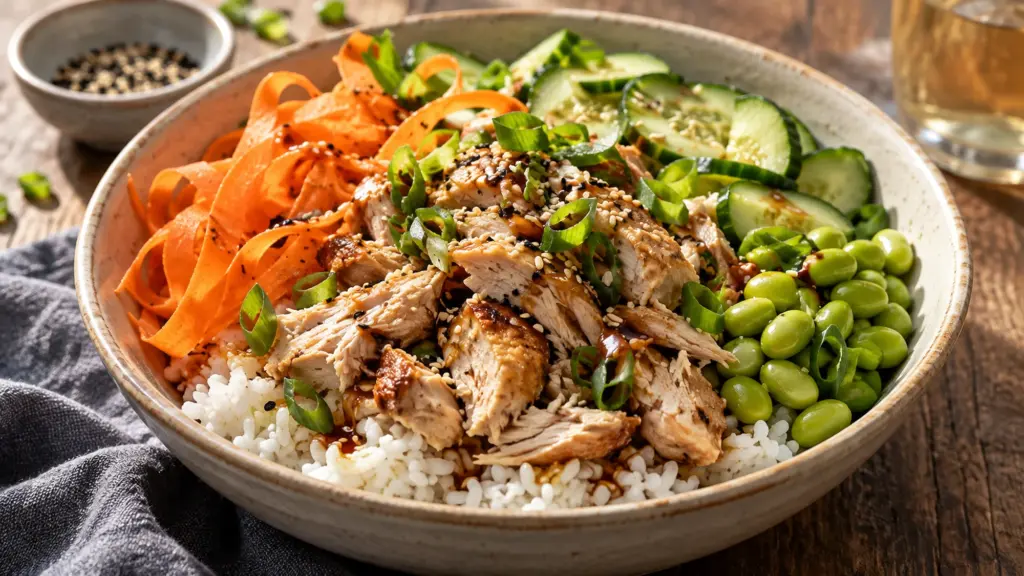
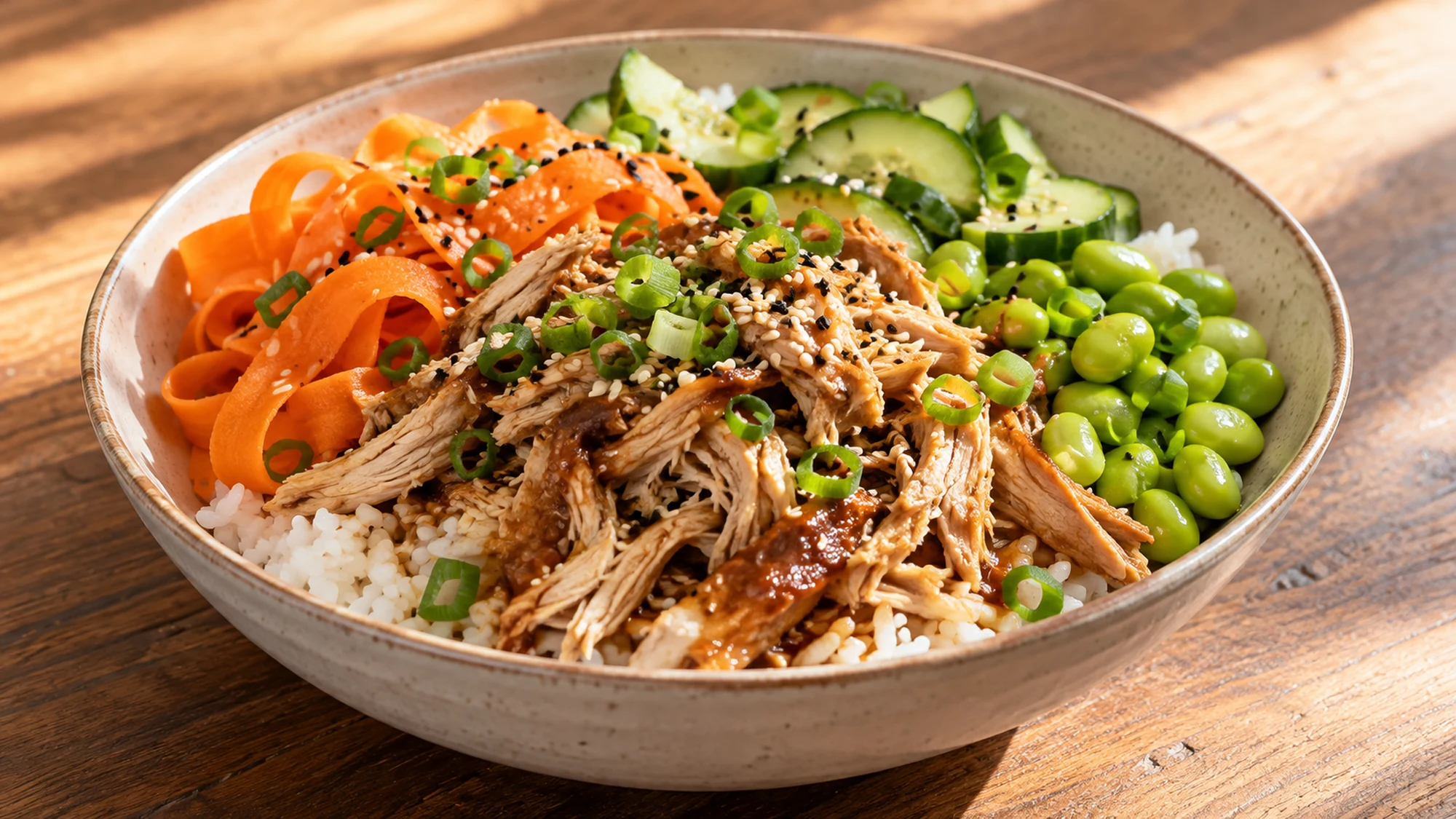
A rotisserie chicken rice bowl is useful when the chicken is already cooked but dinner still needs a little structure. Warm rice forms the base, shredded chicken makes it substantial, and cucumber, carrot and edamame bring color and crunch. A small sesame-ginger dressing ties it together. You get different textures in one bowl without starting with raw meat.
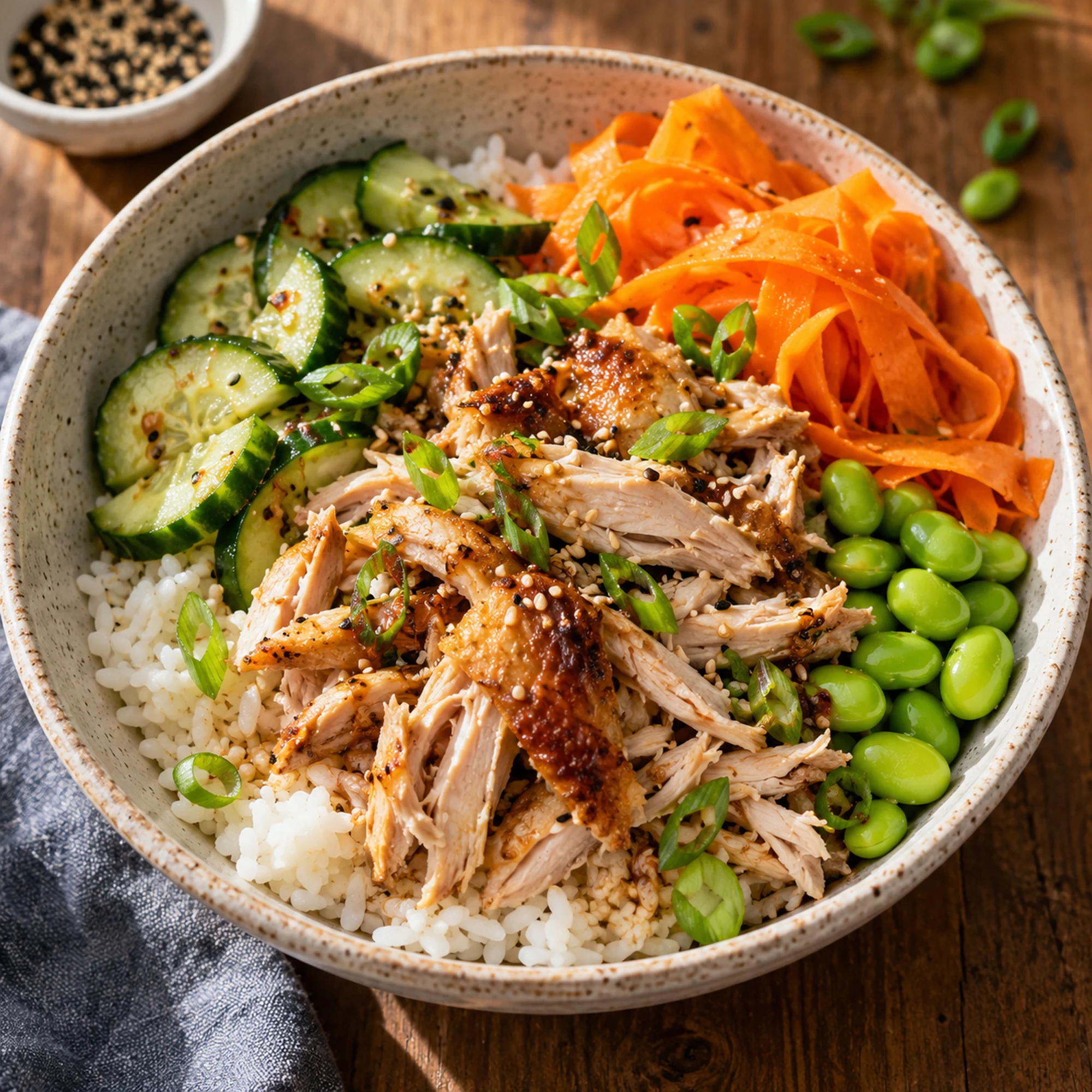
Use cooked chicken, fluffy rice and crisp vegetables, then drizzle the sauce lightly at the table.
I prefer keeping the components in separate sections until the bowl reaches the table. The chicken stays visible, the vegetables keep their crispness and the dressing can be adjusted without flooding the rice. Use tender pieces from the rotisserie bird and remove skin if you prefer. Shred them into bite-size strands rather than a fine pile that disappears among the grains.
Cook the rice according to its package or your cooker, using the same measuring system for grain and water. While it rests, prepare the vegetables and whisk the sauce. The bowl is flexible about temperature: warm rice can sit under warm chicken or properly chilled toppings. The important distinction is that leftover chicken and rice have been handled and stored safely before assembly.
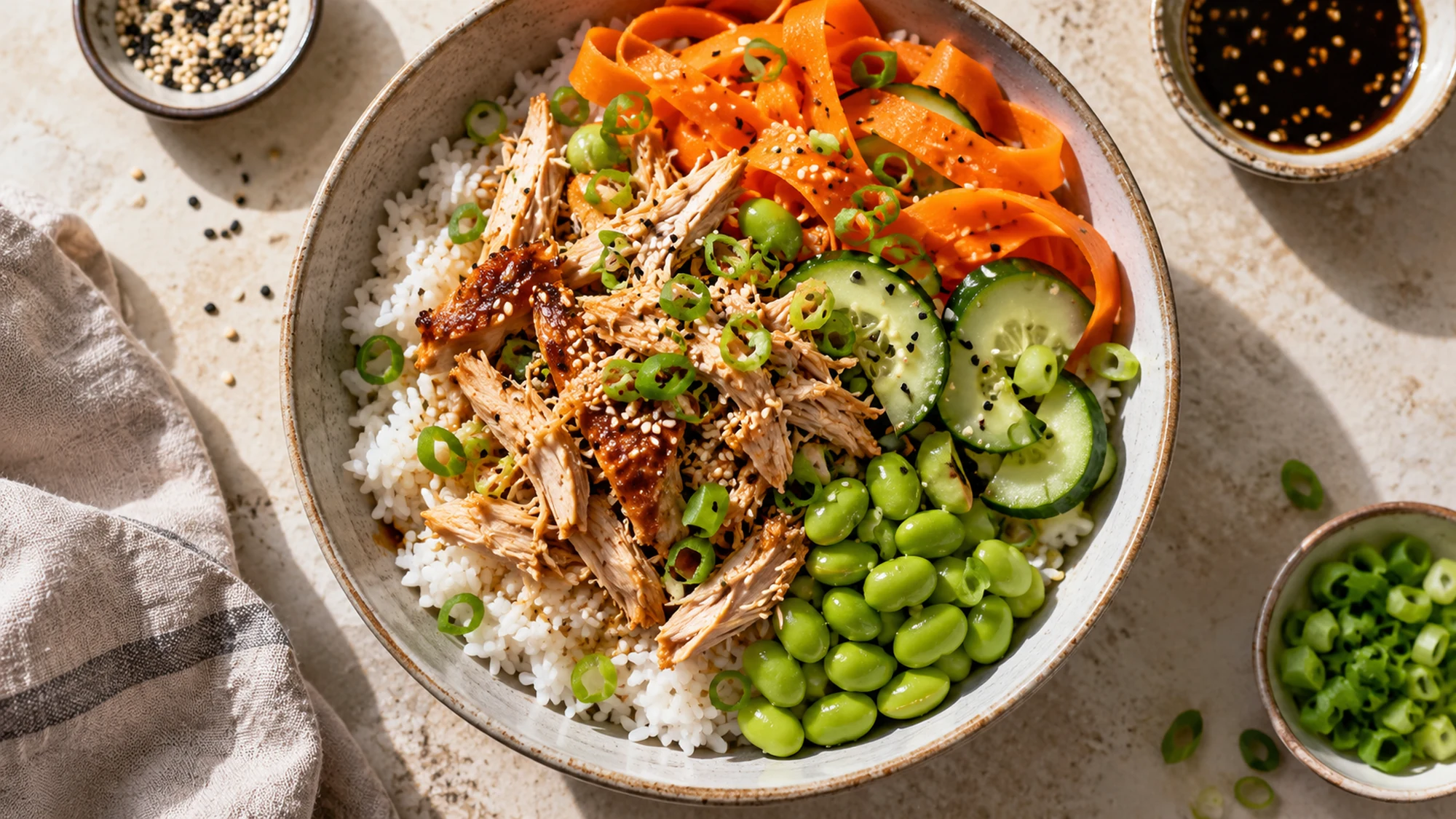
Serving suggestions for rotisserie chicken rice bowl
Divide the rice between bowls, then add an even share of chicken, edamame and vegetables. Finish with scallions and sesame seeds, leaving extra sauce on the side. A little dressing goes a long way when the chicken already carries seasoning. I would begin with a small drizzle, toss a few bites and add more only after tasting.
Serve the bowls promptly so the rice stays fluffy and the vegetables remain fresh. The recipe makes four generous lunches or simple dinners. If you want another chicken meal later in the week, Dishora’s chicken and cabbage soup gives a very different warm-broth option. For this bowl, keep any extra vegetables and sauce separate when packing leftovers.
Keep extra dressing separate so each bowl can be seasoned without soaking the vegetables.
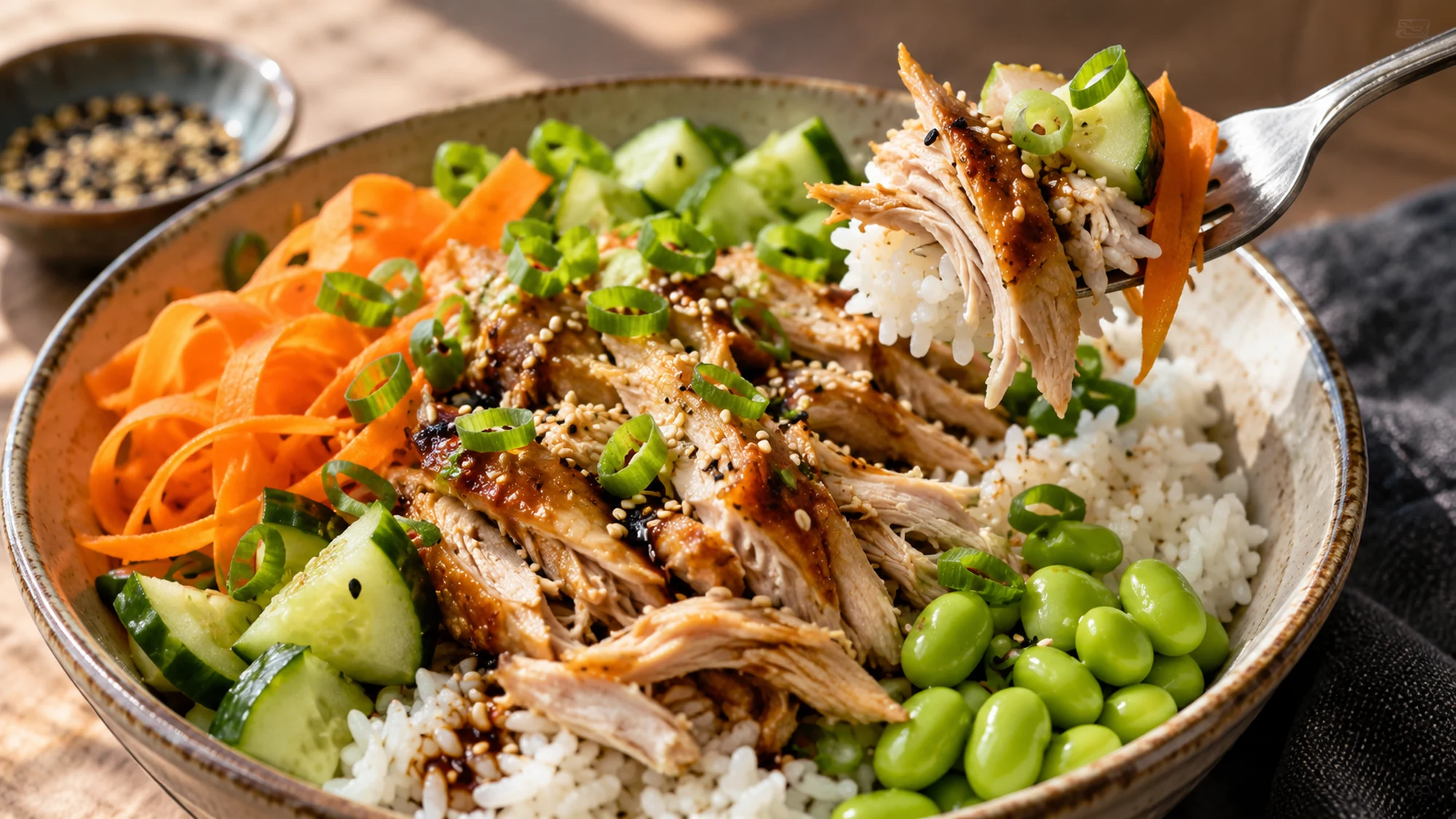
Variations
Brown rice is an optional variation if you prefer its firmer texture. Follow its own cooking time and water amount rather than applying the white-rice directions. You can also use leftover rice that was cooled promptly and refrigerated. The rice cooker guide helps explain why grain type and appliance settings affect how much water is needed.
The vegetables are easy to adapt without changing the bowl’s basic idea. Shredded cabbage adds crunch, while a few thin radish slices add a peppery note. Cooked edamame contributes substance, but check its package for preparation directions. Keep the total topping quantity similar so the measured dressing can season the bowl without becoming an afterthought or needing several extra spoonfuls of soy sauce.
- Honey softens the dressing’s vinegar and soy flavors.
- A little sugar can replace it if needed, though it should be dissolved thoroughly.
- Fresh ginger gives a brighter finish than a large amount of dried ginger.
- I like tasting the sauce on a spoonful of rice instead of by itself: the grain softens its intensity, giving a better idea of the finished bowl.
Change the grain or vegetables deliberately, while following their own cooking and handling needs.
Health benefits
Chicken and edamame supply protein, while rice provides carbohydrate and the vegetables add fiber and variety. Sesame oil makes the dressing aromatic with a small amount of fat. The nutrition estimate describes one quarter of the prepared recipe and changes with the chicken’s skin, seasoning and portion size. A bowl is easy to customize, but the card’s numbers describe the stated version.
Rotisserie chicken can carry substantial sodium before any soy sauce is added. Use reduced-sodium soy sauce if preferred and compare the chicken label when available. The sodium label guide can help with that comparison. Taste the assembled bowl before adding salt; fresh cucumber and carrot do not need extra seasoning when the dressing is already savory.
- Refrigerate cooked chicken and rice promptly in covered containers.
- When serving leftovers hot, reheat them to 165°F; a cold bowl can use chicken that has stayed properly refrigerated.
- Soy and sesame are present in the recipe, so read labels for guests with allergies.
- Keep the sauce and raw vegetables apart from the hot components if packing a bowl to eat later.
Read the chicken and soy sauce labels, and handle cooked rice and poultry promptly after serving.
Give the cooked chicken a fresh direction
The convenient part is the cooked chicken, but the fresh details make the meal feel complete. Fluff the rice, slice the vegetables and whisk a small amount of dressing. Put the components together just before eating, then adjust the sauce at the table. It is a practical bowl to repeat whenever a rotisserie chicken needs a new direction.
Rotisserie Chicken Rice Bowl Recipe

Ingredients
- 1 1/2 cups long-grain rice uncooked
- 2 1/4 cups water or package amount
- 2 cups shredded rotisserie chicken skin removed if desired
- 1 cup shelled edamame cooked
- 1 medium English cucumber diced
- 1 medium carrot shredded
- 2 scallions sliced
- 2 tablespoons low-sodium soy sauce
- 1 tablespoon rice vinegar
- 1 tablespoon toasted sesame oil
- 1 teaspoon honey
- 1 teaspoon fresh grated ginger
- 1 teaspoon toasted sesame seeds
Equipment
- Rice cooker or saucepan
- Small bowl and whisk
- Knife and cutting board
Instructions
- Rinse rice until water is mostly clear. Combine with measured water and cook in a rice cooker or covered saucepan according to package directions. Rest 5 minutes, then fluff.
- Remove rotisserie chicken from the bones and shred into bite-size pieces. If serving warm, reheat until steaming and 165°F. Dice cucumber, shred carrot and cook edamame according to package.
- Whisk soy sauce, rice vinegar, sesame oil, honey and grated ginger until combined. Add a splash of water for a lighter drizzle.
- Divide rice among four bowls. Arrange chicken, edamame, cucumber and carrot on top. Spoon over sesame ginger sauce and finish with scallions and sesame seeds.
- Serve warm rice with warm or chilled toppings. Keep extra sauce on the side so vegetables remain crisp and each person can season to taste.
Nutrition
Video
Notes
Tried this recipe?
Let us know how it turned out!Emily Parker is DISHORA’s recipe-writing persona, bringing a warm, practical voice to everyday cooking. Her focus is simple ingredients, comforting flavors and clear steps that make a dish feel approachable. From cozy dinners to something sweet, Emily’s recipes invite readers to try something delicious and make it their own.