

A skillet of eggs can look inviting and still leave a puddle on the plate. Shakshuka works best when the tomato sauce is thick enough to cradle the eggs before they start cooking. This version combines softened red pepper and onion with paprika, cumin and canned tomatoes, then finishes with eggs and parsley for a warm, savory meal.
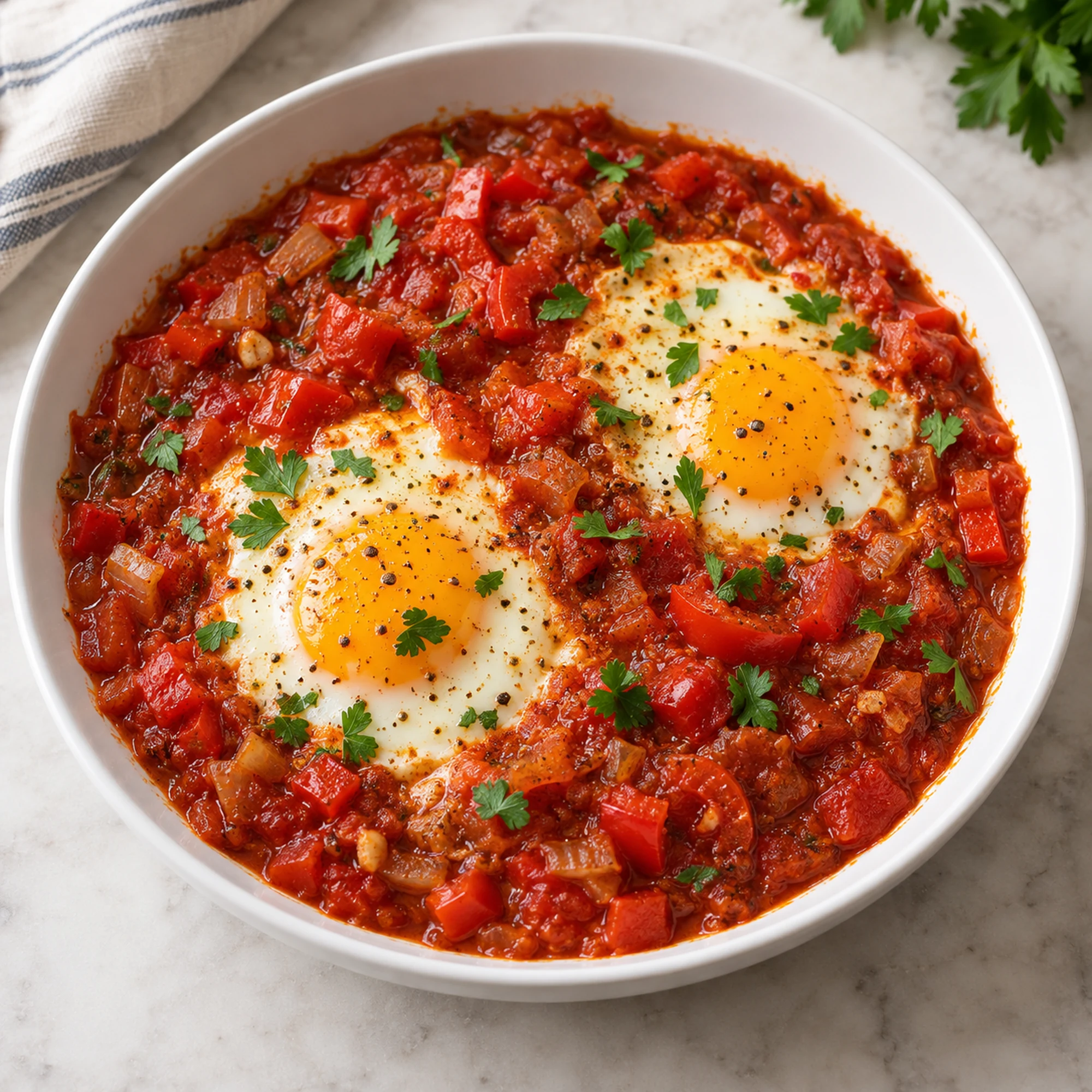
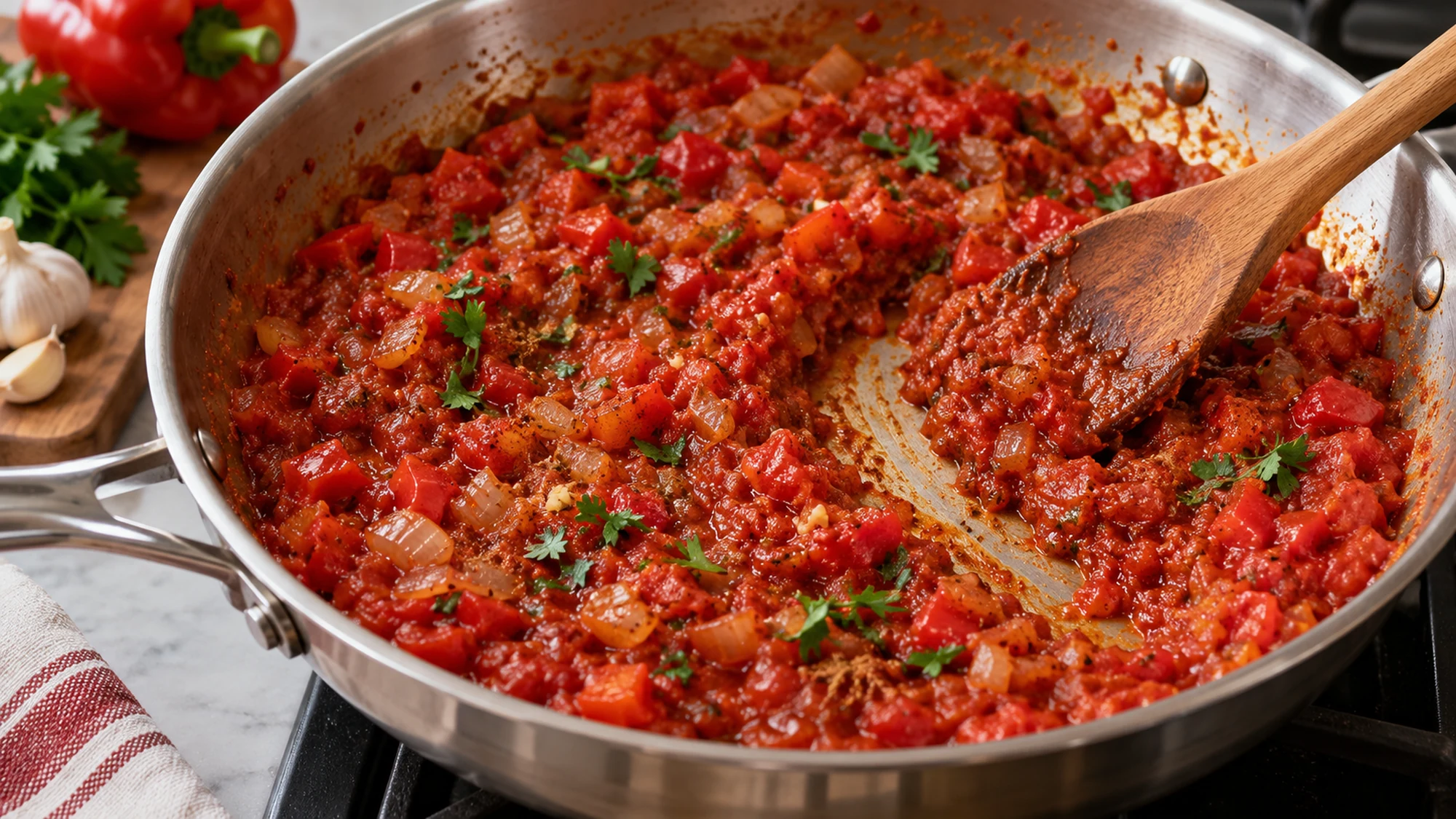
Let the sauce reduce until a spoon leaves a brief trail, then add the eggs and cook gently until their whites and yolks are firm. A wide skillet and a lid help you manage the sauce and eggs separately.
Shakshuka is associated with North African and Middle Eastern cooking, with many regional and household versions. Here, the practical advantage is a tomato base you can prepare ahead. I prefer a stainless steel skillet for this acidic sauce, and I would judge the reduction by its texture rather than watching the clock alone.
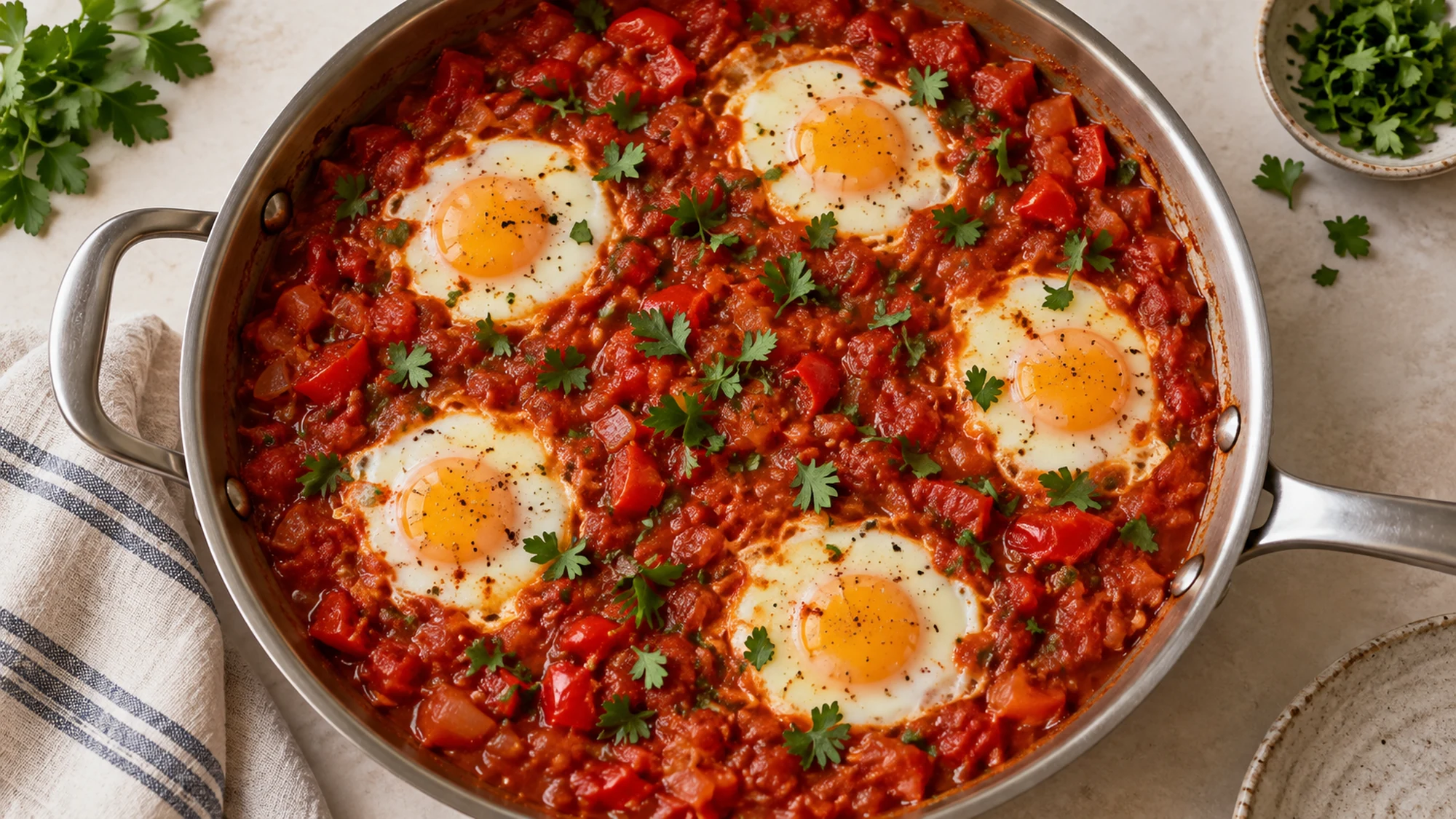
Serving suggestions for shakshuka
Serve the eggs promptly, scooping underneath each one so the surrounding sauce comes along. The card makes three generous portions with two eggs each. For a lighter breakfast, divide it into six smaller portions and choose sides to suit the meal.
- Bring bread to the table. Warm pita, toast or slices of crusty baguette give the sauce somewhere useful to go. Keep the bread separate until serving so it retains its bite.
- Add a cool contrast. A simple cucumber salad with lemon dressing brings crunch alongside the warm tomato base. Put it in a separate bowl; its dressing should not loosen the sauce.
- Keep toppings modest. Parsley adds a fresh finish. If you choose feta or yogurt, offer a small amount at the table and account for the added dairy and salt.
- Plan tomorrow’s portion. Refrigerate leftovers promptly in shallow covered containers and use within three to four days. Reheat to 165°F (74°C); cooked eggs become firmer, so the fresh skillet has the better texture.
Set the plates and bread out before adding the eggs. This is a meal that benefits from being served as soon as it is ready, while the sauce is warm and the garnish still fresh.
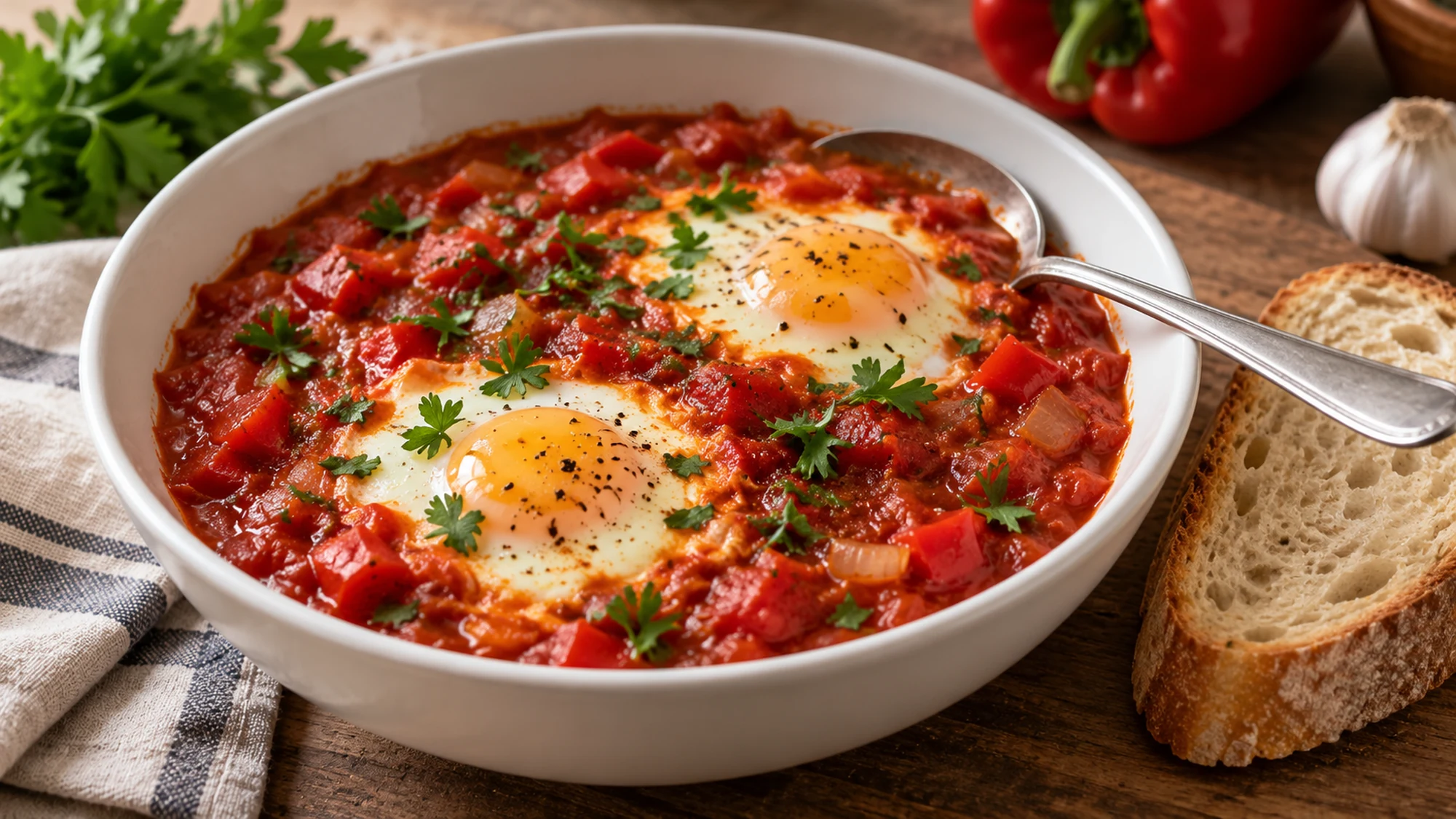
Variations that preserve a thick tomato base
Small flavor changes are easier to manage than changing the whole cooking method. Ground cumin supplies earthy warmth, while sweet paprika adds pepper flavor without requiring a hot sauce. I would start mildly and let people add heat individually.
- Choose your heat. Add a small pinch of red pepper flakes with the spices, or offer hot sauce after cooking. A spoonful of heat is easier to add than to remove.
- Use crushed tomatoes. Substitute the same can weight for whole peeled tomatoes. They usually need less breaking up, but still simmer until thick; brand and packing liquid affect the timing.
- Change the herbs. Cilantro can replace the parsley if you enjoy it. Add either herb at the end so its fresh flavor remains distinct from the cooked sauce.
- Prepare only the base ahead. Make the sauce without eggs, cool and refrigerate it promptly, then reheat thoroughly before adding fresh eggs. Keep the same three-to-four-day refrigerated limit for the prepared base.
If the sauce looks watery, give it more uncovered simmering time before adding the eggs. Once the eggs are in place, prolonged cooking to fix the sauce also changes their texture.
Health benefits and practical portion choices
Eggs contribute protein, and the tomatoes, pepper and onion bring vegetable variety and some fiber. Olive oil adds fat and richness. Those ingredients can fit into a balanced meal, but the dish does not need a promise about weight loss, immunity or other specific health outcomes.
- Consider the whole plate. Bread, cheese and other sides change the meal’s nutrition. Two eggs with sauce are a different portion from one egg with a large side of toast.
- Control seasoning. Choose lower-sodium canned tomatoes when useful, then taste the reduced sauce before adding more salt. Reduction concentrates the flavor already present.
- Check individual needs. The recipe contains eggs. Optional dairy toppings and bread introduce additional allergens; packaged ingredients should be checked when cooking for someone with an allergy.
Choose the portion and accompaniments that suit your appetite. The useful goal is a satisfying meal with clear ingredients, rather than attaching a sweeping health label to a skillet.
Motivation conclusion: give the sauce its head start
Get the chopping done, find a lid that fits your skillet and set out the serving plates. Pay attention to the sauce’s spoon trail, then let gentle heat finish the eggs. The recipe rewards a little organization, and there is no stack of individually fried eggs to keep warm while everyone waits.
Shakshuka Recipe

Ingredients
- 2 tbsp olive oil
- 1 medium yellow onion about 110 g, diced
- 1 red bell pepper about 150 g after trimming, diced
- 3 garlic cloves about 12 g, minced
- 1 tsp sweet paprika
- 0.5 tsp ground cumin
- 1 28-oz can whole peeled tomatoes 794 g, with their juice
- 0.5 tsp fine salt start with less if the tomatoes are heavily salted
- 0.25 tsp ground black pepper
- 6 large eggs
- 2 tbsp chopped fresh parsley divided
Equipment
- 1 12-inch stainless steel skillet with a lid At least 2 inches deep
- Wooden spoon or silicone spatula
- Knife and cutting board
- Instant-read food thermometer
- Small bowl
Instructions
- Heat the oil in the skillet over medium heat. Add the onion and red pepper; cook, stirring, for 7–9 minutes, until softened. Reduce the heat if the onion starts browning.
- Stir in the garlic, paprika and cumin for 30 seconds. Add the tomatoes and their juice, breaking the tomatoes into small pieces with the spoon. Stir in the salt and black pepper.
- Simmer uncovered over medium-low heat for 12–15 minutes, stirring occasionally, until a spoon drawn across the bottom leaves a brief trail. If the sauce begins sticking before it thickens, reduce the heat. Stir in 1 tablespoon of the parsley.
- Make six wells in the hot sauce. Crack each egg into the small bowl first, then slide it into a well. Cover and cook over low heat for about 8–12 minutes, checking frequently. Continue until both whites and yolks are firm; the egg mixture should reach 160°F (71°C). Timing varies with egg size and skillet heat.
- Scatter the remaining parsley over the eggs. Divide into three portions with two eggs and one-third of the sauce each, and serve promptly.
Nutrition
Video
Notes
Tried this recipe?
Let us know how it turned out!Emily Parker is DISHORA’s recipe-writing persona, bringing a warm, practical voice to everyday cooking. Her focus is simple ingredients, comforting flavors and clear steps that make a dish feel approachable. From cozy dinners to something sweet, Emily’s recipes invite readers to try something delicious and make it their own.