
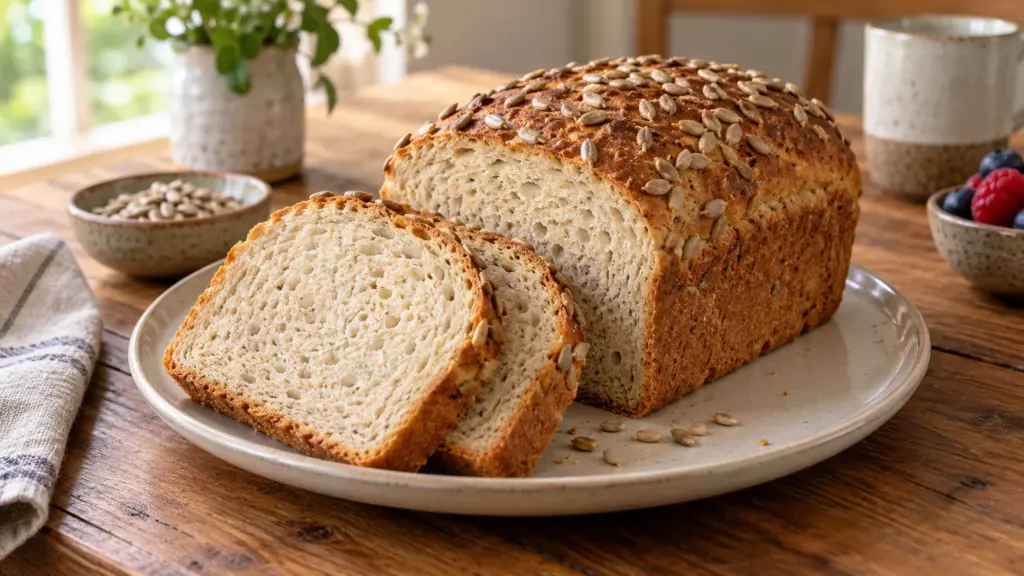
A loaf can look wonderfully rustic and still tell you very little about what is inside. When you are choosing gluten free bread, the useful questions are quieter ones: does the label meet your needs, will the slices hold a sandwich, and how much bread will you actually finish?
Gluten free bread uses alternatives to conventional wheat, barley and rye ingredients. For FDA-regulated packaged food, a gluten-free claim requires less than 20 parts per million of gluten; a wheat-free claim alone does not mean the same thing.
I’d start with the safety information before judging the crust. After that, there is plenty of room for preference: a soft breakfast slice and a sturdy, seed-filled toast do different jobs.
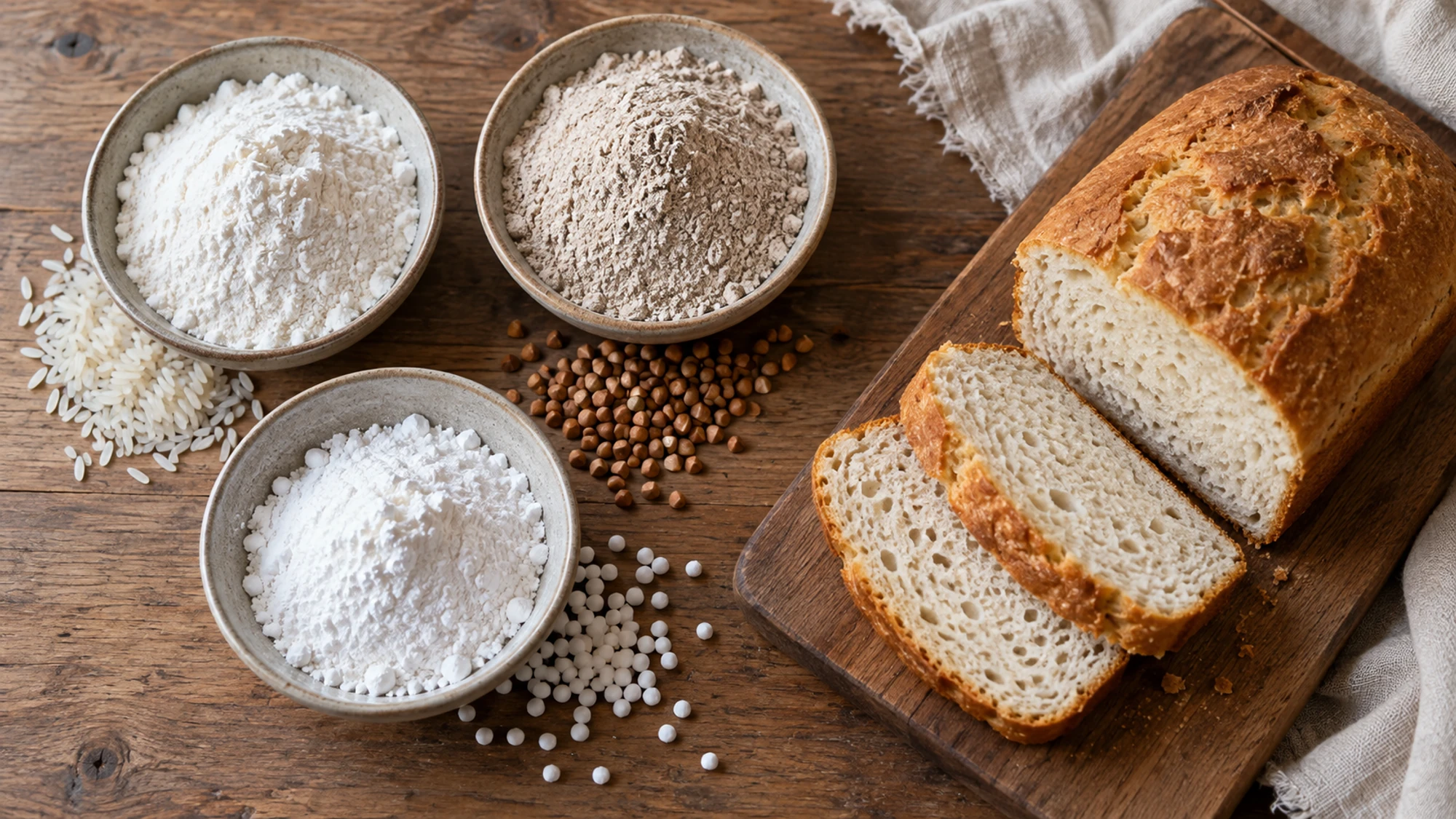
What counts as gluten free bread?
The FDA’s gluten-free labeling rule sets ingredient restrictions as well as the less-than-20-ppm limit. “No gluten,” “without gluten” and “free of gluten” have equivalent requirements. The claim is voluntary, so an absent claim is a reason to investigate rather than guess.
An ordinary wheat baguette belongs in a different category. A traditional appearance, a sour flavor or an overnight fermentation does not establish that a loaf meets gluten-free requirements. Read the actual product information rather than treating the bread’s name as proof.
| Label or cue | What to check |
|---|---|
| Gluten-free | Look for the explicit claim and read the ingredients. |
| Wheat-free | Barley or rye can still be present; it is not an equivalent claim. |
| Seeded or whole grain | Appearance does not establish gluten status or nutrient amounts. |
| Gluten-free with wheat listed | Some processed wheat starch can qualify; wheat allergy is a separate issue. |
Compare the slices you will actually eat
Start with serving size and slice weight. Comparing a tiny slice with two thick slices can make the numbers misleading before you have even opened the bag. Look across fiber, protein, sodium and added sugars using equivalent portions.
- Read the ingredient list for foods you personally need to avoid, including egg, milk, nuts or soy.
- Check whether the package describes a soft sandwich loaf, a dense seeded loaf or bread intended for toasting.
- Compare the price for the amount you expect to use, including any slices you will freeze.
I prefer a loaf that suits its everyday job over one with a long list of promises. If sandwiches are the goal, the slice needs enough structure for the filling; for toast, a firmer crumb can be perfectly welcome.
What nutrition research can tell you
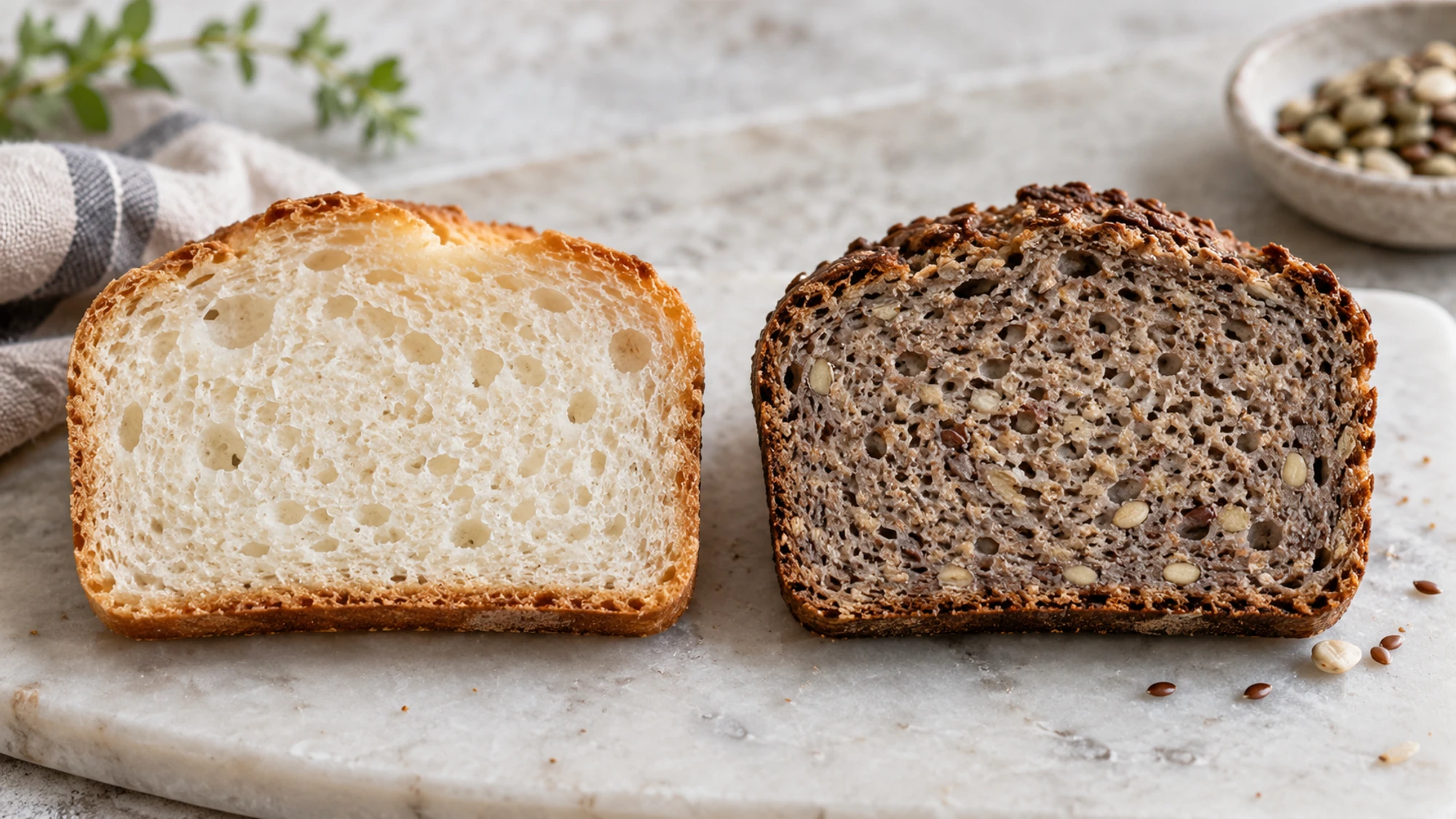
A 2025 laboratory comparison of gluten-free and gluten-containing flours and breads examined products bought through Spanish retailers. It found that composition depends on the product type and formulation; added fibers and other structural ingredients also matter. The gluten-free breads in this sample had higher average fat and fiber than the gluten-containing breads, rather than lower amounts across the board.
That study analyzed foods, not long-term health outcomes, and its pooled brand samples cannot describe every American loaf. It is a useful reason to compare actual packages rather than assume all gluten-free bread has the same fiber or fat content.
Gluten-free describes a specific dietary requirement. It does not, by itself, tell you whether one bread is more nutritious than another.
Keep gluten free bread away from shared crumbs
For people with celiac disease, cross-contact matters after shopping, too. NIDDK recommends separate storage and preparation for gluten-free foods and contacting manufacturers when ingredients are uncertain.
- Keep the loaf closed and separate from ordinary bread.
- Use clean preparation surfaces and utensils; avoid returning a crumb-covered knife to a shared spread.
- Ask about ingredients and preparation when buying an unpackaged bakery loaf.
If you suspect celiac disease but have not been tested, discuss testing with your clinician before removing gluten. NIDDK explains that starting a gluten-free diet first can make the results inaccurate.
Choose a texture and storage routine
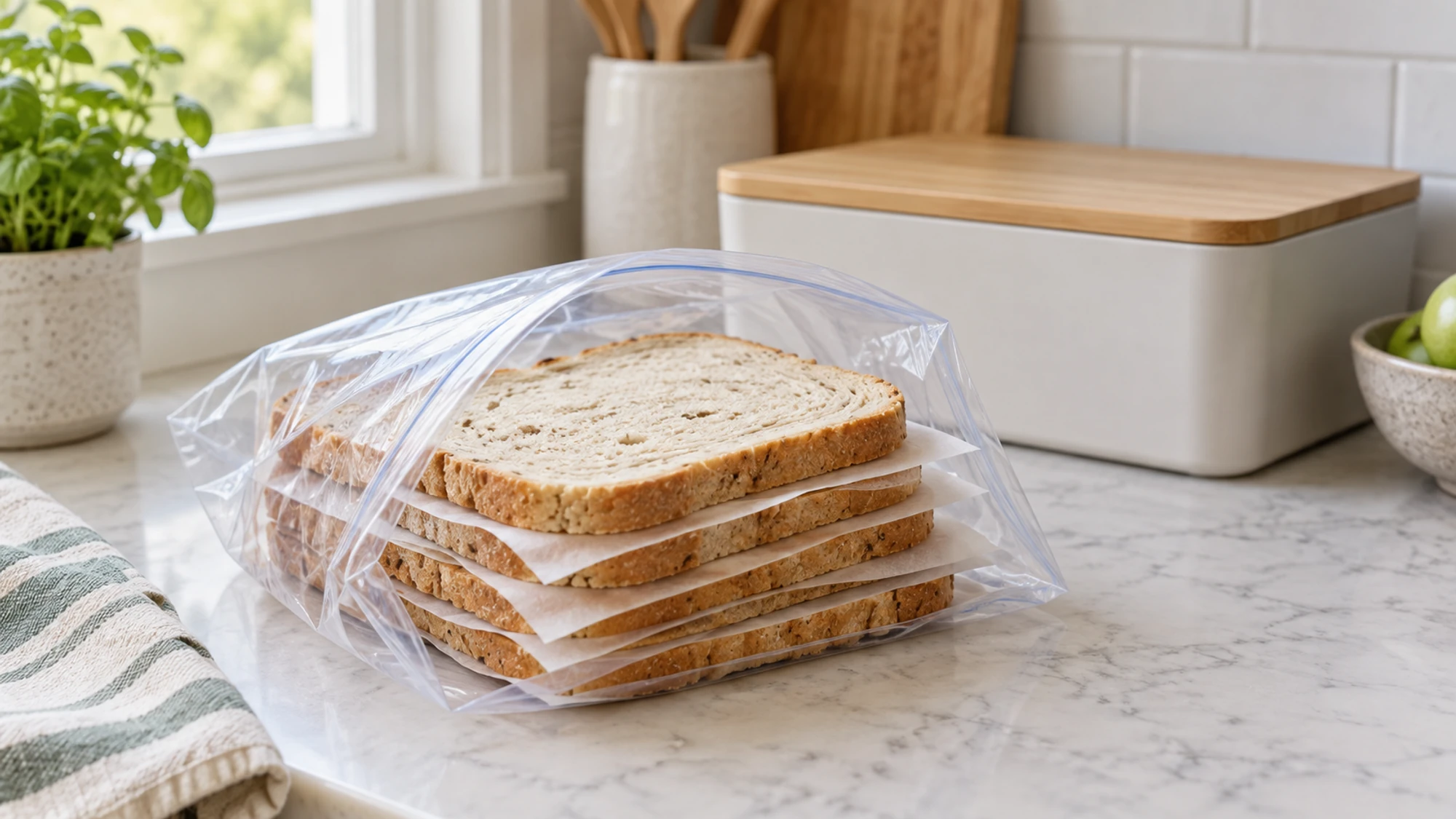
Follow the package’s storage and thawing instructions; shelf-stable, refrigerated and frozen products need different handling. If freezing is recommended, separate slices so breakfast does not require thawing the whole loaf. There is no single storage timetable for every formulation.
Build meals around variety, too. For another grain-style option, our guide to cooking plain quinoa in a rice cooker explains the texture and appliance choices; check packaged ingredients whenever gluten avoidance matters.
Choose a clearly suitable label, compare equivalent portions, and protect the loaf from shared crumbs. Then let flavor, texture and your real routine decide which bread earns a place at the table.
Sources
- FDA: gluten-free food labeling questions and answers.
- NIDDK: eating and nutrition for celiac disease.
- Determination and Comparison of Fat and Fibre Contents, 2025.

Emily Parker is DISHORA’s recipe-writing persona, bringing a warm, practical voice to everyday cooking. Her focus is simple ingredients, comforting flavors and clear steps that make a dish feel approachable. From cozy dinners to something sweet, Emily’s recipes invite readers to try something delicious and make it their own.