

The kettle clicks off, and a box of chamomile promises a quieter evening. Before giving that golden cup a job description, it helps to separate a pleasant drink from a proven treatment. Chamomile tea benefits have some encouraging research behind them, alongside important limits.
Chamomile may help some measures of sleep quality, but it is not an established insomnia treatment. Tea and concentrated extracts are different products, and allergies or medicines can change whether either is suitable for you.
I’d choose chamomile for a gentle, floral drink first, rather than expect it to fix a difficult night. Here is what the studies actually measured and what deserves a closer look before you pour.
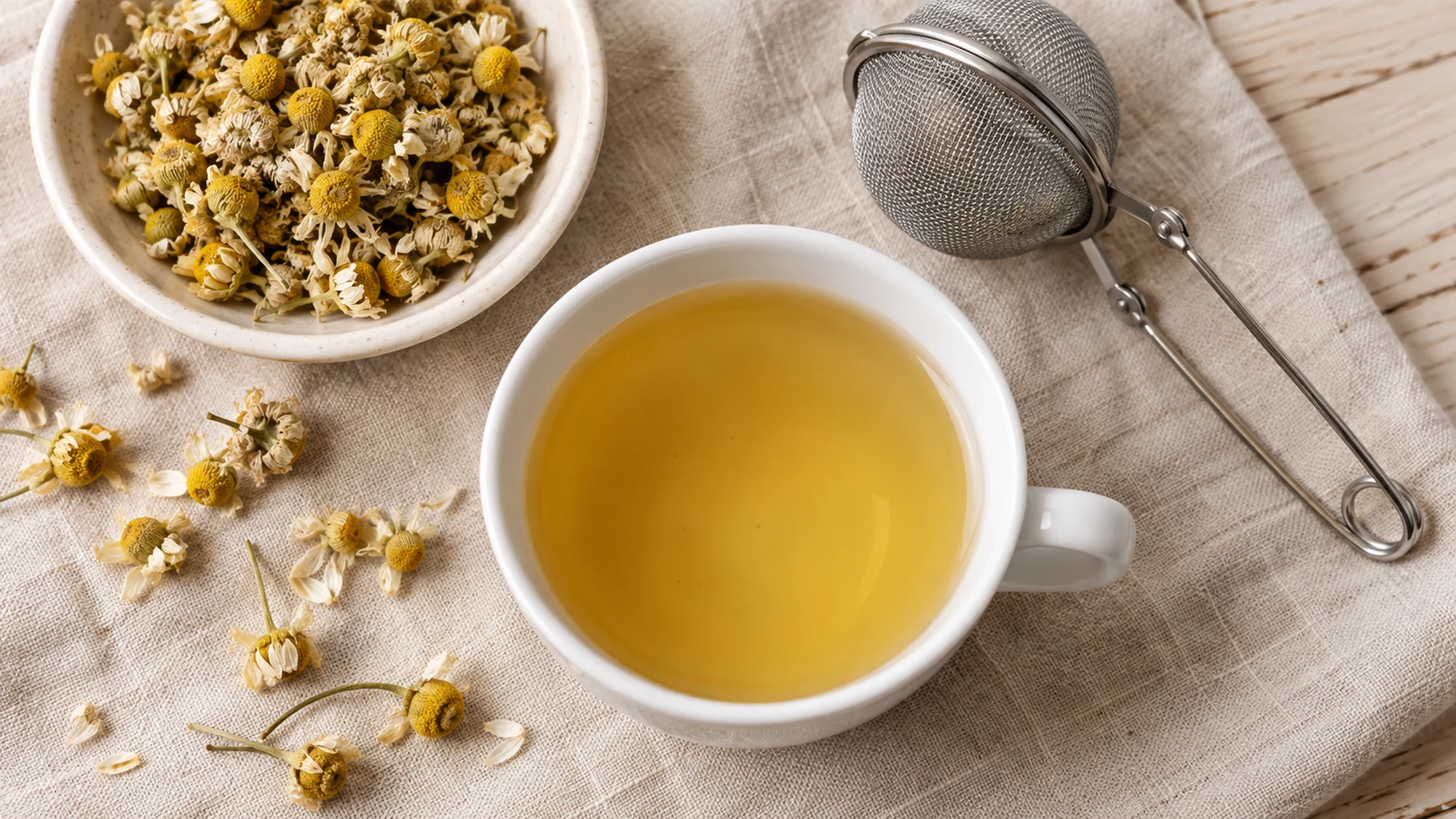
Chamomile tea benefits at a glance
Chamomile tea is an infusion of dried flowers. Most research concerns German chamomile, and studies use different preparations, doses and participants. That makes the product in the study just as important as the plant’s name.
| Claim | Evidence | Practical meaning |
|---|---|---|
| Better sleep quality | Some encouraging findings | Possible benefit; no guaranteed result |
| Treating insomnia | Insufficient reliable evidence | Do not replace insomnia care |
| Reducing anxiety | Preliminary supplement research | Not proof for a mug of tea |
| Relieving digestive problems | Traditional use; limited evidence | Chamomile alone is not established treatment |
These distinctions reflect NCCIH’s chamomile evidence overview. A traditional use can explain a tea’s reputation without establishing that it treats a condition.
Read a benefit claim with three questions in mind: which product, which people and which outcome? A positive result in one setting does not answer all three.
Can chamomile help you sleep?
A 2024 systematic review of 10 studies involving 772 participants found improved sleep-quality scores, but not longer sleep, better sleep efficiency or improved daytime functioning. Results varied considerably across studies, and the authors called for more objective measurements. Feeling that sleep is better and actually sleeping longer are different outcomes.
In a 2016 trial involving 80 Taiwanese women after childbirth, two weeks of tea improved one sleep-related measure compared with usual care. The groups’ scores were similar at the four-week follow-up. This narrow, short-term finding does not establish a lasting benefit for everyone.
- Tea-specific evidence: Relevant to a brewed drink, but limited in size and population.
- Extract evidence: A 2011 trial in 34 adults with chronic insomnia found no significant between-group improvement in sleep-diary measures.
- Useful next step: Seek help for persistent sleep trouble instead of increasing the strength of your tea.
- No universal dose: These studies do not establish one number of cups for everyone. Different preparations cannot be converted reliably into tea bags, so a supplement dose is not a brewing instruction.

What anxiety and digestion claims leave out
A 2019 review of randomized trials found some encouraging results for generalized anxiety disorder, but no clear benefit for situational anxiety. Those are different conditions, and the findings do not make an ordinary cup equivalent to a studied supplement.
For digestive complaints, NCCIH notes that studies of herbal combinations cannot establish chamomile’s individual effect. A blend containing chamomile is not evidence that chamomile alone treats bloating, colic or diarrhea.
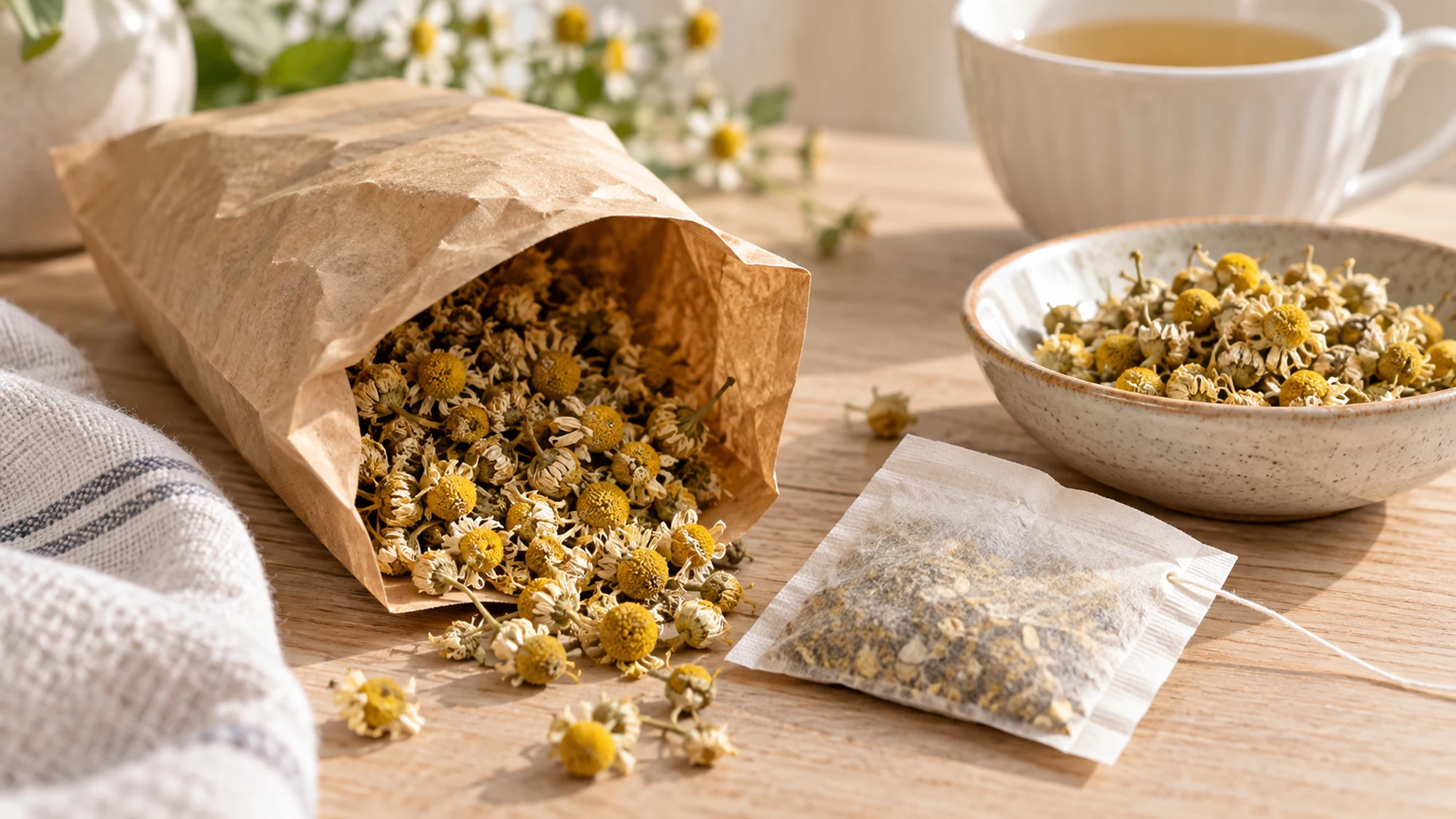
Choose your tea and check the cautions
I prefer a short ingredient list here: it makes the drink easier to understand. Check whether the package contains only chamomile or a blend, and look for an explicit caffeine-free label if avoiding caffeine is your aim. Follow the product’s brewing directions rather than treating stronger as better.
- Allergies: Reactions are more likely with allergies to ragweed, daisies and related plants. Rare severe reactions are possible.
- Medicines: Reported interactions include warfarin and some liver-metabolized medicines; interactions with sedatives are also possible. Ask a pharmacist or clinician before combining them.
- Pregnancy or breastfeeding: Safety information is limited. Check with your maternity care team rather than assume an herbal drink is automatically suitable.
These cautions come from NCCIH’s safety guidance, which describes ordinary food and tea amounts as likely safe for most people. The postpartum sleep trial should not be read as proof of breastfeeding safety.
The practical takeaway
Think about the kind of drink you enjoy, without asking it to deliver a medical result. If floral tea is not appealing, DISHORA’s pure chicory coffee guide and recipe offers a different, roasted flavor. That is a taste comparison, not evidence that the two drinks share health effects.
For an occasional cup, follow the tea packet’s directions and let flavor guide your choice; a stronger brew is not evidence of a greater benefit.
Enjoy chamomile if it suits you, keep expectations modest and check relevant cautions. A pleasant evening cup can earn its place without promising to treat insomnia, anxiety or digestive disease.
Sources
- NCCIH: chamomile evidence and safety
- 2024 sleep review
- 2016 tea trial
- 2011 insomnia trial
- 2019 anxiety and sleep review

Emily Parker is DISHORA’s recipe-writing persona, bringing a warm, practical voice to everyday cooking. Her focus is simple ingredients, comforting flavors and clear steps that make a dish feel approachable. From cozy dinners to something sweet, Emily’s recipes invite readers to try something delicious and make it their own.