
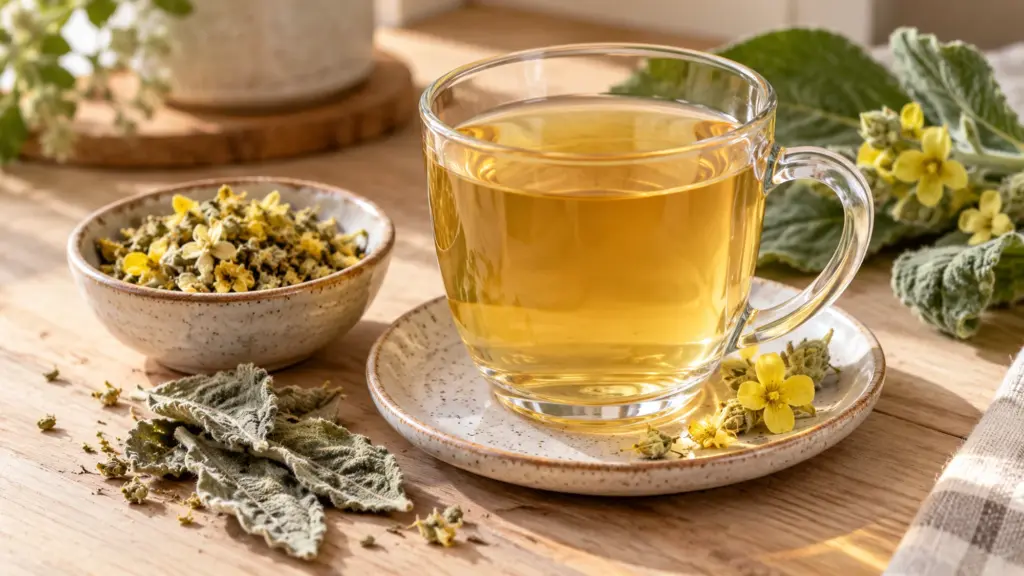
A bag of mullein tea can come with an impressive list of promises, from a calmer throat to cleaner lungs. The most useful place to start is the ingredient label: a tea made from leaves is not automatically the same product as a traditional flower medicine.
Mullein flower has a history of use for sore throat with dry cough and colds, but strong clinical evidence is lacking. Leaf tea, flower tea, concentrated extracts and ear oils should not be treated as interchangeable products.
I’d give a clearly identified tea more attention than a dramatic wellness slogan. Here is how to understand the plant, judge the evidence and decide which questions to ask before putting it in your mug.
What is mullein tea?
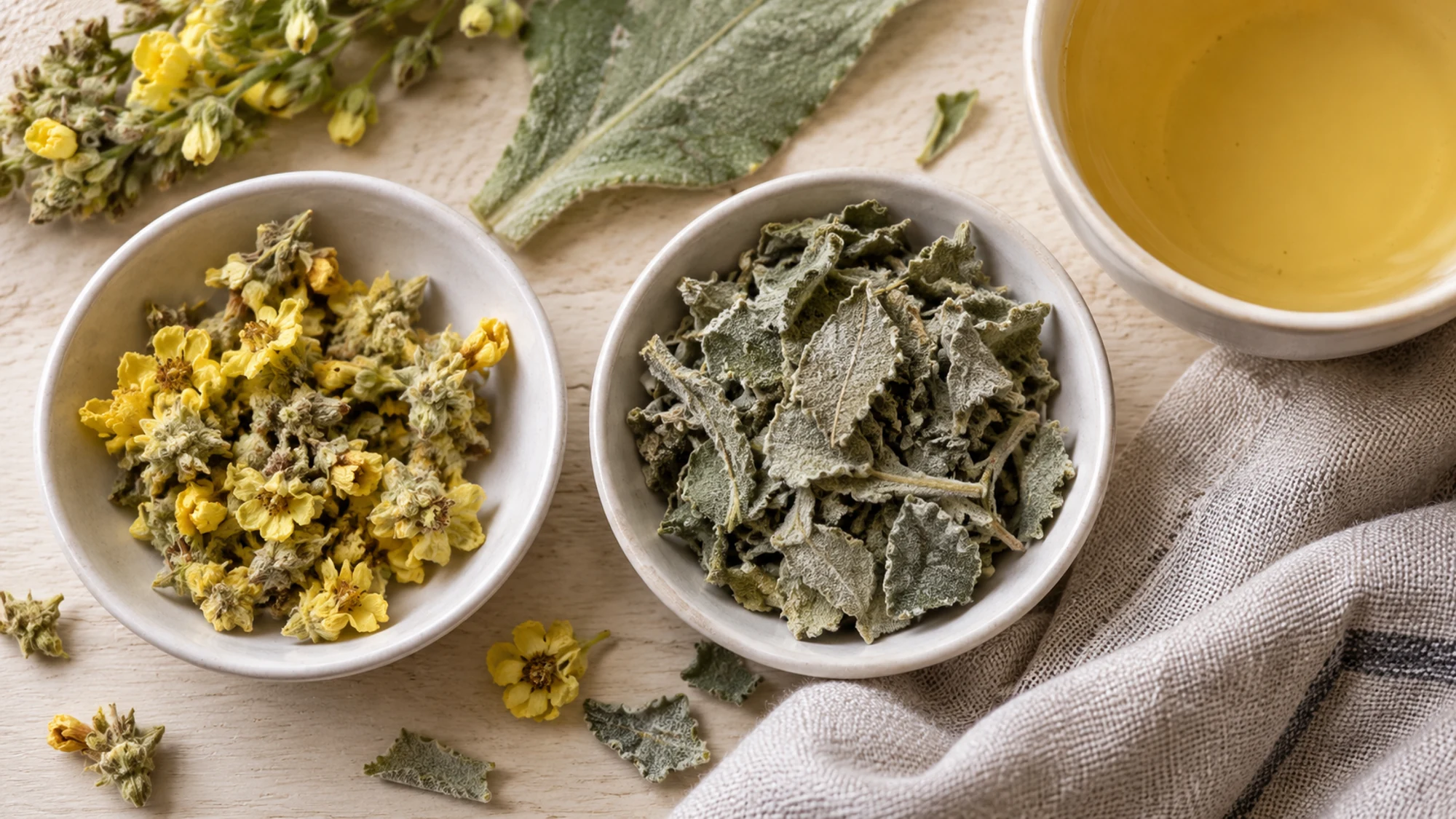
Mullein usually refers to plants in the Verbascum genus, including Verbascum thapsus. A 2022 review of common mullein describes traditional preparations made from leaves, flowers, roots and oils. Those different plant parts help explain why products sold under one familiar name can look very different.
For a consumer, the useful detail is the actual botanical ingredient and plant part. A package labeled simply “mullein” leaves more uncertainty than one identifying the species, leaf or flower, and intended use.
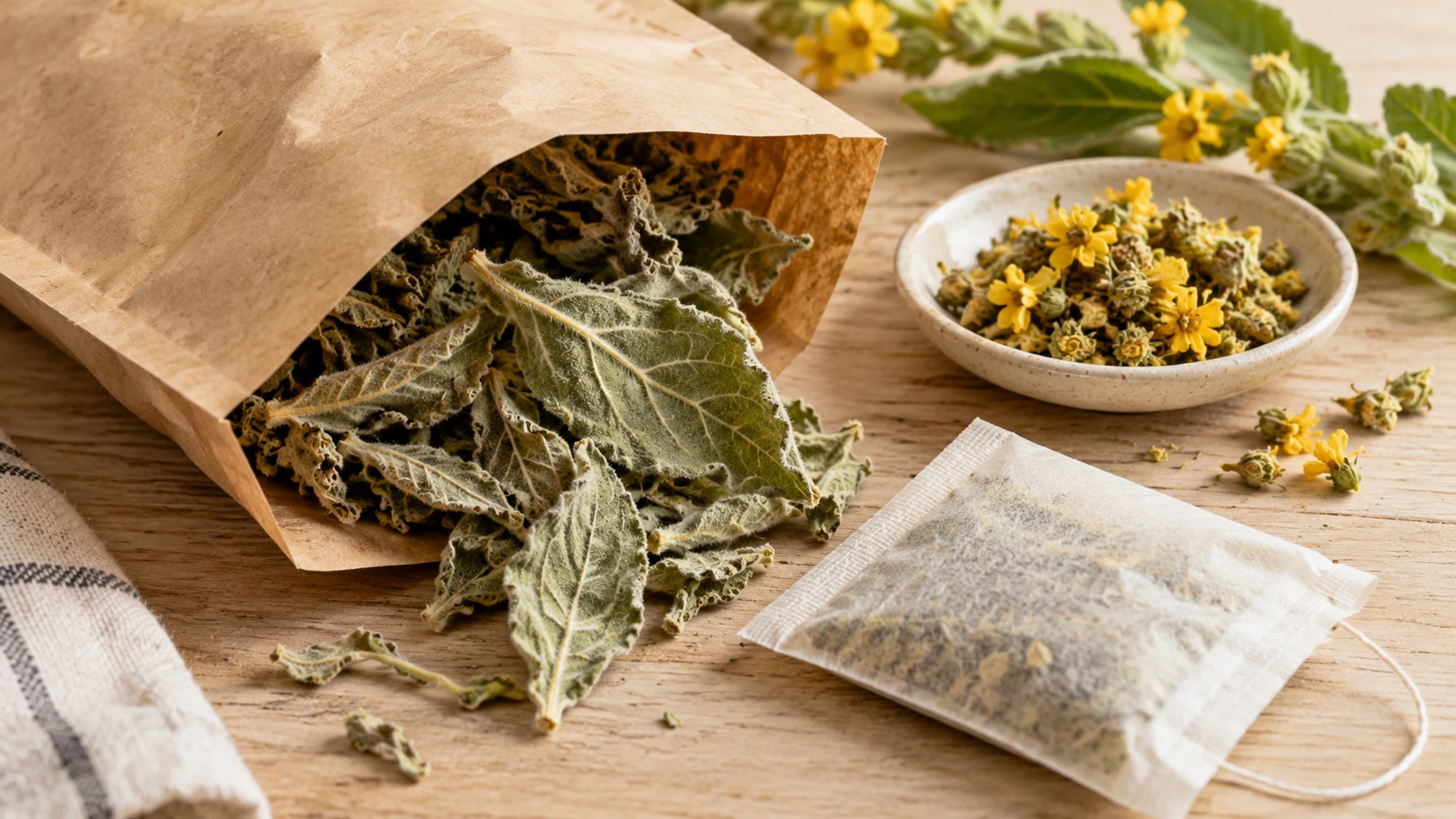
- Leaf tea: Check that the package specifically identifies leaves.
- Flower tea: Look for a clear flower designation, rather than assume every yellow herbal blend qualifies.
- Blends: Read the entire ingredient list; additional herbs introduce their own effects and cautions.
What the evidence supports
The European Medicines Agency’s mullein-flower summary recognizes a traditional use for sore throat associated with dry cough and colds. It explicitly notes insufficient clinical-trial evidence. Traditional use is a regulatory evidence category based partly on long-standing use, not a claim that modern trials have proved effectiveness.
| Claim | Evidence boundary | What to do |
|---|---|---|
| Soothes a dry, irritated throat | Traditional flower use | Keep expectations modest |
| Treats asthma or lung disease | Not established by that traditional-use assessment | Continue appropriate medical care |
| “Detoxes” the lungs | Not demonstrated by the cited evidence | Treat the promise skeptically |
| An extract works like tea | Different preparation and concentration | Do not transfer results automatically |
A history of use can explain a tea’s reputation. It does not turn every product, plant part or advertised benefit into a clinically proven treatment.
Why the preparation matters
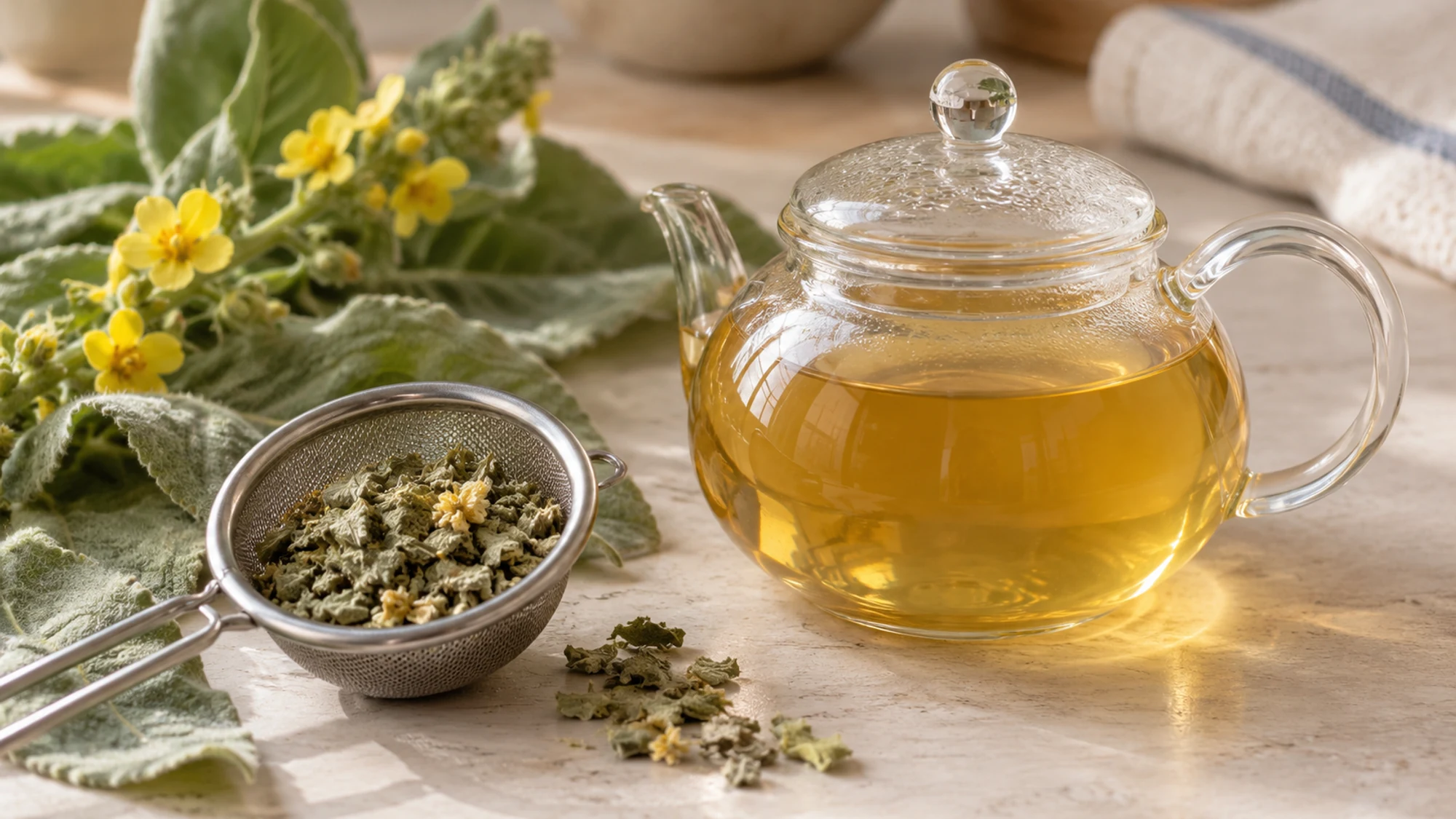
The EMA assessment report evaluates mullein flower preparations and separates traditional use from clinical evidence. That scope matters: you cannot simply carry its conclusions across to an unidentified leaf powder, a concentrated dropper product or something intended for the ear.
Laboratory findings are another common source of confusion. The 2022 review discusses experimental biological activity, but a result in a laboratory does not establish that an ordinary brewed cup produces the same outcome in people.
- Match the form: Evidence about a specific preparation belongs to that preparation.
- Follow its label: Tea bags, loose botanicals and extracts may have different directions.
- Keep routes separate: Do not drink an ear preparation or put a beverage into an ear.
Safety checks before choosing a cup
The EMA flower monograph does not recommend use during pregnancy or breastfeeding because safety data are insufficient. Use in children under 12 is also not recommended. These restrictions deserve more weight than a reassuring “natural” label.
- Medicines or ongoing conditions: Ask a pharmacist or clinician whether the particular product is suitable; limited reports do not establish that every interaction has been ruled out.
- Unexpected symptoms: Stop using a product that causes a suspected reaction and seek appropriate advice.
- A worsening cough: Do not keep escalating herbal products while symptoms persist or worsen.
The NHS cough guidance recommends medical assessment for a cough lasting more than three weeks, and urgent advice for chest pain, breathing difficulty or coughing blood. Seek emergency help for severe breathing difficulty; tea should not delay care.
A practical way to judge the claims
I prefer a small, understandable promise: a clearly labeled beverage you enjoy, with its limitations made visible. Before buying, ask what plant part is inside, what the label actually promises, and whether the supporting evidence studied that same product.
For another herbal-drink comparison, DISHORA’s pure chicory coffee guide and recipe shows how ingredient identity changes a beverage. Compare the actual product, rather than assume everything sold as an herbal drink has the same uses or evidence.
Choose clarity over a long list of benefits. Mullein tea deserves the same thoughtful label reading as any herbal product, and a cup should complement appropriate care rather than carry the burden of treating illness.
Sources
- EMA: mullein-flower overview
- EMA: flower monograph
- EMA: assessment report
- Common mullein review, 2022
- NHS: cough guidance

Emily Parker is DISHORA’s recipe-writing persona, bringing a warm, practical voice to everyday cooking. Her focus is simple ingredients, comforting flavors and clear steps that make a dish feel approachable. From cozy dinners to something sweet, Emily’s recipes invite readers to try something delicious and make it their own.