
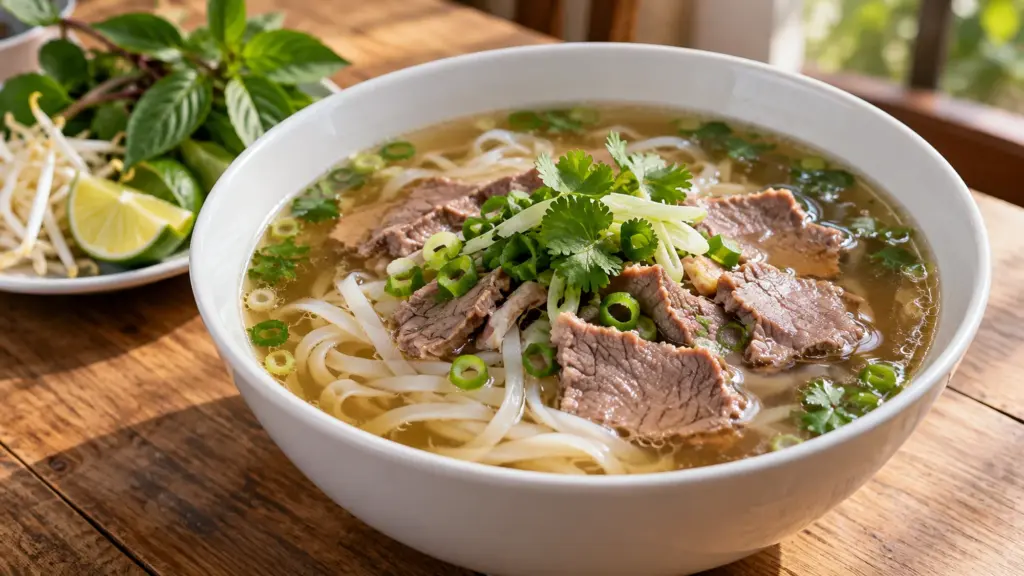
A bowl arrives with a spoon, chopsticks and a little plate of herbs. The broth smells gently spiced, and white noodles sit beneath the surface. If your first question is “what is pho?”, start with the bowl itself: a Vietnamese rice-noodle soup whose broth does much of the flavor work.
Pho, written phở in Vietnamese, is a soup of aromatic broth and flat rice noodles, most commonly served with beef or chicken. Herbs, citrus, chilies and sauces vary with the style and the restaurant.
In English, “fuh” is a useful pronunciation starting point, as Merriam-Webster explains; it does not capture every detail of Vietnamese pronunciation. I’d begin with a spoonful of broth before adding anything from the condiment tray.
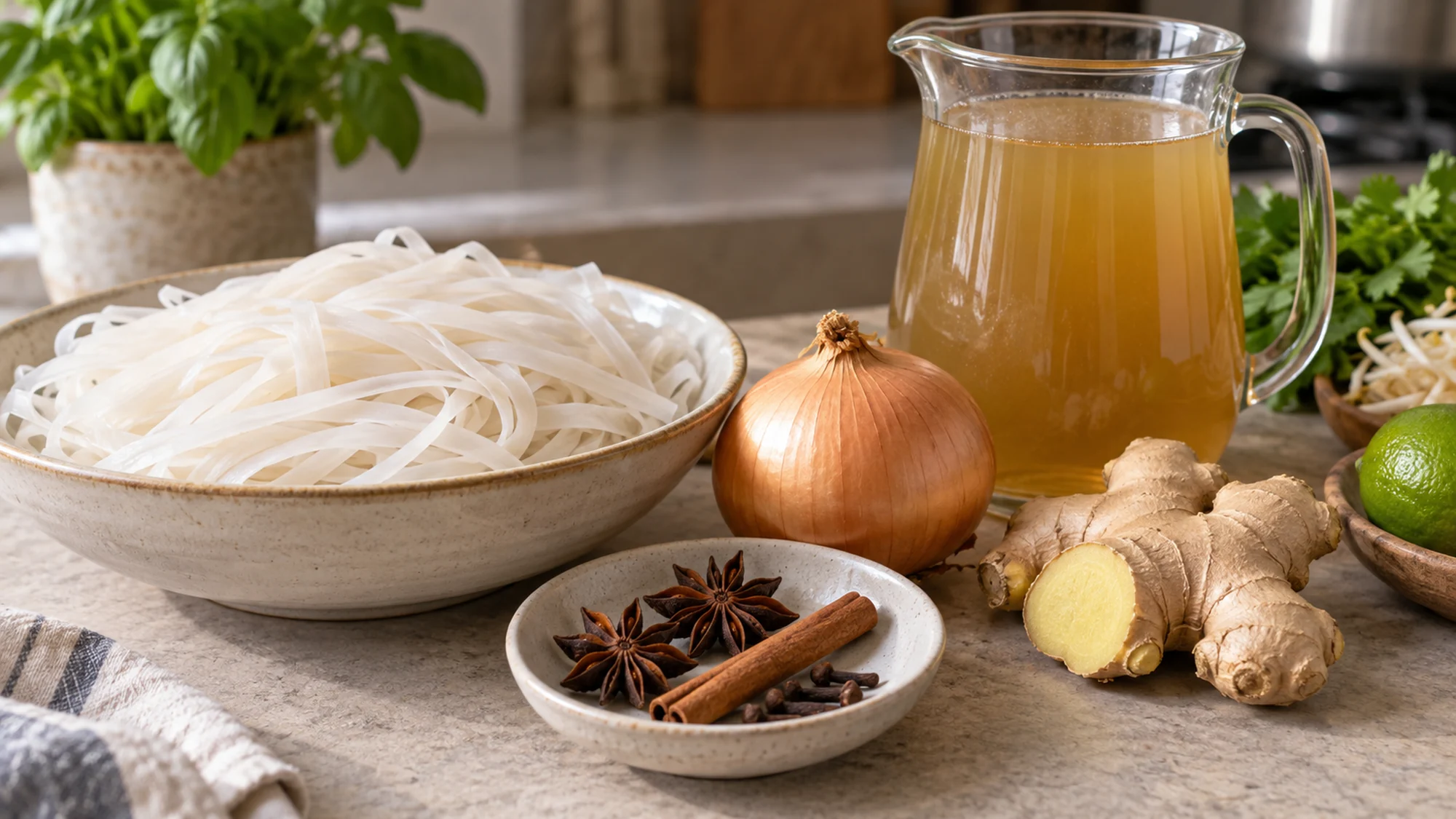
What is pho built around?
The noodles are a good place to look. Vietnam Tourism’s noodle guide distinguishes flat pho rice noodles from the round rice noodles called bún and the clear noodles called miến. The word is associated with the noodle as well as the familiar soup, so you may encounter pho noodles in other preparations.
- Broth: A savory, aromatic base, commonly beef or chicken, with the precise seasoning depending on the cook.
- Flat rice noodles: Soft ribbons that give the soup its characteristic texture.
- Meat or another topping: Beef and chicken are familiar choices; a vegetarian version needs its own broth check.
- Aromatics and finishing herbs: The fragrant notes and fresh garnish keep the bowl distinct from a plain noodle soup.
Vietnam Tourism describes star anise, cloves and cinnamon among the spices used to perfume pho broth. They should be understood as part of an aromatic profile, not a fixed formula every bowl must follow.
Menu words that help you order
Start with the meat or broth you prefer, then ask about unfamiliar cuts. A restaurant’s own menu shows how combinations can include tendon, tripe or meatballs; a short conversation is more useful than assuming a special contains only familiar pieces.
| Menu term | Meaning | Useful question |
|---|---|---|
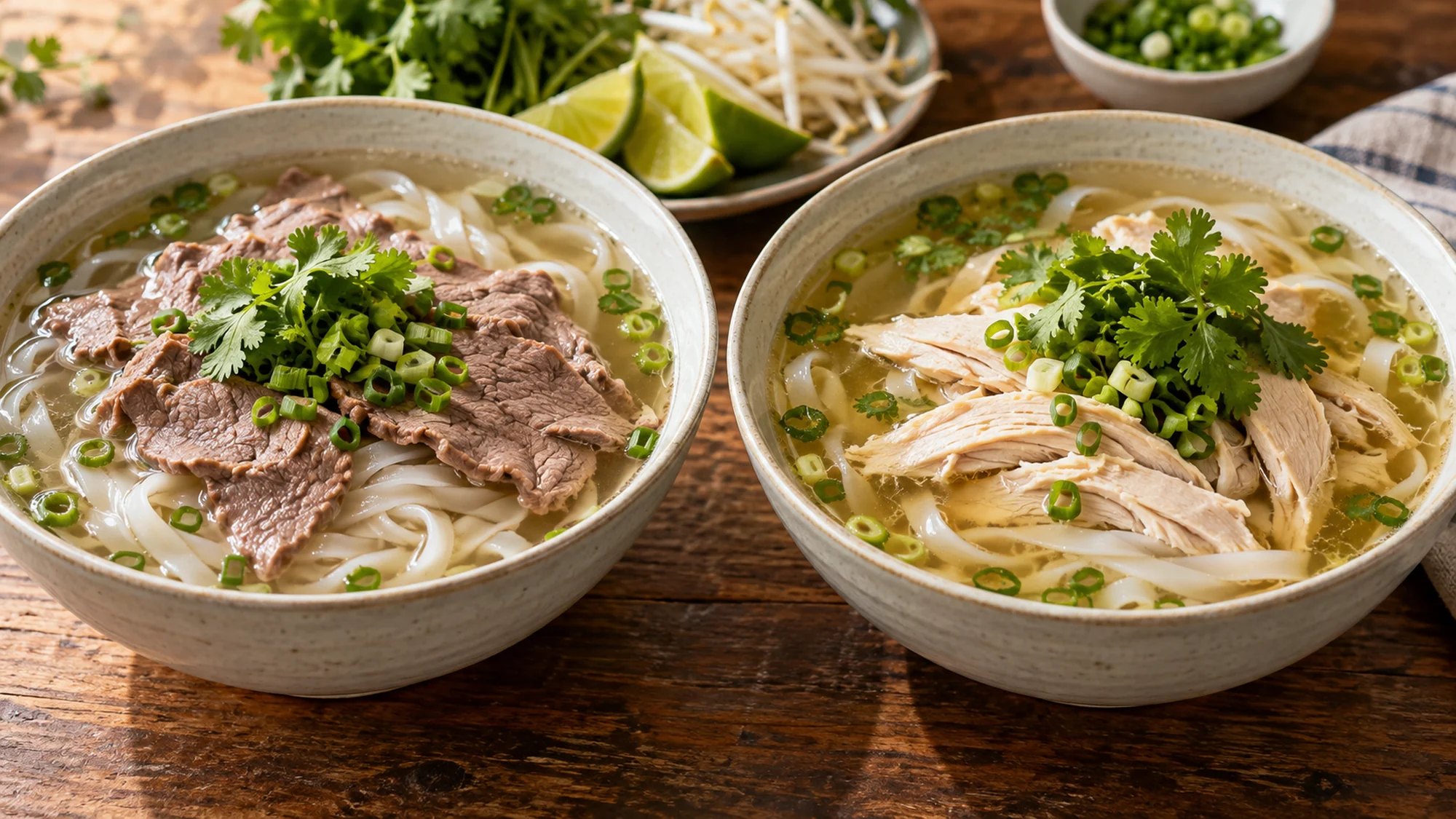
| Phở bò | Beef pho | Which cuts are included? |
| Phở gà | Chicken pho | What broth and chicken cuts are used? |
| Phở chay | Vegetarian-style pho | Are the broth and seasonings fully vegetarian? |
| Combination or special | A restaurant’s mix of toppings | Does it include tendon, tripe or meatballs? |
Menu language and combinations differ between restaurants. If you prefer fully cooked meat, say so when ordering. That is clearer than relying on a translated name or expecting hot broth to meet a particular cooking standard.
Northern and southern bowls can look different
Pho comes from northern Vietnam, and a single restaurant bowl cannot represent all of its regional styles. The tourism authority describes northern pho as emphasizing a clear, delicate broth and restrained garnishes. Its guide to Vietnamese dishes contrasts that with southern bowls served with a more generous selection of herbs and accompaniments.
- Expect variation in sweetness, seasoning, noodle width and the garnish plate.
- Do not judge a bowl’s identity by whether it comes with every herb you have seen elsewhere.
- Treat the cook’s style as the starting point, then season thoughtfully to your taste.
It is also different from Dishora’s American-style beef noodle soup, which uses wide egg noodles, carrots, celery and thyme. Sharing beef and broth does not make the two soups interchangeable.
Enjoy the broth before adjusting the bowl
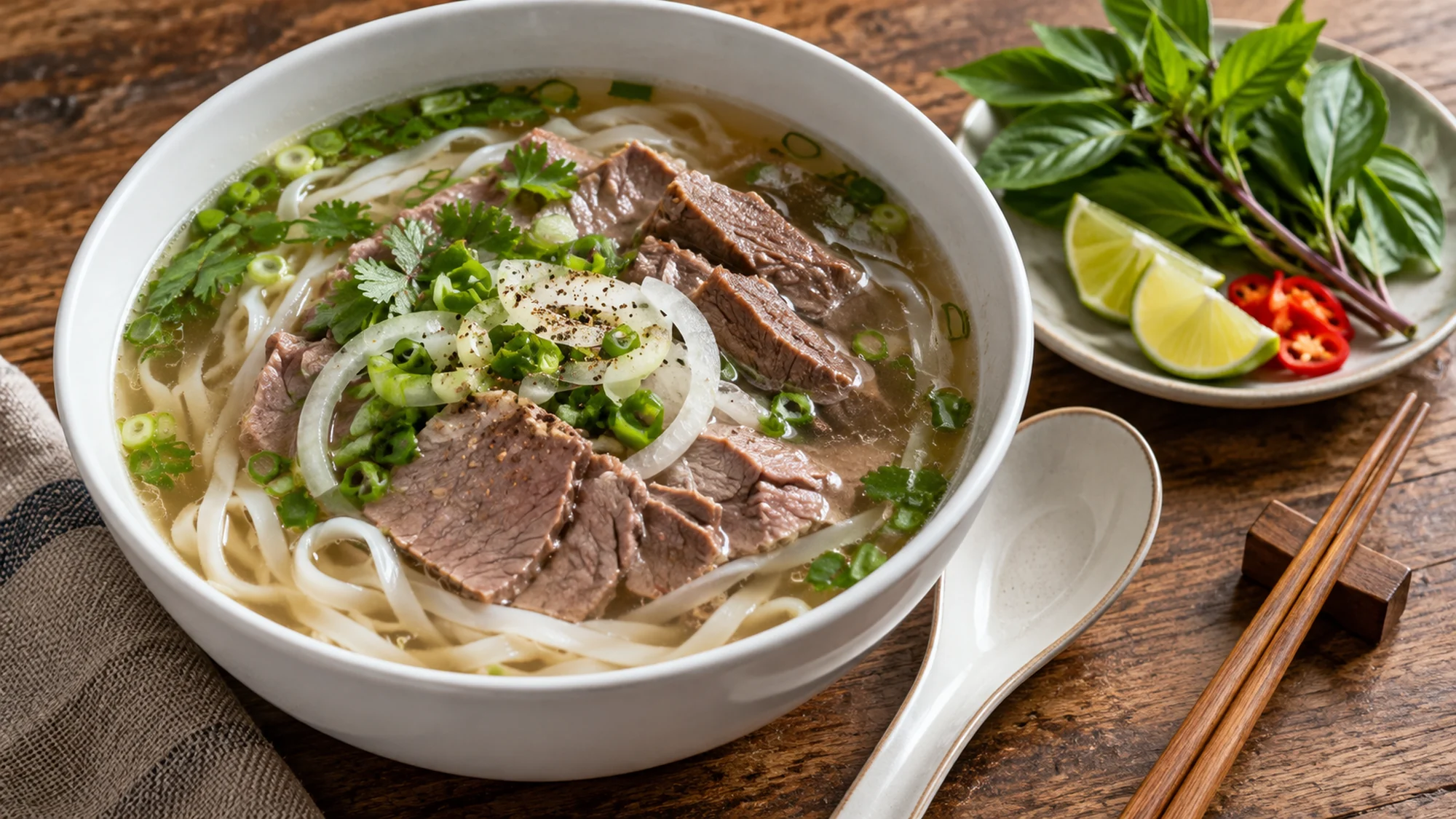
The side plate is an invitation to make choices, not a checklist you must empty. I prefer adding a little at a time so that citrus, heat or sweetness does not cover the broth before I have tasted it.
- Taste the broth while the bowl is hot enough to enjoy comfortably.
- Use chopsticks for the noodles and meat, with the spoon for broth, or use the utensils that work for you.
- Add a little herb, citrus or chili if offered, then taste again.
- Use hoisin or chili sauce according to your preference and the restaurant’s style; keeping some in a side dish lets you dip individual bites.
The broth is worth a first taste on its own. Small additions let you notice what each herb, squeeze of citrus or spoonful of sauce changes.
Dietary questions worth asking
Rice noodles do not establish that an entire bowl is gluten-free, and vegetables do not establish that its broth is vegetarian. Vietnam Tourism’s vegetarian guide explains the word chay and the importance of checking fish sauce. Ask about the stock, packaged sauces, meatballs and shared preparation if those details matter to you.
- For vegetarian or vegan eating: Confirm the broth and seasonings, as well as the visible toppings.
- For allergies or gluten avoidance: Ask about the complete dish and accompaniments rather than the noodles alone.
- For raw sprouts: People at higher risk of foodborne illness should avoid raw or lightly cooked sprouts. Ask for thoroughly cooked sprouts or leave them off.
That sprout advice comes from the FDA’s produce-safety guidance, which names pregnant people, children, older adults and people with weakened immune systems among vulnerable groups. A quick dip in warm broth is not the same as thorough cooking.
Sources
- Merriam-Webster: pho and its English pronunciation.
- Vietnam Tourism: Vietnamese noodle types.
- Vietnam Tourism: Vietnamese dishes and pho styles.
- Vietnam Tourism: regional cooking traditions.
- Vietnam Tourism: vegetarian eating and seasonings.
- Pho Hoa: menu examples and topping combinations.
- FDA: produce safety and raw sprouts.

Emily Parker is DISHORA’s recipe-writing persona, bringing a warm, practical voice to everyday cooking. Her focus is simple ingredients, comforting flavors and clear steps that make a dish feel approachable. From cozy dinners to something sweet, Emily’s recipes invite readers to try something delicious and make it their own.