
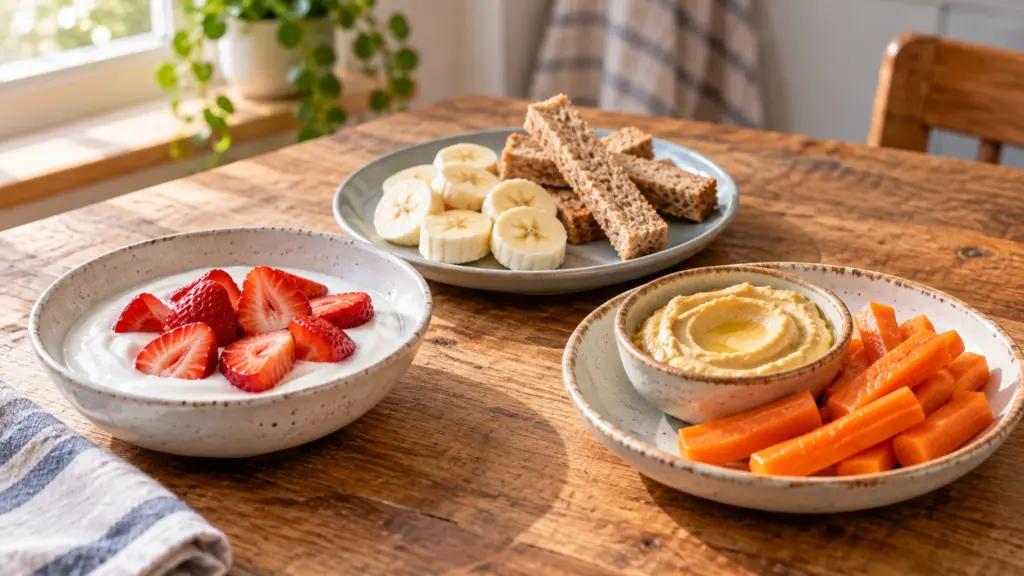
After school, a snack often needs to happen before anyone has the patience for a project. Easy snacks for kids can be as straightforward as yogurt and soft fruit, or toast with a suitable spread. A small plate and a couple of familiar foods are a perfectly useful beginning.
Combine foods your child can safely eat and comfortably manage, then adjust the amount to appetite. These ideas mainly suit school-age children; younger children need developmentally appropriate shapes and textures, close supervision and extra attention to choking hazards.
Build easy snacks for kids from a simple pairing
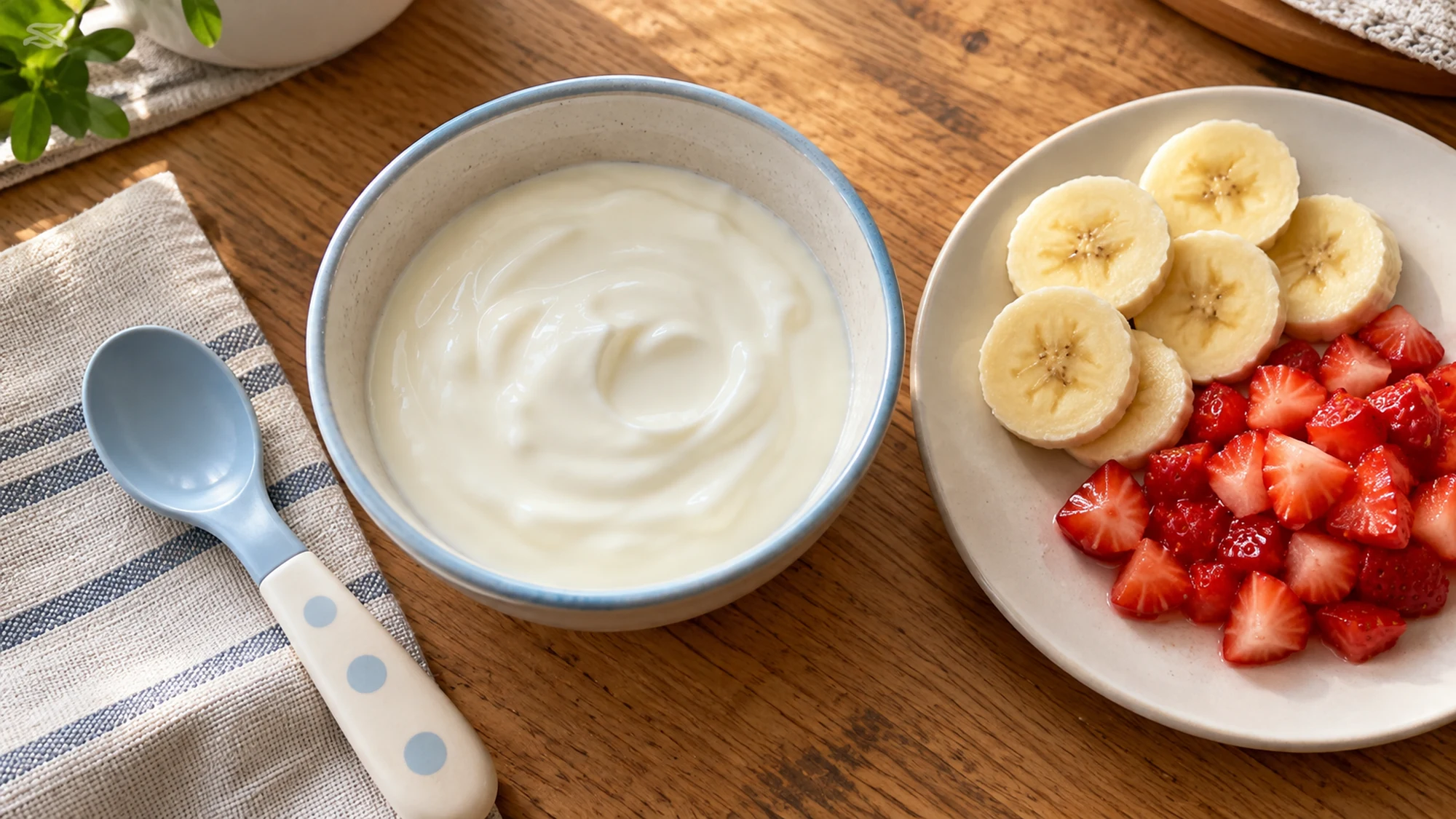
A useful starting point is fruit or vegetables alongside a grain, dairy food or protein food. The USDA’s snack tips for parents suggest combining two or more food groups. This is a flexible approach, not a rule that every snack must look identical.
I’d choose combinations you can keep available without much preparation. Plain yogurt is ready for soft fruit; hummus works with suitable soft bread or cooked vegetables. A snack does not need decorative cutters, a special tray or a name worthy of a restaurant menu.
- Offer a modest starting portion and more if the child is still hungry.
- Use familiar foods alongside an optional new food.
- Let older children choose between a couple of suitable options.
- Provide water and keep snack time seated and unhurried.
Six practical snack combinations
Choose ingredients that fit the child’s allergies, chewing ability and preferences. The preparation notes matter as much as the food names. This table gives ideas to assemble, rather than a set of recipes or a guarantee of suitability for every age.
| Pairing | What to offer | Preparation note |
|---|---|---|
| Yogurt + fruit | Plain yogurt and ripe banana | Slice or mash fruit for the child’s stage. |
| Hummus + vegetables | Smooth hummus and soft cooked carrots | Check for sesame; avoid hard raw carrot pieces for young children. |
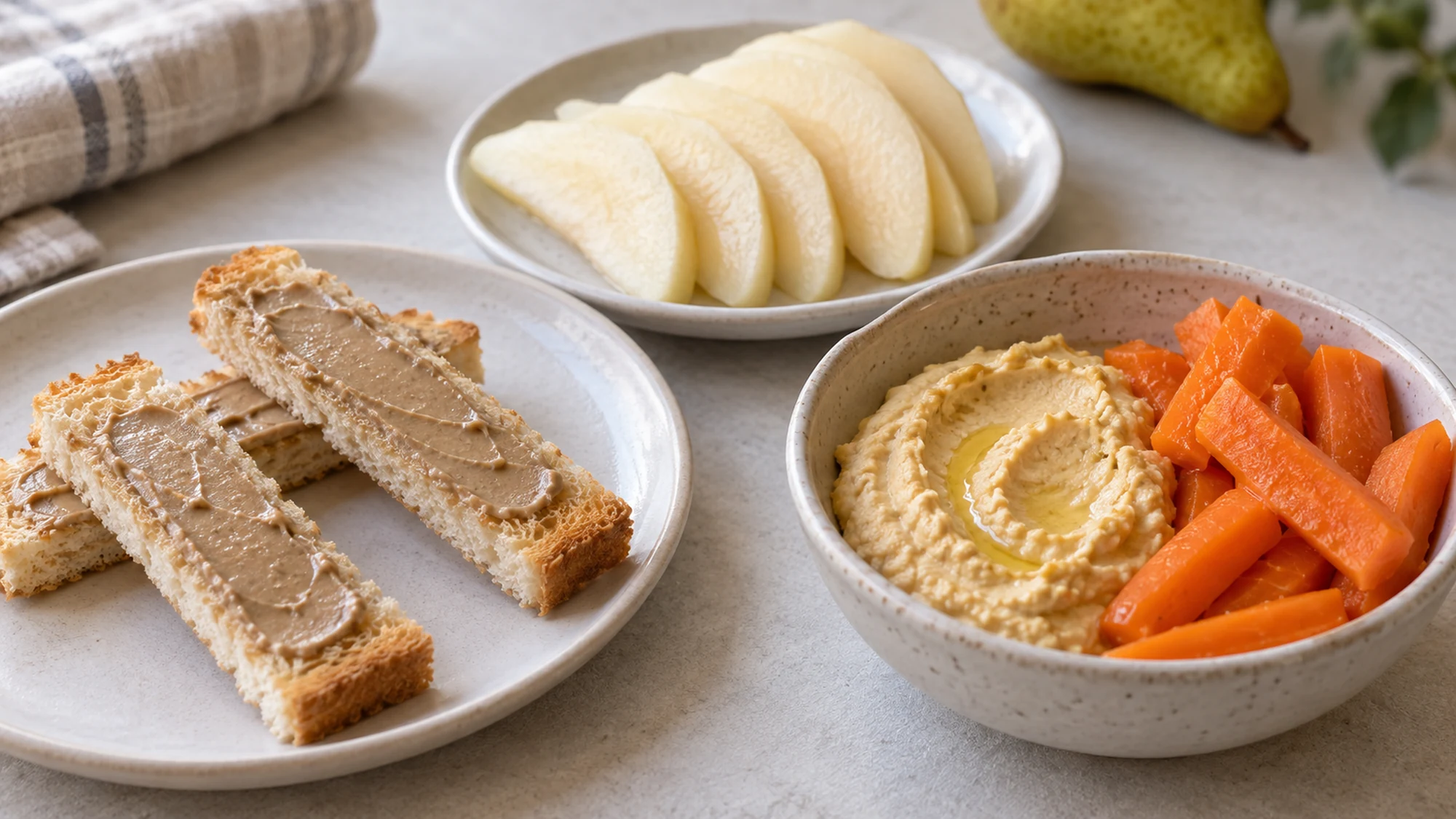
| Toast + spread | Soft toast with a suitable smooth spread | Use a thin layer, never a sticky spoonful. |
| Cheese + fruit | A suitable cheese portion and ripe pear | Adapt shape and texture; avoid large cheese chunks. |
| Egg + bread | Hard-cooked egg and soft bread | Cut to suit chewing ability and keep refrigerated. |
| Oats + yogurt | Softened oats and plain yogurt | Use an appropriate soft texture and check allergens. |
Dishora’s guide to making yogurt at home offers an option for cooks who enjoy advance preparation. Purchased plain yogurt is equally practical here. Check storage instructions and the ingredients of whichever product you use.
Make the food match the child’s stage
CDC choking-prevention guidance emphasizes matching shape, size and texture to development. Young children should sit upright in a safe place and be watched throughout eating. Eating while walking, riding in a car or rushing adds avoidable difficulty.
Whole nuts, popcorn, hard raw apple or carrot pieces, uncut grapes, large cheese chunks and spoonfuls of nut or seed butter can be choking hazards for young children. Cutting alone does not make every hard or sticky food suitable. Cook, soften, mash, grate or spread thinly as appropriate, and seek individualized feeding advice when needed.
I’d skip a snack idea that needs complicated safety adjustments and choose something the child already manages well. A photograph or an age label cannot establish that a particular food is safe for an individual child.
Check allergies and keep packed snacks cold
Read the current ingredient label every time, including familiar products. The FDA identifies nine major food allergens: milk, eggs, fish, crustacean shellfish, tree nuts, peanuts, wheat, soybeans and sesame. Other foods can also cause allergies; follow the child’s established allergy plan.
Hummus often contains sesame, bread may contain wheat or other allergens, and a seed spread is not automatically suitable for a peanut-allergic child. Check school policies and prevent cross-contact through shared utensils, surfaces and containers. Avoid calling a combination universally “allergy-safe.”
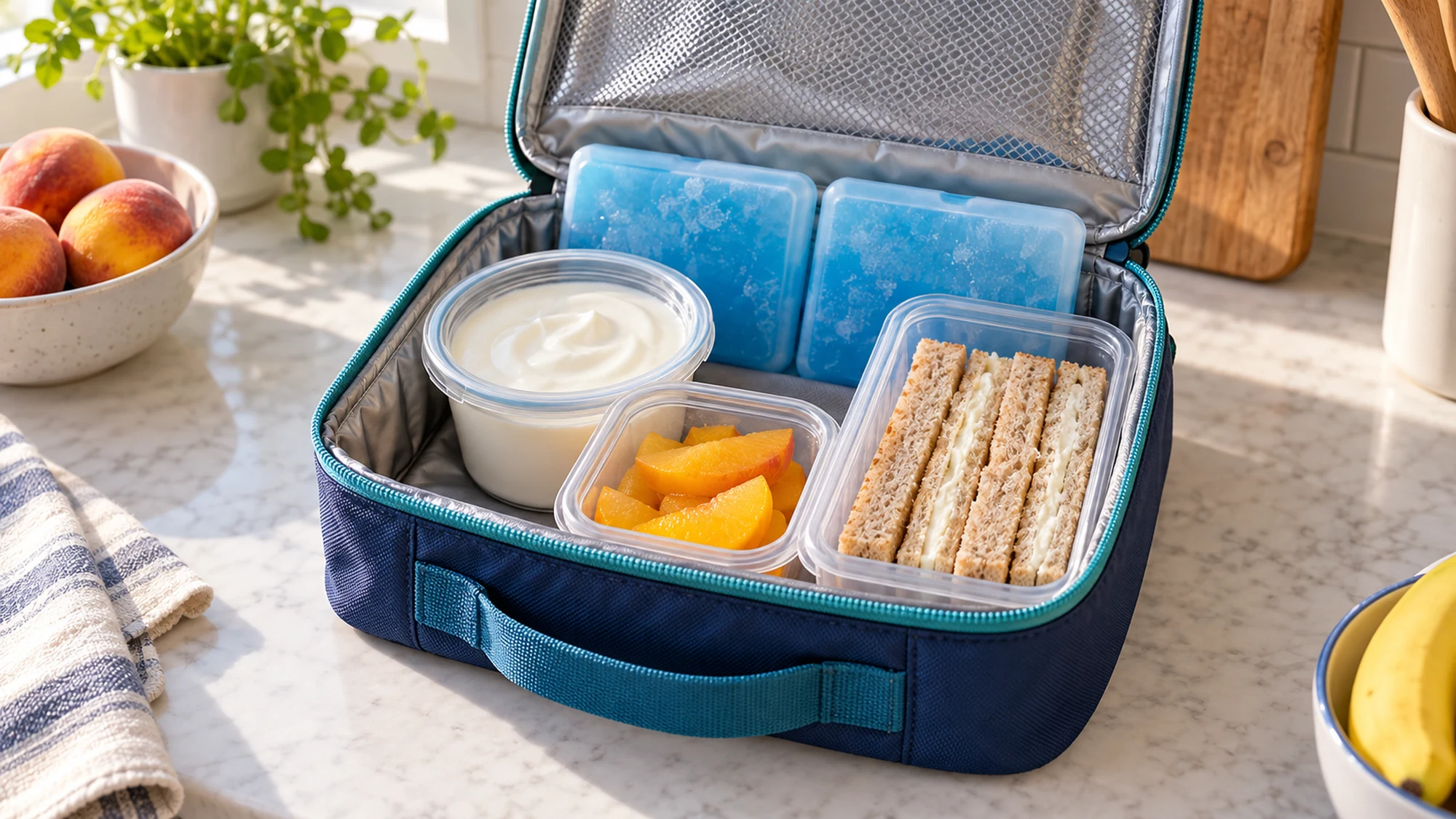
Keep yogurt, cheese, egg snacks and other perishables refrigerated until needed. FoodSafety.gov’s guidance for perishable foods sets a two-hour room-temperature limit, reduced to one hour above 90°F. Use an insulated bag with cold sources for transport, and refrigerate promptly when possible.
Keep snack preparation manageable
Put a few dependable choices on the shopping list and keep the components visible. Wash produce, portion a suitable amount when serving, and keep cold foods in the refrigerator. Prepare only what you can store correctly and use within its product-specific limits.
Some children want separate foods; others enjoy dipping or stirring. Either approach can work. Offer food without making a clean plate the goal, and use the child’s appetite and usual meal schedule to guide the amount.
Easy snacks for kids are easier to repeat when they fit the day. Choose a familiar pairing, make its texture and shape appropriate, check allergens and keep it at a safe temperature. Those small decisions matter more than an elaborate presentation.
Sources
- USDA MyPlate: Snack Tips for Parents
- CDC: Choking Hazards
- FDA: Food Allergies
- FoodSafety.gov: Perishable Food Safety

Emily Parker is DISHORA’s recipe-writing persona, bringing a warm, practical voice to everyday cooking. Her focus is simple ingredients, comforting flavors and clear steps that make a dish feel approachable. From cozy dinners to something sweet, Emily’s recipes invite readers to try something delicious and make it their own.