
A little soy sauce gives a dressing or rice bowl a deep, savory finish. But the word “soy” on the front does not tell you whether wheat went into the bottle.
Regular soy sauce commonly contains wheat and should not be assumed gluten free. Choose a product explicitly labeled gluten-free, check its ingredients, and remember that tamari and reduced-sodium are not gluten-free guarantees.
I’d make the label the deciding factor before worrying about cap colors or sauce styles. A few careful checks are more useful than a blanket rule about every brown sauce on the shelf.
Why ordinary soy sauce can contain gluten
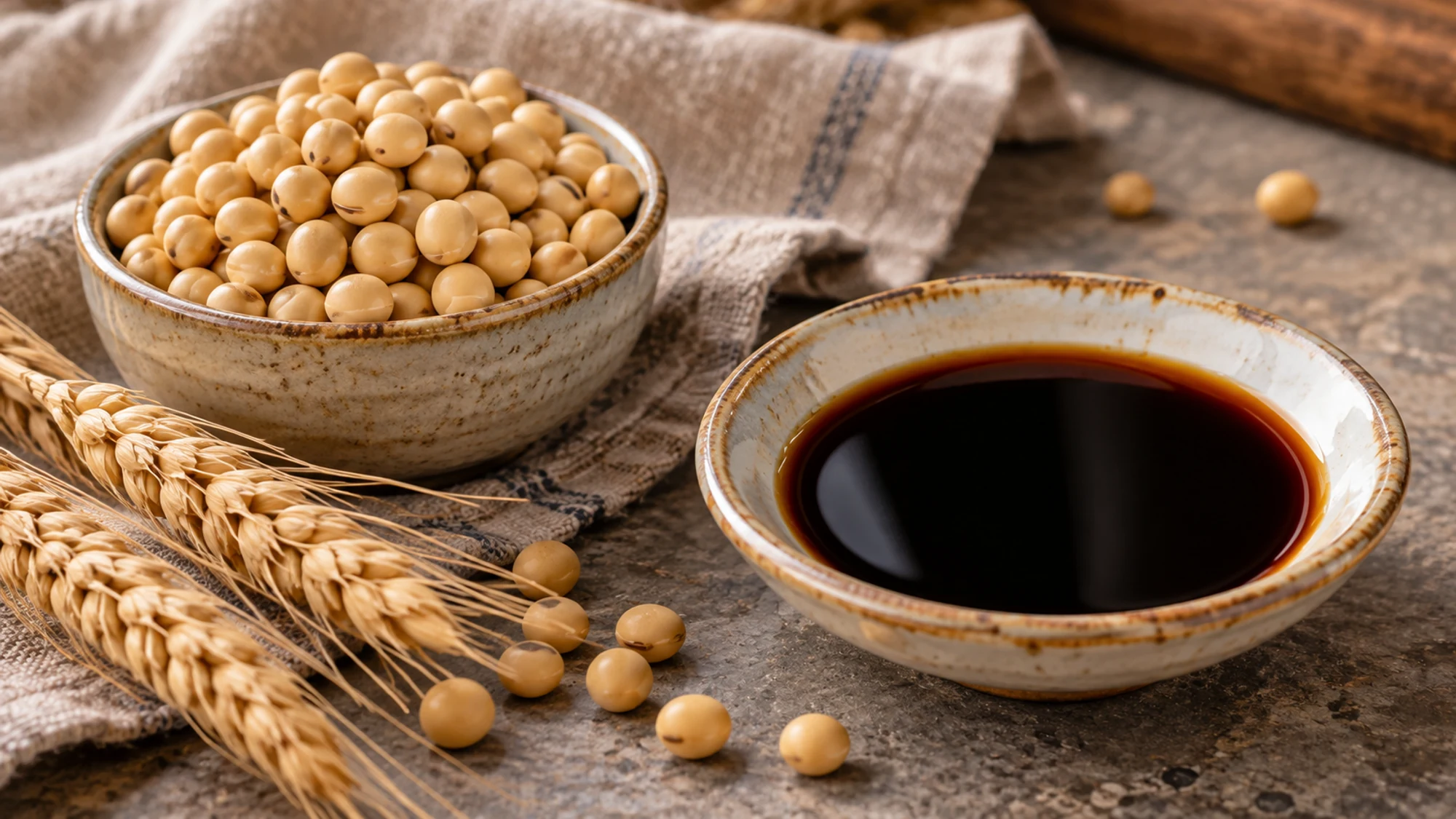
Wheat is a normal ingredient in many traditionally brewed soy sauces. For example, Kikkoman’s U.S. all-purpose Soy Sauce lists water, soybeans, wheat and salt.
Gluten occurs in wheat, barley and rye, as the FDA explains. A sauce made with wheat is therefore not something to treat as gluten free simply because you use only a splash.
This matters when soy sauce is hidden inside a marinade, soup base, dressing or prepared stir-fry. Checking the finished sauce alone may miss a separate seasoning added earlier in the kitchen. On packaged foods, read the ingredients inside parentheses after soy sauce as well as the main ingredient names.
Tamari is a style, not a promise
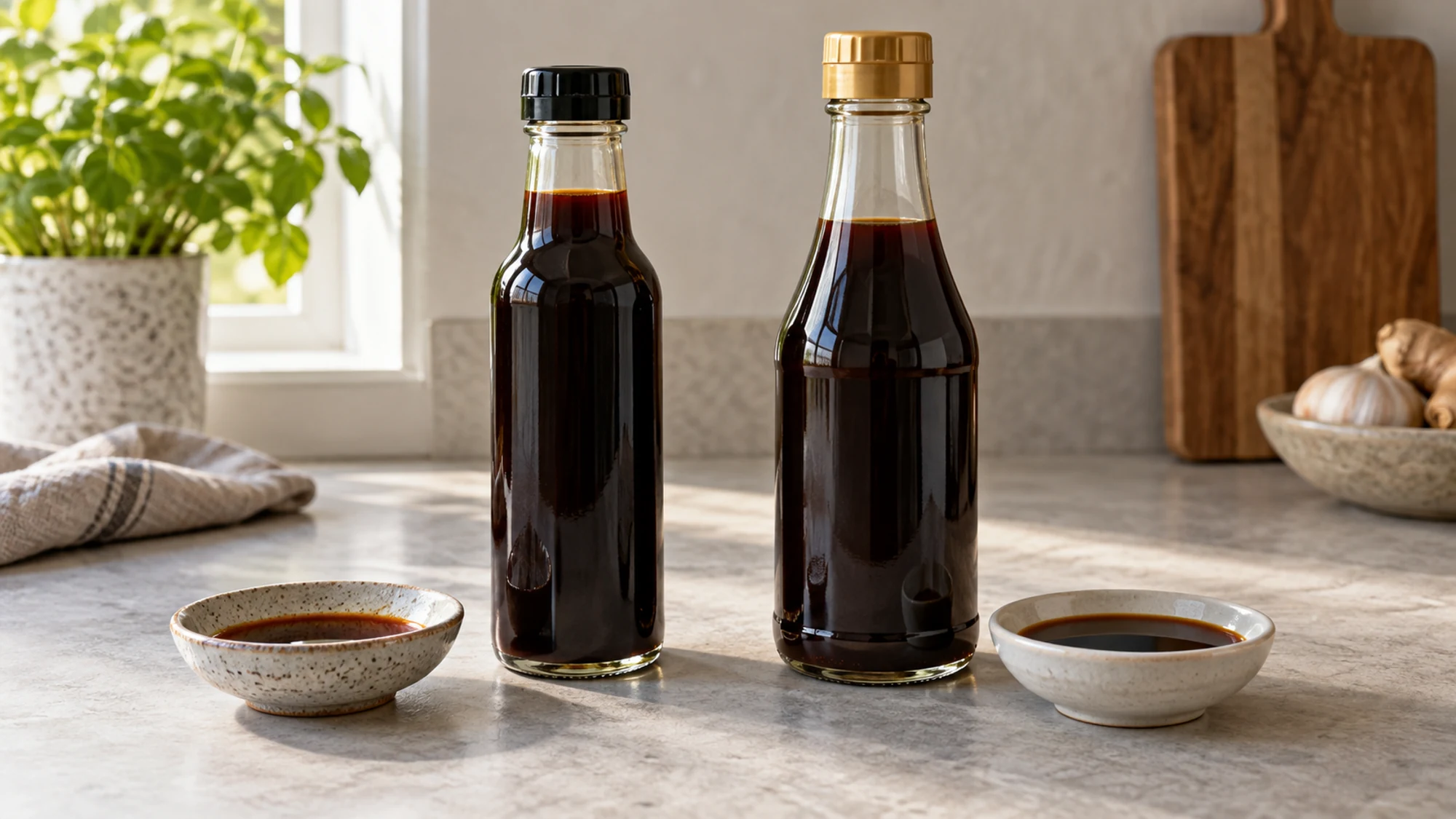
Some tamari is made without wheat; some contains it. The U.S. Kikkoman Tamari Soy Sauce ingredient list actually includes wheat, which is a useful reminder to check the exact product rather than relying on the name.
A different product, Kikkoman Gluten-Free Soy Sauce, uses rice in place of wheat and carries a gluten-free certification. These examples illustrate label differences rather than a recommendation to buy a particular brand.
| Front-label wording | What it tells you | What to check |
|---|---|---|
| Regular soy sauce | Often brewed with wheat | Ingredients and gluten-free claim |
| Tamari | A soy-sauce style | Some versions still list wheat |
| Less sodium | A sodium comparison | Some versions still contain wheat |
| Gluten-free soy sauce | A regulated U.S. claim | Full label and other allergens |
I find a side-by-side ingredient comparison clearer than a shelf full of marketing words. Organic, vegan, light and dark describe other features; none replaces a gluten-free claim. “Wheat-free” alone also does not address barley or rye, so it answers a narrower question than gluten-free labeling.
Fermentation does not settle the question
Brewing can break proteins into smaller pieces, but that does not make an ordinary wheat-containing sauce a dependable gluten-free choice. A claim that fermentation “removes all gluten” oversimplifies both the processing and the testing.
The FDA’s rule for fermented and hydrolyzed foods addresses this problem: fragmented gluten is difficult to quantify with standard testing, so compliance relies on manufacturers’ records, including evidence about ingredients before fermentation. A low test result quoted online is not a substitute for an appropriate label.
A practical gluten-free shopping check
For FDA-regulated foods, a gluten-free claim must meet specific requirements, including less than 20 parts per million of gluten. It does not mean a product is necessarily soy-free, low in sodium or suitable for every food allergy.
- Find an explicit gluten-free claim on the exact bottle, then read the full ingredient and allergen information.
- Check the current package each time you buy; similarly named products can have different ingredients.
- If the information is unclear and you need strict gluten avoidance, contact the manufacturer instead of guessing.
- Read sodium per serving separately and compare equal serving sizes when choosing between sauces.
A labeled gluten-free soy sauce can often fill the same savory role in a dressing or dipping bowl. Taste before adding more: products differ in saltiness, sweetness and intensity, so a familiar volume may give a different result.
Keep the whole meal in view
NIDDK advises people with celiac disease to avoid gluten cross-contact during storage, preparation and serving. Use clean utensils and a separate dipping portion; a gluten-free bottle cannot undo crumbs or another sauce already mixed into the meal.
At a restaurant, ask which product is used in the marinade and cooking sauce, and how the food is prepared. For a home example, DISHORA’s carrot ribbon salad specifically calls for labeled gluten-free tamari when making that substitution, plus checks on the remaining ingredients.
Choose by the complete label, not the word soy or tamari. The right bottle is one part of a gluten-free meal; the other ingredients and handling still matter.
Sources
- Kikkoman U.S.: regular soy sauce ingredients
- Kikkoman U.S.: tamari ingredients
- Kikkoman U.S.: gluten-free soy sauce ingredients
- FDA: gluten and food labeling
- FDA: fermented and hydrolyzed foods
- NIDDK: celiac disease and cross-contact

Emily Parker is DISHORA’s recipe-writing persona, bringing a warm, practical voice to everyday cooking. Her focus is simple ingredients, comforting flavors and clear steps that make a dish feel approachable. From cozy dinners to something sweet, Emily’s recipes invite readers to try something delicious and make it their own.