
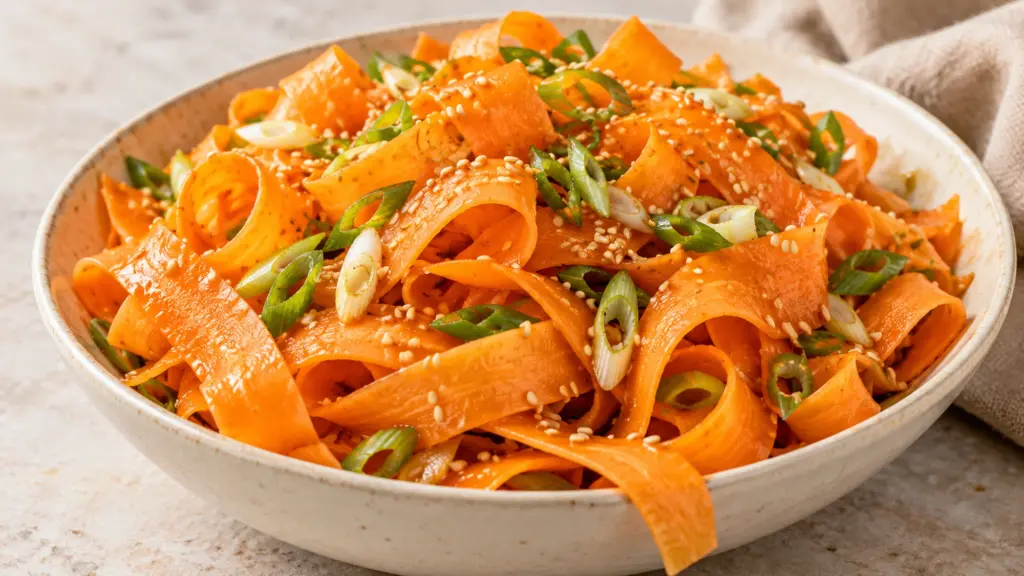
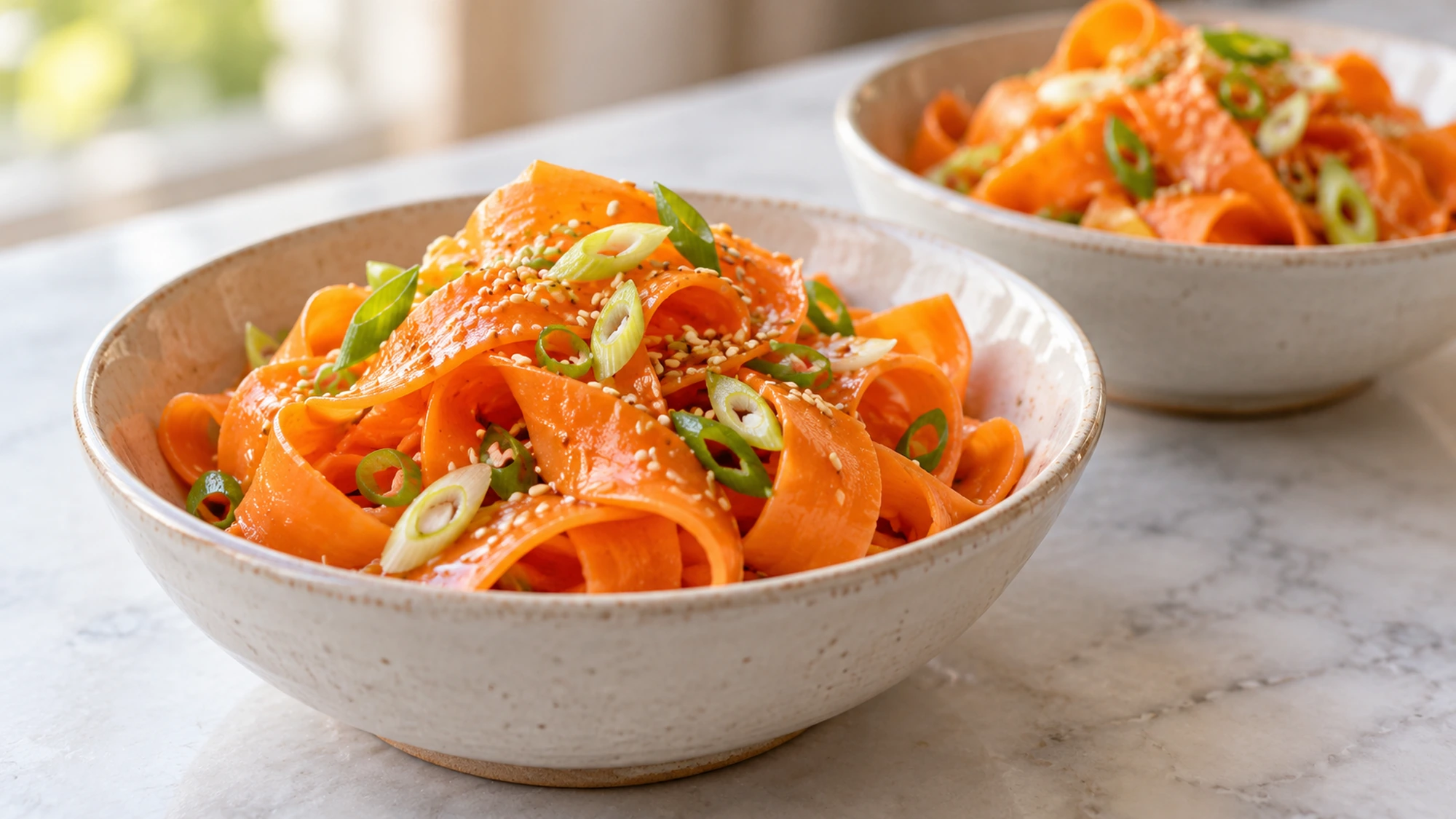
A bag of carrots can look like a job for another day, especially when dinner already needs a side. Carrot ribbon salad changes the shape of that problem. A vegetable peeler turns sturdy carrots into thin, bendy curls that catch a sesame-ginger dressing, giving you plenty of crunch without a skillet or a mound of tiny chopping.
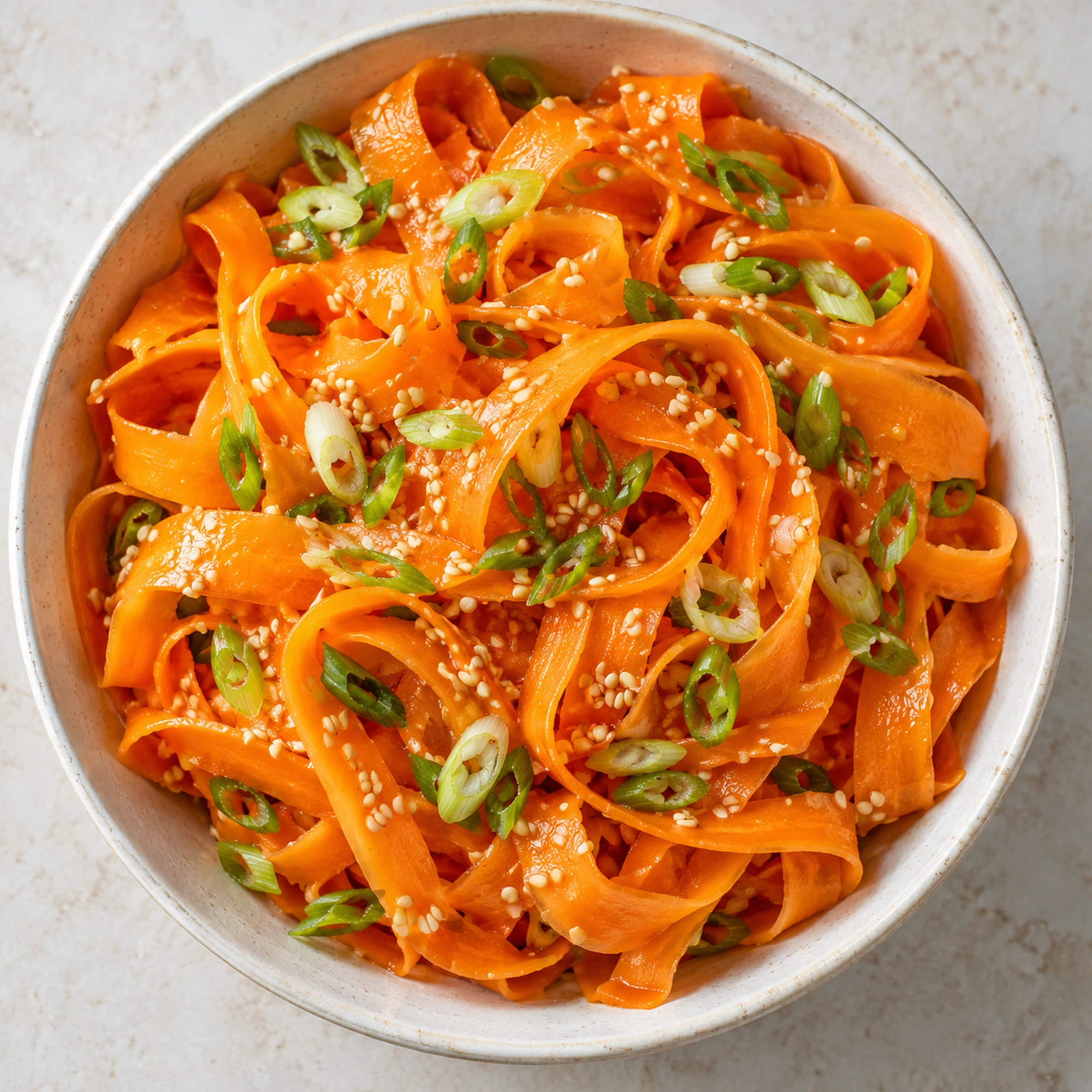
Keep the ribbons thin, dry them well, and dress them close to serving. That simple combination gives this carrot ribbon salad its crisp bite, toasted sesame aroma, and bright, savory finish.
I’d choose wide, fairly straight carrots here. They are easier to hold securely and give the peeler a useful surface to travel across. Small irregular ribbons still belong in the bowl; the goal is a pleasant bite, not identical orange gift wrap. Allow about 15 minutes, including the peeling, for four side servings.
Serving suggestions
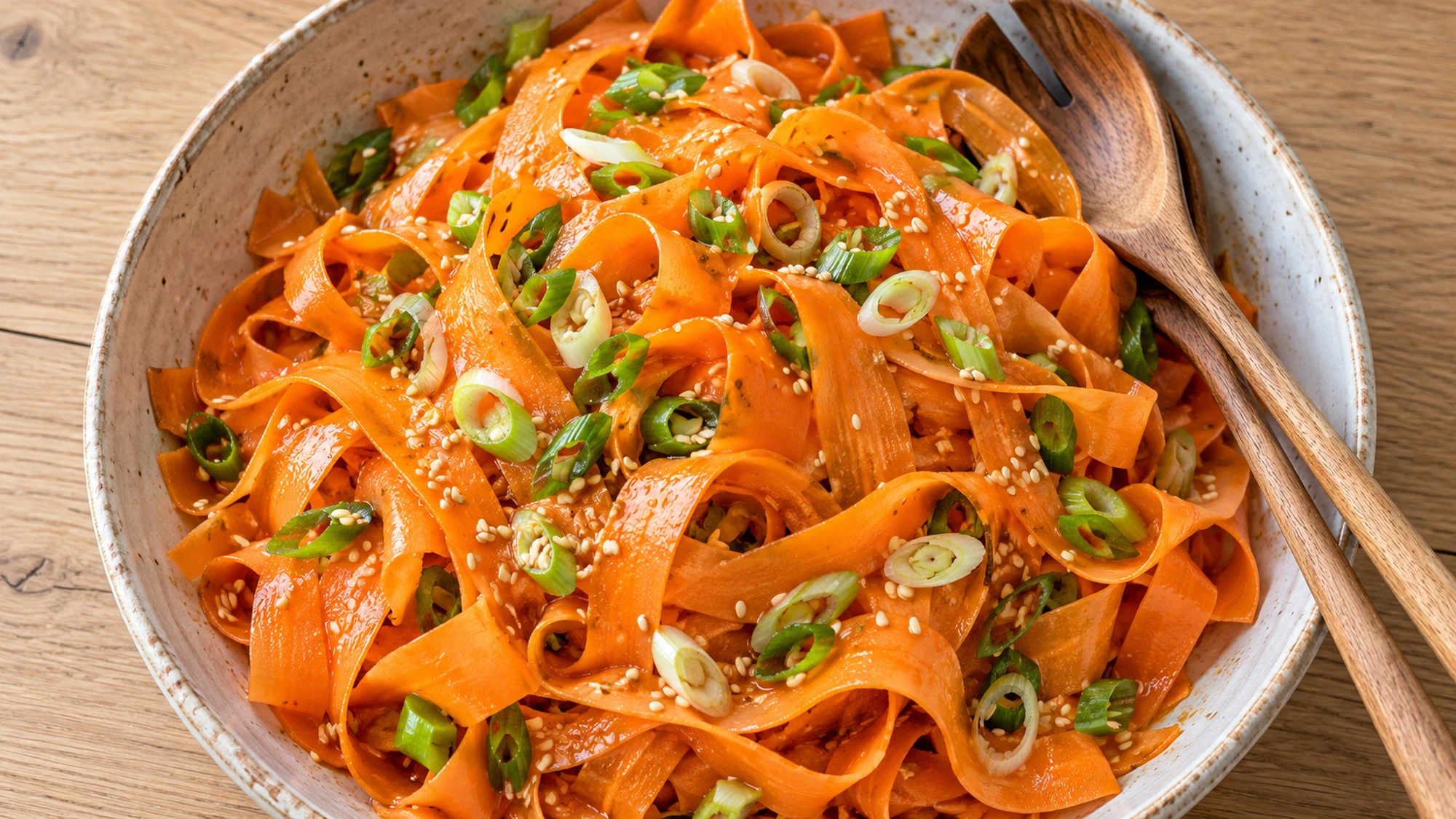
The dressing combines sweet carrot flavor with tangy rice vinegar, nutty sesame oil, and a little soy sauce. Serve the salad cool beside something warm or rich. It is especially useful when the main dish is soft, saucy, or simply needs a crunchy companion.
- With dinner: Spoon it beside baked salmon, grilled chicken, or pan-seared tofu. Keep a strongly flavored glaze on the main dish rather than adding more sauce to the salad.
- In a bowl: Add a portion to cooked rice with edamame or an egg. Let very hot rice cool slightly so the ribbons keep their snap.
- With soup: A small side bowl offers a cool contrast to cabbage dumpling soup, especially when both dishes share ginger and scallion flavors.
For make-ahead lunches, refrigerate the undressed ribbons and dressing separately overnight. Toss before eating and add the sesame seeds last. Refrigerate dressed leftovers promptly in a covered container at 40°F (4°C) or colder, and use within two days. They will soften, so expect a more marinated texture on day two.
Choose one warm, satisfying main and let the salad supply the cool crunch. It does not need a complicated plate around it.
Variations
Start with unseasoned rice vinegar; seasoned versions can bring extra sugar and salt. Toasted sesame oil supplies the characteristic aroma, while plain sesame oil tastes milder. I prefer adjusting a spoonful of dressing before changing the whole bowl, particularly when the carrots themselves taste very sweet.
- Make it vegan: Replace the teaspoon of honey with a teaspoon of maple syrup. The dressing will keep its gentle sweetness with a slightly different flavor.
- Turn up the heat: Stir a small pinch of red pepper flakes into the dressing. Add gradually so the ginger and sesame remain noticeable.
- Use gluten-free ingredients: Choose a labeled gluten-free tamari in place of soy sauce, and check every other ingredient. Ordinary soy sauce commonly contains wheat.
- Change the cut: If a peeler is uncomfortable to use, finely grate the carrots instead. The flavor still works, but the salad will be more compact and release moisture sooner.
Make one adjustment at a time. Thin ribbons and a light coating of dressing matter more to the finished texture than an extra topping.
Health benefits
Carrots provide beta-carotene, which the body can convert into vitamin A, and fiber. Those are useful contributions to a varied diet, without turning a side salad into a cure or a complete meal. A quarter of this recipe is estimated at about 100 calories and 3.7 grams of fiber, including the dressing.
- Balance the meal: Add a protein-containing food alongside it. The salad itself supplies only a modest amount of protein.
- Mind the seasoning: Reduced-sodium soy sauce still contains sodium. Taste before adding more, especially if the main dish is salty.
- Check allergies: The base recipe contains sesame and soy, and most regular soy sauces contain wheat. Swapping the sauce alone does not remove sesame.
Think of this as an enjoyable way to add vegetables to dinner. The whole meal, portion size, and your individual needs still count.
Motivation conclusion
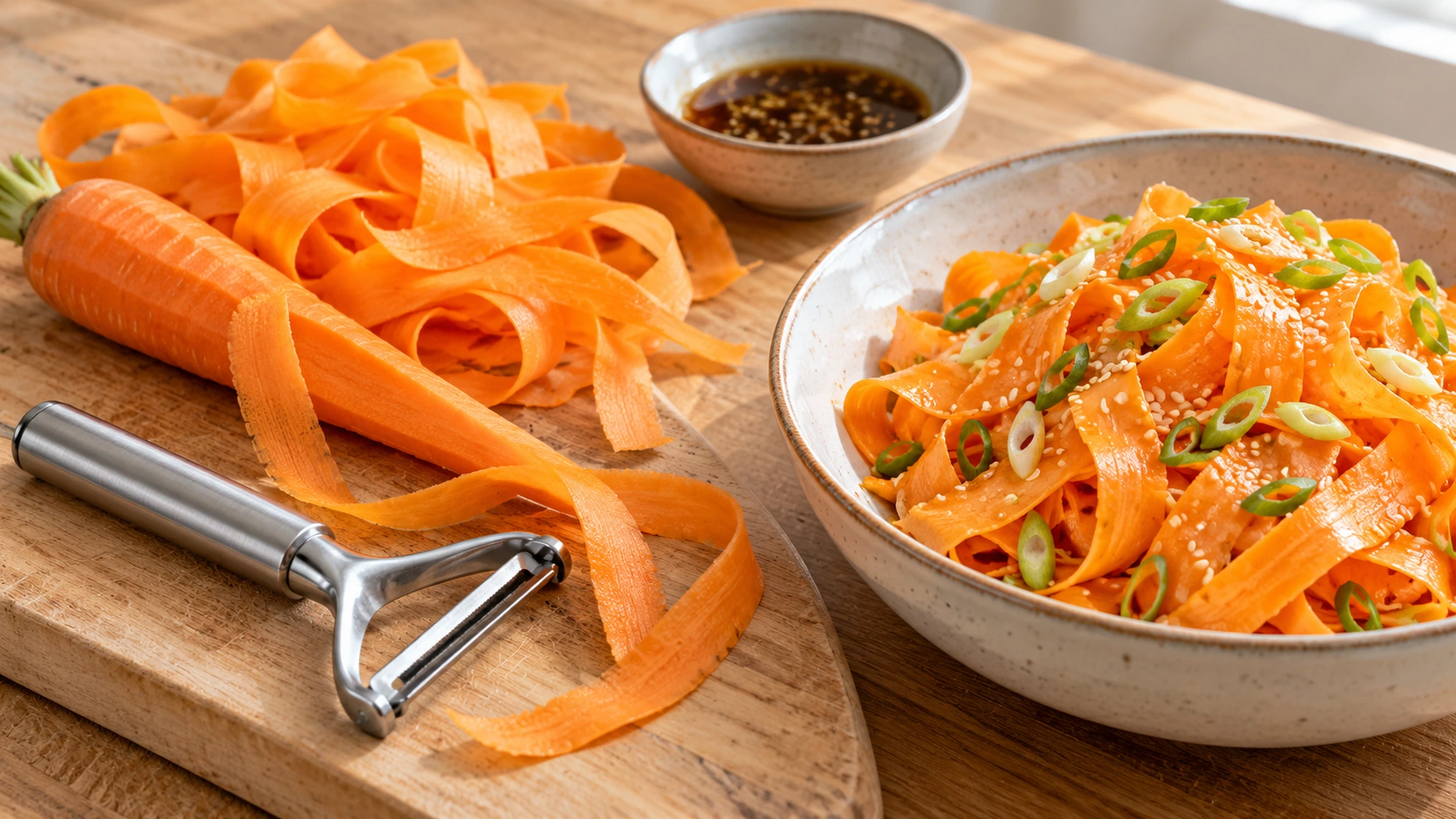
If the ribbons break as you peel, rotate the carrot and work from a broader side. Stop before the remaining piece becomes awkward to hold, then cut that last bit into thin little sticks for the bowl. There is no prize for shaving a carrot down to nothing.
I’d keep the first batch simple: carrots, scallions, sesame, and the measured dressing below. Once you know whether you prefer a sharper or softer finish, the next adjustment becomes obvious. A useful everyday side should leave you with dinner, not a new shopping project.
Carrot Ribbon Salad Recipe

Ingredients
- 1 lb carrots 450 g after trimming; large, straight carrots are easiest to shave
- 2 scallions about 30 g, white and green parts
- 1 tablespoon toasted whole sesame seeds about 9 g; ready-toasted, unsalted
- 1 tablespoon unseasoned rice vinegar 15 ml
- 1 tablespoon reduced-sodium soy sauce 15 ml
- 1 tablespoon toasted sesame oil 15 ml; about 13.6 g
- 1 teaspoon honey about 7 g
- 1 teaspoon finely grated fresh ginger about 2 g
Equipment
- Vegetable peeler a Y-peeler is useful
- Knife and cutting board
- Fine grater for ginger
- Large mixing bowl
- Small bowl and whisk for dressing
- Measuring spoons
Instructions
- Wash and dry the carrots, trim the ends and peel away the outer skin. Lay a carrot securely on a cutting board and shave lengthwise with a vegetable peeler, working away from your fingers. Rotate as needed. Stop when the remaining piece is too thin to hold safely, then finely slice that piece and add it with the ribbons to a large bowl.
- Wash, dry and trim the scallions. Thinly slice the white and green parts and add them to the carrots.
- In a small bowl, whisk the rice vinegar, reduced-sodium soy sauce, toasted sesame oil, honey and grated ginger until the honey dissolves and the dressing is combined.
- Pour the dressing over the carrots and scallions. Gently lift and turn the ribbons for about 30 seconds, until evenly coated and flexible but still crisp. Scatter over the toasted sesame seeds and divide among four side bowls. Serve right away for the firmest crunch.
Nutrition
Video
Notes
Tried this recipe?
Let us know how it turned out!Emily Parker is DISHORA’s recipe-writing persona, bringing a warm, practical voice to everyday cooking. Her focus is simple ingredients, comforting flavors and clear steps that make a dish feel approachable. From cozy dinners to something sweet, Emily’s recipes invite readers to try something delicious and make it their own.