
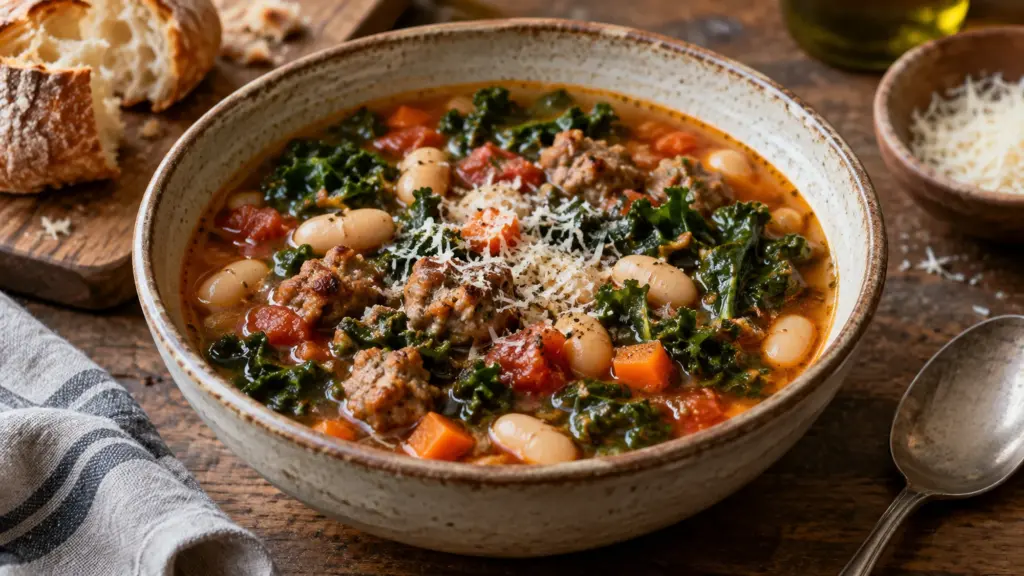
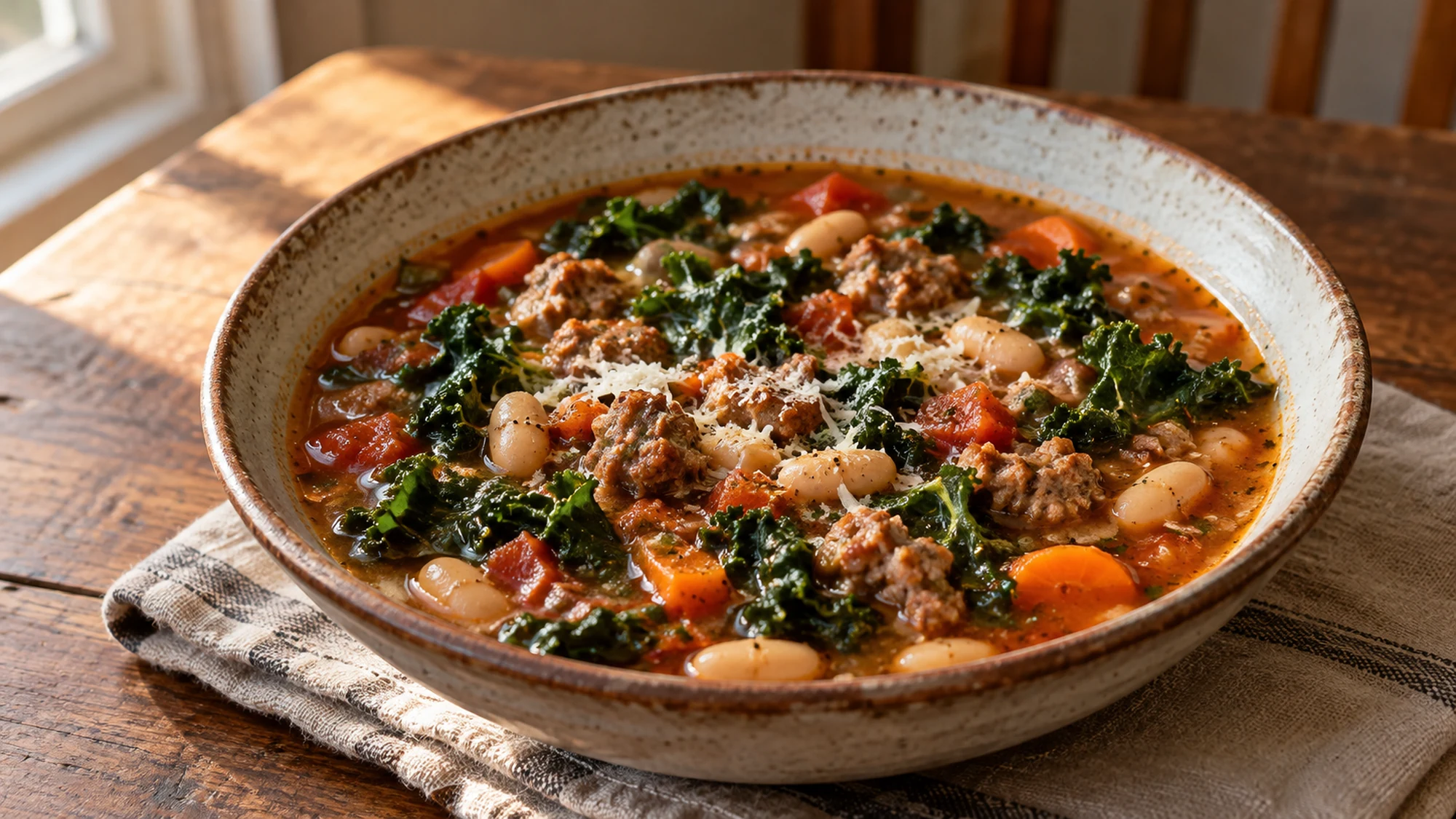
A pot of sausage white bean kale soup is a useful answer to a chilly evening and a fairly ordinary pantry. Italian sausage seasons the broth, canned beans make the bowl substantial, and chopped kale brings a little bite. The result is savory and spoonable, with creamy beans against crumbled meat and tender greens. Everything comes together in one pot.
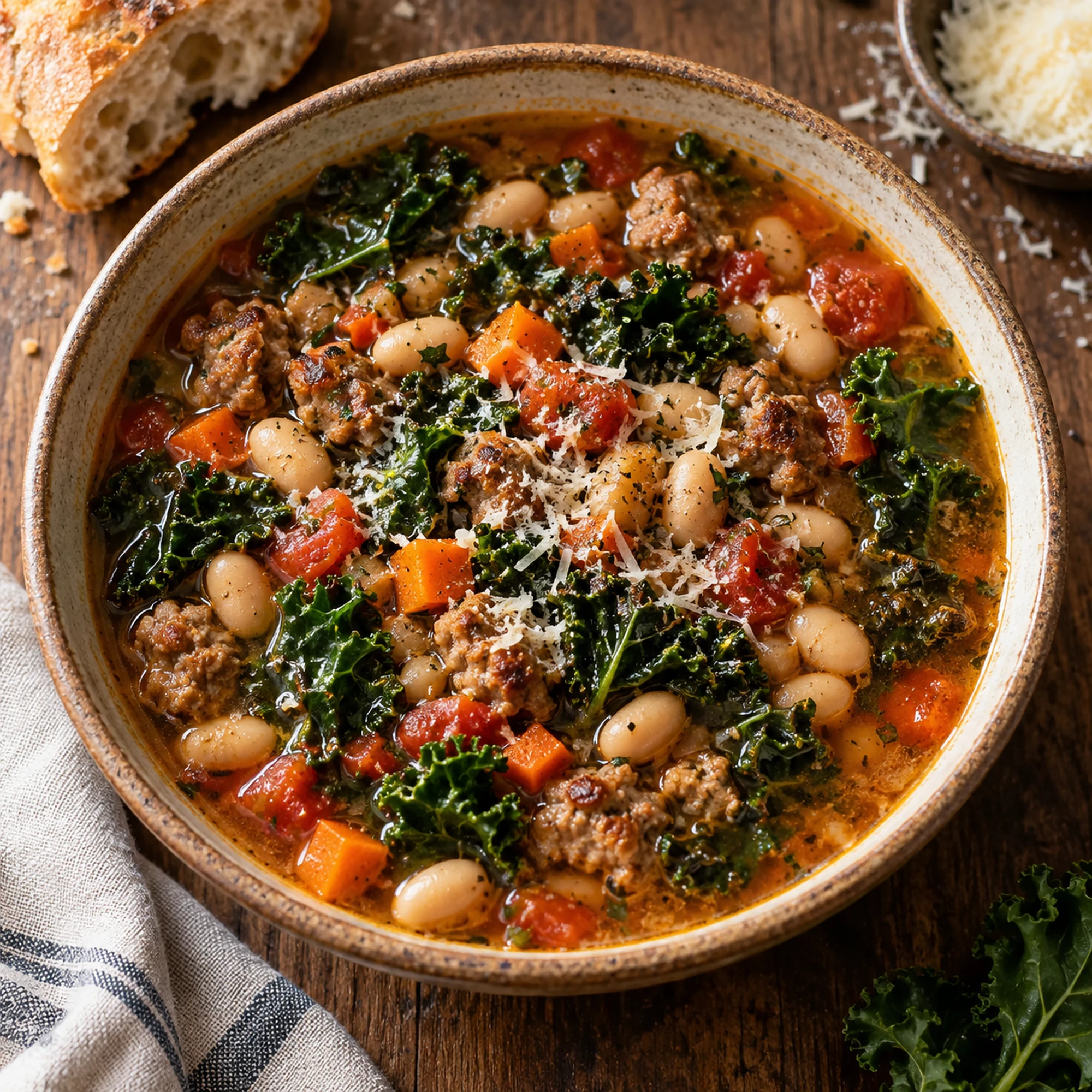
Brown the sausage first, simmer the beans gently and add the kale near the end for a balanced bowl.
I prefer a broth-based version here because the beans already lend body. Some can be gently crushed against the side of the pot if you want it thicker, without adding cream. Browning the sausage first builds flavor, while onion, carrots and a small spoonful of tomato paste round out the broth. A squeeze of lemon at the end keeps the bowl lively.
Remove the kale’s firm stems and chop the leaves into pieces that fit on a spoon. Large ribbons can be awkward in a bowl, especially when they drape over the edge. Rinse the canned beans and let them drain before adding them. Keep the simmer gentle once they go in so they stay mostly whole rather than breaking into a grainy paste.
Serving suggestions for sausage white bean kale soup
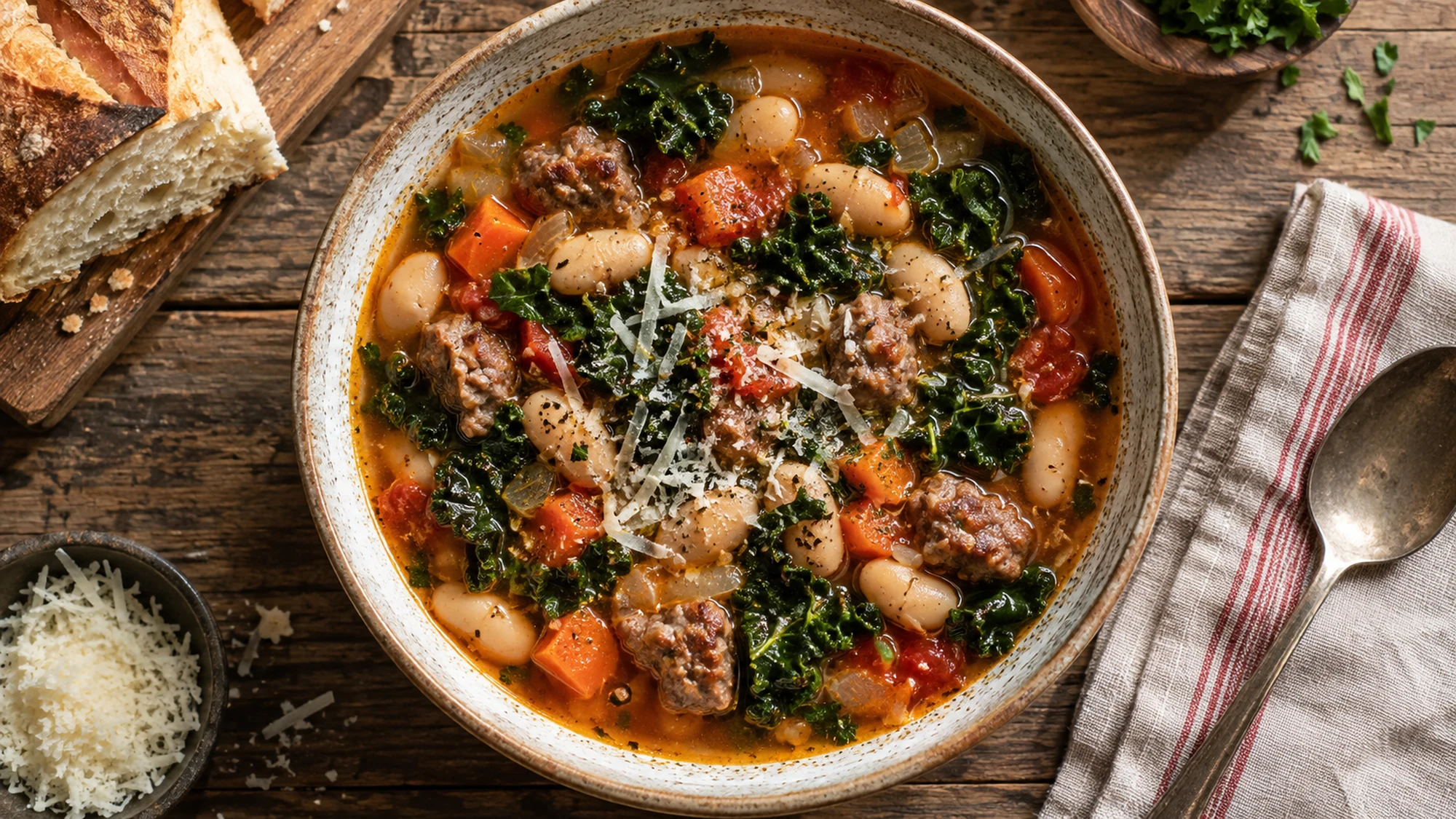
Serve the soup in warm bowls with Parmesan on the side, letting each person decide how much to add. Crusty bread works well for the broth, while a simple salad gives a fresh contrast. The pot makes six portions, making it useful for a family dinner with a little left over. I would taste the broth before setting out extra salt.
If you want another bean dish for a later meal, Dishora’s cabbage and white bean skillet uses the same sort of canned beans in a different way. With this soup, keep any bread or cheese separate until serving. That helps each bowl retain the balance of clear broth, sausage, beans and greens rather than becoming heavy.
Serve Parmesan separately and taste the broth before adding more salt.
Variations
Use mild Italian sausage for a gentle bowl or hot sausage for more heat. Poultry sausage changes both the fat content and cooking target, so check its label and cook it to the appropriate safe temperature. A vegetarian version would need a different savory base and is a separate variation. The card’s nutrition estimate describes the pork-sausage pot, not every possible substitution.
Cannellini beans have a creamy texture, but great northern beans also work well. Drain and rinse either kind. The beans and peas ingredient guide explains their place in a balanced meal. If your beans are very soft, fold them in gently and shorten their simmer so the soup keeps recognizable pieces.
- Lacinato kale becomes tender without losing all its texture.
- Curly kale can be used instead, but chop it finely and allow a little extra simmering if needed.
- Spinach is softer and should go in closer to the end.
- I like keeping lemon juice as the final adjustment: a small amount makes the broth taste brighter without turning it into a distinctly lemony soup.
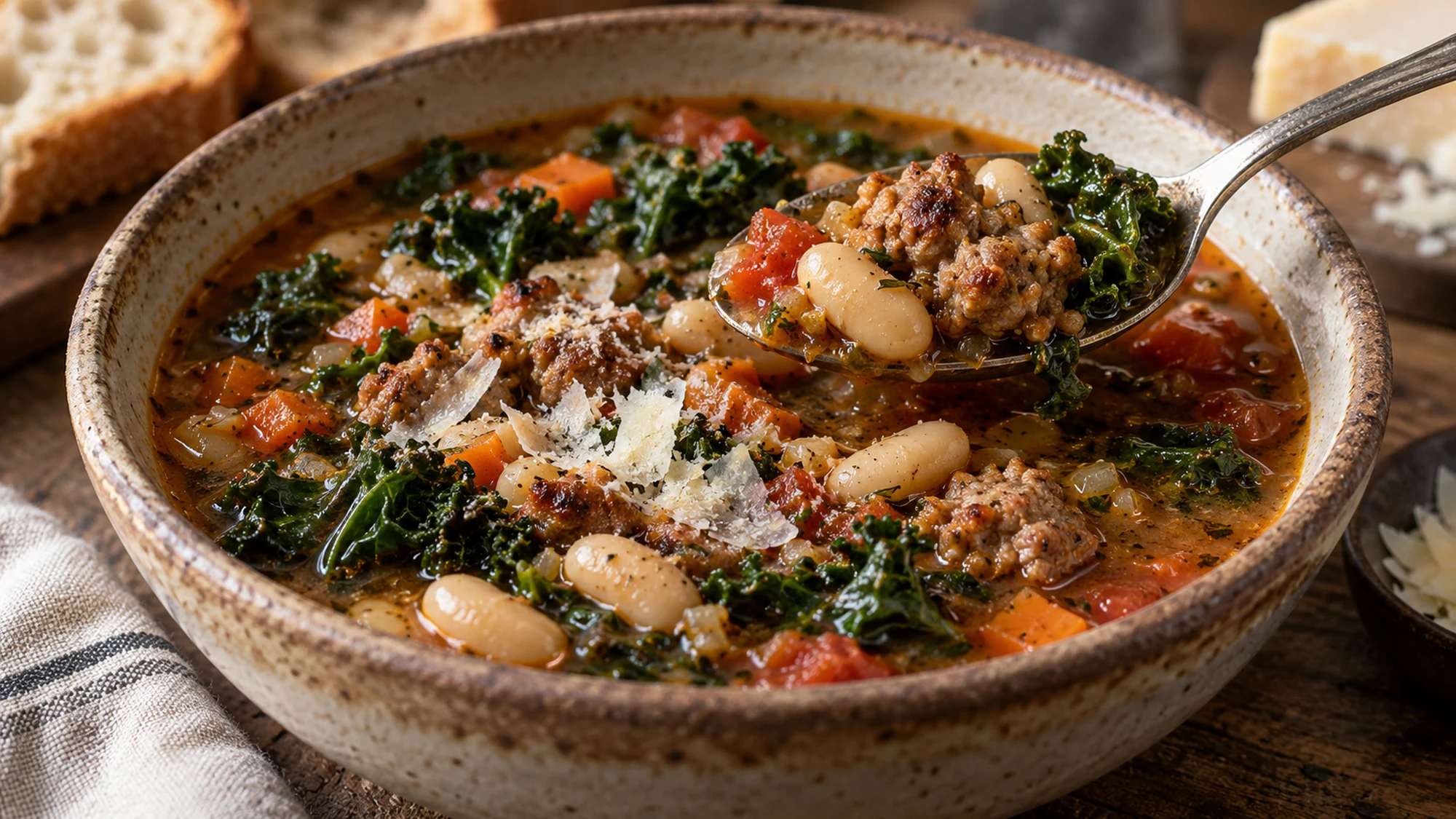
Use a gentle simmer so the beans stay creamy inside and mostly whole in the bowl.
Health benefits
The beans bring fiber and plant protein, while sausage supplies additional protein and fat. Kale and carrots add vegetables to the same bowl. The portion in the card is an estimate, and the amount of sausage fat left in the pot changes it. A satisfying soup can still be served in a reasonable bowl, with vegetables or salad alongside when you want more variety.
Sodium is the number most likely to vary with packaged ingredients. Sausage, canned beans, broth and Parmesan all contribute. Reduced-sodium broth and rinsed beans give you more control, though they do not remove every bit of salt. The sodium label guide makes it easier to compare products before the pot is on the stove.
- Cook ground pork sausage to 160°F and ground poultry sausage to 165°F.
- Cool leftovers promptly in shallow containers and refrigerate them, rather than leaving a deep pot warm for hours.
- When reheating, bring the soup to a thorough simmer and check that it is hot throughout.
- Parmesan contains milk, and some sausages or broths contain additional allergens, so read those labels too.
Beans and greens add substance, while packaged sausage and broth make careful sodium-label comparisons worthwhile.
Put one warm pot on the table
This soup asks for a little chopping and a patient simmer, then rewards you with a pot that is easy to serve. Let the sausage brown, keep the beans intact and add the kale late enough to stay appealing. Finish with lemon, taste, and ladle it into bowls. A spoonful of Parmesan is optional; the broth already has plenty of savory flavor.
Sausage White Bean Kale Soup Recipe

Ingredients
- 1 pound mild Italian pork sausage bulk or remove links from casings
- 1 tablespoon olive oil only if sausage is lean
- 1 medium yellow onion diced
- 2 medium carrots diced
- 3 cloves garlic minced
- 1 tablespoon tomato paste
- 6 cups low-sodium chicken broth
- 2 cans (15 oz each) cannellini beans drained and rinsed
- 1 teaspoon dried Italian seasoning
- 1/2 teaspoon smoked paprika
- 1 bunch lacinato kale stems removed, leaves chopped
- 1 tablespoon lemon juice
- 1/4 teaspoon black pepper
- 1/3 cup grated Parmesan optional
Equipment
- Large Dutch oven or soup pot
- Wooden spoon
- Ladle
Instructions
- Heat a Dutch oven over medium-high. Add sausage and break it into small pieces. Cook until browned and no longer pink, reaching 160°F for ground pork; drain excess fat if needed.
- Add onion and carrots with a splash of broth if the pot is dry. Cook 5 to 7 minutes until beginning to soften. Stir in garlic and tomato paste for 30 seconds.
- Pour in broth, beans, Italian seasoning, paprika and pepper. Bring to a boil, then lower to a steady simmer for 15 minutes.
- Stir in chopped kale and simmer 5 to 8 minutes until tender but still green. Add lemon juice and taste the broth; adjust salt only after tasting.
- Ladle into bowls and finish with Parmesan if desired. Offer crusty bread or extra lemon at the table.
Nutrition
Video
Notes
Tried this recipe?
Let us know how it turned out!Emily Parker is DISHORA’s recipe-writing persona, bringing a warm, practical voice to everyday cooking. Her focus is simple ingredients, comforting flavors and clear steps that make a dish feel approachable. From cozy dinners to something sweet, Emily’s recipes invite readers to try something delicious and make it their own.