
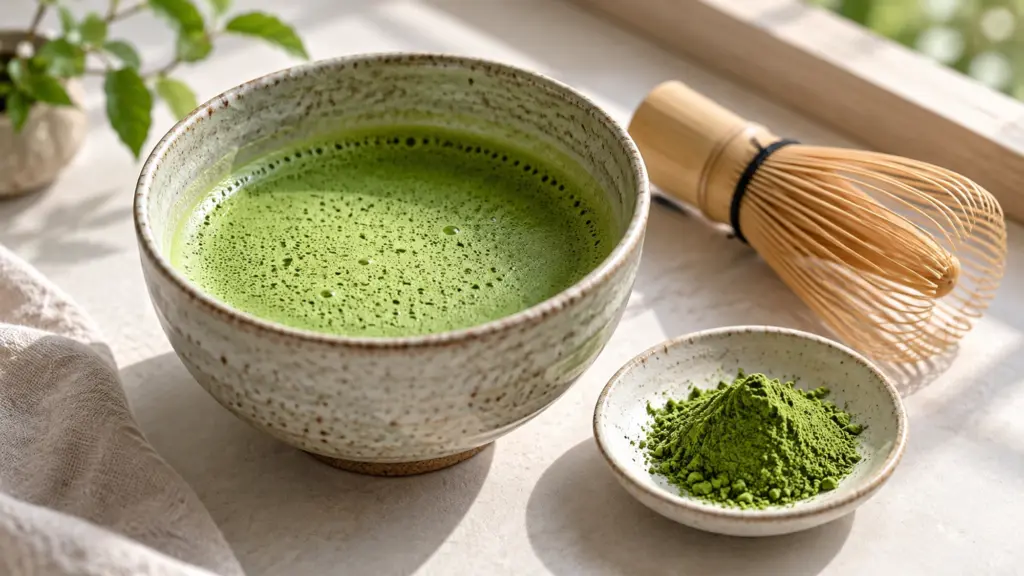
A bowl of matcha is unmistakable: vivid green, softly foamy and a little grassy, with a savory edge that ordinary tea rarely has. When the conversation turns to matcha benefits, though, flavor and laboratory findings can quickly become promises the human research has not established.
Matcha contains caffeine and tea compounds such as catechins and theanine. It can be an enjoyable unsweetened drink, but evidence for preventing disease, producing lasting weight loss or protecting memory is not strong enough to promise those outcomes.
I’d choose matcha because I like that distinctive flavor, then treat any health claim as a separate question. A pleasing cup does not need an impressive medical résumé.
What makes matcha different from brewed green tea?
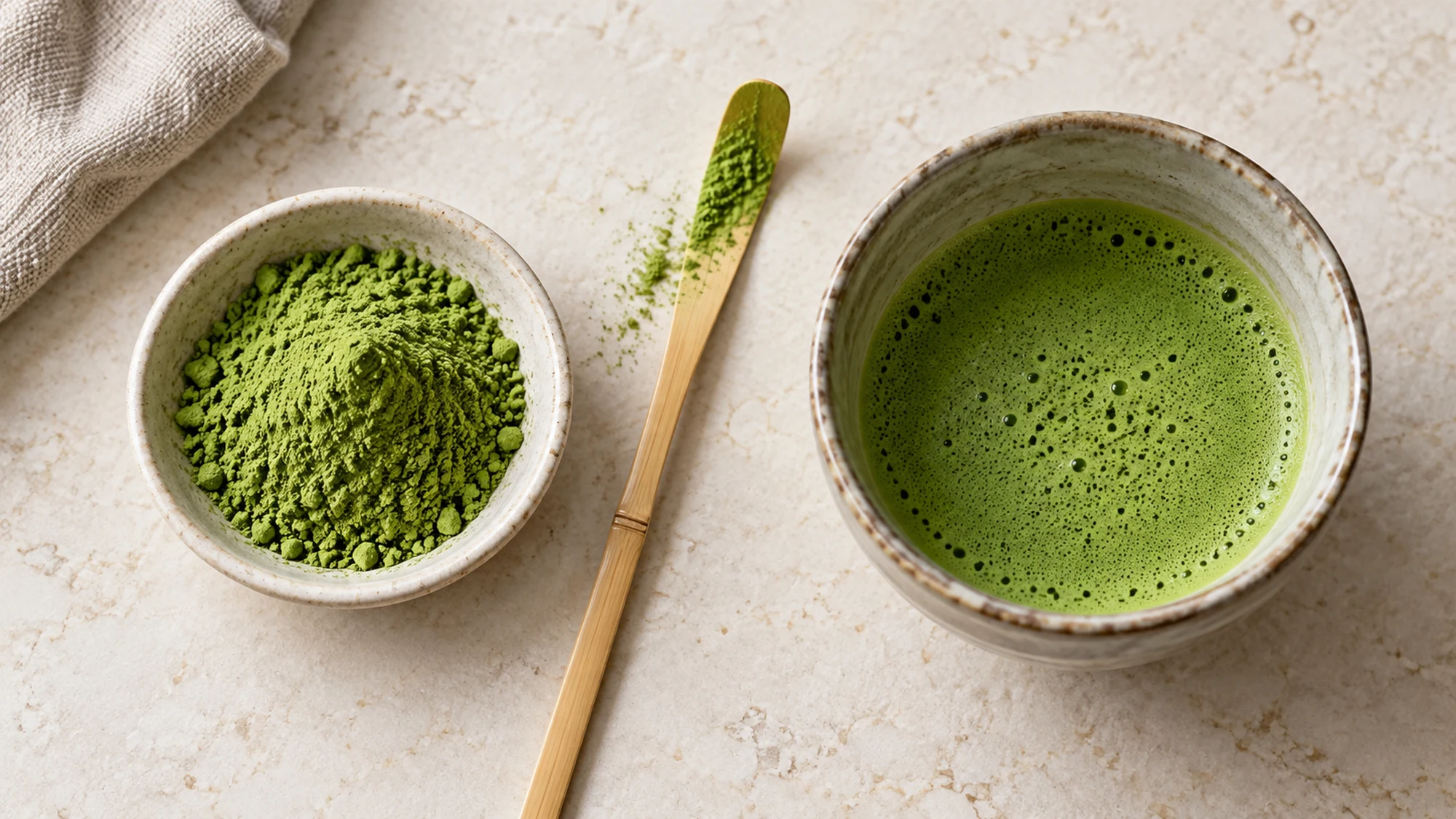
Matcha is finely powdered green tea made from tencha. Japan’s Ministry of Agriculture describes tencha’s shaded cultivation and processing: the leaves are steamed and dried, then milled to make matcha.
With matcha, the powder is suspended in the drink and consumed, rather than steeped and removed like loose leaves. That changes what goes into the cup, but it does not mean every powder, serving or café drink has identical composition.
- Catechins: A group of plant compounds, including EGCG, studied for biological effects.
- Theanine: An amino acid found in tea; its presence does not guarantee a particular mood or sleep response.
- Caffeine: A stimulant, so a mellow taste does not make the drink caffeine-free.
“Contains” and “has been proven to improve” are different statements. Keep that distinction whenever a benefit is attached to a tea compound.
What human research says about matcha benefits
A 2024 randomized trial of 99 older adults with cognitive concerns compared 2 grams of matcha daily, supplied in capsules, with placebo for 12 months. The two primary measures of cognition and everyday functioning did not improve significantly.
The study reported a narrower improvement in facial-emotion recognition, while the sleep result was not statistically significant. It was a small, specific population, and several authors had tea-company affiliations. These findings invite more research; they do not establish dementia prevention or prove that a café latte improves sleep.
| Claim | More useful interpretation |
|---|---|
| Rich in studied tea compounds | Chemical content alone does not show a clinical benefit |
| Good for memory | Small trials have mixed findings; disease prevention is unproven |
| Helps weight loss | Do not assume a meaningful lasting effect from a drink |
| Provides calm energy | Caffeine response and sleep effects vary by person |
I put more weight on a study’s main outcomes and limitations than on the most exciting sentence in a headline.
Green-tea findings do not automatically describe your cup
NCCIH’s evidence summary for green tea describes uncertain or modest findings for many promoted uses. For cholesterol research, most trials studied extracts rather than a normal beverage; cancer results have been inconsistent.
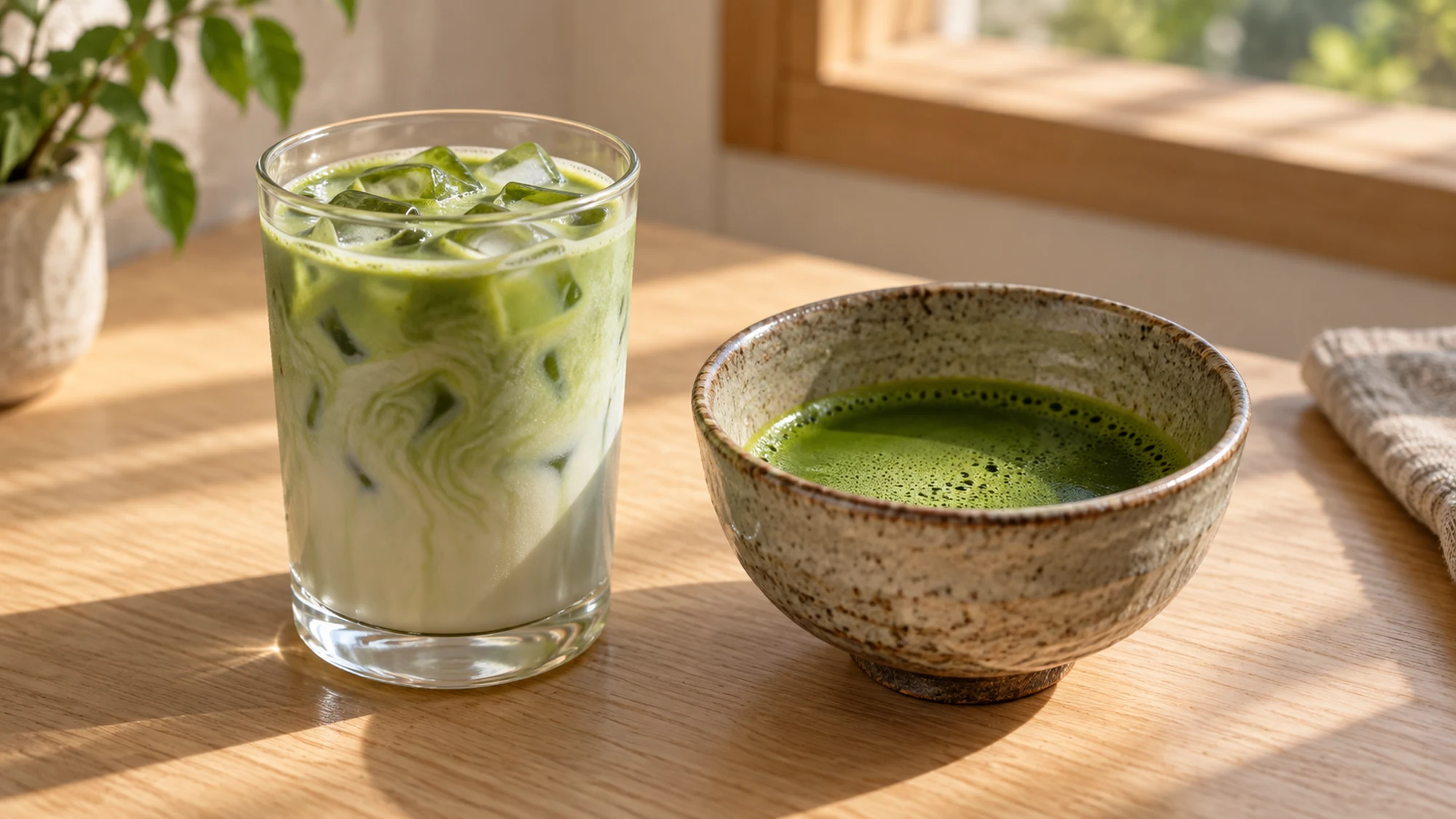
An extract, a capsule, plain whisked matcha and a large sweetened latte differ in dose and ingredients. It is a stretch to take a finding from one form and attach it unchanged to another. More concentrated is also not automatically more useful.
- Check whether the research tested people or only cells and animals.
- Look for the actual product, dose, duration and comparison group.
- Separate a change in a laboratory measure from a demonstrated improvement in health.
A study can be interesting without supplying a reason to drink a stronger serving or buy a supplement.
Choose the drink, then count its caffeine and extras
The FDA’s caffeine guidance cites 400 milligrams daily as an amount not generally associated with negative effects for most adults. It is not a target, and personal sensitivity, medicines and health conditions can change what suits you.
DISHORA’s guide to matcha and caffeine explains why powder quantity matters more than glass size. Adding milk or ice does not remove the caffeine in the matcha portion.
- Plain powder: Check that matcha is the ingredient rather than assuming a sweetened premix is the same product.
- Café orders: Ask about powder portions, added syrup and available caffeine information.
- Sleep: Move the drink earlier or reduce the portion if it leaves you restless.
- Personal limits: Ask your clinician about pregnancy, breastfeeding or a medical reason to restrict caffeine.
Keep matcha enjoyable and expectations reasonable
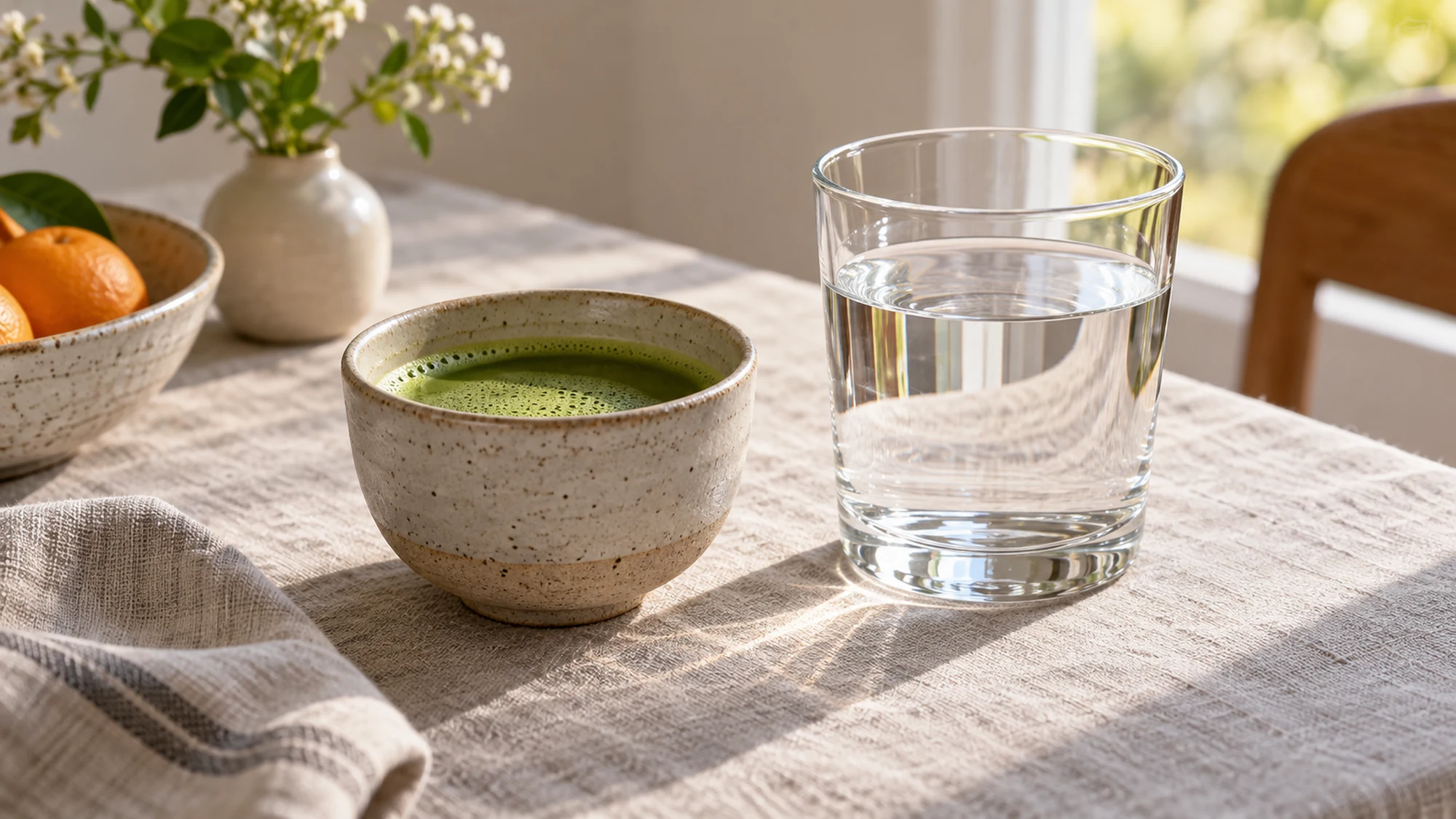
Plain matcha can fit an ordinary eating pattern; it does not need to replace a meal or become an escalating daily challenge. A milk-based version is another drink choice, with its own ingredients and serving size. Judge the full drink rather than the green color.
Concentrated green-tea extracts deserve separate caution: NCCIH reports uncommon liver injury, mainly linked to extract products, and possible medicine interactions. Discuss supplements with a pharmacist or clinician instead of treating them as a stronger version of your afternoon tea.
Enjoy the aroma, choose a portion and timing that work for you, and let the evidence stay appropriately modest. I prefer a good drink to a long list of promises.
Sources
- Japan MAFF: tencha and matcha production
- Uchida and colleagues, 2024: randomized matcha trial
- NCCIH: green tea evidence and safety
- FDA: caffeine and individual sensitivity

Emily Parker is DISHORA’s recipe-writing persona, bringing a warm, practical voice to everyday cooking. Her focus is simple ingredients, comforting flavors and clear steps that make a dish feel approachable. From cozy dinners to something sweet, Emily’s recipes invite readers to try something delicious and make it their own.