
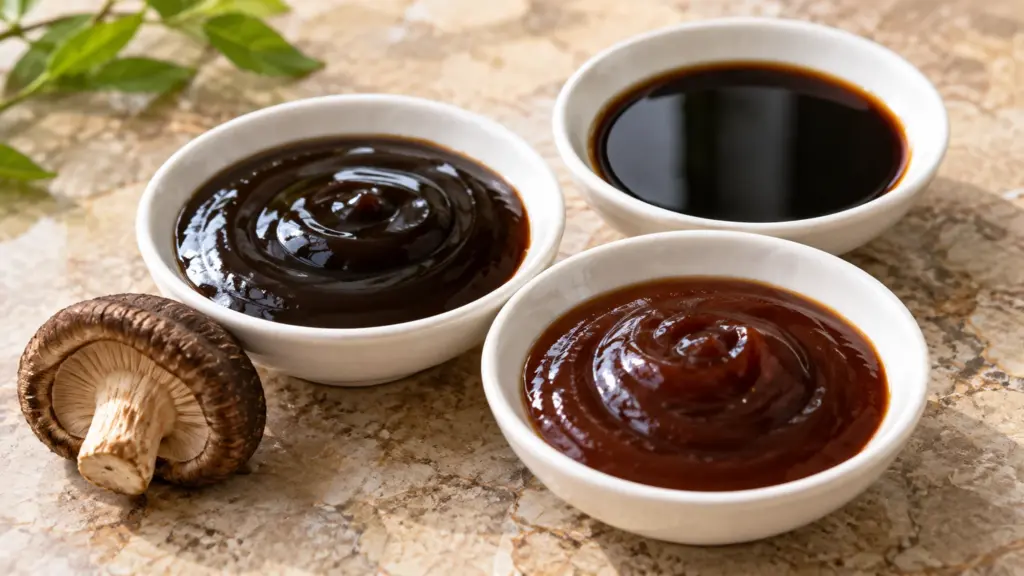
The pan is hot, the vegetables are chopped, and the oyster-sauce bottle gives you one disappointing drop. Choosing an oyster sauce substitute is easier when you consider the job it was doing: bringing savory flavor, a little sweetness, and enough body to coat the food.
A mushroom-based vegetarian oyster-style sauce is usually the closest starting point. Hoisin gives a sweeter, more spiced result, while soy sauce brings salty savoriness without the same thickness.
I’d match the substitute to the dish before worrying about a universal conversion. A glossy broccoli coating and a spoonful of seasoning in a large pot do not ask the sauce to do exactly the same work.
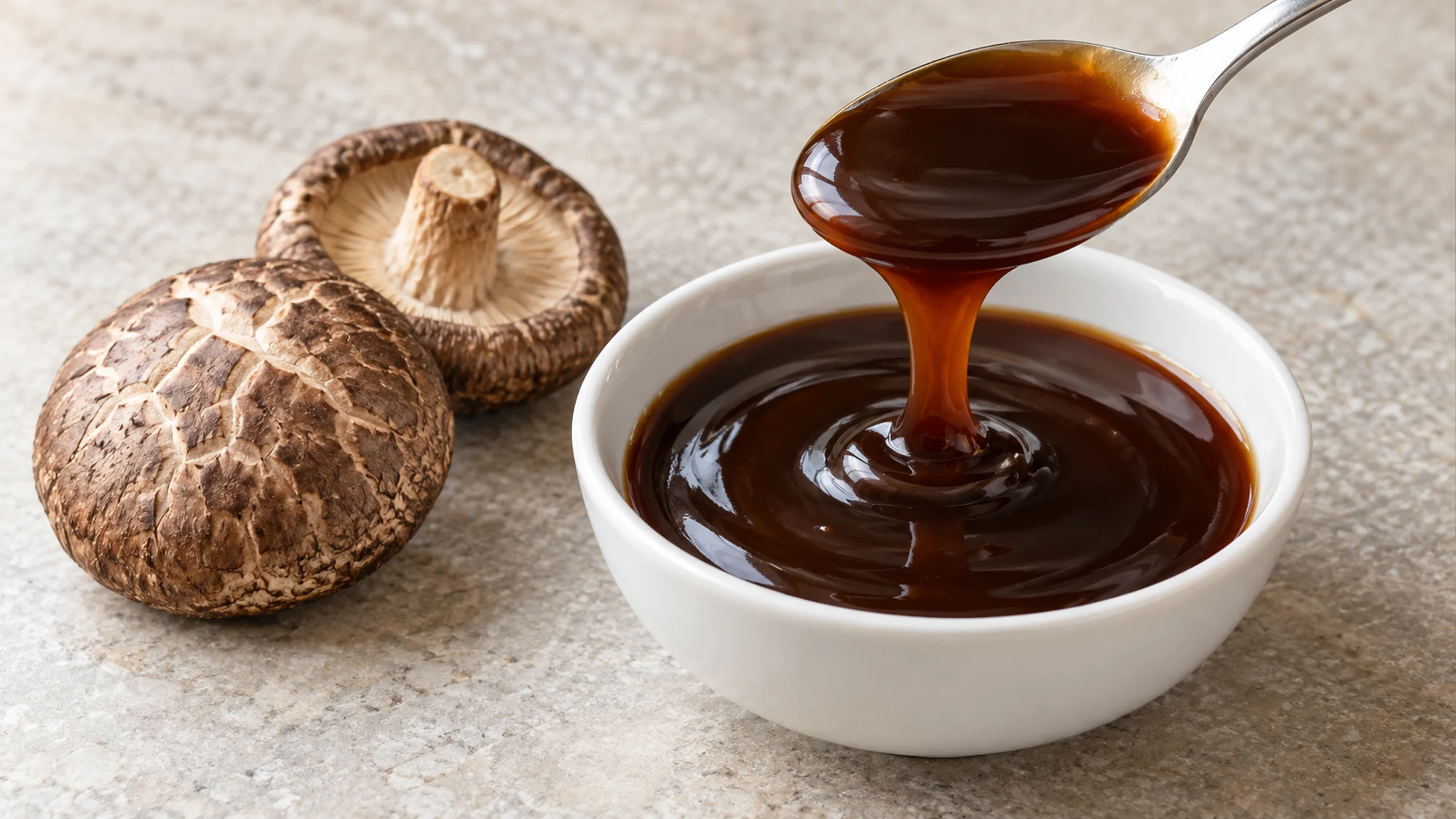
What an oyster sauce substitute needs to replace
Ordinary oyster sauce contains actual oysters or oyster extract. For a concrete example, Lee Kum Kee’s premium product lists oyster extract, sugar, salt, starch and wheat flour among its ingredients. That explains why an equally dark liquid is not automatically an equivalent replacement.
- Savory depth: Often called umami, this is the rounded, mouth-filling side of the sauce’s flavor.
- Sweetness: It helps balance the salt; a much sweeter substitute changes the whole seasoning.
- Body: Thickened sauce clings to ingredients instead of behaving like plain liquid.
- Dietary suitability: An emergency pantry swap and a shellfish-free or vegan choice require different checks.
Color is the least useful deciding factor. Two brown sauces can look similar and leave a very different taste in the bowl.
Compare the three most useful choices
These are cooking trade-offs rather than promises of identical flavor. Formulas vary, so use the bottle’s ingredients and preparation guidance alongside this comparison.
| Choice | Where it helps | What changes |
|---|---|---|
| Mushroom oyster-style sauce | Glazes, stir-fries and noodle coatings | Closest style; mushroom flavor and sweetness vary |
| Hoisin sauce | Sweet-savory glazes and robust sauces | Sweeter, spiced and often garlicky |
| Soy sauce | A small savory seasoning adjustment | Thin and salty; does not supply the same coating |
Lee Kum Kee’s vegan oyster-style sauce, for example, uses dried mushrooms, soy sauce and starch. It is specifically designed as an alternative, which makes it a more logical first choice than assembling several unrelated condiments.
When hoisin or soy sauce makes sense
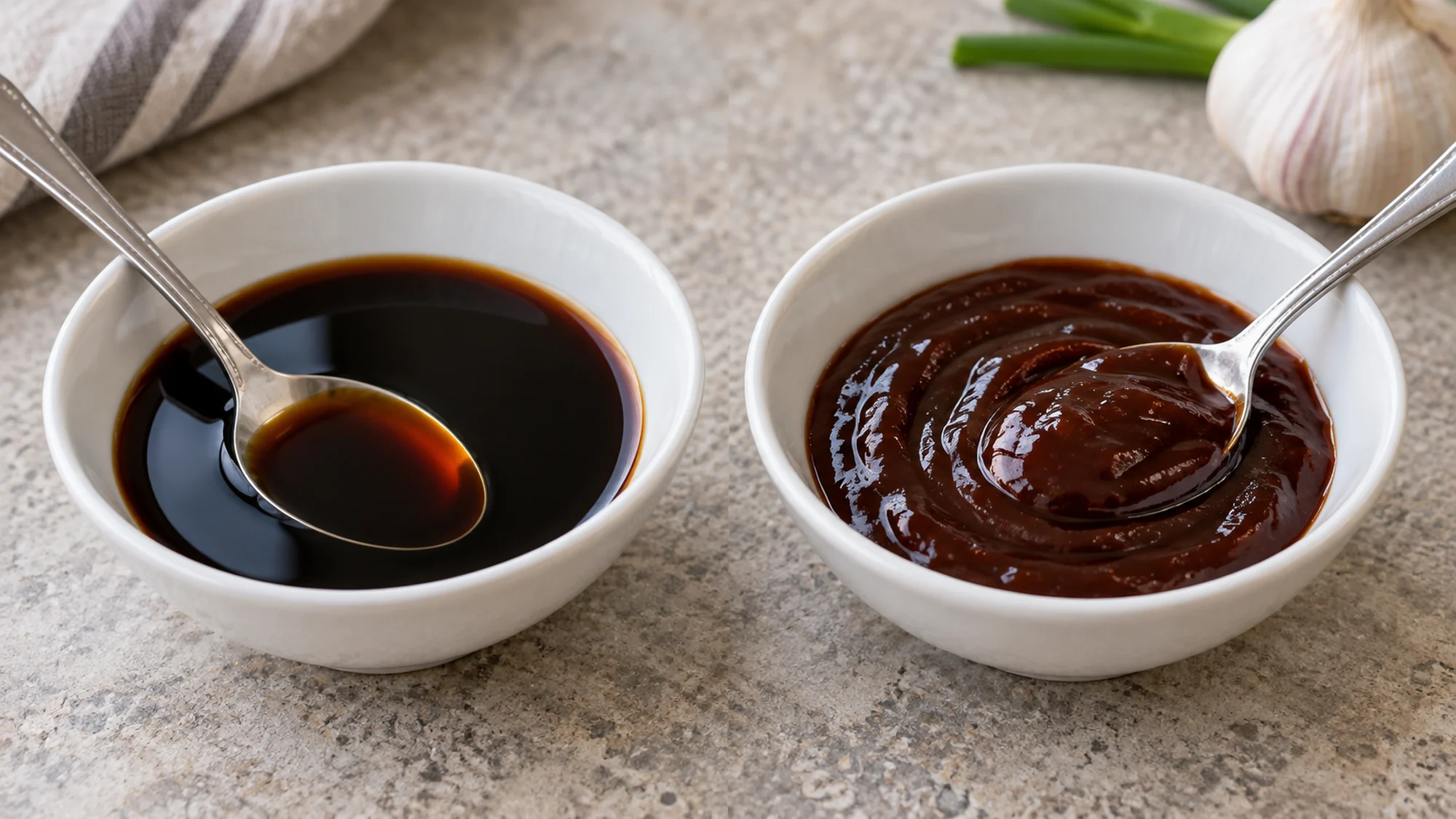
Hoisin can suit a dish that welcomes sweetness and spice, but it changes the flavor rather than disappearing into the background. The manufacturer describes its hoisin sauce as a thick sauce made with fermented soybean paste, spices, sesame and garlic. I’d be cautious in a delicately seasoned vegetable dish.
- Choose hoisin when a sweet, pronounced sauce suits the meal. Review any other sugar or sweet glaze already included.
- Choose soy sauce when you mainly need a small savory adjustment and the recipe does not rely on oyster sauce for thickness.
- Choose neither automatically when a large amount of oyster sauce is central to the dish. A purpose-made replacement is more predictable.
- Avoid chasing the original with extra salt. A substitute can be salty enough while still lacking the original flavor or body.
For another approach to savory cooking, Dishora’s miso mushroom pasta uses miso and browned mushrooms. It illustrates a different sauce system rather than a conversion for oyster sauce.
Adjust the dish in small steps
There is no dependable one-size-fits-all ratio across these products and recipes. Start conservatively, keep other salty ingredients in mind, and evaluate both flavor and consistency. Follow the original recipe’s food-safety instructions; tasting applies to a sauce or finished food that is safe to taste.
- Identify whether the original sauce mainly seasons, sweetens or coats the dish.
- Choose the closest suitable product, then check its label and instructions.
- Add gradually and assess the finished seasoning before adding more soy sauce, sugar or salt.
- If the sauce is too thin, use the recipe’s own supported thickening method rather than boiling away liquid until it becomes excessively salty.
Replace the sauce’s function first. Taste, sweetness and thickness are separate adjustments, so change one at a time.
Check allergens before calling it a safe swap
A vegetarian label does not make a sauce suitable for every allergy. The mushroom product above lists soy, while the hoisin example lists sesame, soy and wheat. Even products sold under similar names can have different formulations in different markets.
- For shellfish avoidance: Read the full ingredients, including oyster extract; do not rely only on the short allergen box.
- For gluten avoidance: Look for an appropriate gluten-free product instead of assuming all soy or mushroom sauces qualify.
- For vegan cooking: Check the complete product rather than assuming a seafood-sounding name or a brown color tells the story.
- For a diagnosed allergy: Check cross-contact questions with the manufacturer when needed.
The FDA’s allergy guidance emphasizes reading labels and avoiding your allergens. My first choice is the bottle that fits the person and the dish; the closest flavor comes after that.
Sources
- Lee Kum Kee: premium oyster sauce ingredients
- Lee Kum Kee: mushroom-based vegan alternative
- Lee Kum Kee: hoisin ingredients and uses
- FDA: food-allergy guidance

Emily Parker is DISHORA’s recipe-writing persona, bringing a warm, practical voice to everyday cooking. Her focus is simple ingredients, comforting flavors and clear steps that make a dish feel approachable. From cozy dinners to something sweet, Emily’s recipes invite readers to try something delicious and make it their own.