
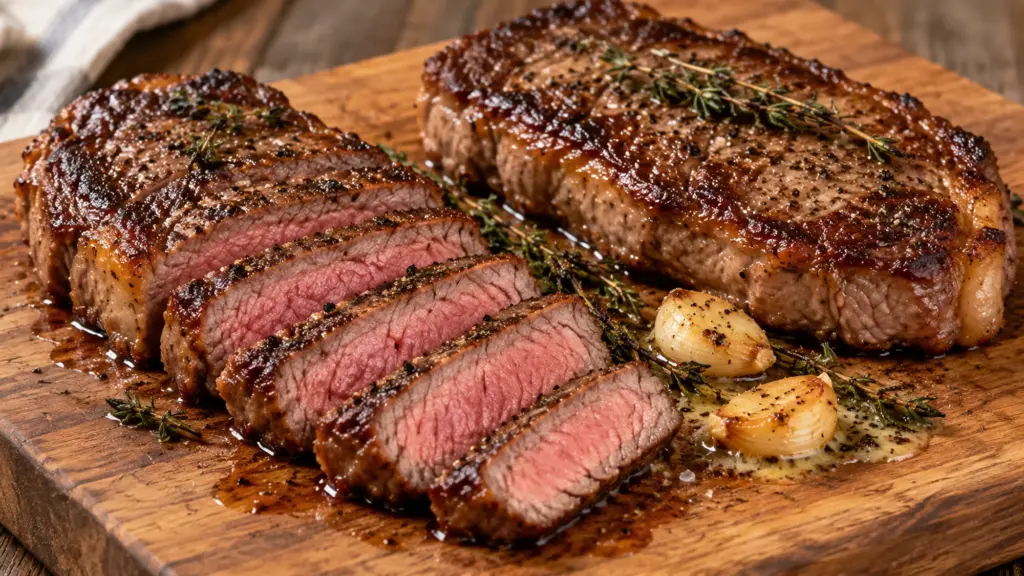
A steak dinner starts to feel achievable when the plan is clear: dry the meat, heat a heavy pan, build a crust, and check the center. This recipe explains how to cook steak using one-inch boneless strip steaks and a simple garlic-thyme butter finish. A thermometer and a short rest make the final stage much easier to judge.
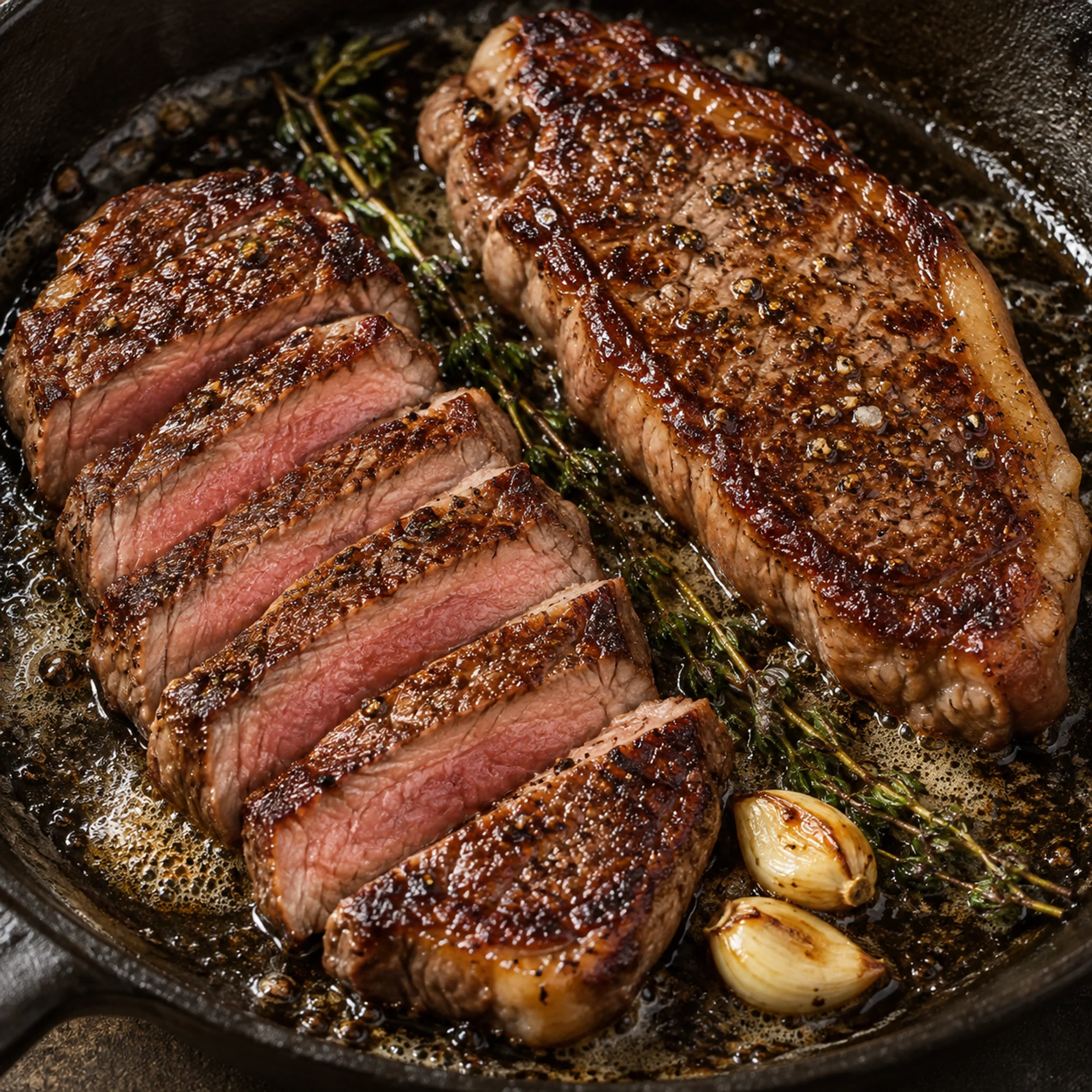
Pat the surface dry before searing, then use temperature to decide when the steak is ready. The cooking minutes are a guide because thickness and pan heat vary.
I prefer strip steaks of similar thickness for a two-person skillet meal. They cook at a similar pace and fit comfortably in a large pan. A little butter, garlic, and thyme at the end adds aroma without needing a separate sauce.
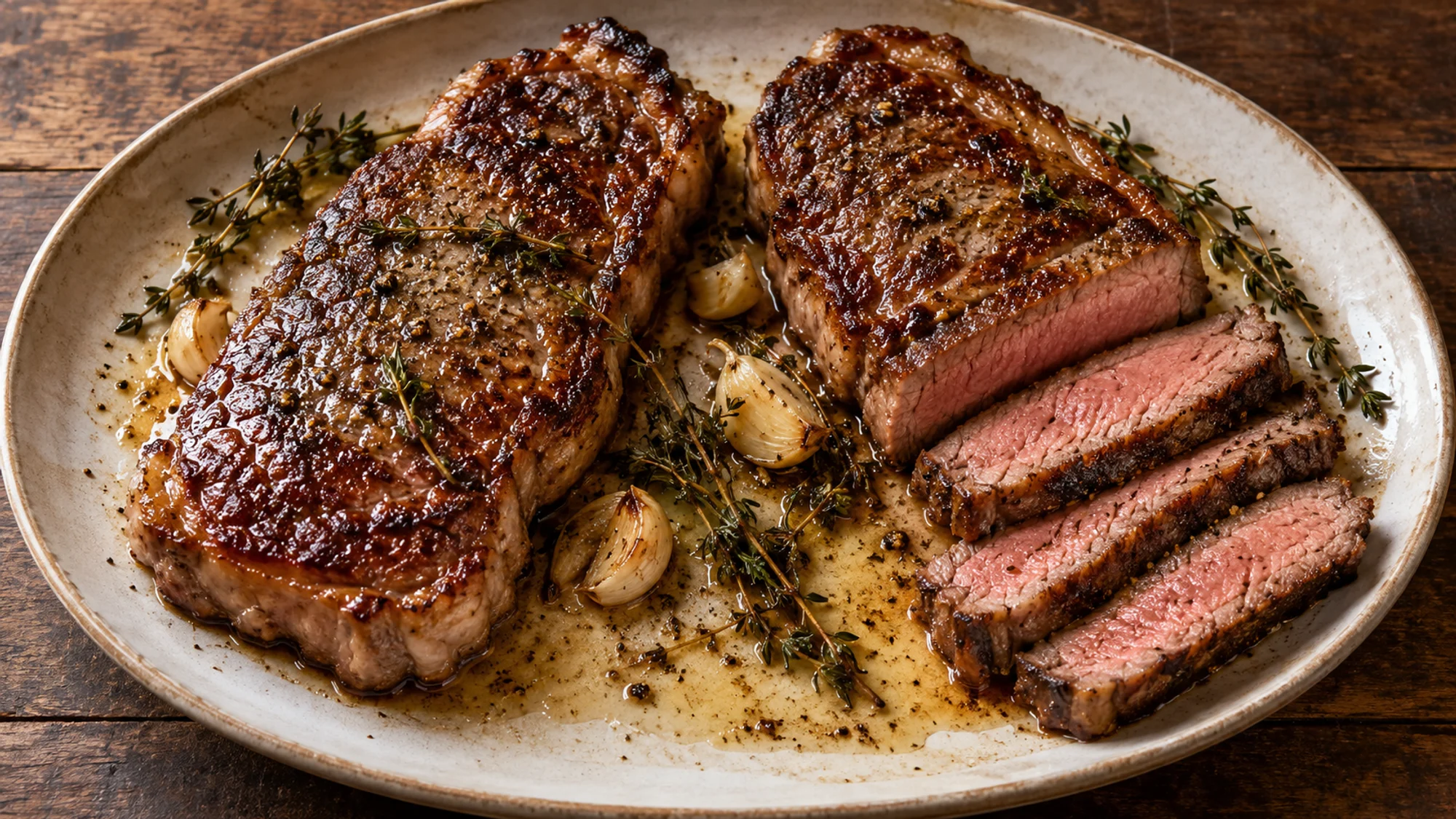
Serving suggestions for steak
Rest the steaks on a clean board before slicing. Then look for the direction of the muscle fibers and cut across them with a sharp knife. Spoon over a small amount of the warm pan butter, leaving the garlic and thyme to one side if you prefer.
A potato and a vegetable side make a straightforward plate. Dishora’s air fryer jacket potato is one option for a crisp skin that contrasts with the sliced steak. A simple green salad or steamed vegetables keeps the rest of dinner fresh.
I like to finish the side dishes before the steak starts cooking, because the skillet stage needs attention. The resting time is then a useful moment to bring plates to the table, rather than a scramble to cook another component.
For a shared platter, slice only what will be eaten immediately. A larger piece holds warmth better than many thin slices. Any extra cooked steak should be cooled and refrigerated promptly for later use.
Let the steak rest, slice across the grain, and keep the sides ready before the skillet work begins.
Steak variations and useful checks
The measured method is for one-inch boneless strip steaks. Ribeye can work at a similar thickness, but its extra fat and shape can change the timing. A much thicker steak needs a different plan to warm the center without overbrowning the outside.
Rosemary can replace thyme as an aromatic variation, or you can leave the herbs out. Keep the butter finish modest so the beef and browned crust remain clear. I would avoid adding wet marinades to this method, since the recipe relies on a dry surface.
Insert the thermometer from the side so its tip reaches the center of the thickest part. Avoid a pocket of fat or touching the pan. This thermometer guide explains placement and reading. A color check or a finger press cannot confirm a safe temperature.
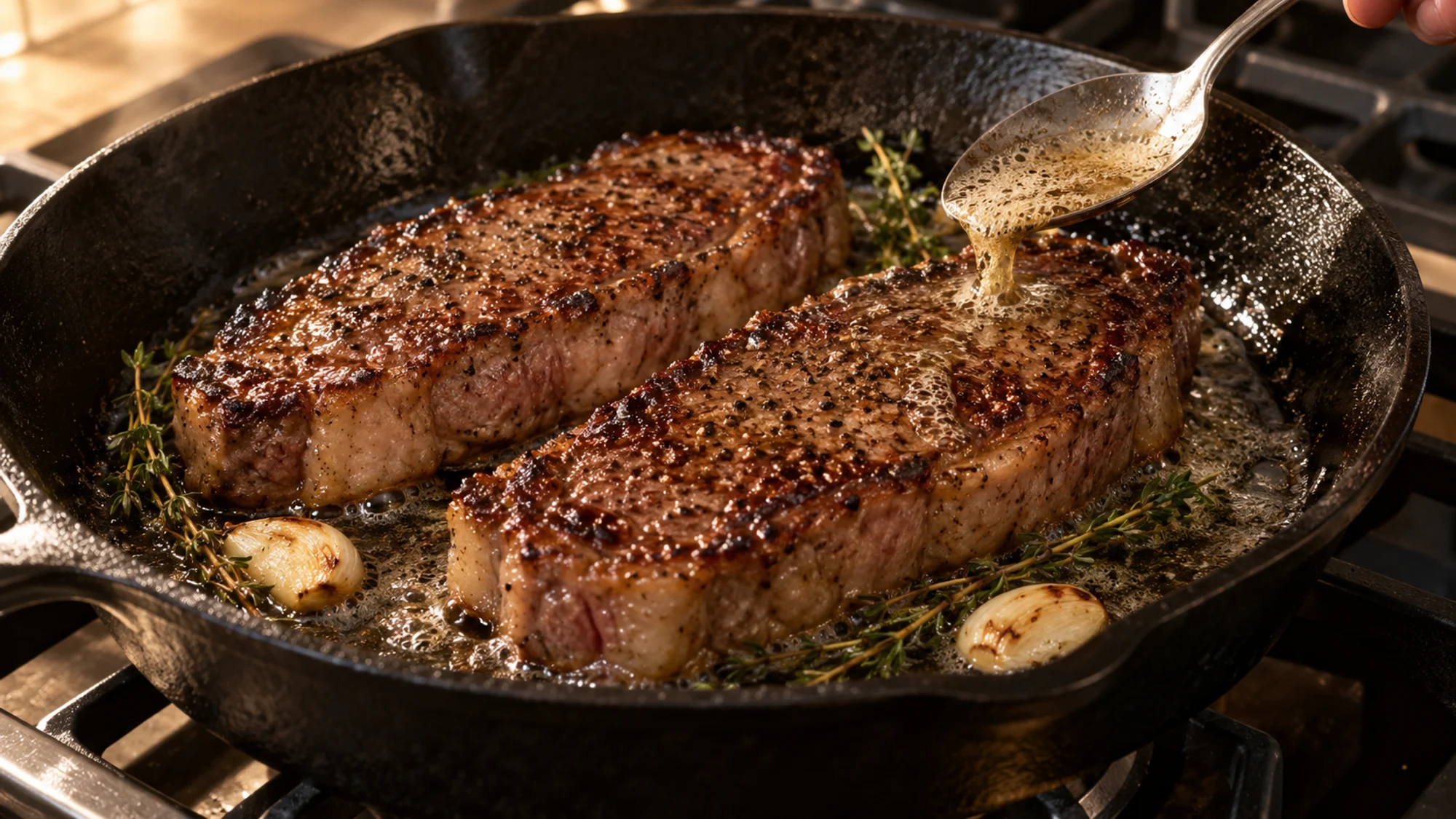
If the pan darkens too quickly after the butter goes in, lower the heat. Butter should foam and carry the garlic aroma, rather than turn into black specks. Continue cooking gently until the center reaches the required temperature.
Match the method to the steak thickness and let a properly placed thermometer guide the finish.
Health benefits and balance
Beef supplies protein and nutrients such as iron. The steak portion can be adjusted to fit your appetite and the rest of the meal. Vegetables and a grain or potato side bring different textures and food groups to the plate.
The card uses measured salt and a small amount of butter for two steaks. Taste with the sides before adding more seasoning. Rich flavor can come from a browned surface and aromatic pan butter without a large extra sauce.
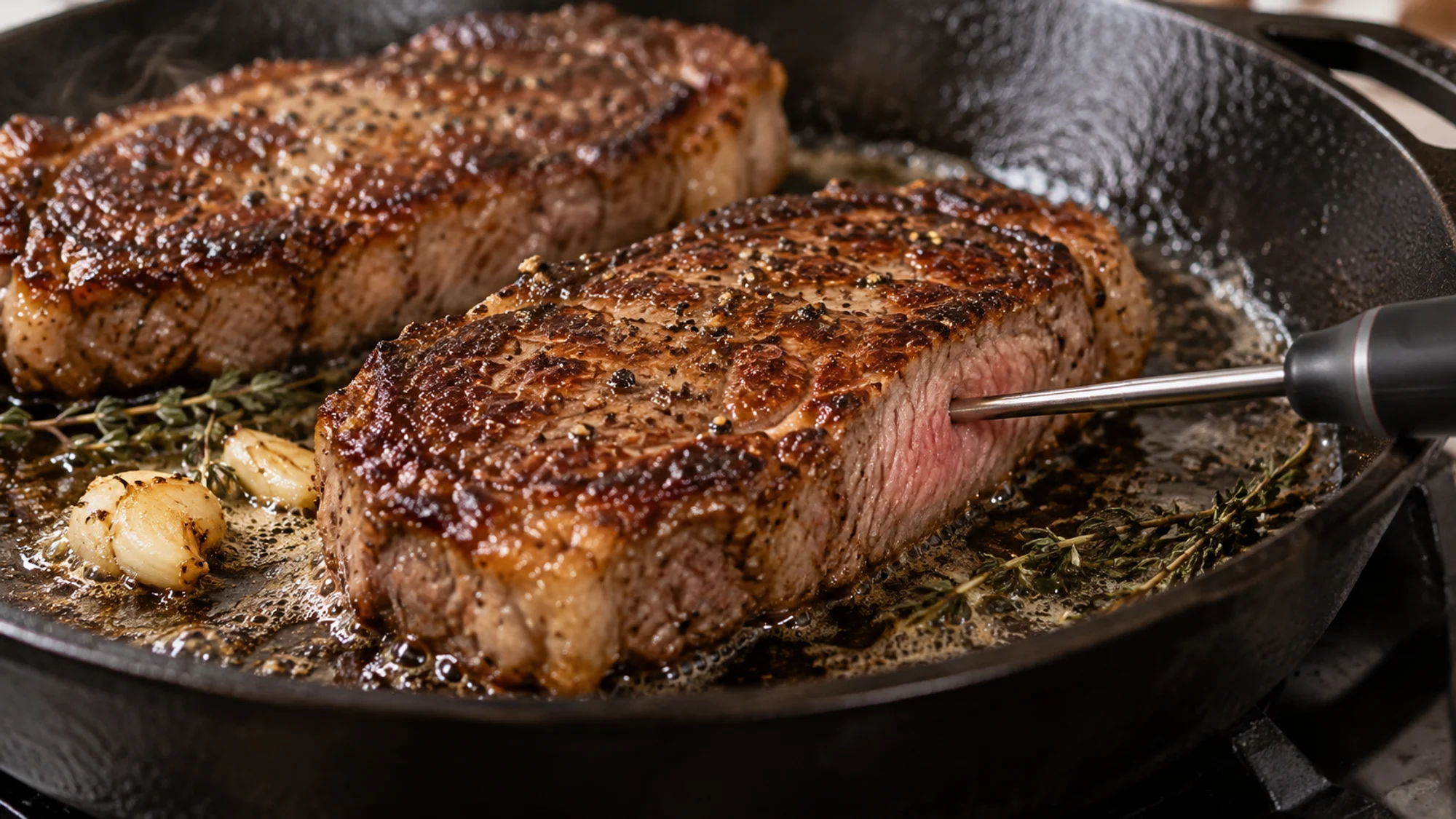
Cook whole beef steaks to at least 145°F before they leave the heat and rest them for at least three minutes. The safe temperature chart gives that minimum. Keep raw-meat equipment separate from the clean board used for resting and serving.
A satisfying steak plate combines a measured portion, varied sides, and a clear temperature check.
Motivation conclusion
Put the tongs, spoon, thermometer, and clean resting board within reach before the steaks meet the pan. Dry and season the meat, then let the first side make contact long enough to brown. Constantly moving it is an easy way to lose that useful crust.
Lower the heat for the butter finish and check the center as you go. Once the required temperature is reached, give the steak its rest. I like this short sequence because every step has a visible purpose, from a dry surface to a browned crust and an easier final slice.
A hot pan starts the crust; a thermometer and a little patience finish the steak.
How to Cook Steak

Ingredients
- 2 10-oz boneless New York strip steaks about 1 inch thick
- 1 tbsp neutral cooking oil
- 1 tsp kosher salt
- 1/2 tsp ground black pepper
- 2 tbsp unsalted butter
- 2 cloves garlic lightly crushed
- 2 sprigs fresh thyme
Equipment
- 12-inch cast-iron skillet
- Tongs
- Large spoon
- Instant-read food thermometer
- Paper towels
- Clean cutting board
- chef’s knife
Instructions
- Pat the steaks thoroughly dry with paper towels, then season both sides with salt and black pepper.
- Heat a 12-inch cast-iron skillet over medium-high heat for about 2 minutes. Add oil and heat until shimmering.
- Lay the steaks in the pan away from you. Sear about 3 minutes without moving, then turn with tongs and sear the second side about 3 minutes.
- Reduce heat to medium-low. Add butter, crushed garlic, and thyme. Tilt the pan carefully and spoon the foaming butter over the steaks for 2 to 4 minutes, turning as needed. Check the center from the side with a thermometer. Continue gently until each steak reaches at least 145°F (63°C) before removing from heat.
- Transfer to a clean board and rest at least 3 minutes, preferably 5. Slice across the visible grain and spoon over a little of the pan butter. Timing varies with thickness and pan heat.
Video
Notes
Tried this recipe?
Let us know how it turned out!Emily Parker is DISHORA’s recipe-writing persona, bringing a warm, practical voice to everyday cooking. Her focus is simple ingredients, comforting flavors and clear steps that make a dish feel approachable. From cozy dinners to something sweet, Emily’s recipes invite readers to try something delicious and make it their own.