
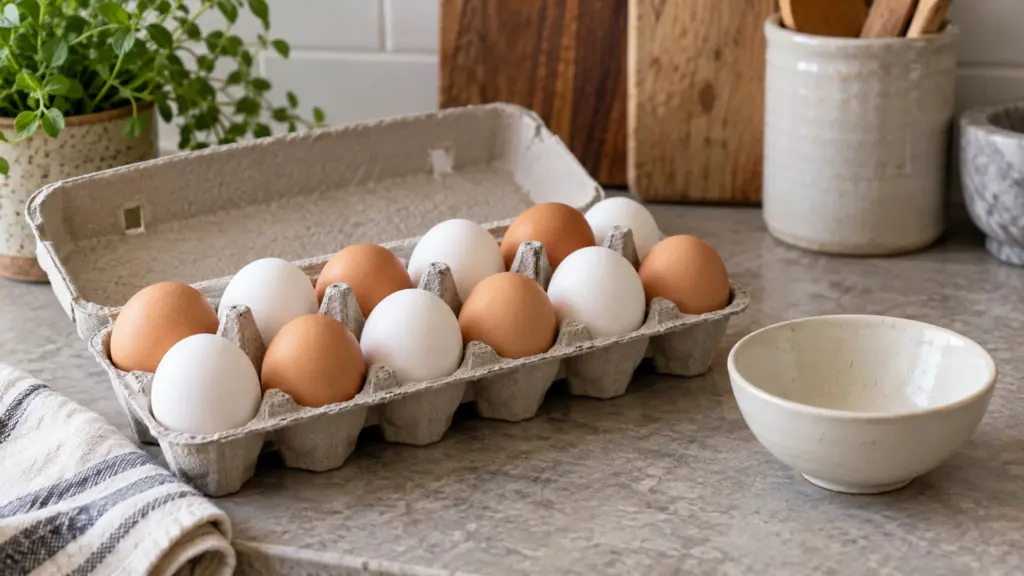
You are about to crack eggs into a mixing bowl, and the carton has been in the refrigerator long enough to make you pause. Learning how to tell if eggs are bad starts before the water-glass trick: consider how they were stored, then look for signs of spoilage.
Discard eggs with an off-odor or unusual appearance, and eggs with an unsafe storage history. A float test can indicate an enlarged air cell and poorer quality; it cannot prove an egg is safe. Even a clean, uncracked egg can contain Salmonella.
I’d check the cold-storage history first. A reassuring-looking shell cannot make up for eggs that have spent too long warm, and a quick kitchen test cannot check for every harmful bacterium.
Start with the carton and storage history
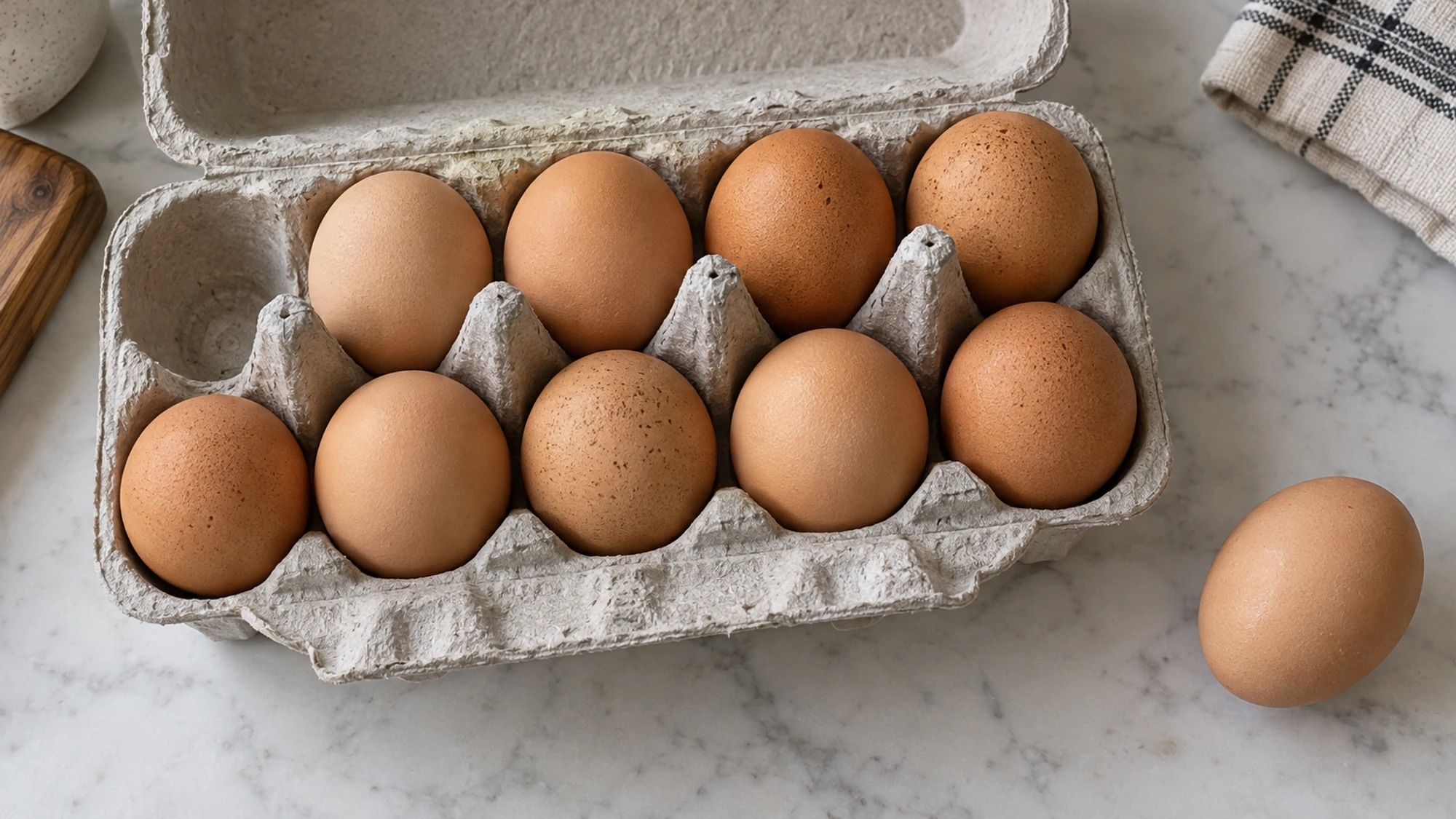
This guide concerns shell eggs sold refrigerated in the United States. The FDA recommends buying refrigerated eggs with clean, uncracked shells and promptly storing them at 40°F (4°C) or below. Keep the original carton so the product information stays with them.
Follow the FDA’s two-hour rule for refrigerated perishables, shortened to one hour above 90°F (32°C). If you do not know how long eggs have been warm, do not use a normal smell as a reason to dismiss that uncertainty.
- Check whether the eggs stayed refrigerated from shopping through storage.
- Read any recall information for the specific product; a kitchen test cannot clear a recalled carton.
- Inspect the shells before adding an egg to other ingredients.
What smell and appearance can tell you
USDA advises cracking an egg into a separate bowl and checking for an off-odor or unusual appearance. Its egg-appearance guidance also explains several normal changes that can otherwise cause unnecessary worry.
| Observation | What it means | Practical response |
|---|---|---|
| Off-odor | A spoiled egg can smell unpleasant. | Discard it; do not taste it. |
| Pink or iridescent raw white | USDA identifies this as spoilage. | Discard the egg. |
| Cloudy white | Can indicate a very fresh egg. | Do not confuse this alone with spoilage. |
| Green ring around a hard-cooked yolk | Often a cooking reaction. | The ring alone does not indicate spoilage. |
I prefer breaking each egg into a small bowl before adding it to a large mixture. That keeps an obvious problem from being mixed through everything, while still leaving storage and safe cooking as separate checks.
The float test measures a quality change
The USDA explanation of floating eggs is about buoyancy: an egg can float when its air cell becomes large enough. A floating egg may be poorer in quality without being spoiled. The test does not detect Salmonella.
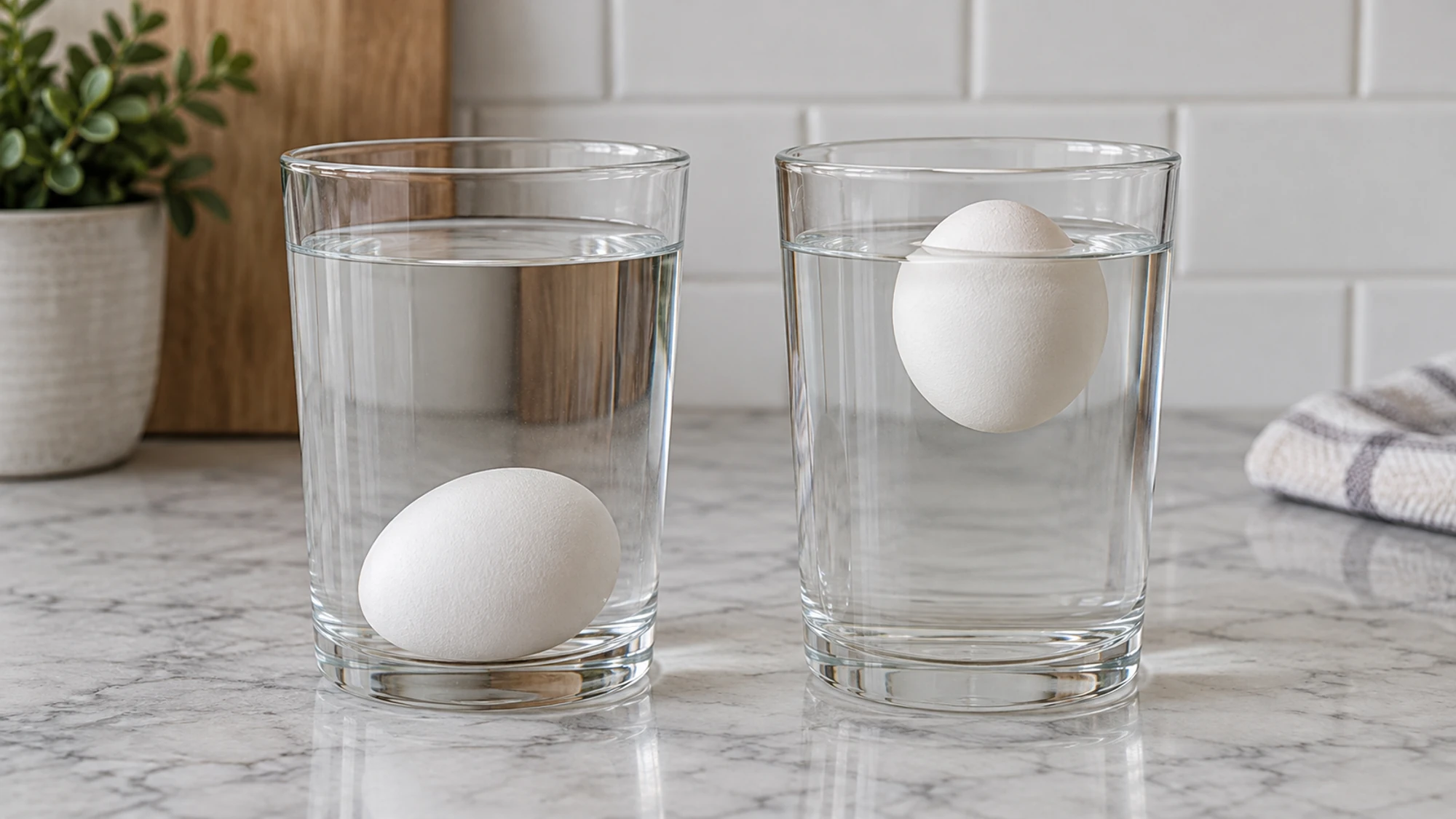
Treat sinking the same way: it is not a safety certificate. If an egg has an off-odor, unusual appearance or unsafe storage history, its position in water does not change the decision to discard it.
A freshness clue and a safety check answer different questions. Use the float test’s limits, rather than turning it into a pass-or-fail rule for eating eggs.
Use dates and refrigerator times in context
The FDA’s egg-storage recommendations distinguish several forms. They assume proper refrigeration; a printed date or suggested time cannot undo poor handling.
- Shell eggs: use within three weeks for best quality, following the FDA’s guidance.
- Hard-cooked eggs, peeled or in the shell: use within one week after cooking.
- Cooked egg dishes: refrigerate promptly and use within three to four days.
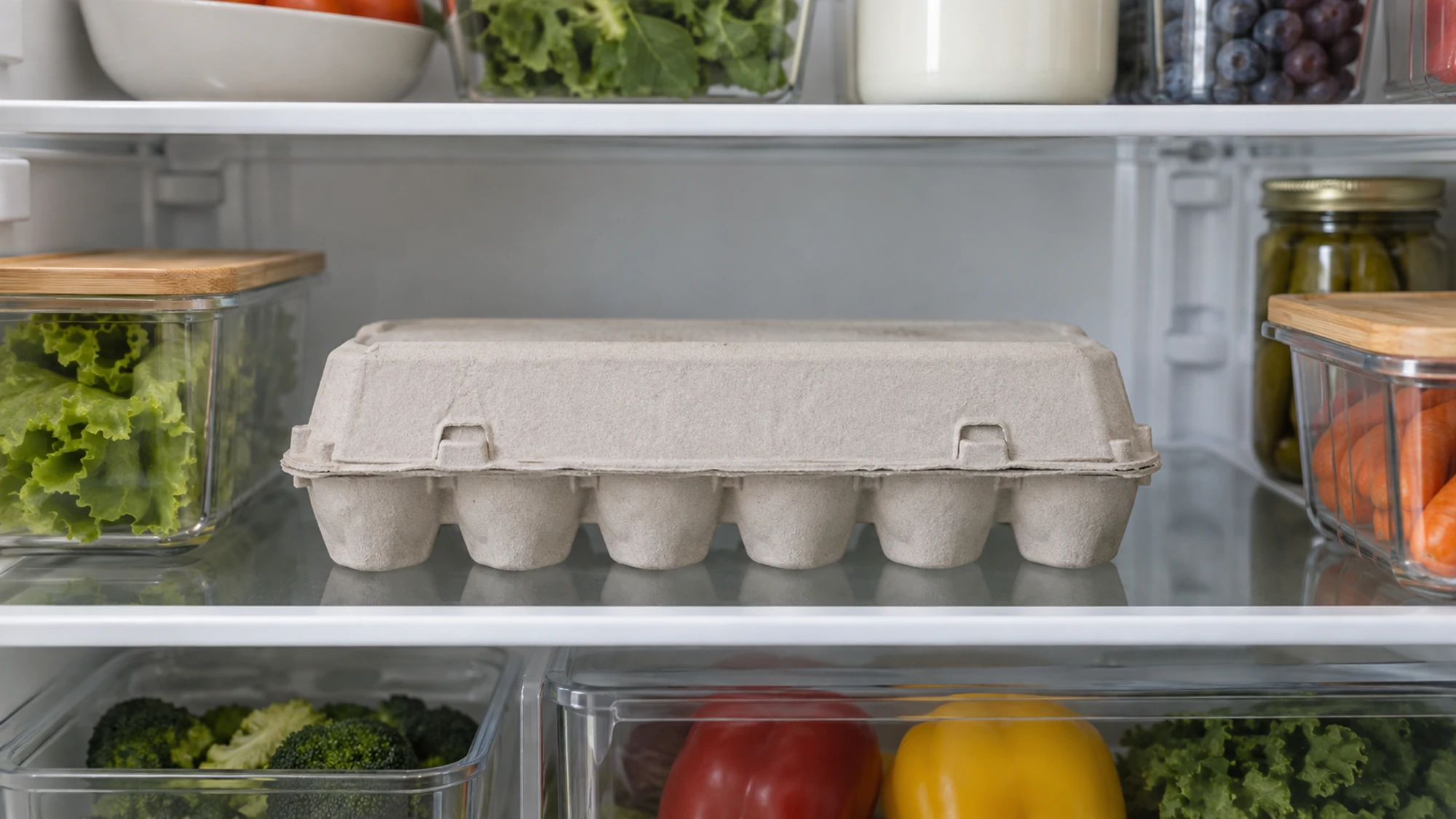
Keep the carton on an interior refrigerator shelf rather than in the door, where temperatures vary more. A refrigerator thermometer helps establish the actual storage temperature instead of relying on how cool the shelf feels.
Handle suitable eggs carefully, too
USDA’s shell-egg safety guide recommends firm whites and yolks, and 160°F (71°C) for casseroles and other egg dishes. For foods served with uncooked eggs, follow FDA advice to use appropriately pasteurized eggs or egg products. Cooking is not a salvage plan for a spoiled egg.
Wash hands, utensils and surfaces after raw-egg contact. Whether you are preparing papadzules with hard-cooked eggs or mixing a chocolate cake batter, keep raw ingredients away from ready-to-eat food and avoid tasting raw batter.
Begin with safe storage, discard clear spoilage, and remember that a normal-looking egg can still carry germs. Careful handling and thorough cooking remain useful even when a freshness test seems reassuring.
Sources
- FDA: egg safety and storage.
- FDA: safe food storage.
- USDA: what floating means.
- USDA: egg appearance.
- USDA: shell eggs from farm to table.

Emily Parker is DISHORA’s recipe-writing persona, bringing a warm, practical voice to everyday cooking. Her focus is simple ingredients, comforting flavors and clear steps that make a dish feel approachable. From cozy dinners to something sweet, Emily’s recipes invite readers to try something delicious and make it their own.