
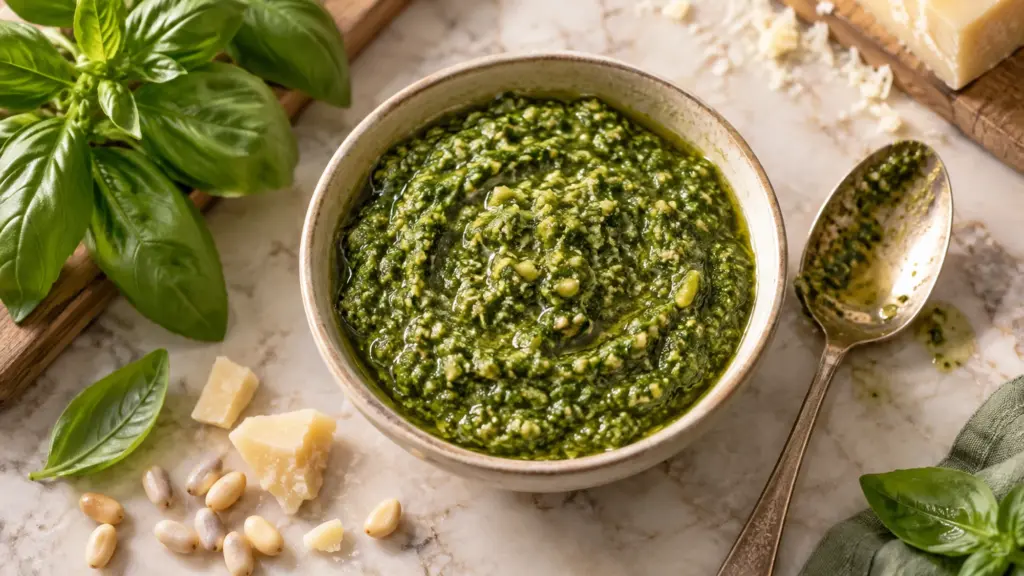
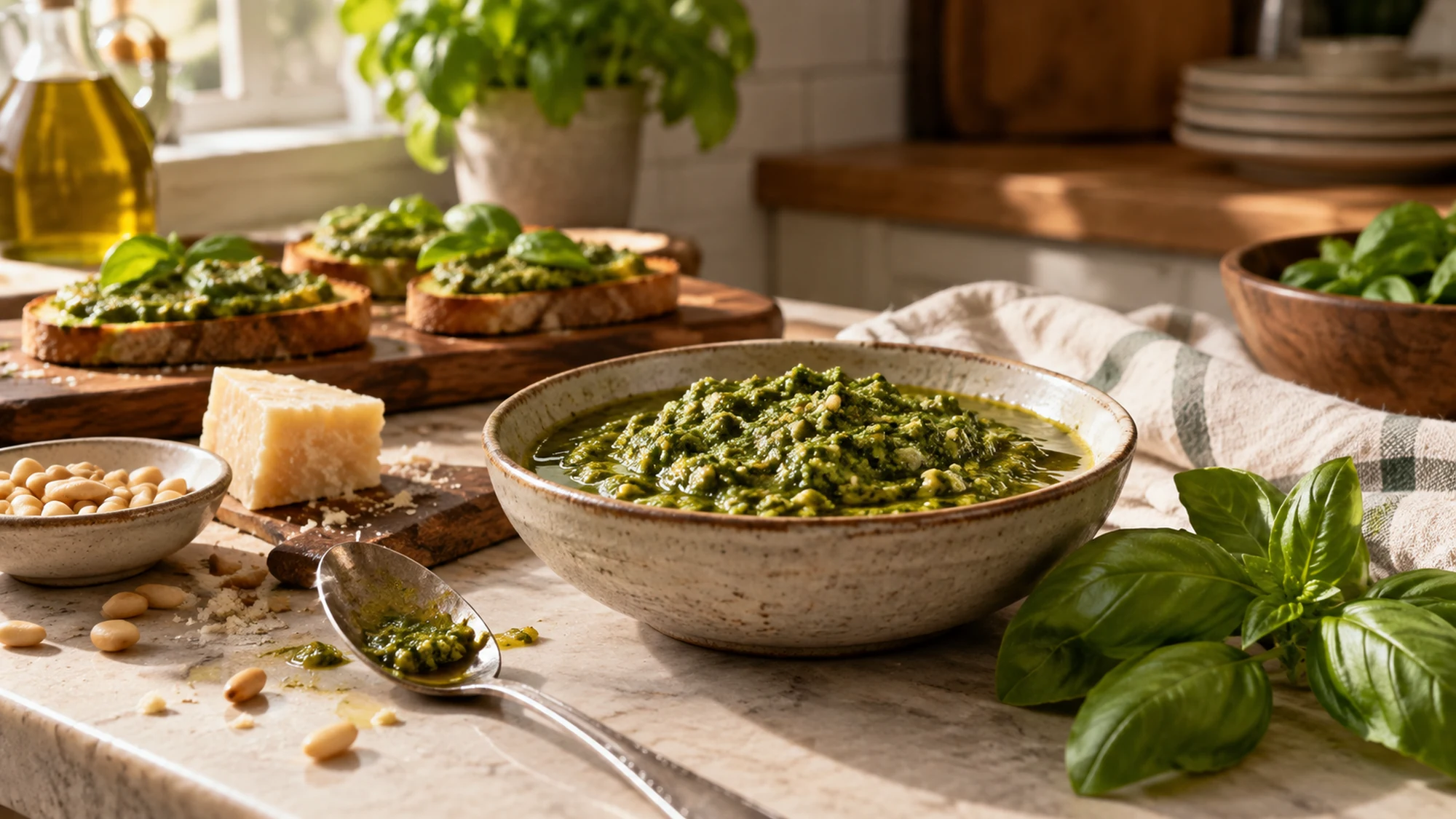
A handful of basil has more promise than a jar of green sauce might suggest. Here is how to make pesto with pine nuts, Parmesan, garlic and olive oil, keeping the basil flavor bright and recognizable. A food processor makes a practical small batch. Brief pulses bring the ingredients together without turning the sauce into a completely smooth green puree.
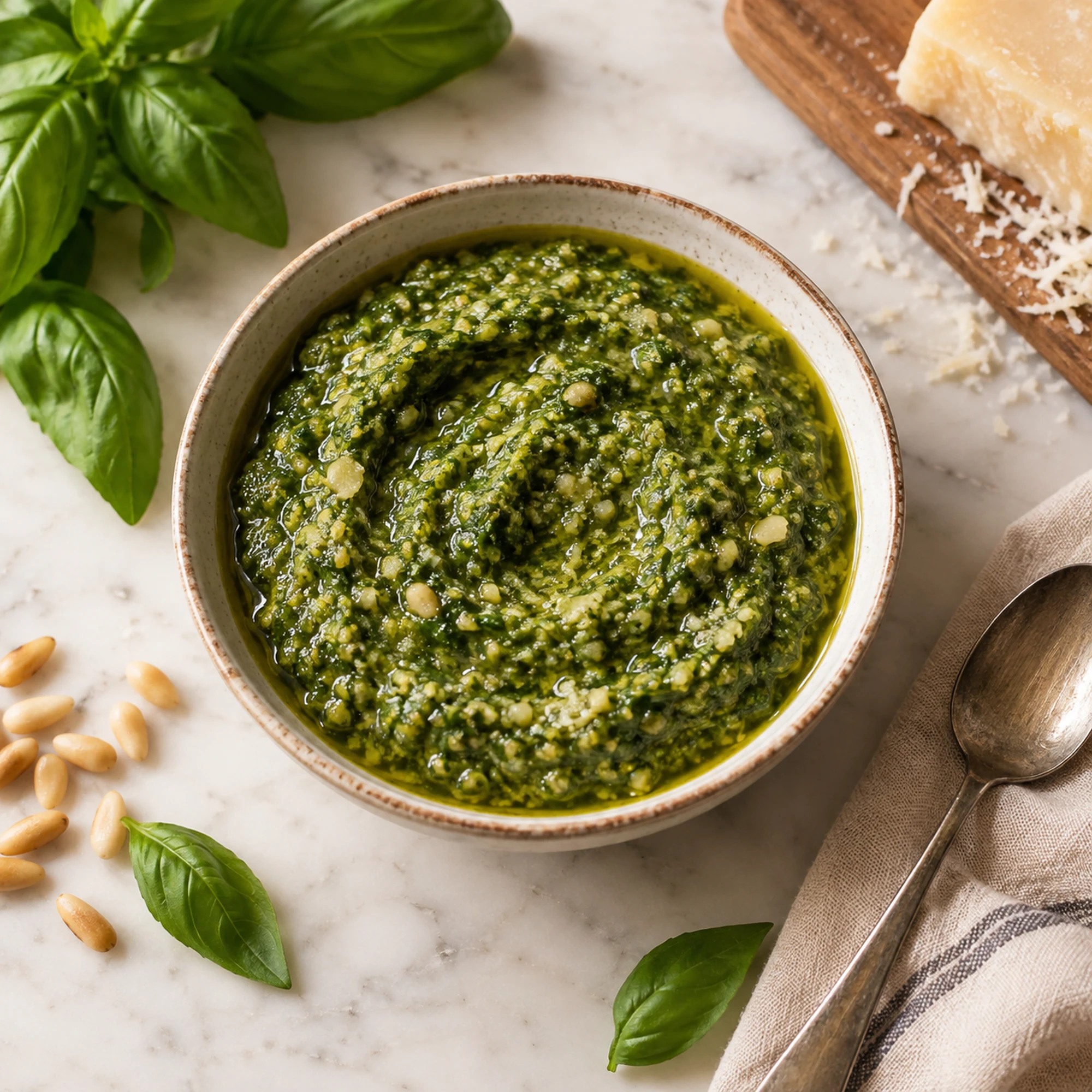
Dry the basil well, pulse briefly and stop while the pesto still has a little texture.
I prefer a lightly textured pesto that shows tiny flecks of nut and cheese. It clings well to pasta and tastes lively on vegetables. Water clinging to washed leaves can dilute the sauce, so drying them is worth the small effort. Use tender leaves rather than thick stems, and remove any damaged pieces before putting the basil into the processor.
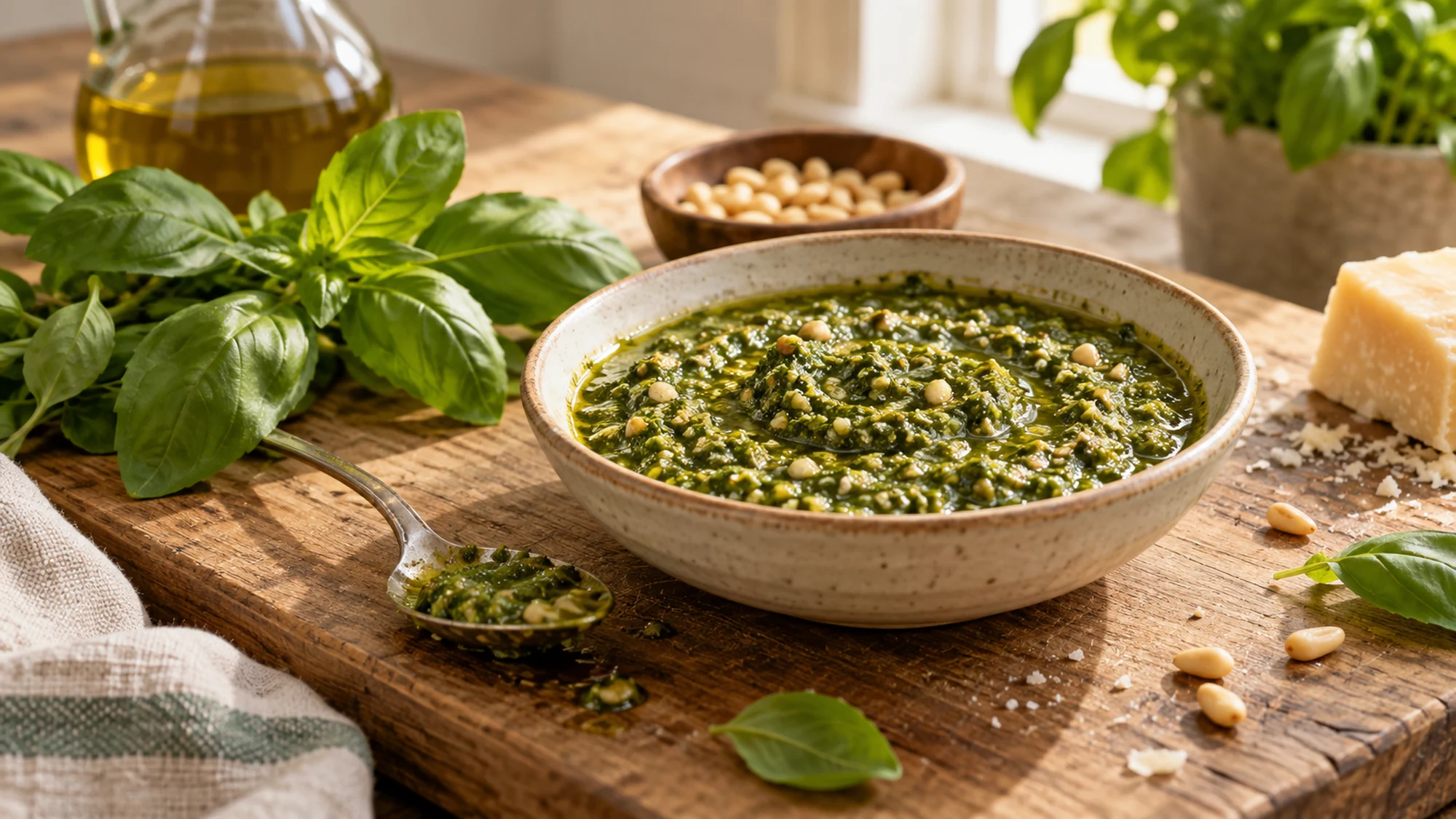
Serving pesto beyond a bowl of pasta
For pasta, loosen a spoonful of pesto with warm pasta water before tossing. Add it off the heat so the sauce stays fresh-tasting rather than frying in the pan. The starchy water helps the concentrated mixture spread around the pasta. Taste after tossing: Parmesan already adds salt, so seasoning the sauce and pasta separately can make the finished bowl saltier than expected.
- Spoon a little onto cooked potatoes or roasted vegetables just before serving.
- Spread a thin layer inside a tomato sandwich rather than using a large scoop.
- Pair with Dishora’s white bean dip as two contrasting spreads.
- Use a small portion alongside cooked fish, and keep extra sauce in the refrigerator.
The card makes approximately one cup, enough for eight modest portions. I would freeze the excess in small measured amounts if only one meal is planned. Fresh pesto should be refrigerated promptly and used within three days. For longer storage, pesto freezing guidance helps with containers and headspace. Freezing preserves a useful ingredient even if the green color changes slightly.
Loosen pesto with the liquid already in the dish, and serve a measured amount while the basil tastes fresh.
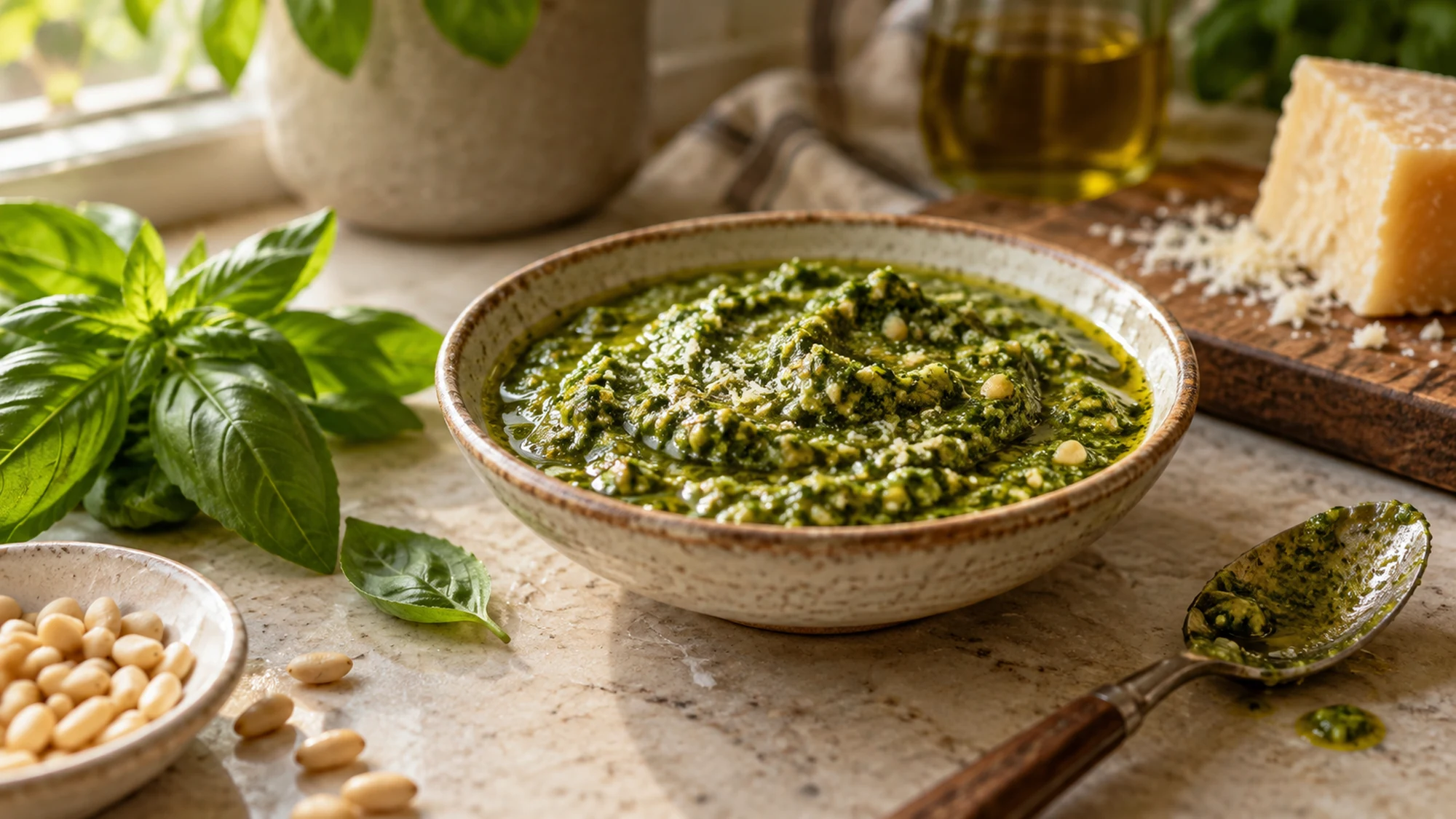
Variations with clear flavor differences
Pine nuts have a gentle flavor, but walnuts can make a less expensive sauce with a more assertive taste. Substitute the same weight and expect a different result. Toasting either nut also changes the flavor; if you toast them, let them cool before blending. Hot nuts warm the basil, and this particular version is meant to taste fresh rather than roasted.
- For a stronger garlic flavor, add a small additional piece after tasting.
- For a thinner sauce, work in a little more oil or use dish-specific liquid at serving.
- For a more lemony finish, add small amounts of juice while tasting.
- For dairy-free pesto, use a clearly labeled suitable cheese alternative and expect different salt and texture.
Spinach or parsley substitutions will not taste like basil pesto, so name them clearly. A mortar and pestle gives another texture and takes longer. With a processor, scrape down the sides and pulse rather than running the motor continuously.
Check Parmesan’s rennet if vegetarian suitability matters. Lemon adds brightness here, rather than acting as a preservation treatment. An oil layer over the top does not make pesto safe at room temperature.
Choose substitutions for their actual flavor and label them clearly, while keeping the same refrigerated handling.
Health benefits without overselling a spoonful
Basil contributes flavor and aroma, nuts add some protein and fat, and cheese brings calcium alongside salt. Oil provides most of the concentrated energy. A pesto portion is much smaller than a serving of vegetables, so a green sauce does not replace a varied plate. The recipe is useful because a small amount can make plain food more enjoyable.
- The nutrition estimate includes every measured ingredient divided across eight portions.
- Extra oil, cheese or pasta changes the nutrition of the complete meal.
- Pine nuts and dairy need careful ingredient-label checks when serving someone with an allergy.
- A nut substitution does not automatically make pesto safe for a person with a different nut allergy.
The food-allergen guide explains why reading labels matters. Cheese saltiness varies too, so the sodium label guide can help compare packages. I prefer to adjust salt after the Parmesan is mixed in. That is a practical cooking decision, with no need to promise a special health outcome from a spoonful.
Treat pesto as a flavorful condiment, and check nuts, dairy and salt before serving.
Keep a little basil texture
Dry the leaves, pulse the ingredients and pause to taste before making another adjustment. A small batch gives you a concentrated sauce for several different meals without a long cooking project. Use what you need while it is fresh, refrigerate promptly and freeze the rest in convenient portions. The next simple bowl of pasta or vegetables will have a useful head start.
How to Make Pesto Recipe

Ingredients
- 2 packed cups fresh basil leaves 60 g, washed and dried very well
- 1/3 cup pine nuts 45 g, untoasted
- 1/2 cup finely grated Parmesan 50 g
- 1/2 cup olive oil 120 ml; about 108 g
- 1 clove garlic About 3 g, peeled
- 2 teaspoons lemon juice 10 ml
- 1/4 teaspoon fine salt Adjust after tasting the Parmesan
Equipment
- Food processor
- Cheese grater
- Clean towel or salad spinner
- Measuring cups and spoons
- Spatula
- Small lidded refrigerator container
Instructions
- Wash the basil leaves and dry thoroughly with a clean towel or salad spinner. Remove thick stems and damaged leaves.
- Put pine nuts and garlic into a food processor and pulse a few times until finely chopped.
- Add the basil, Parmesan and lemon juice. Pulse briefly, scraping the bowl as needed.
- Add olive oil gradually, pulsing just until a lightly textured sauce forms. Taste and add the measured salt as needed. Makes approximately 1 cup; divide into eight portions. Refrigerate promptly and use within three days, or freeze portions.
Nutrition
Video
Notes
Tried this recipe?
Let us know how it turned out!Emily Parker is DISHORA’s recipe-writing persona, bringing a warm, practical voice to everyday cooking. Her focus is simple ingredients, comforting flavors and clear steps that make a dish feel approachable. From cozy dinners to something sweet, Emily’s recipes invite readers to try something delicious and make it their own.