
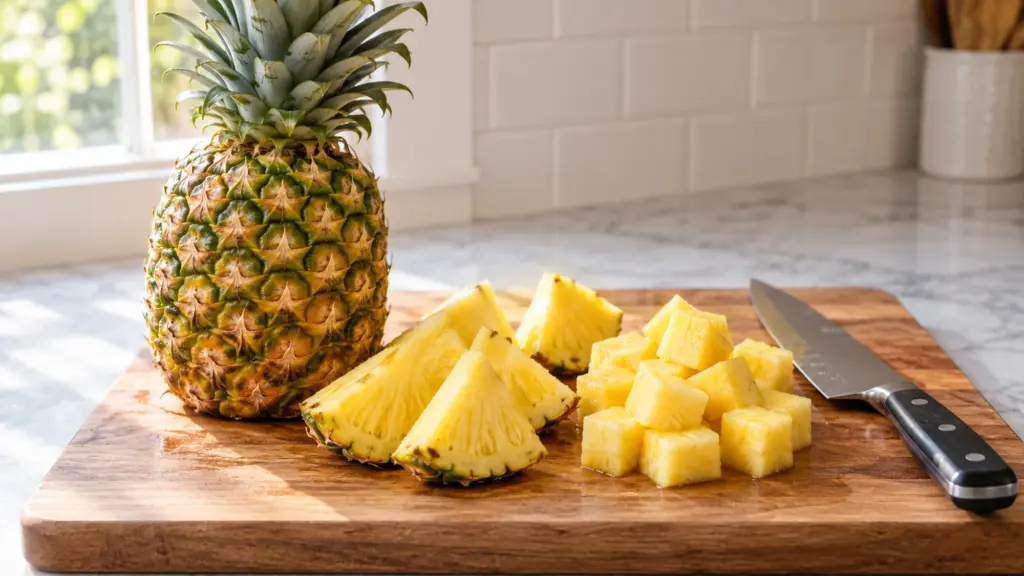
A whole pineapple looks more complicated than the bowl of golden chunks it becomes. The prickly skin and rolling shape are the awkward parts; once you give it a flat base, the rest is a series of manageable cuts.
Here’s how to cut a pineapple: wash and dry it, trim off the crown and base, stand it upright and slice away the skin. Quarter it lengthwise, remove the firm core from each quarter, then cut the flesh into spears or chunks.
I prefer this quartering approach for everyday fruit bowls because the core is easy to see and the pieces rest flat. Keep the knife work slow and controlled; the pineapple does not deserve a dramatic entrance.
Before cutting: wash the fruit and steady the board
Start with a clean board, a sharp kitchen knife large enough for the fruit and a small knife for any remaining eyes. Set the board on a stable surface; a damp clean towel underneath can help prevent sliding. Keep your fingers out of the blade’s path.
Wash your hands, then rinse and scrub the pineapple under running water and dry it. FDA’s produce-cleaning advice explains why washing comes before peeling: a knife can carry contamination from the outside onto the edible flesh. Do not use soap on the fruit.
At the store, choose a fruit with a sweet aroma and avoid sour smells, mold or soft damaged areas. A good cutting method cannot repair spoiled fruit, and washing reduces contamination rather than making produce sterile.
How to cut a pineapple into spears or chunks
The same trim, peel and quarter approach appears in University of Minnesota’s pineapple guide. Make one cut at a time and move trimmings out of the working area.
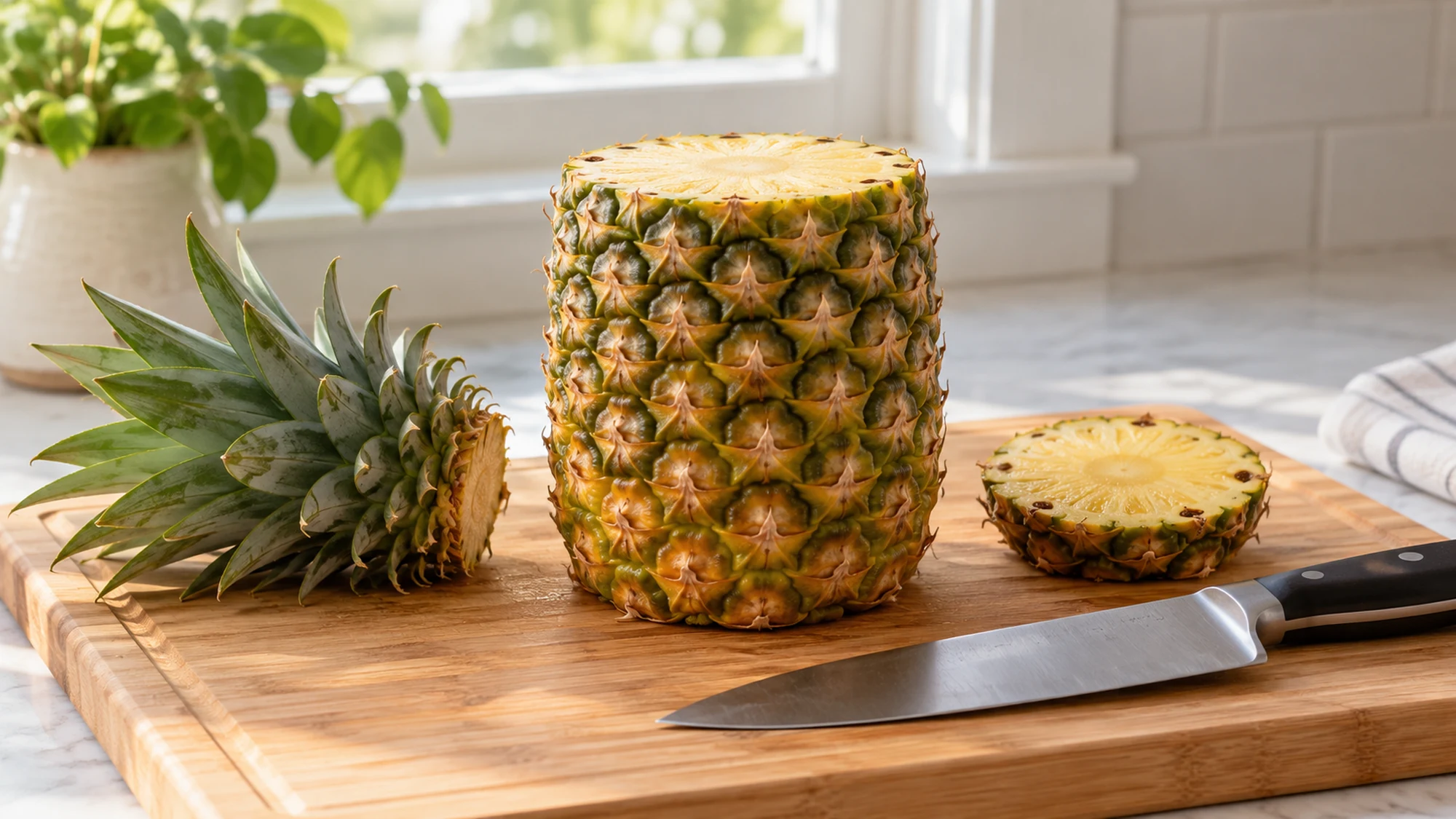
- Make two flat ends. Lay the washed pineapple on its side and cut off the leafy crown and the bottom. Remove enough to create a stable, flat base.
- Stand it upright. Place a cut end on the board. If it rocks, carefully level the base before going further.
- Remove the skin. Slice downward in strips, following the fruit’s curve. Rotate the fruit between cuts and keep your supporting hand away from the descending blade.
- Tidy the surface. Remove remaining prickly skin and brown eyes with shallow, controlled cuts. A little trimming is preferable to leaving hard pieces in the fruit.
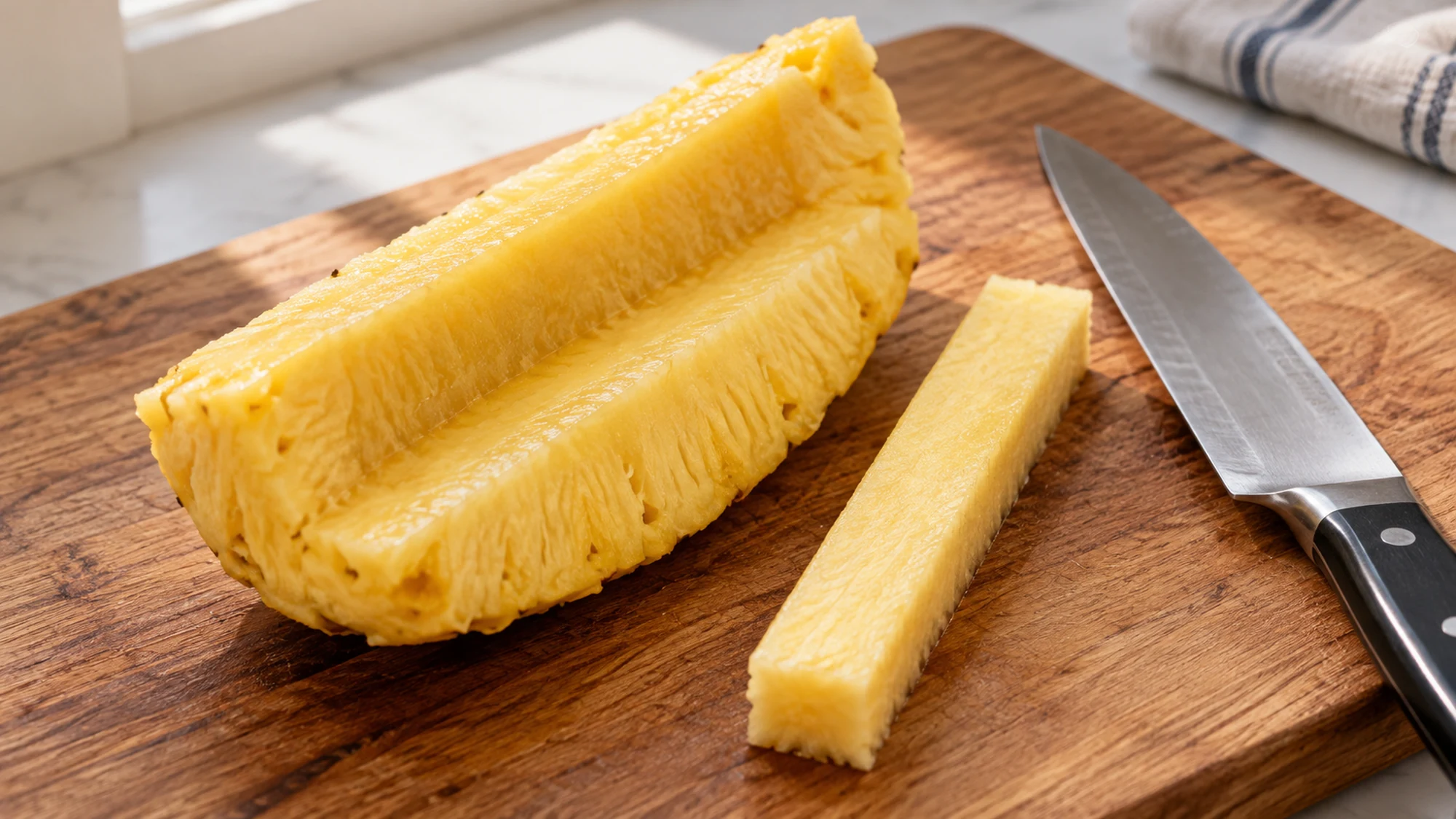
- Quarter and core. Cut the peeled fruit in half lengthwise, then halve again. Rest each quarter securely and slice off its firm inner core strip.
- Choose your pieces. Leave the quarters as spears, split into narrower spears or cut crosswise into chunks. Move the finished fruit into a clean container.
Choose chunks, spears or rings for the way you’ll use it
Chunks are convenient for fruit bowls or a spoonful of plain homemade yogurt; spears make a simple handheld serving. For rings, use the peeled cylinder before quartering: lay it securely on its side, slice crosswise, then remove the tough center from each round with a suitable small cutter.
I’d choose chunks for storage because they are easy to portion, and rings when presentation matters. Keep the pieces reasonably even for a tidier bowl or more consistent contact with a grill.
| Cut | How to finish | Useful for |
|---|---|---|
| Chunks | Slice cored spears crosswise | Fruit bowls and containers |
| Spears | Keep cored quarters long | Snack plates and grilling |
| Rings | Slice peeled cylinder; remove centers | Round garnishes and grilling |
| Small dice | Cut cored strips into smaller pieces | Salsa and finely chopped fruit |
Avoid the little problems that waste good fruit
Taking very thick skin strips removes plenty of flesh with them. Follow the curve in smaller passes and tidy remaining eyes afterward. Do not chase perfect cosmetic smoothness at the expense of half the pineapple.
The core feels denser than the surrounding flesh, which helps identify the strip to remove. University of Minnesota’s pineapple guide also describes quartering to separate fruit from the core. If a quarter slips, stop and reposition it rather than cutting while it moves.
Keep ready-to-eat pineapple away from raw meat, poultry and their utensils. FDA recommends separate equipment or thorough washing between those tasks.
Refrigerate the cut fruit and enjoy it while fresh
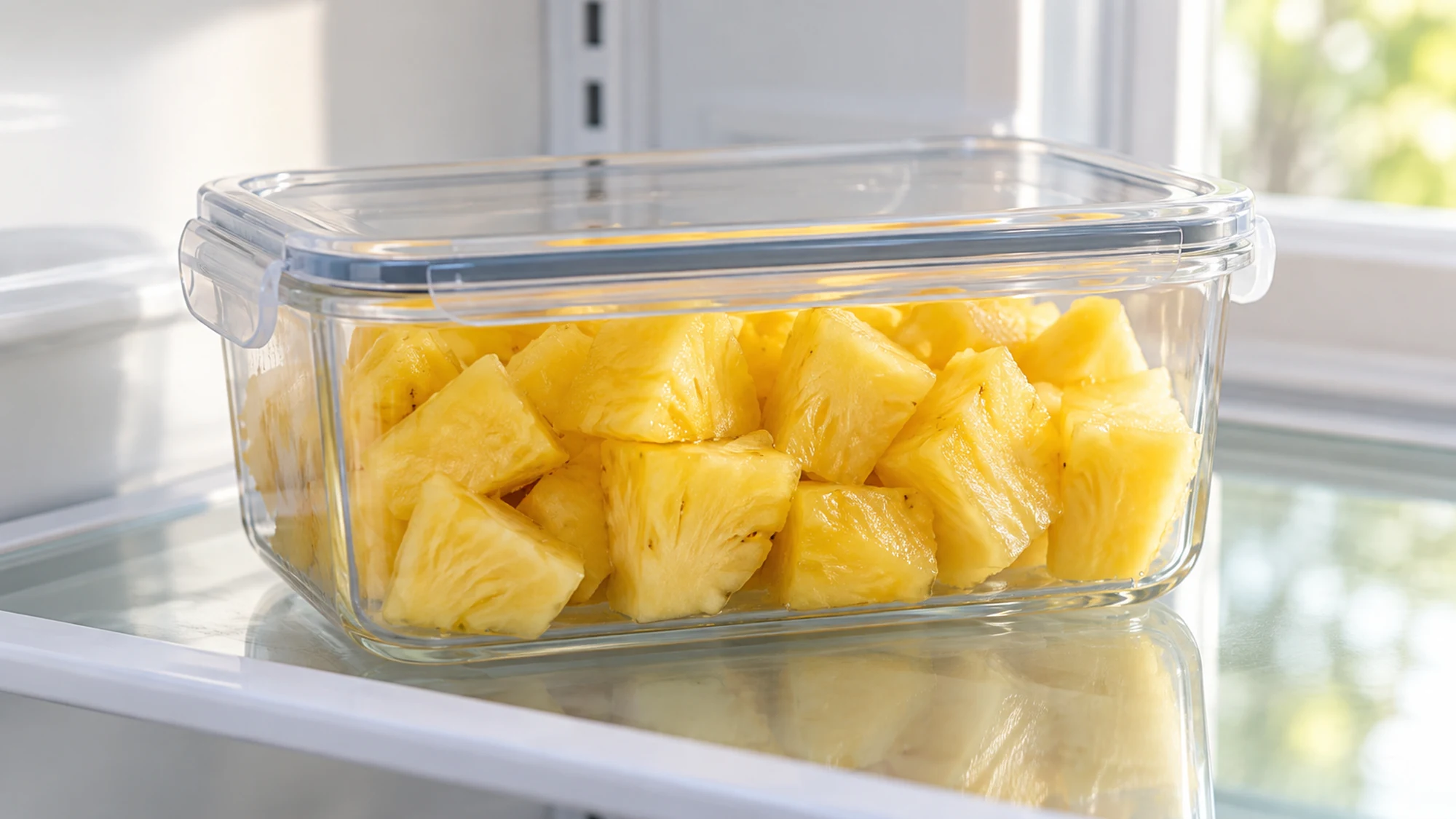
Put the chunks into a clean, airtight container and refrigerate at 40°F or below. Oregon State University’s Food Hero guide recommends keeping cut pineapple refrigerated for up to four days. Date the container so it does not become a mysterious yellow resident.
FDA-hosted fresh-produce handling guidance advises refrigerating cut or peeled produce within two hours. For longer storage, freeze pieces separately on a tray before transferring to a freezer container; Food Hero suggests using them within six months for best quality.
A flat base makes the work manageable: wash, trim, peel, quarter and core. Then enjoy the golden flesh and refrigerate the remainder promptly.

Emily Parker is DISHORA’s recipe-writing persona, bringing a warm, practical voice to everyday cooking. Her focus is simple ingredients, comforting flavors and clear steps that make a dish feel approachable. From cozy dinners to something sweet, Emily’s recipes invite readers to try something delicious and make it their own.