
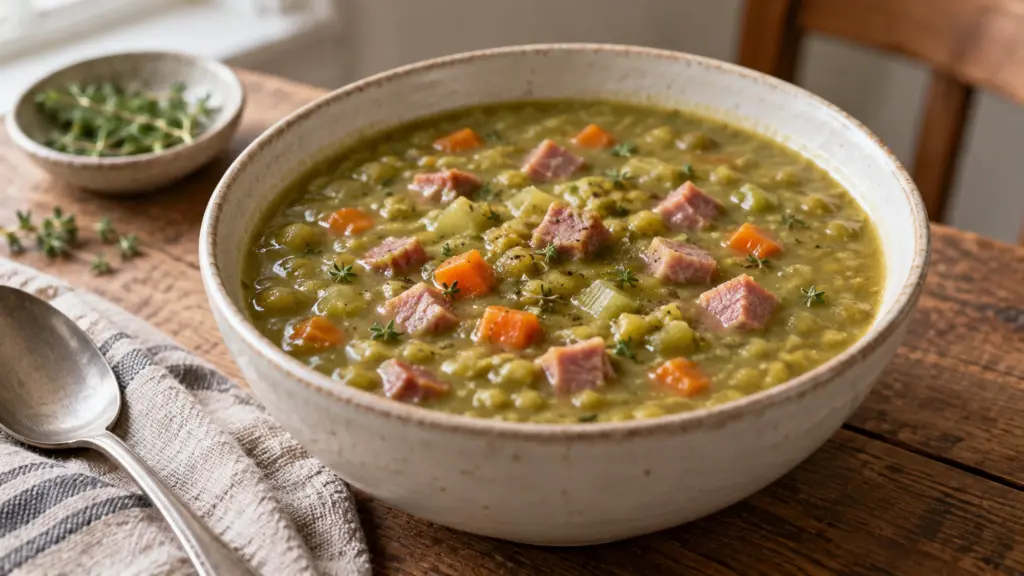
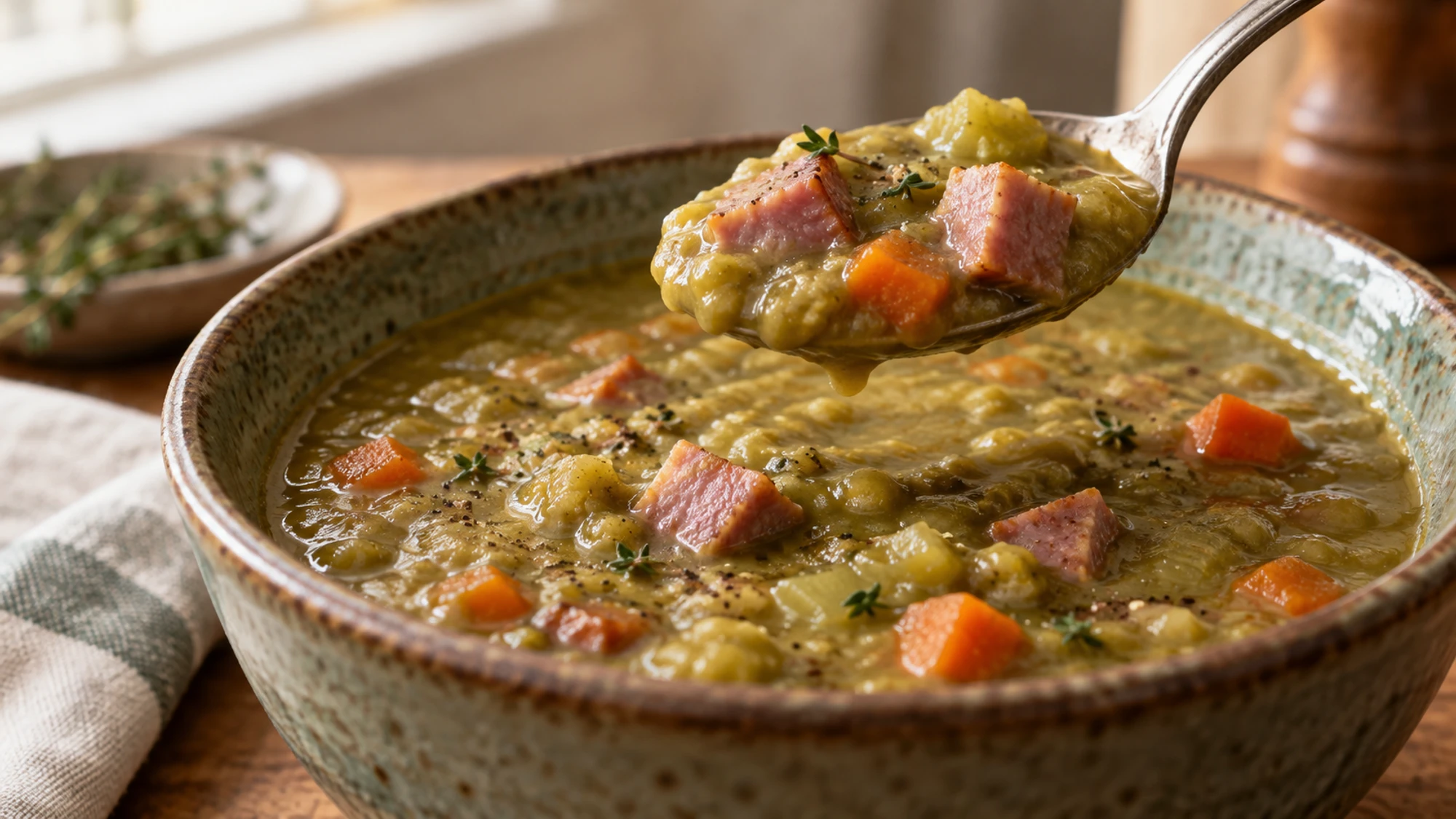
A bag of split peas does not look like a creamy dinner until you give it a little time on the stove. This split pea soup recipe turns those dried peas into a thick, spoonable bowl with smoky ham, sweet carrot and a gentle thyme aroma. The peas soften and break down as they simmer, building the body of the soup without cream.
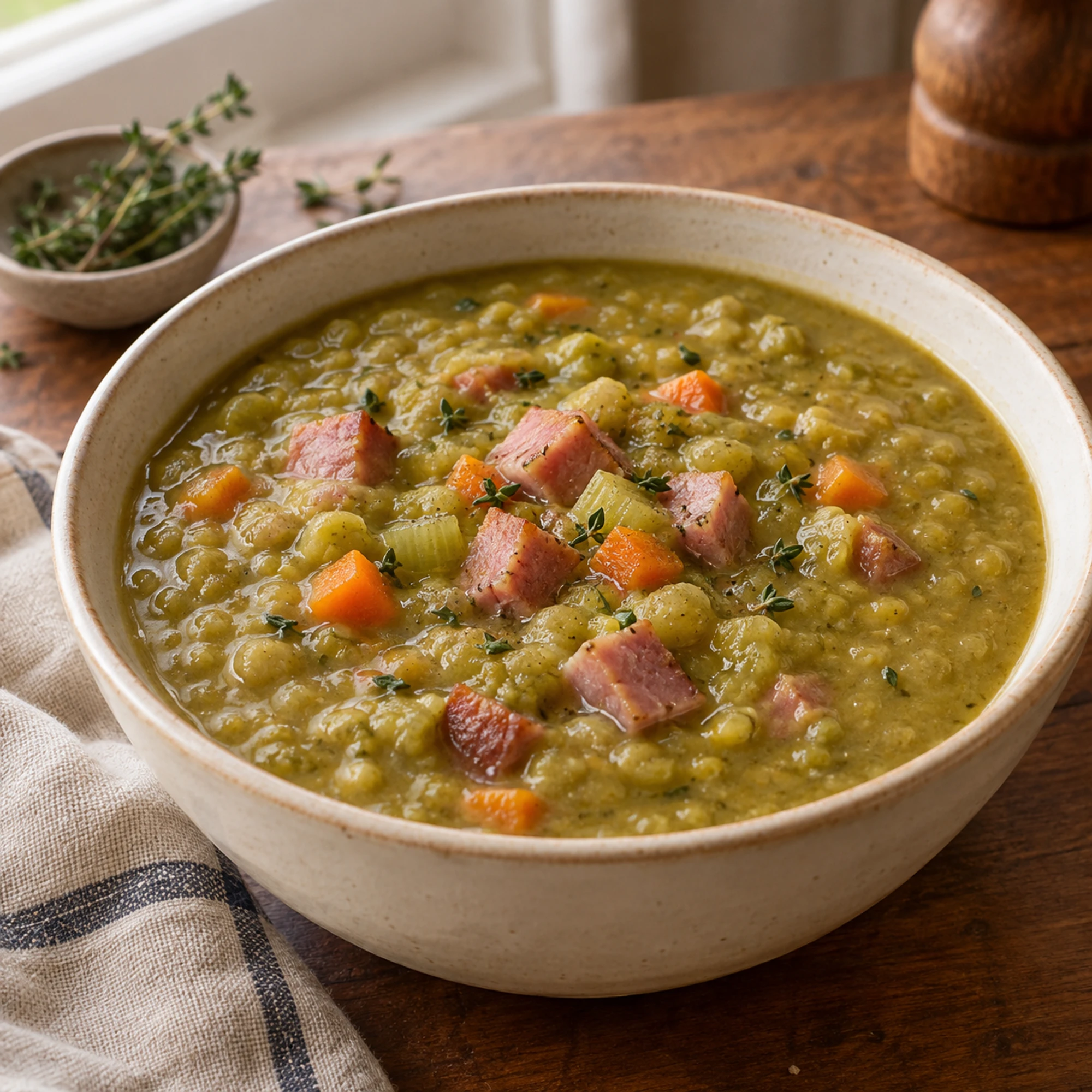
Judge the soup by the peas, not just the clock. They should crush easily and lose their firm, chalky centers before you serve. Keep the heat gentle and stir the bottom as the pot thickens; a splash of water can loosen it without changing the flavor balance dramatically.
I prefer modest cubes of fully cooked ham here because they give you a savory bite without taking over every spoonful. Green split peas bring the familiar muted olive color, while small vegetable pieces become part of the creamy texture. This is a relaxed stovetop meal for six, with timing that leaves room for older peas to take longer.
Serving suggestions
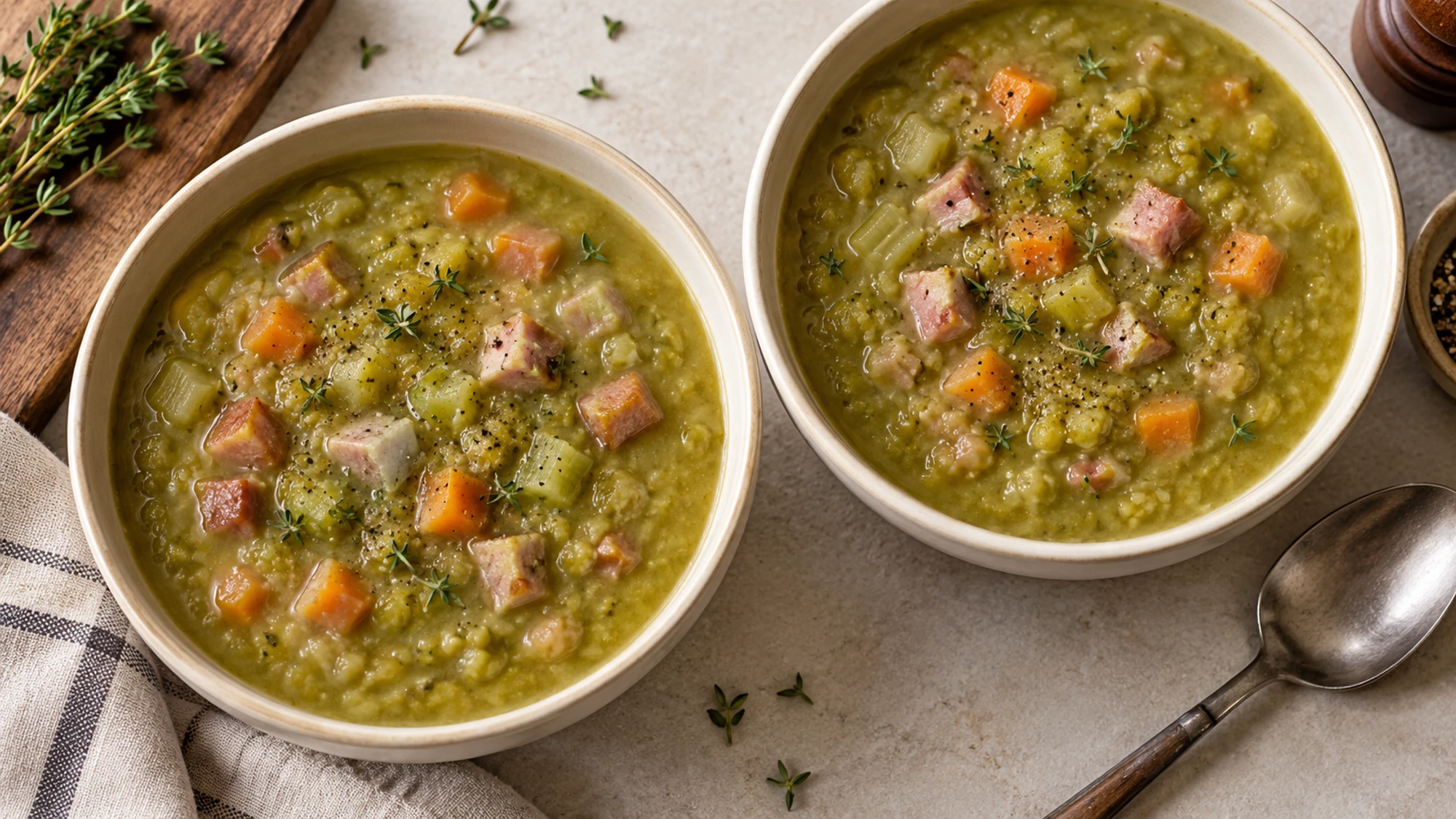
Serve the soup hot in wide bowls, with enough room to drag a spoon through its thick center. A piece of crisp bread is useful for the last few spoonfuls; our baguette with a golden crust makes that contrast especially clear. I would keep the rest of the meal fresh and simple, since the soup already has peas, vegetables and ham.
- For a complete dinner: Pair a bowl with a leafy salad dressed lightly with vinegar. Its crunch and acidity complement the soft, savory soup.
- For a smaller lunch: Pour a modest bowl and add sliced tomato or cucumber alongside. You can always serve another ladle if you are still hungry.
- For tomorrow: Expect the chilled soup to thicken considerably. Add water a little at a time while reheating, then stir until the consistency feels right.
Choose a soup that pours slowly rather than standing in a solid mound. Letting the peas finish softening is more useful than blending an undercooked pot. For a different style of soup night, our caldo de res with beef and brothy vegetables keeps the broth clear.
Variations
The ham supplies much of the seasoning, so choose an unsalted chicken broth and taste the finished soup before adding salt. Unsalted does not mean sodium-free, and ham brands vary widely. A glazed leftover ham can also introduce sweetness that this plain smoked-ham version does not have.
- Without ham: Omit it and use unsalted vegetable broth for a meatless pot. A little smoked paprika can add a smoky note, but the result will have different protein and sodium values.
- With yellow split peas: Use the same dry weight and cook to tenderness. The color changes to golden yellow and the flavor can feel slightly milder.
- For a looser bowl: Stir in extra water near the end. Keep the peas fully tender; thinning changes consistency without fixing a firm pea center.
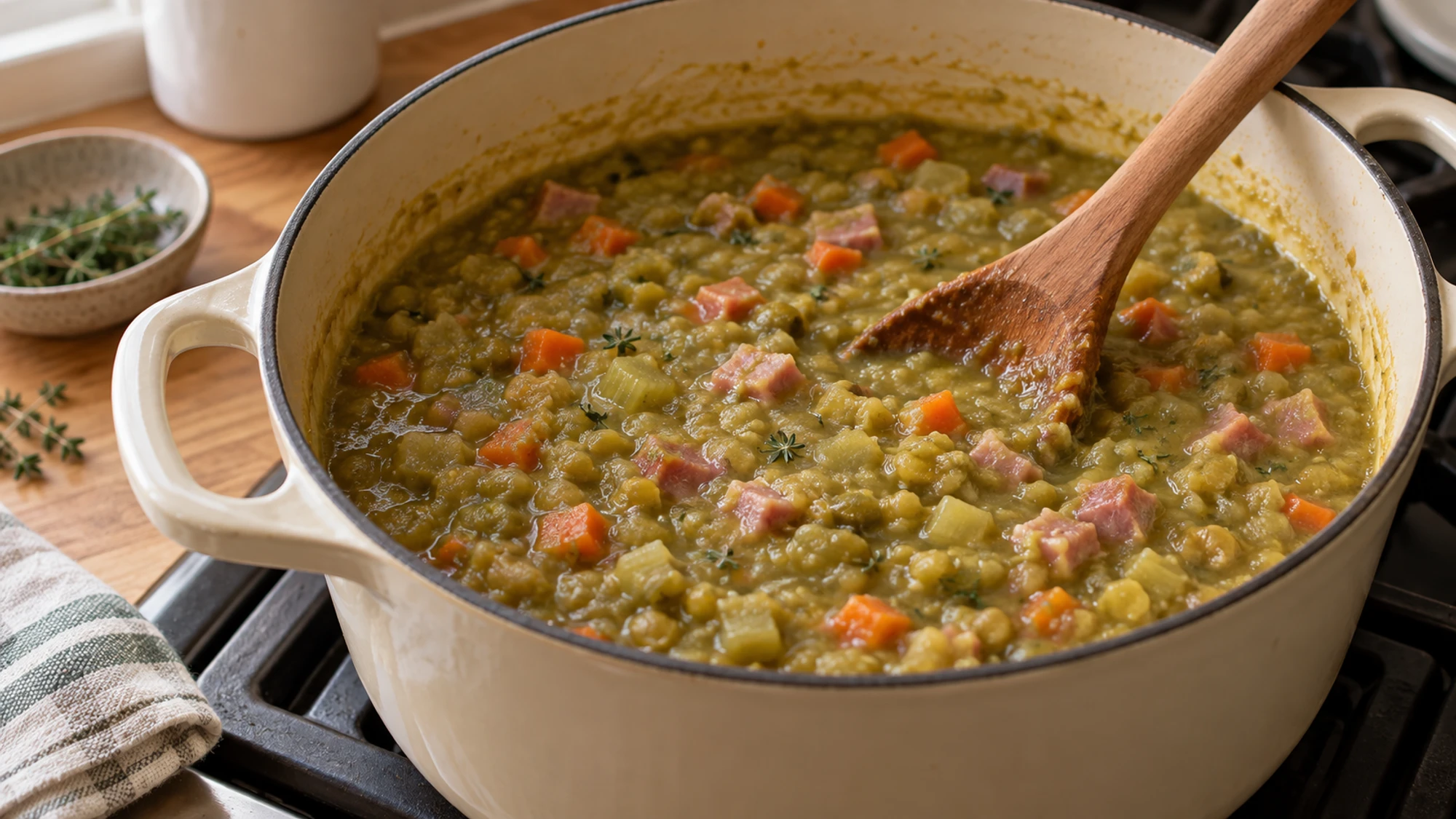
Keep the foundation recognizable: dried split peas, gently cooked vegetables and enough liquid for the peas to soften. Fresh or frozen green peas cook very differently and will not behave like the dried split peas in this card.
Health benefits
Split peas contribute plant protein and fiber, while the ham adds more protein and a smoky flavor. Carrot, onion and celery give the pot vegetable variety. The soup’s creamy consistency comes from the softened legumes rather than added cream, although the olive oil and ham still contribute fat.
- Fiber context: This is a substantial legume portion. Start with a serving that suits your appetite, especially if bean and pea dishes are new to your usual meals.
- Sodium context: Fully cooked smoked ham can be salty. Unsalted broth and tasting before seasoning give you more control than adding salt at the beginning.
- Nutrition context: The card estimates one-sixth of the pot. Bread, additional toppings and ingredient changes are separate from that estimate.
Think about what the whole bowl contributes: legumes, vegetables, protein and a satisfying warm meal. The most useful choices are a comfortable portion, a ham and broth combination that suits your needs, and sides that add the textures you enjoy.
Motivation conclusion
This split pea soup recipe rewards an ordinary ingredient with patient cooking. You do not need to chase a bright green color or a silky restaurant puree; a thick, softly textured pot with small pieces of ham and carrot has its own appeal. Keep a spoon handy to check the peas and a little water nearby for adjustment.
Plan for the full cooking window, then use the card’s tenderness cues to decide when dinner is ready. Once the peas have softened, a simple loaf of bread and six bowls are enough to turn that small pantry bag into a meal.
Split Pea Soup Recipe

Ingredients
- 450 g dried green split peas about 1 lb; sorted, rinsed and drained
- 8 oz fully cooked smoked ham 226 g; cut into small cubes
- 200 g carrots peeled and finely diced
- 150 g yellow onion finely diced
- 100 g celery finely diced
- 3 cloves garlic 9 g; minced
- 1 tbsp olive oil 13.5 g
- 1.5 L unsalted chicken broth about 6 1/4 cups
- 500 ml water about 2 cups, plus more as needed
- 1 tsp dried thyme about 1 g
- 1 bay leaf
- 1/2 tsp ground black pepper about 1 g
- salt optional; only to taste after cooking
Equipment
- 5–6-quart heavy pot or Dutch oven
- Fine-mesh strainer
- Knife and cutting board
- Wooden spoon
- Measuring jug
- Food thermometer
Instructions
- Spread the split peas on a plate and pick out any small stones or damaged peas. Rinse in a fine-mesh strainer under cool running water and drain. Dice the ham and vegetables before starting the stove.
- Heat the olive oil in a 5–6-quart heavy pot over medium heat. Add the onion, carrot and celery. Cook for 7–8 minutes, stirring occasionally, until the onion softens without browning deeply. Add the garlic and cook for 30 seconds.
- Add the rinsed split peas, fully cooked ham, unsalted broth, 500 ml water, thyme, bay leaf and black pepper. Stir well and bring to a boil, then immediately lower the heat to a gentle simmer. Partially cover the pot.
- Simmer for 60–80 minutes, stirring every 10–15 minutes and scraping the bottom gently so the thickening peas do not catch. The peas should crush easily and have no firm, chalky center. Older peas may take longer. Add hot water in small splashes if the soup becomes too thick before the peas soften. Check that the ham and soup are thoroughly hot, at least 165°F (74°C).
- Remove and discard the bay leaf. Stir vigorously to break down the tender peas further, leaving some soft texture and the diced ham. Add a little water if needed for a soup that pours slowly from the ladle. Taste before adding any optional salt, divide into six equal portions and serve hot.
Nutrition
Notes
Tried this recipe?
Let us know how it turned out!Emily Parker is DISHORA’s recipe-writing persona, bringing a warm, practical voice to everyday cooking. Her focus is simple ingredients, comforting flavors and clear steps that make a dish feel approachable. From cozy dinners to something sweet, Emily’s recipes invite readers to try something delicious and make it their own.