
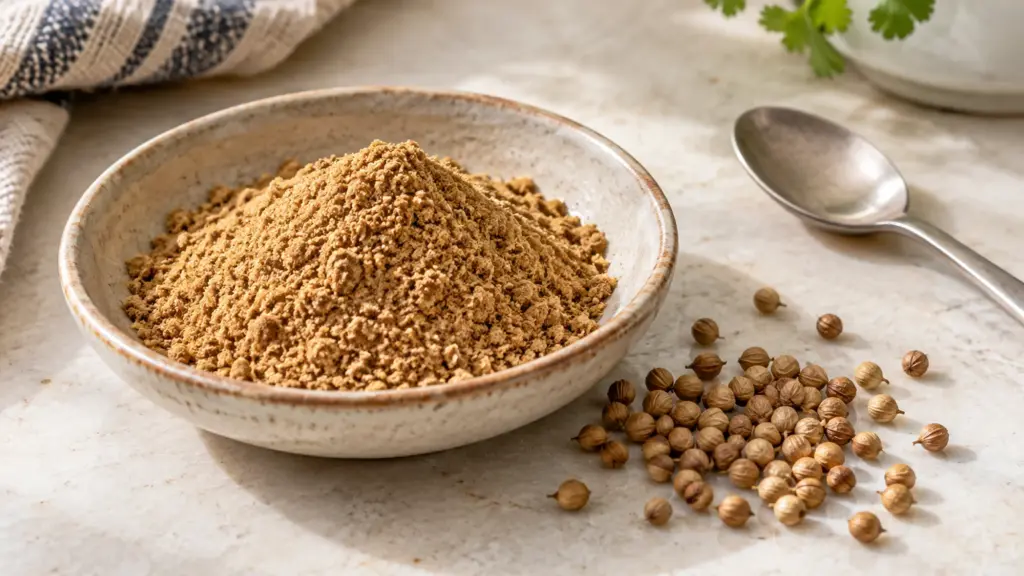
A jar marked ground coriander can cause a small pause when the recipe also mentions cilantro. They come from the same plant, but they do different jobs. The tan powder is made from the dried seeds; the fresh green herb brings a leafy flavor and texture that the powder cannot reproduce.
Ground coriander is the powdered seed of the cilantro plant. Its warm, citrusy flavor suits savory and sweet foods, but it is not a direct replacement for fresh cilantro.
I’d decide which part the recipe means before opening the spice drawer. That is especially helpful with recipes from places where “coriander” may also mean the fresh leaves. Here is what to look for, how to use it and which substitutions deserve a little caution.
What ground coriander tastes like
The seed’s flavor is rounded and citrusy, without the acidity of lemon juice. University of Alaska’s coriander growing notes describe its distinctive citrus flavor when ground. Think of it as an aromatic seasoning rather than a way to make food sour.
It can sit comfortably beside cumin, ginger or chili, but it brings its own character. I prefer to smell a little in a clean spoon before using an unfamiliar jar. That gives a better starting point than expecting every spice with a similar color to taste alike.
| Ingredient | What it is | What it contributes |
|---|---|---|
| Ground coriander | Powdered dried seed | Warm, citrusy seasoning |
| Whole coriander | Dried round seeds | Seed texture; can be ground |
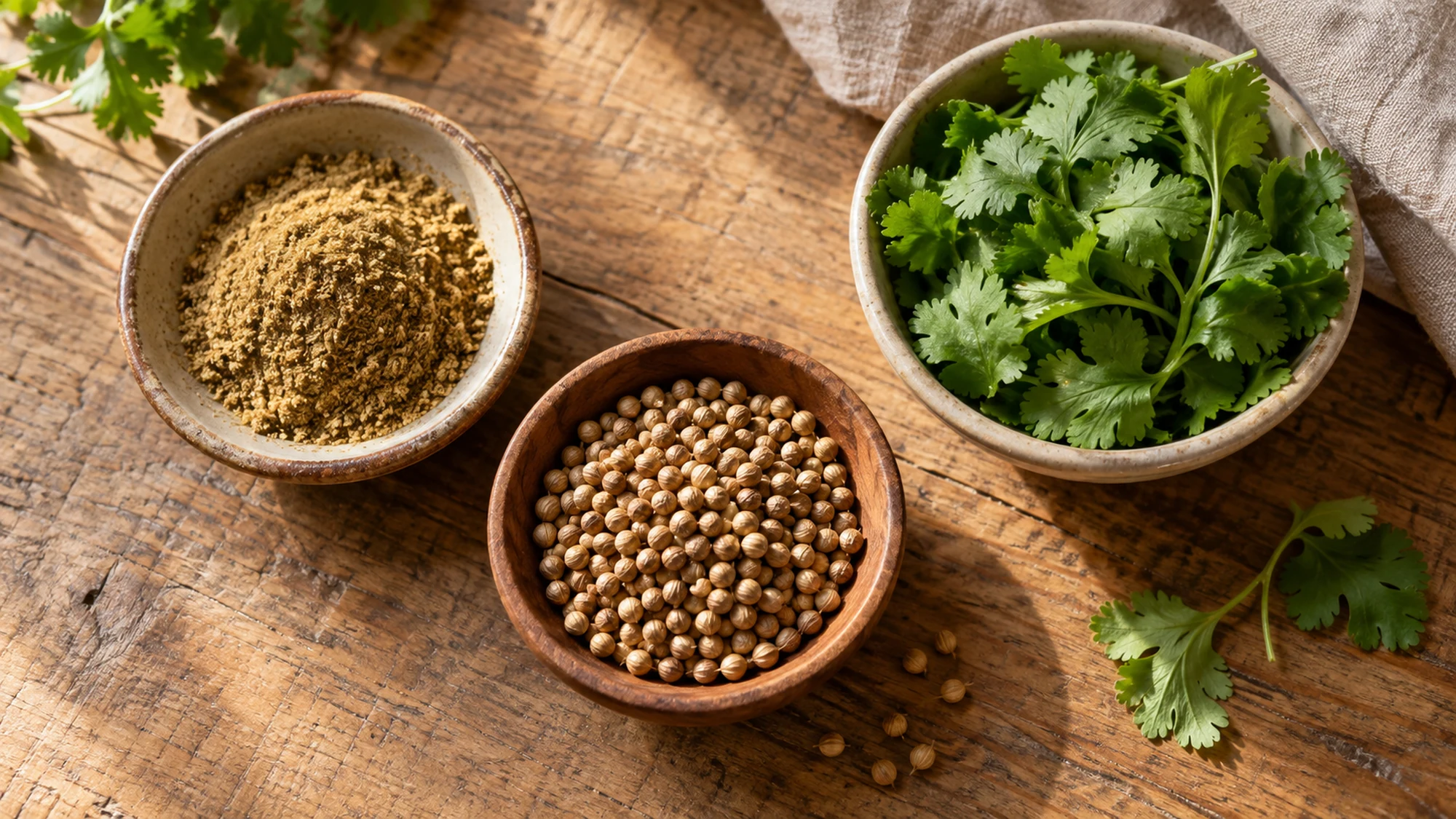
| Fresh cilantro | Leaves and tender stems | Fresh herb flavor and green texture |
| Ground cumin | A different seed spice | A different earthy flavor profile |
Ground coriander and cilantro are not interchangeable
University of Wisconsin Extension explains the naming: cilantro is the leaf herb and coriander is the seed spice in common American usage. Other regional wording can call the leaves fresh coriander, so the recipe’s description matters.
Look at the action and ingredient form: “chopped,” “a bunch” and “leaves” point toward the herb, while “ground,” “powder” and “seeds” point toward the spice. If a translated recipe remains unclear, check an image or clarification rather than guessing from the name alone.
- Use fresh leaves when the recipe needs a leafy finish.
- Use ground seed when it calls for a measured powder in seasoning.
- Do not replace a handful of cilantro with a handful of ground coriander.
The shared plant explains the names. It does not make the leaf and seed perform the same job.
Where the ground spice is useful
Ground coriander blends into sauces and spice mixtures without leaving whole seeds behind. University of Florida’s herb and spice guide lists coriander for foods including curries, meats, relishes and baked goods. Its range is broader than a single cuisine or a single savory dish.
Follow the quantity and timing in a recipe when you have one. For an informal addition to beans or vegetables, start modestly, mix thoroughly and taste before adding more. A spoonful that seems small in the jar can still dominate a small portion of food.
- Pair it with other seasonings in a vegetable or bean dish.
- Notice its role in the spice mixture for this onion-tomato murgh curry.
- Use a recipe designed for the spice when exploring it in baking.
Whole seeds, ground spice and possible substitutes
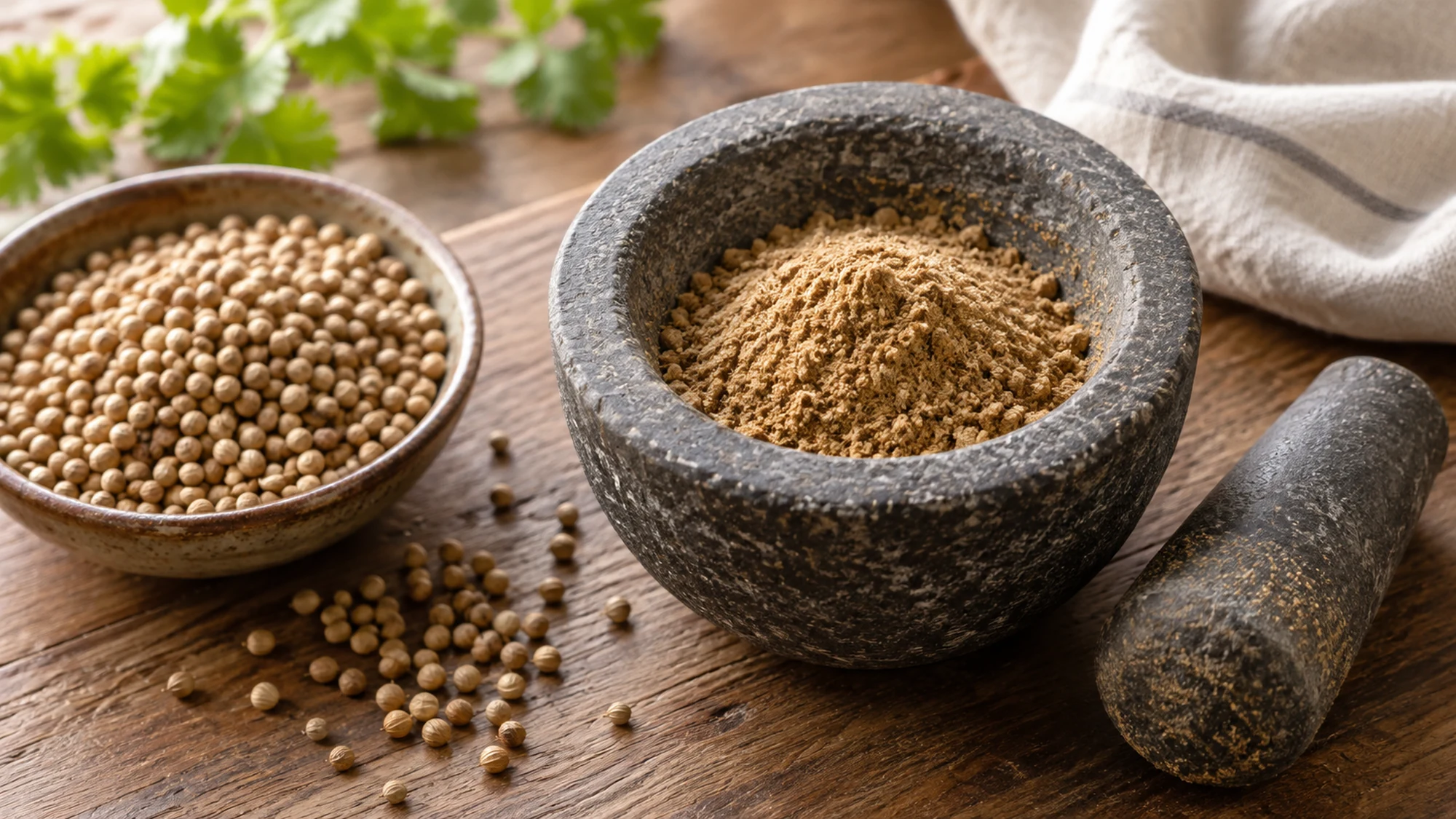
Whole seeds and powder create different textures. If the recipe needs a smooth sauce or a fine seasoning blend, grind seeds rather than adding them whole. A small mortar or spice grinder is useful; grind only what you need and clean the tool between strongly flavored spices.
No single substitute duplicates coriander exactly: cumin takes a dish in an earthier direction, while a mixed curry powder changes several flavors at once. Lemon zest can add citrus aroma, yet it does not recreate the spice. I’d treat these as deliberate variations rather than promise a universal one-for-one swap.
Match the ingredient’s job first: fine seasoning, whole-seed texture or a fresh leafy finish. Then decide whether a variation still suits the dish.
Keep ground coriander fragrant
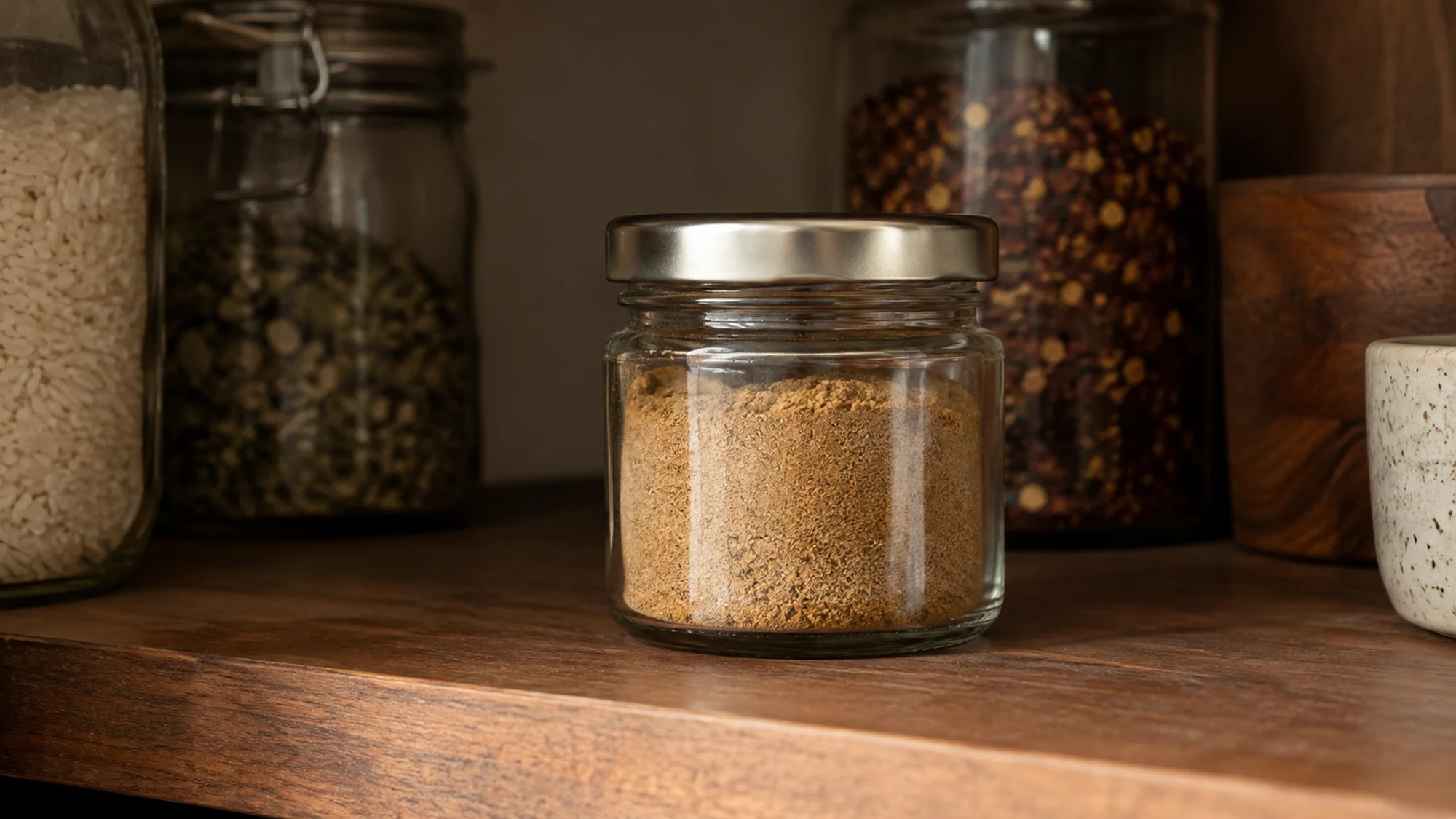
Buy a jar size that fits your cooking and close it tightly after measuring. Keep it in a cool, dry, dark cupboard rather than beside the stove, where heat and steam repeatedly reach it. Use a dry spoon and measure away from a steaming pot.
Iowa State Extension notes that spices lose flavor and potency over time. A faded aroma is a reason to replace a tired jar for cooking quality; adding ever larger amounts is not always a satisfying fix. Discard spice that becomes damp, moldy or otherwise spoiled.
Let the recipe guide the choice
Ground coriander is easier to use once the name stops being the mystery. Check that the recipe wants the seed, enjoy its warm citrus character and keep the powder protected from steam. One useful jar, used thoughtfully, does more for dinner than a crowded drawer of forgotten seasonings.

Emily Parker is DISHORA’s recipe-writing persona, bringing a warm, practical voice to everyday cooking. Her focus is simple ingredients, comforting flavors and clear steps that make a dish feel approachable. From cozy dinners to something sweet, Emily’s recipes invite readers to try something delicious and make it their own.