
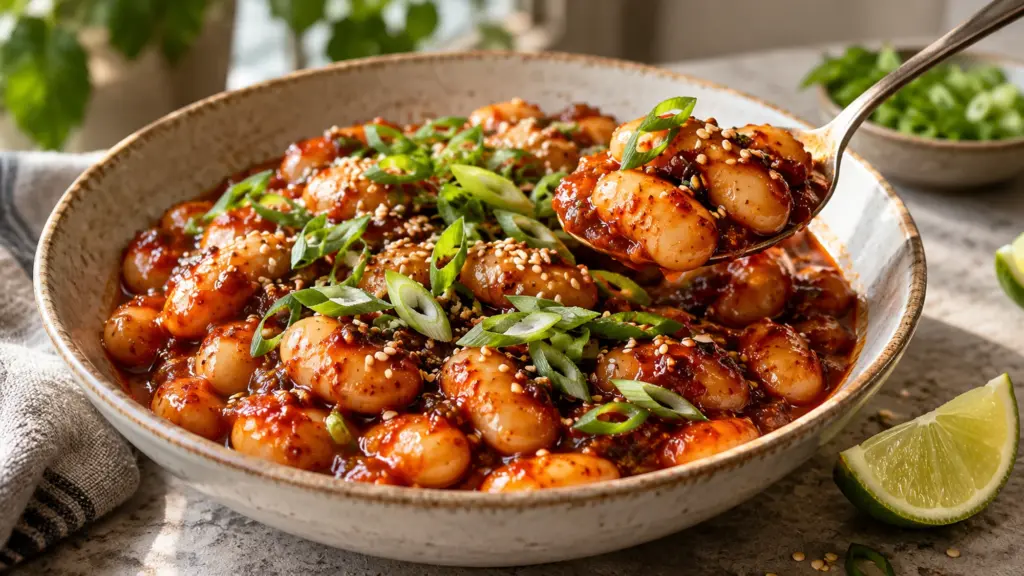
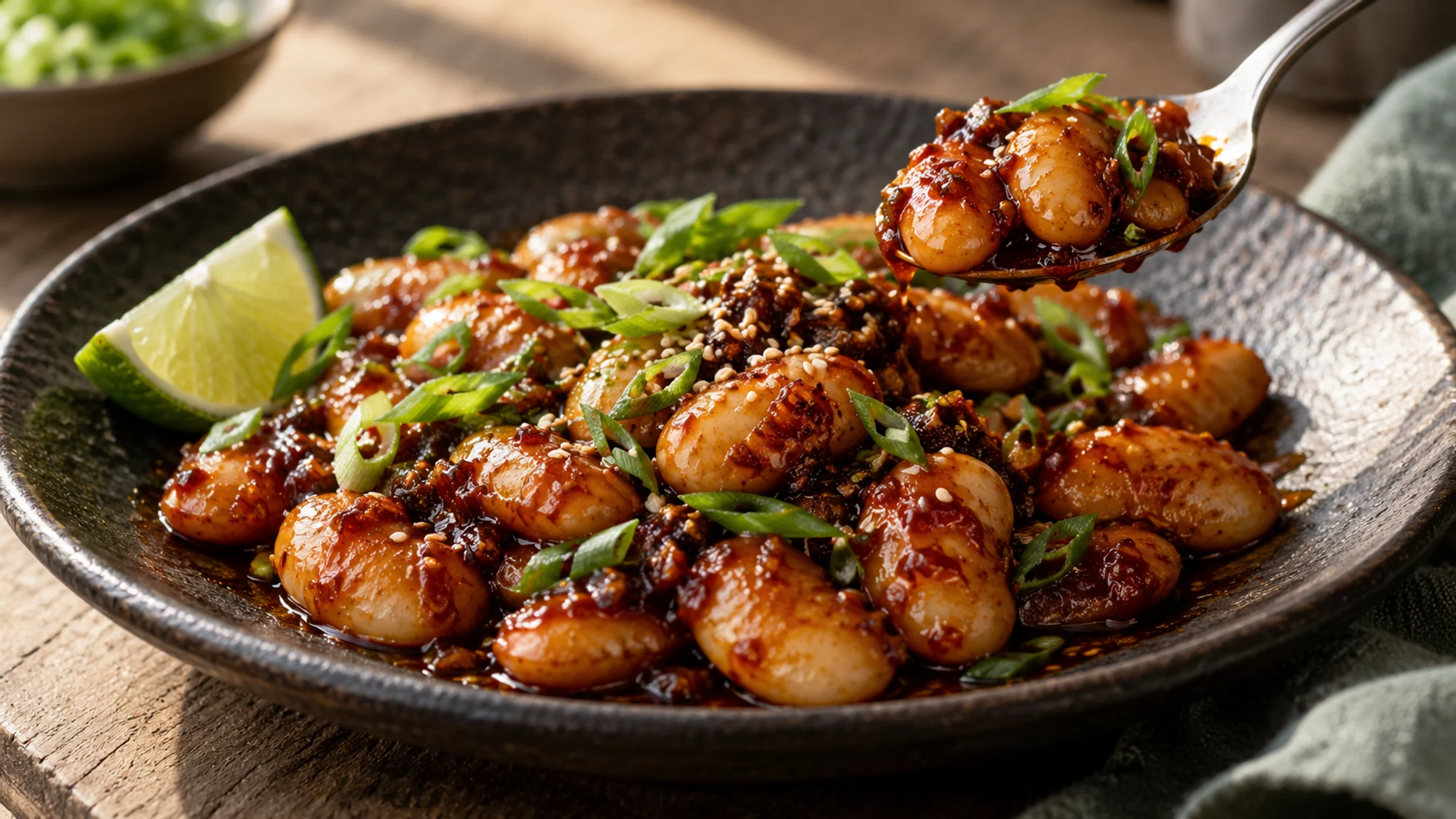
When a couple of cans of beans are staring back from the pantry, a bold sauce can turn them into a dinner worth sitting down for. These gochujang butter beans simmer briefly in a glossy chili sauce, then get a fresh lift from lime, sesame, and scallion greens. The beans stay whole and tender because they are warmed gently, not boiled hard.
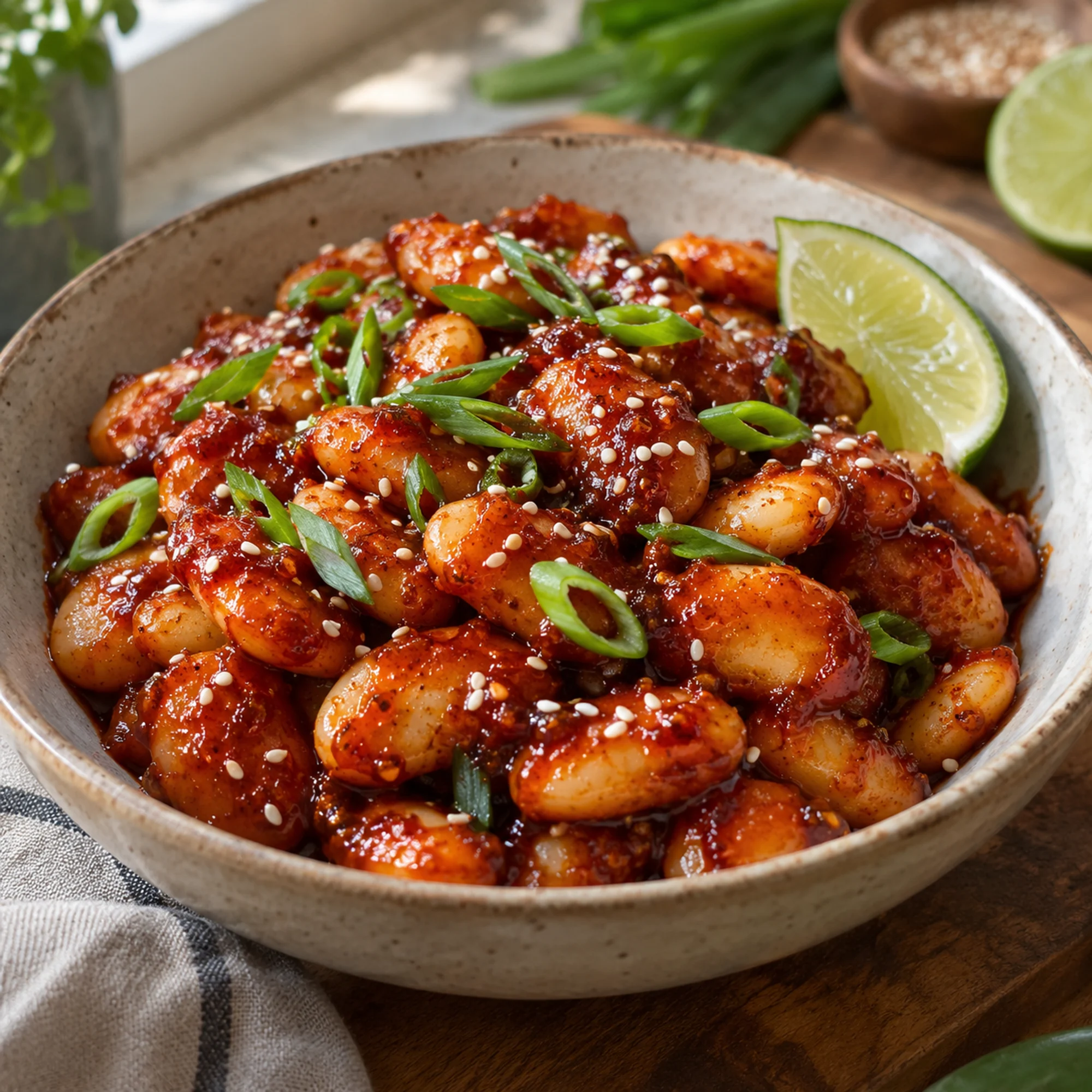
Dissolve the gochujang in the sauce before adding the beans. Fold them in gently so their soft centers stay intact.
I like this version without cream. Gochujang supplies the savory heat, a little honey rounds it, and water lets the sauce cling without feeling heavy. The lime belongs at the end so its bright flavor survives. This is a home-style combination inspired by a Korean pantry ingredient, not a claim to traditional Korean cooking.
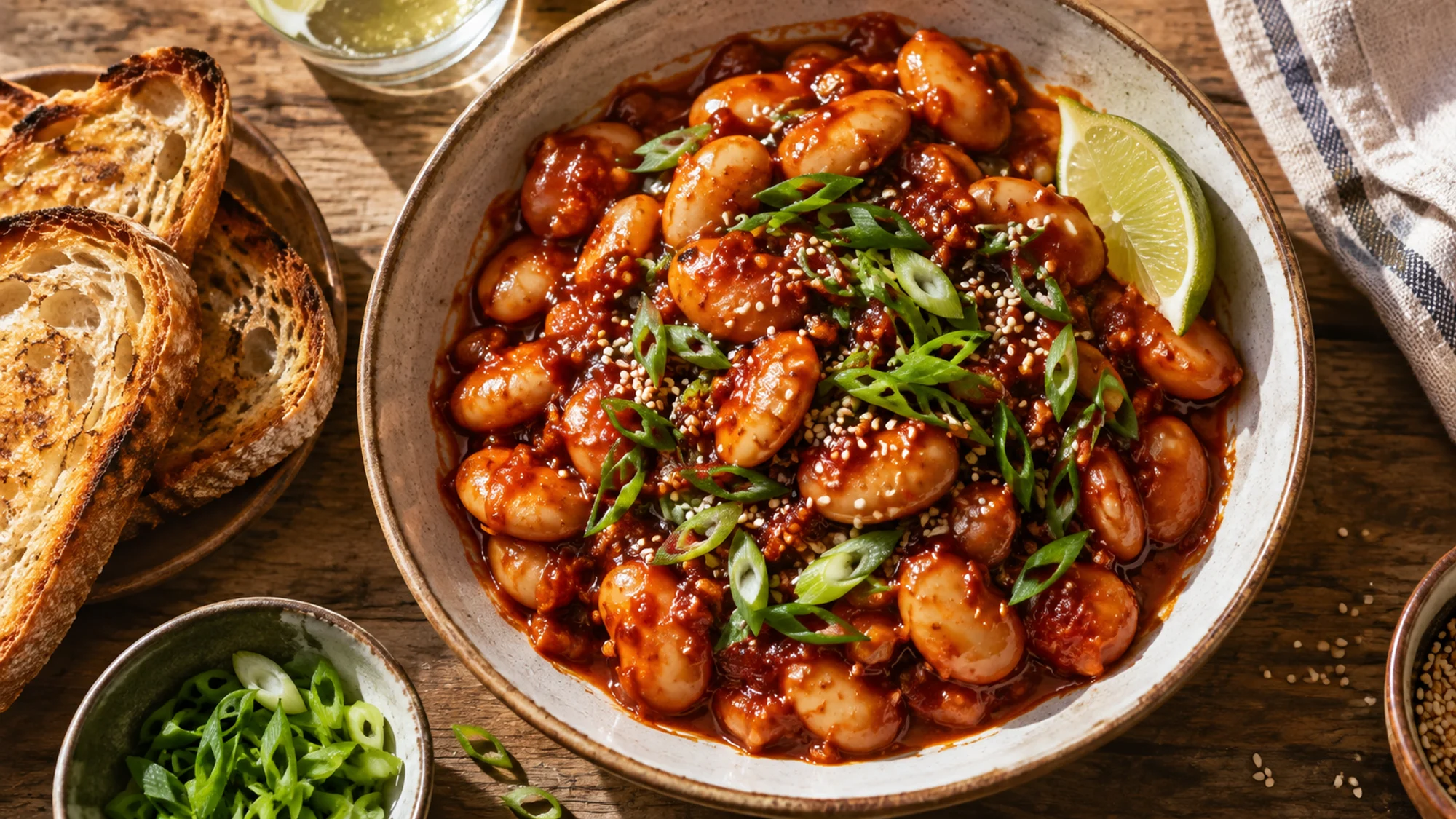
Serving suggestions for gochujang butter beans
Spoon the hot beans over rice for a simple bowl, with any extra sauce drizzled on top. Warm flatbread or thick toast is also useful for catching the glossy sauce. I prefer something mild underneath, because the gochujang, soy sauce, and lime already do the seasoning work.
Add a cool, crunchy side if dinner needs contrast. Sliced cucumber, shredded cabbage, or a quick green salad makes each bite feel lighter. A baked potato is another good base; Dishora’s air fryer jacket potato explains how to get a crisp skin that holds a saucy topping.
Bring a lime wedge to the table rather than squeezing extra juice into every portion. Some brands of gochujang are sweeter or hotter than others, so a final taste lets each person adjust the brightness. Sesame seeds and the reserved scallion greens add texture without hiding the beans.
Keep the base simple, then use rice, toast, or a crisp potato to make the beans a full meal.
Gochujang butter beans variations
For less heat, start with two teaspoons of gochujang and taste the sauce before the beans go in. For more, add another teaspoon at the end and simmer briefly. Read the label: gochujang can vary in heat, sweetness, and ingredients. This gochujang ingredient guide gives useful background on the fermented chili paste.
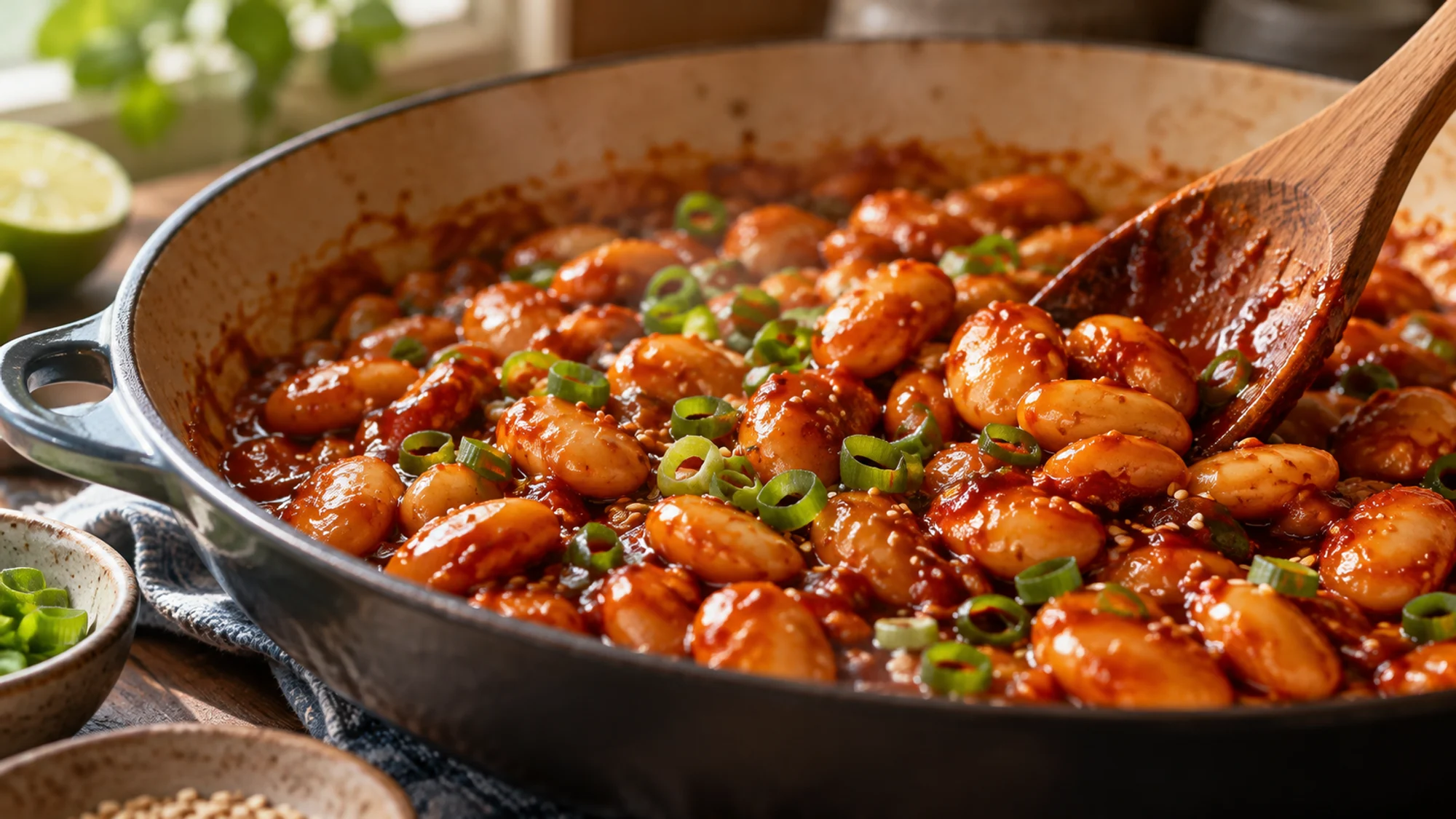
A teaspoon of maple syrup can replace the honey for a vegan version. If you only have cannellini beans, they can work in the same sauce, though they are smaller and tend to break more easily. Lower the heat and fold them in only once or twice. The title recipe uses broad, tender butter beans for a reason.
A handful of spinach can go in during the final minute if you want extra greens. Let it wilt, then add the lime off the heat. Avoid adding cream unless you want an entirely different dish; the sauce here is meant to be shiny and lightly coating rather than thick and rich.
Change the heat or the beans if needed, but keep the short simmer and final squeeze of lime.
Health benefits and balance
Butter beans contribute plant protein and fiber, so they make a satisfying center for a meatless plate. They also bring a naturally creamy texture without needing a dairy sauce. The MyPlate protein foods guide includes beans as one way to vary protein choices.
Gochujang and soy sauce both contain sodium. Choose reduced-sodium soy sauce, rinse the canned beans, and taste before adding any salt; the card needs none. The sweetness is measured at one teaspoon of honey for the whole skillet. It rounds the chili, rather than making the beans taste candied.
Gochujang formulas differ, so check the jar if you avoid wheat, soy, or other allergens. The sesame finish also matters for anyone with a sesame allergy. Nothing in this skillet needs a wellness claim to earn a place at dinner: it is a flavorful way to use beans with ingredients you can recognize.
Beans supply substance; the sauce supplies flavor. Check labels and balance the rest of the plate to suit your needs.
Motivation conclusion
The trickiest part of this meal is remembering to separate the scallion whites from the greens. Put them in two small piles before the skillet heats. The whites soften with garlic; the greens stay fresh for the finish. After that, the sauce comes together in minutes.
When the beans go in, use a wide wooden spoon and turn them gently through the sauce. If the skillet looks dry, a spoonful of water will loosen it. I would rather serve intact beans with a little extra sauce than mash them while chasing a thicker glaze.
A warm bowl of tender beans, spicy-sweet sauce, sesame, and lime can make a pantry dinner feel considered.
Gochujang Butter Beans

Ingredients
- 2 15-oz cans butter beans drained and rinsed
- 1 tbsp neutral oil
- 4 scallions white and green parts separated and sliced
- 2 cloves garlic minced
- 1 tbsp gochujang
- 1 tbsp reduced-sodium soy sauce
- 1 tbsp rice vinegar unseasoned
- 1 tsp honey
- 1/2 cup water
- 1 tsp toasted sesame oil
- 1 lime juice, about 2 tbsp
- 1 tsp sesame seeds toasted
Equipment
- Can opener
- Colander
- Cutting board
- knife
- Measuring spoons and cup
- Large skillet
- Wooden spoon
Instructions
- Drain and rinse the butter beans in a colander, then let the excess water drip away.
- Slice the scallions, keeping white and green parts separate. Mince the garlic.
- Heat the neutral oil in a large skillet over medium heat. Add the scallion whites and cook 2 minutes. Add the garlic and stir for 30 seconds, just until fragrant.
- Stir in the gochujang, soy sauce, rice vinegar, honey, and 1/2 cup water. Simmer 2 minutes, stirring until the paste dissolves into a smooth sauce.
- Add the drained butter beans and fold gently to coat. Simmer 4 to 5 minutes, until hot and the sauce lightly coats the beans. Add a splash of water if it tightens too much.
- Turn off the heat. Stir in the toasted sesame oil and about 2 tablespoons lime juice. Scatter scallion greens and sesame seeds over the top. Serve warm.
Notes
Tried this recipe?
Let us know how it turned out!Emily Parker is DISHORA’s recipe-writing persona, bringing a warm, practical voice to everyday cooking. Her focus is simple ingredients, comforting flavors and clear steps that make a dish feel approachable. From cozy dinners to something sweet, Emily’s recipes invite readers to try something delicious and make it their own.