
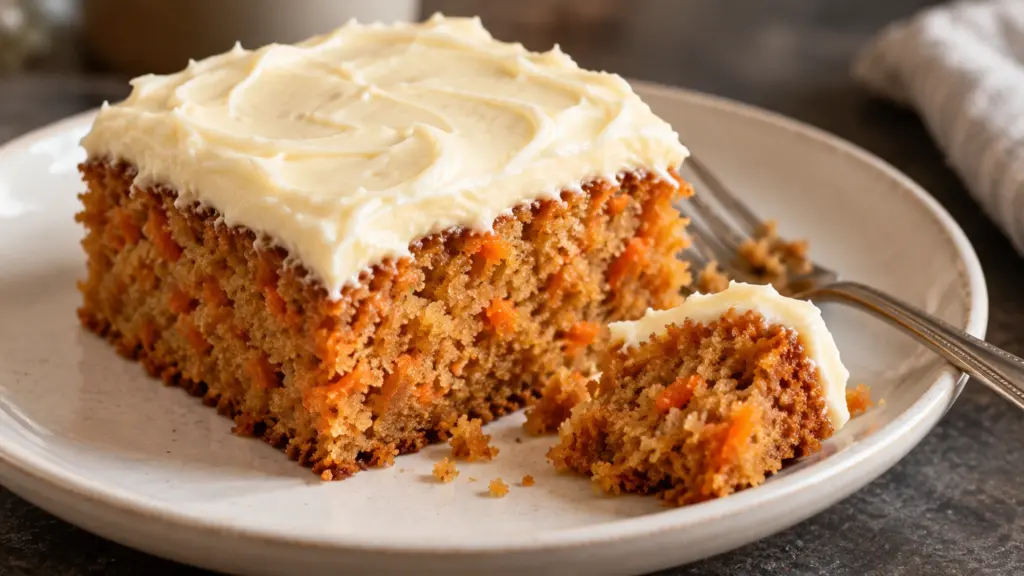
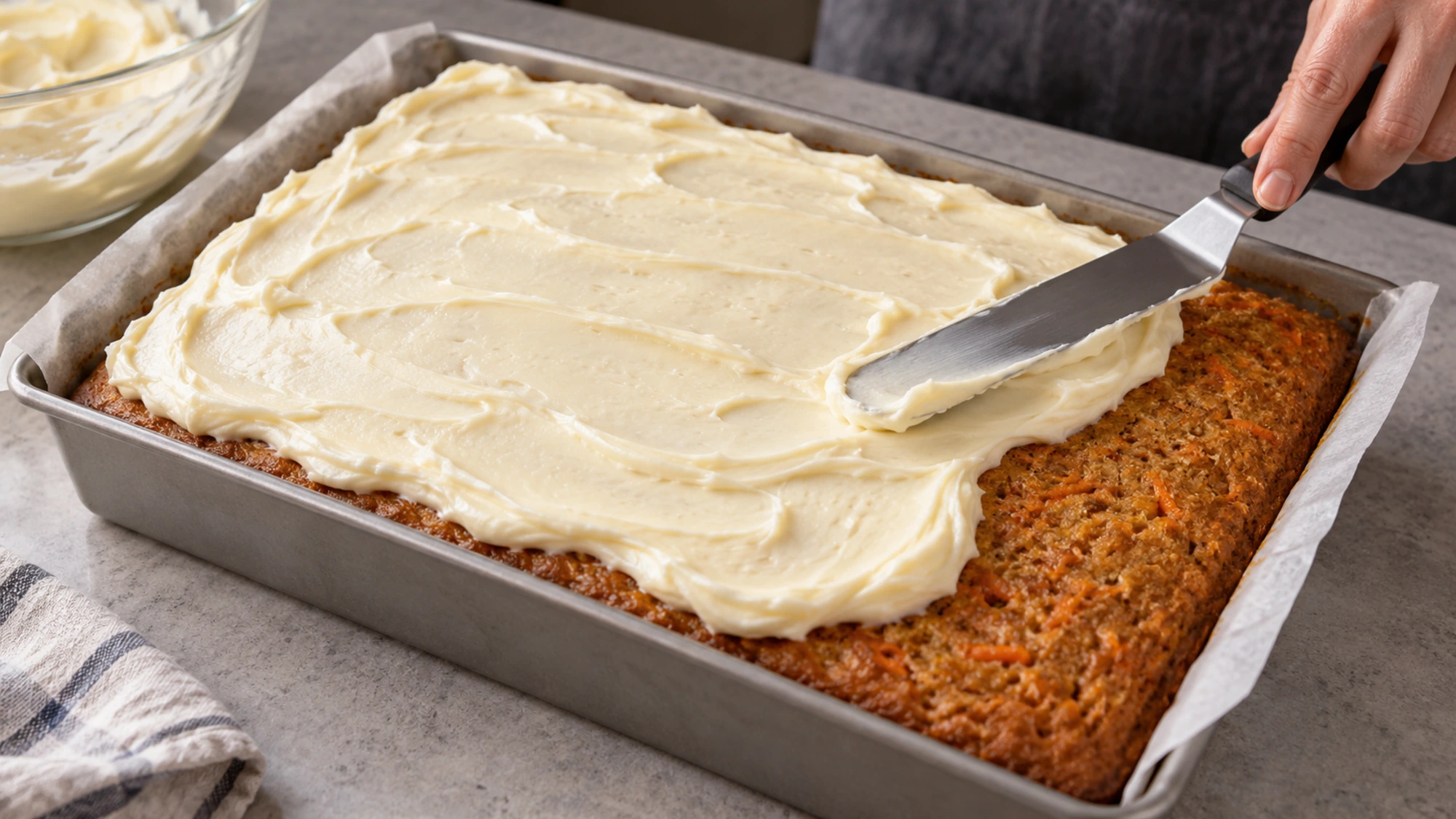
A carrot cake craving does not have to turn into a layer-cake project. This version bakes in one rectangular pan, with cinnamon in the crumb and a soft sweep of cream cheese frosting across the top. Freshly grated carrots disappear into the batter as fine orange flecks, leaving a cake that slices neatly without losing its tender character.
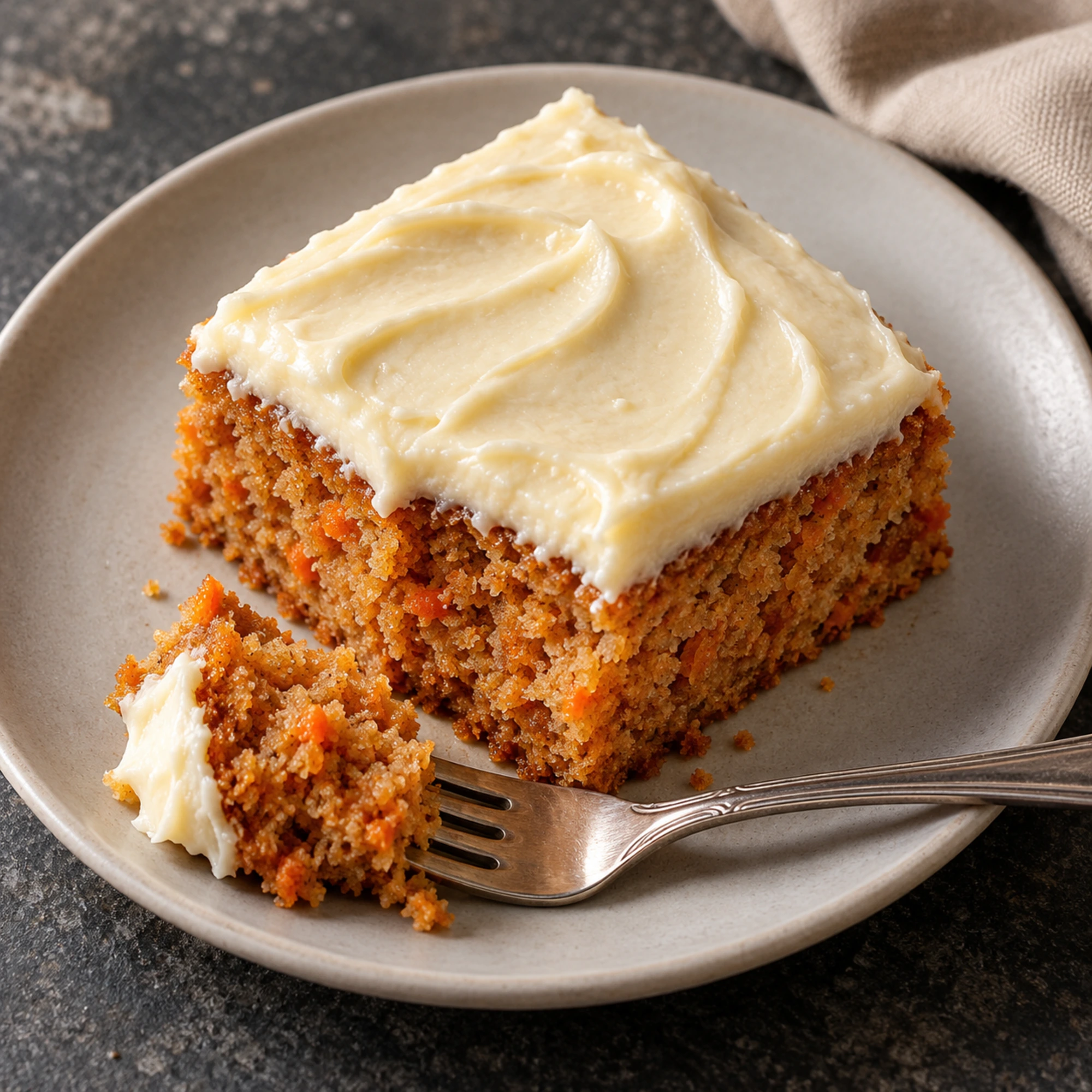
For a tender carrot cake, grate the carrots finely, measure the flour carefully, and stop mixing once the dry streaks disappear. Let the cake cool completely before adding the cream cheese frosting.
I prefer the straightforward sheet-cake approach here: no stacking, no crumb coat, and no need to negotiate with a leaning tower of frosting. Brown sugar adds a little molasses depth, while buttermilk gives the batter gentle tang. The cake is ready to share when a plain square and a fork feel like enough.
Serving suggestions for carrot cake
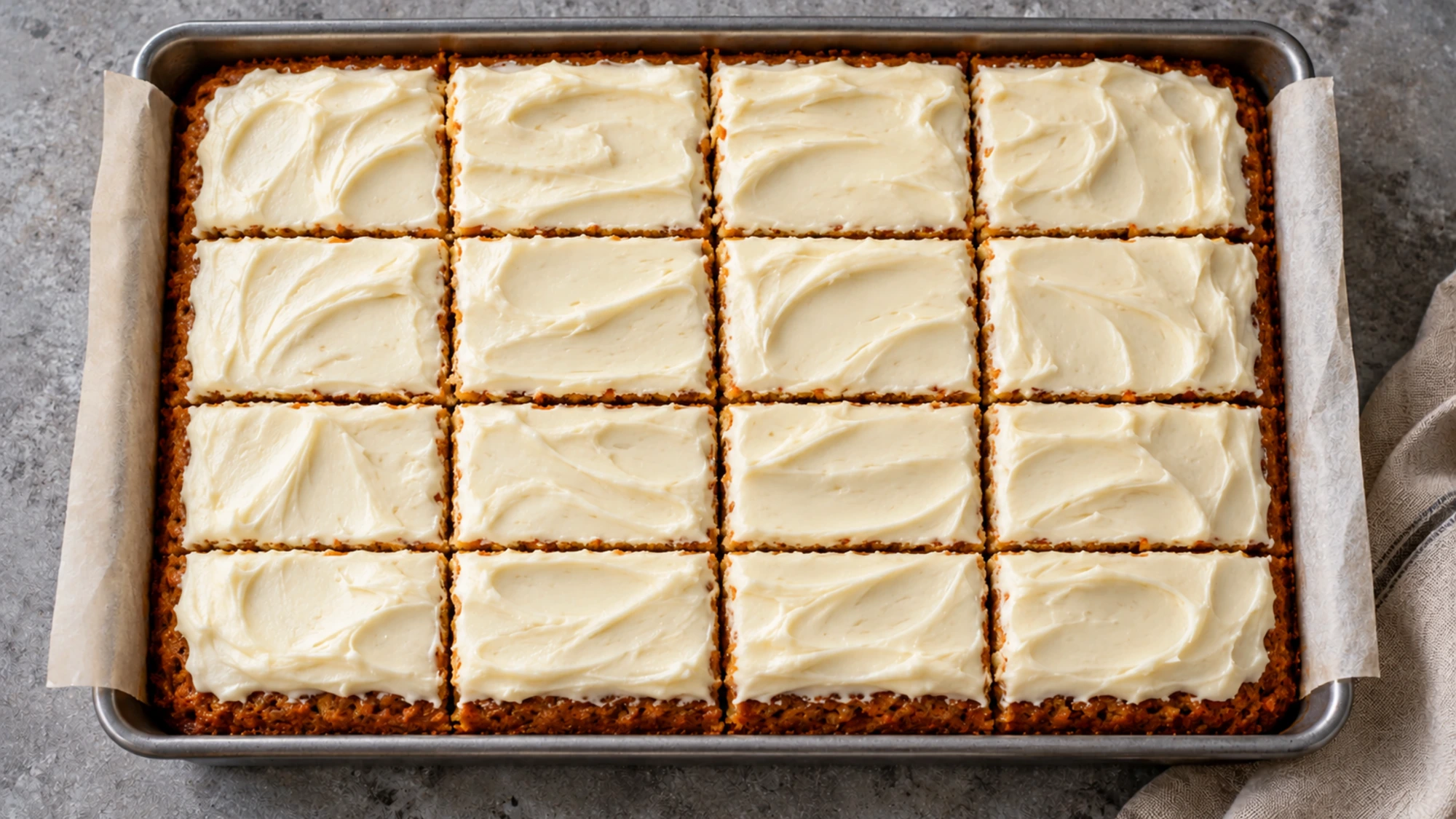
Cut the cake into sixteen squares for a dessert tray, or smaller pieces when it is one of several sweets. A short rest out of the refrigerator softens the frosting and crumb; there is no need to warm the whole pan or leave it sitting out all afternoon.
- Keep the plate simple. Coffee, black tea, or a glass of milk makes a useful partner. The frosting already supplies richness, so an extra scoop of something creamy is entirely optional.
- Make clean cuts. Use a long knife, wiping it between slices. Chilling the frosted cake briefly first helps keep the creamy topping from dragging across the cut edges.
- Plan a baking-table pair. For another pan dessert with a different finish, apple fritter cake with a thin glaze brings apple pieces and cinnamon swirls instead of cream cheese frosting.
Keep the frosted cake covered in the refrigerator at 40°F (4°C) or colder. Serve only what you need, and return the rest promptly so the next slice stays fresh.
Variations without losing the tender crumb
Carrot cake welcomes a little personality, but its moisture balance still matters. I would change one thing at a time rather than adding every appealing ingredient in the pantry. For the base recipe, a scale for the flour and carrots removes much of the uncertainty that comes with packed measuring cups.
- A deeper spice note: Use dark brown sugar in place of light brown sugar by weight. Its stronger molasses flavor will be more noticeable beside the cinnamon and nutmeg.
- A different neutral oil: Plain vegetable oil can replace the canola oil in the same amount. Strongly flavored olive oil will make itself known; choose it only if that flavor appeals to you.
- A little crunch: Fold in ½ cup of chopped walnuts or pecans with the carrots. They are an optional variation, not part of the pictured cake or its nutrition estimate.
- Keep wet additions separate: Pineapple, applesauce, and extra carrots change the batter. Do not add them casually to this formula, and avoid swapping in a much smaller pan, which changes the depth and baking time.
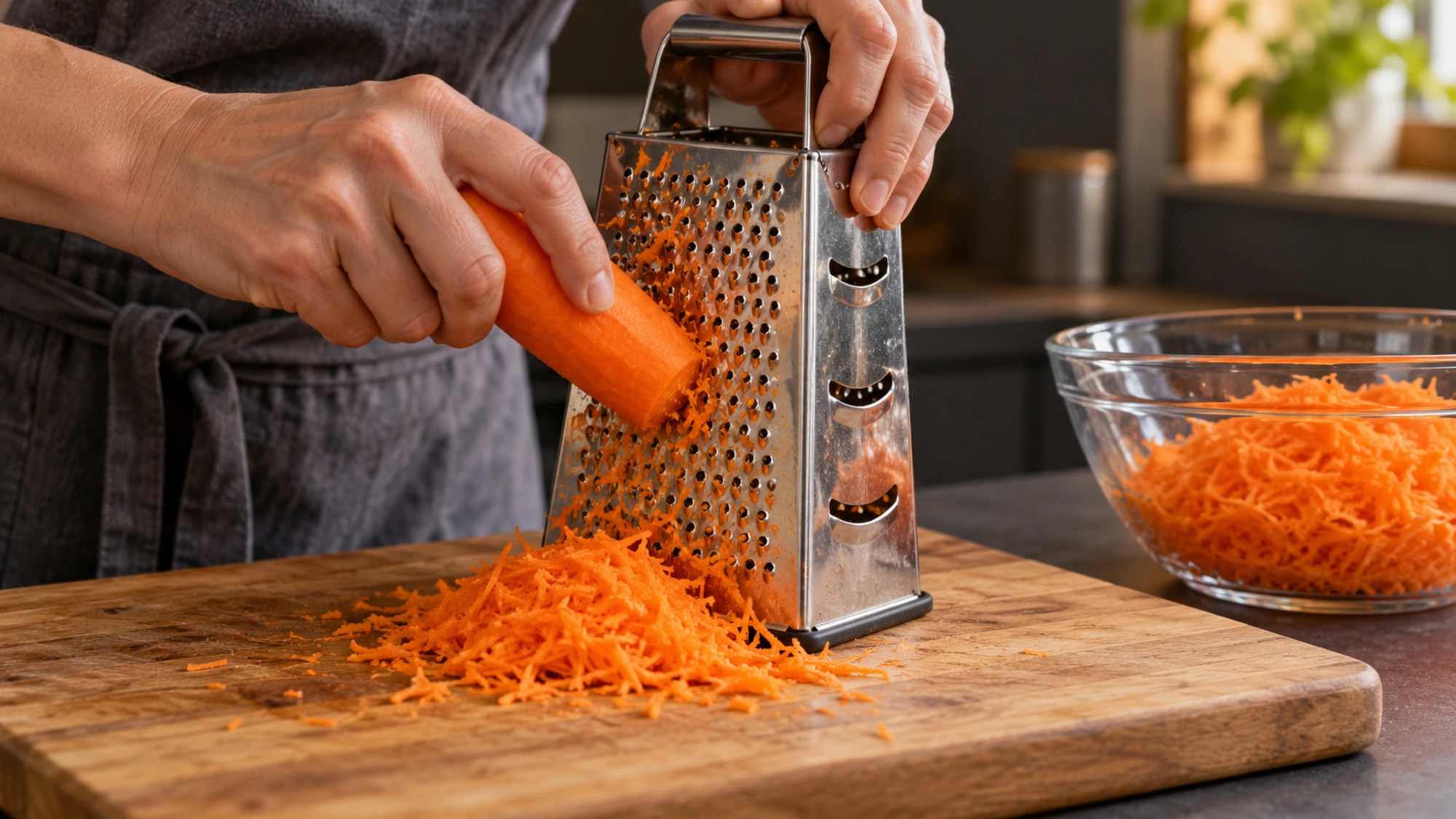
Freshly grated carrots are worth the small effort. Thick, dry bagged shreds do not blend into the crumb the same way; use the finer holes of a box grater and watch your fingers near the end.
Health benefits in perspective
Carrots contribute beta-carotene, which the body can convert to vitamin A, along with some fiber. That is a useful ingredient contribution, but it does not make a frosted cake a substitute for vegetables. Sugar, oil, butter, and cream cheese are substantial parts of this dessert too.
- Portion context: One of sixteen frosted squares provides approximately 442 calories and 38 grams of total sugar. These are ingredient-based estimates; brands, measurements, and slice size change the numbers.
- Allergen check: The base cake contains wheat, eggs, and milk. Adding the nut variation introduces another allergen, and leaving nuts out does not establish that every ingredient is safe for someone with an allergy.
- Food safety matters: Do not taste the raw batter. Once frosted, limit room-temperature time to two hours, or one hour if the temperature is above 90°F (32°C).
Enjoy the cake as dessert, with a portion that suits the occasion. A realistic serving and clear ingredient information are more useful than giving a familiar treat a health halo.
Motivation conclusion
Set aside the cooling time before you begin. The cake needs very little attention once it is in the oven, but warm crumb and cream cheese frosting are impatient partners. Keep the topping refrigerated until the cake is cool, then spread it in relaxed swirls.
You do not need a special occasion or elaborate decoration to make the pan inviting. A few visible carrot flecks, a soft frosting edge, and sixteen shareable squares tell the whole story.
Carrot Cake Recipe

Ingredients
- 1 teaspoon canola oil about 4.5 g
- 2 1/2 cups all-purpose flour 300 g; spooned into the cup and leveled, or weigh for consistency
- 1 teaspoon baking powder 4 g; double-acting
- 1 teaspoon baking soda about 4.6 g
- 1/2 teaspoon fine salt 3 g
- 2 teaspoons ground cinnamon about 5.2 g
- 1/2 teaspoon ground nutmeg about 1.1 g
- 3/4 cup granulated sugar 150 g
- 1 cup light brown sugar 200 g, lightly packed
- 1 cup canola oil 218 g / 240 ml
- 4 large eggs about 200 g without shells
- 1/2 cup cultured low-fat buttermilk 120 ml
- 2 teaspoons vanilla extract 10 ml
- 350 g peeled carrots, finely grated about 3 cups, depending on grating and packing; use the weight when possible; do not squeeze dry
- 8 ounces full-fat block cream cheese 227 g, softened but still cool; not whipped or spreadable tub cheese
- 1/4 cup unsalted butter 57 g, softened
- 2 cups powdered sugar 240 g, sifted if lumpy
- 1 teaspoon vanilla extract 5 ml
Equipment
- 9-by-13-inch metal baking pan, at least 2 inches deep
- Parchment paper
- Kitchen scale and measuring cups and spoons
- Box grater with fine holes
- Two large mixing bowls
- Whisk and flexible spatula
- Electric hand mixer
- Wire cooling rack
- Toothpick or thin cake tester
- Long knife
Instructions
- Heat the oven to 350°F (175°C) with a rack in the middle. Lightly grease a 9-by-13-inch metal pan with the 1 teaspoon of oil, then line the bottom and two sides with parchment, leaving an overhang for lifting.
- Peel and finely grate the carrots, weighing 350 g after trimming and grating. Do not squeeze out their moisture. Measure the remaining ingredients. Let the eggs and buttermilk lose their refrigerator chill briefly while you prepare the bowls.
- In one large bowl, whisk the flour, baking powder, baking soda, salt, cinnamon and nutmeg until evenly distributed. Break up any small flour lumps.
- In the second bowl, whisk the granulated sugar, brown sugar and 1 cup of oil until combined. Add the eggs and whisk until smooth, then whisk in the buttermilk and 2 teaspoons of vanilla.
- Add the dry mixture to the wet mixture. Fold with a flexible spatula just until only a few streaks of flour remain, then fold in the grated carrots until no dry flour is visible. Scrape into the prepared pan and level the surface. Do not taste the raw batter.
- Bake for approximately 40–50 minutes, beginning to check at 40 minutes. The center should spring back lightly and a tester inserted into the center should come out without wet batter; a few moist crumbs are fine. Set the pan on a rack and cool completely, about 2 hours. Ovens and pan materials vary; use the doneness cues rather than the clock alone.
- When the cake is cool, beat the softened butter with an electric hand mixer until smooth. Add the cool, softened cream cheese and beat briefly until combined. Mix in the powdered sugar on low speed in two additions, then add 1 teaspoon of vanilla. Stop once smooth and spreadable; prolonged beating can loosen the frosting. If too soft, refrigerate briefly before spreading.
- Spread the frosting over the completely cooled cake in the pan. Cut into 16 squares, wiping the knife between cuts. Refrigerate the frosted cake promptly, covered, and keep at 40°F (4°C) or below. Take out only the portions you plan to serve.
Nutrition
Video
Notes
Tried this recipe?
Let us know how it turned out!Emily Parker is DISHORA’s recipe-writing persona, bringing a warm, practical voice to everyday cooking. Her focus is simple ingredients, comforting flavors and clear steps that make a dish feel approachable. From cozy dinners to something sweet, Emily’s recipes invite readers to try something delicious and make it their own.