
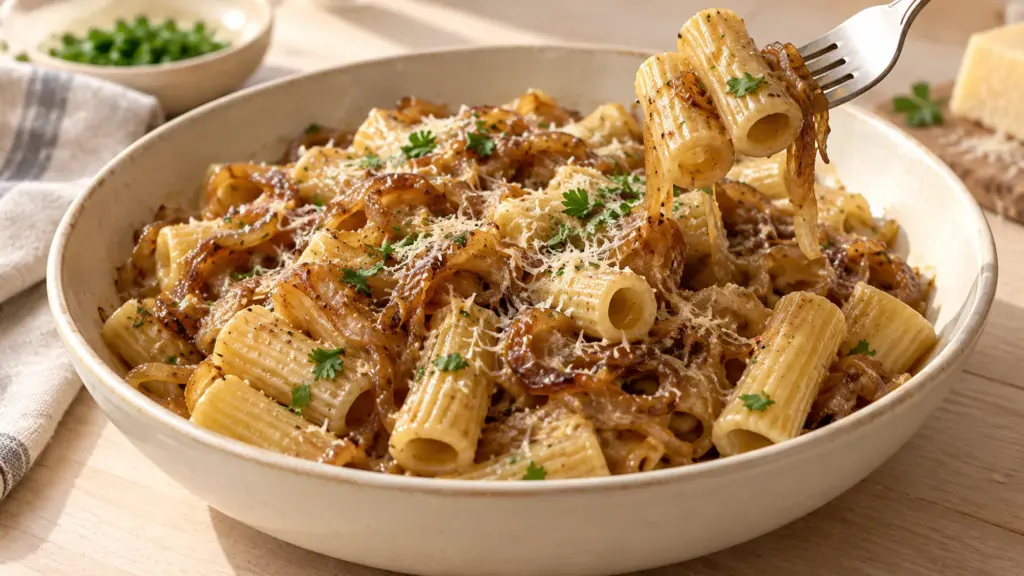
French onion pasta brings deeply golden onions and tender rigatoni together in a silky, savory sauce. A little cream softens the broth, while Parmesan adds a salty finish. The onion strands catch around the ridged tubes, making a bowl that feels generous without needing a baked cheese crust or a long list of extras.
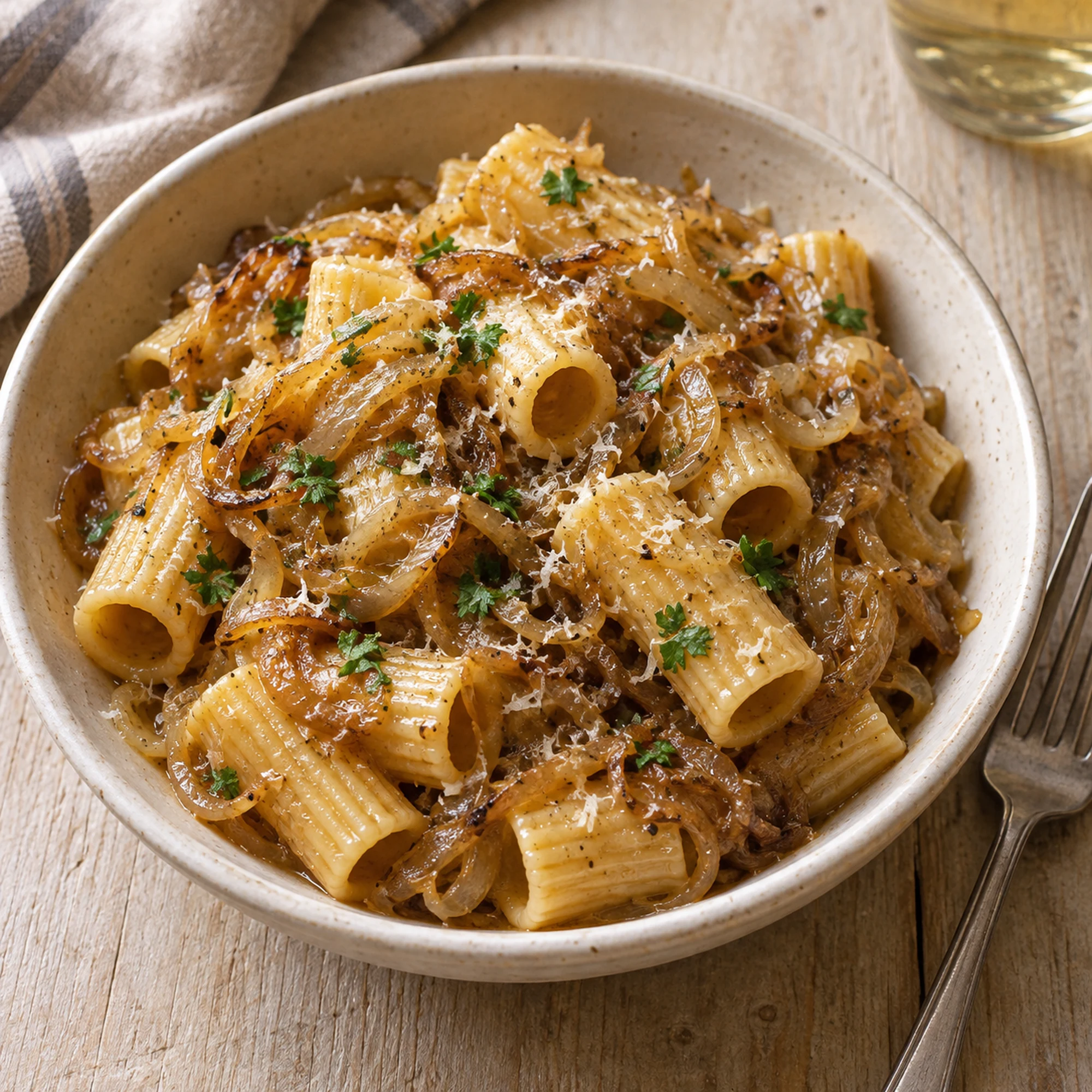
Let the onions build the flavor before the pasta goes in; that patient first stage makes the sauce.
This version cooks the pasta in the same pot as the onions, using broth as part of the cooking liquid. Stirring releases starch that helps the sauce cling. Keep water nearby so you can adjust as the rigatoni cooks; different brands, pot widths, and burner settings change how quickly the liquid evaporates.
Allow about eighty-five minutes from slicing onions to serving, including a short rest. Much of that time belongs to slowly browning the onions, with occasional stirring and attention to the pan. The card makes four moderate portions and explains the texture cues, so you can follow the food as well as the clock.
Serving suggestions
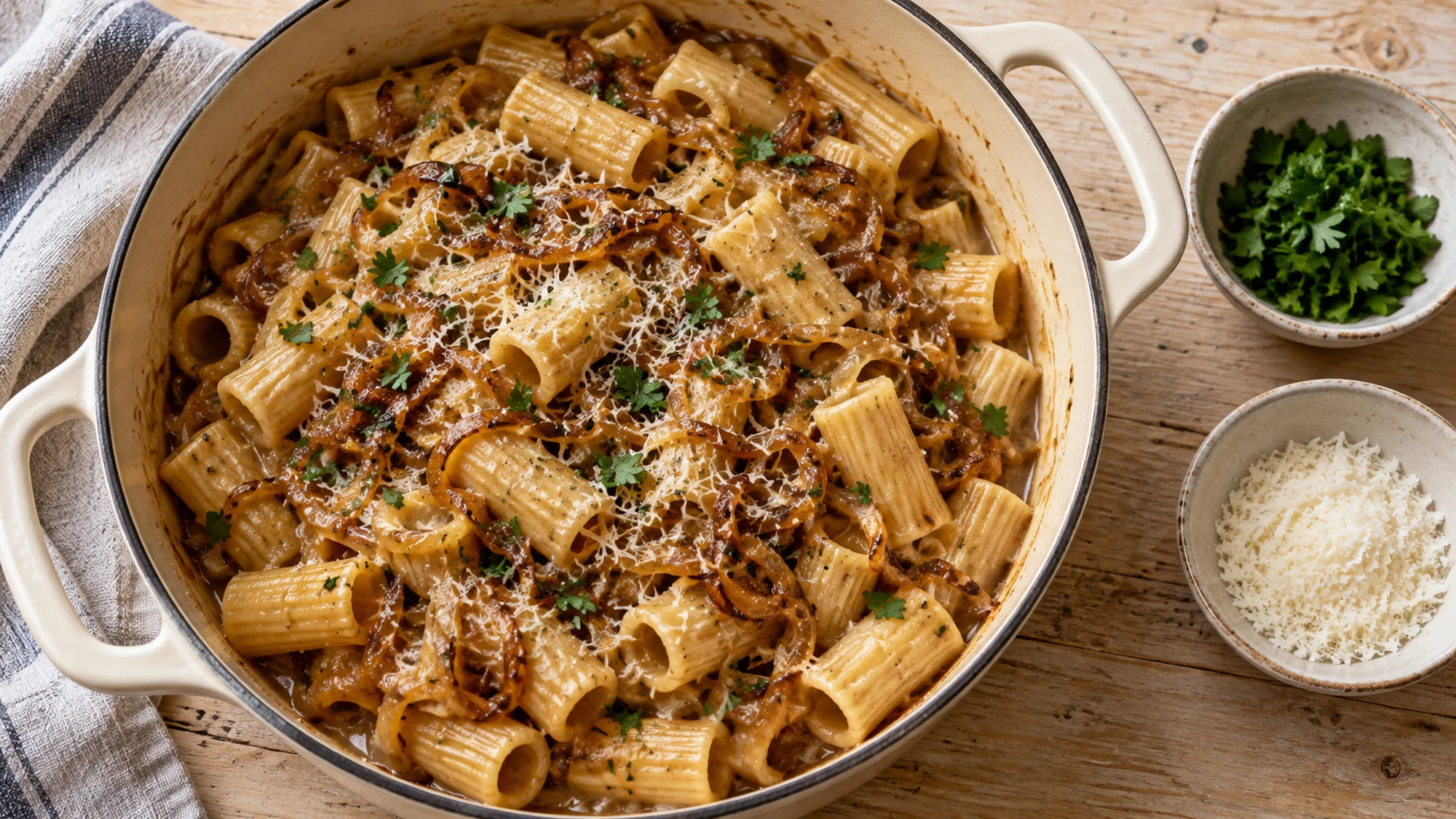
Serve the pasta in warm shallow bowls soon after its brief rest. The sauce continues thickening as it stands, so loosen it with a little hot water if needed before dividing. You want the tubes coated and moving easily against one another, rather than a stiff mound that holds the shape of the pot.
A crisp green salad or steamed vegetables suits the savory sauce. For something brighter, serve a small portion of chickpea cucumber salad alongside. The cool cucumber and lemon provide a useful change in texture, while the chickpeas make the table feel more substantial without adding another complicated hot dish.
Keep extra cheese optional at the table rather than covering every bowl heavily. Taste the finished sauce first, because broth and Parmesan both contribute salt. If you want larger pasta portions for especially hungry diners, consider this a three-serving batch and adjust your meal plan accordingly.
A loose sauce and a fresh side make the warm bowl comfortable to eat from the first forkful to the last.
Variations
Choose a sturdy short pasta such as rigatoni that catches onion strands in its ridges. Penne or another similar shape can work, but start checking against its package timing. The amount of liquid may need adjusting, so do not assume every shape cooks identically.
Mushroom or vegetable broth changes the savory base if you prefer to avoid beef. For a vegetarian version, also use a hard cheese made with suitable rennet. Traditional Parmigiano Reggiano uses animal rennet, so the cheese choice matters as well as the stock.
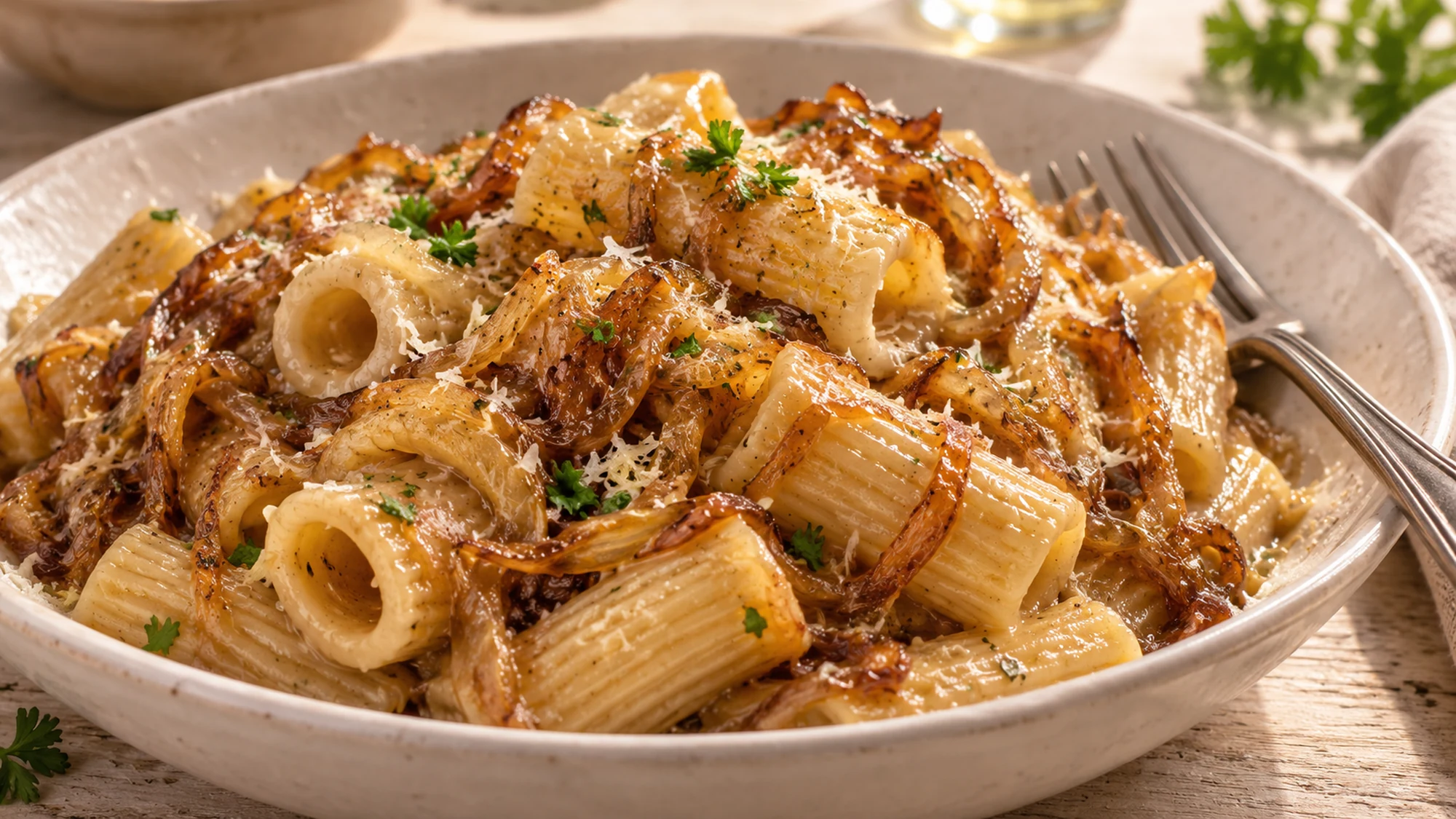
For a less rich finish, omit the cream and use a little extra water to help the cheese form a sauce. The result will taste sharper and look less creamy. A dairy-free adaptation requires replacing butter, cream, and cheese together; choose products that tolerate heat, and expect a different flavor and texture.
Keep the onion base and adjust the finishing ingredients thoughtfully, one change at a time.
Health benefits
Pasta supplies carbohydrate for energy, and onions contribute vegetables to the bowl. Cheese adds some protein and calcium, while cream, oil, and butter contribute fat. This is a comfort-food meal whose role depends on the portion and the rest of your day, without needing a claim that it treats or prevents illness.
Whole-wheat pasta can add fiber, though it may absorb liquid differently and need more cooking time. If using it, watch the pot closely and add water gradually. Pairing a moderate serving with vegetables or legumes is another practical way to bring variety to the meal without changing the pasta itself.
The standard recipe contains wheat and milk, and it uses beef broth. Check the broth and pasta packages for other allergens. Refrigerate leftovers within two hours and use within three to four days. Reheat thoroughly with a splash of water, stirring gently; the pasta will soften more on reheating and the original texture will change.
Choose a portion that satisfies you, then let vegetables and other foods round out the meal.
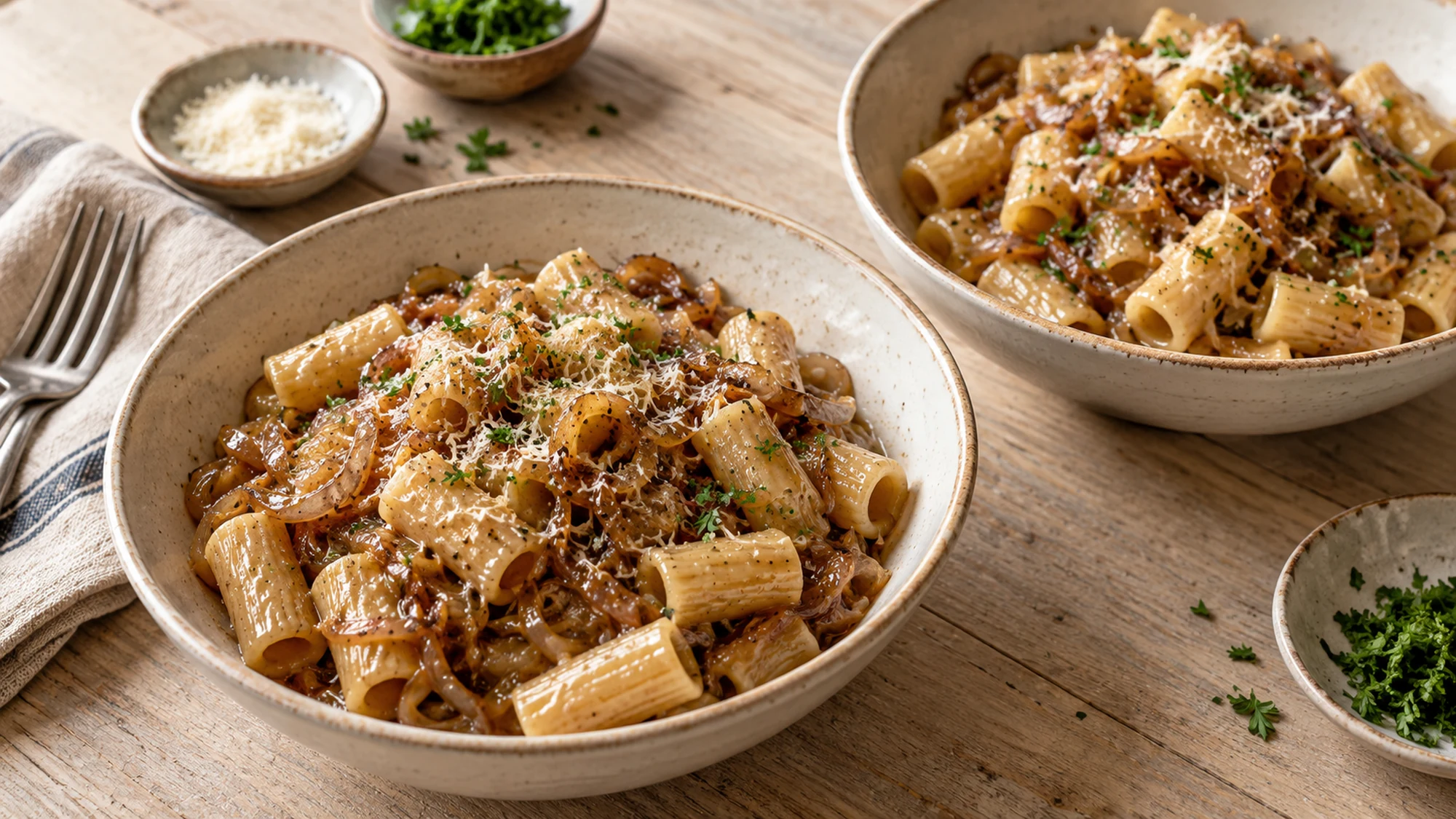
Give the onions their time
Set aside a relaxed stretch for the onion stage, then bring the pot together when you are ready to eat. The reward is a simple-looking sauce with plenty of savory depth. Save this French onion pasta recipe for a cool evening and use the card’s liquid cues to keep your own batch silky.
A few well-chosen ingredients and a patient pot can make a warm pasta supper feel inviting.
French Onion Pasta Recipe

Ingredients
- 3 large yellow onions about 1 1/2 lb total before peeling
- 2 tbsp unsalted butter
- 1 tbsp olive oil
- 3 cloves garlic minced
- 1 tsp fresh thyme leaves
- 0.25 tsp fine salt reduce if broth is salty
- 0.25 tsp black pepper
- 8 oz dry rigatoni
- 2.5 cups lower-sodium beef broth
- 0.5 cup water up to this amount as needed for onions and pasta, plus small extra splashes only if needed for tenderness
- 0.25 cup heavy cream
- 0.5 cup finely grated Parmesan about 1 1/2 oz; divided between sauce and finishing
- 1 tbsp fresh parsley finely chopped
Equipment
- 1 4-quart Dutch oven with lid
- 1 Wooden spoon
- 1 Stable cutting board and chef’s knife
- 1 Cheese grater
- 1 Measuring jug
- 1 Set measuring cups and spoons
Instructions
- Peel and halve the yellow onions, then slice them into very thin, even half moons on a stable cutting board.
- Melt butter with olive oil in the Dutch oven over medium-low heat. Add onions and salt. Cook for 35–45 minutes, stirring regularly, until deeply golden and very soft. Add small splashes from the measured water if the onions threaten to scorch, and lower heat if needed. Extend cooking if the onions are still pale.
- Stir garlic, thyme, and black pepper into the onions for 1 minute. Pour in beef broth and scrape up the browned bits. Bring to a gentle boil.
- Stir in dry rigatoni and simmer uncovered over medium-low heat, stirring often, for about 12–15 minutes or until tender with a slight bite. Check the pasta package and begin tasting near its suggested time. Add remaining measured water gradually if the pan becomes dry before the pasta is tender; use extra small splashes only if necessary. Reduce excess liquid briefly if needed, keeping a loose sauce.
- Stir in heavy cream and warm for about 1 minute. Remove from the heat and stir in most of the Parmesan, reserving a little for the bowls. Cover and rest for 5 minutes. Loosen with a splash of hot water if needed, divide into 4 bowls, and finish with parsley and reserved Parmesan.
Video
Notes
Tried this recipe?
Let us know how it turned out!Emily Parker is DISHORA’s recipe-writing persona, bringing a warm, practical voice to everyday cooking. Her focus is simple ingredients, comforting flavors and clear steps that make a dish feel approachable. From cozy dinners to something sweet, Emily’s recipes invite readers to try something delicious and make it their own.