
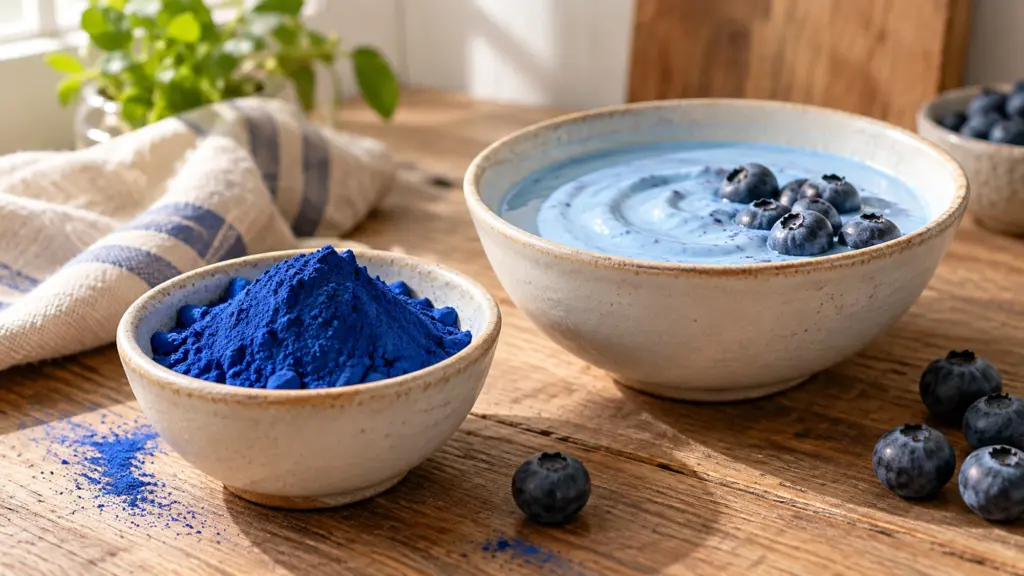
Blue spirulina can turn a pale yogurt bowl a striking shade of blue, but the color is easier to recognize than the ingredient behind it. Before treating it as a nutritional upgrade, check whether you are looking at an extract, whole spirulina or a blend.
Blue spirulina usually refers to a phycocyanin-rich extract from spirulina, rather than the whole green powder. Its clearest kitchen role is adding blue color. That color does not establish that a serving improves health or supplies the nutrients attributed to whole spirulina.
I like separating a visual choice from a health claim. A blue spoonful can be enjoyable without needing to promise a “detox” or a transformation.
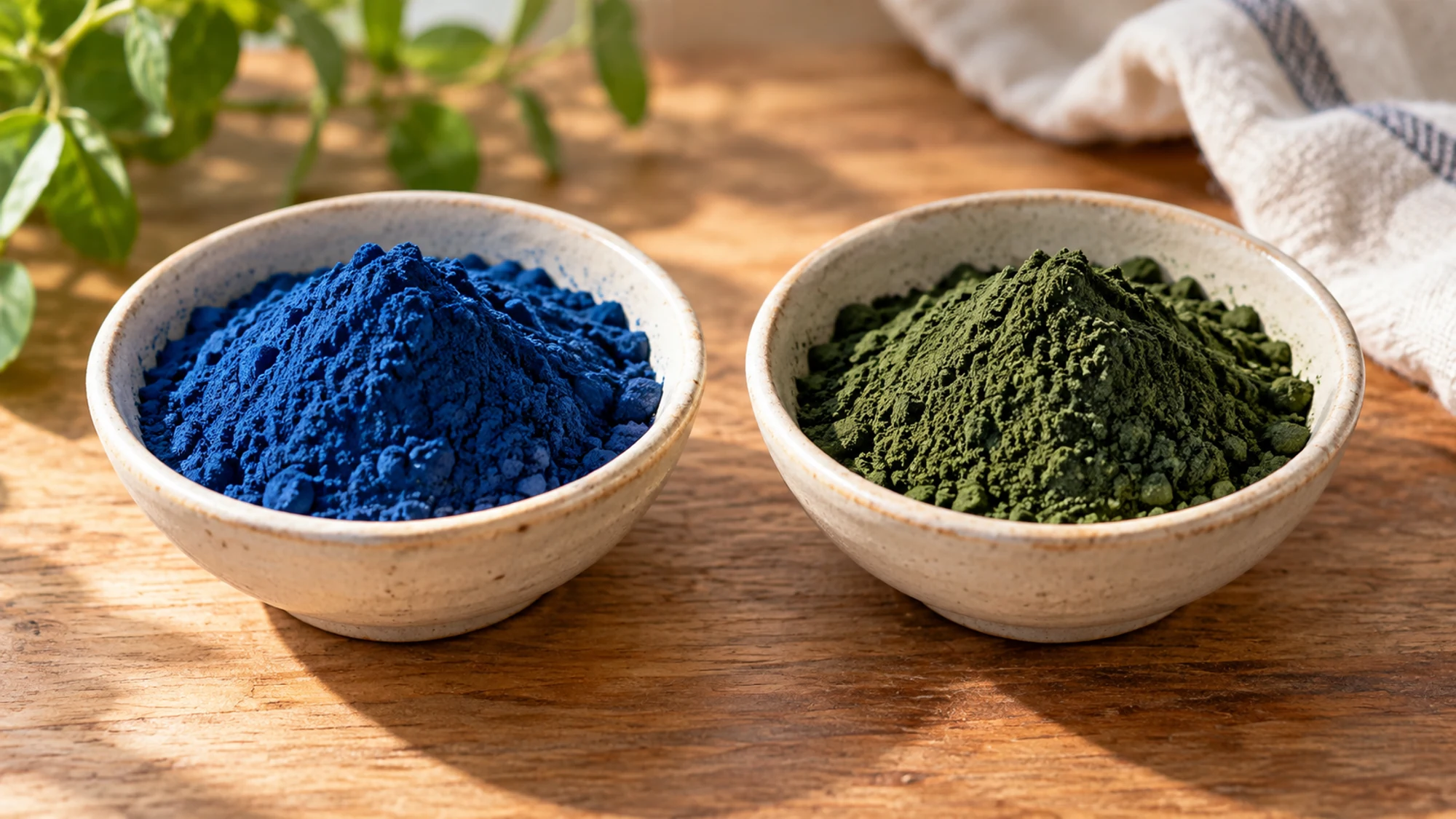
What blue spirulina actually contains
The FDA color-additive regulation for spirulina extract describes a filtered water extract from dried Arthrospira platensis, with phycocyanins as its main coloring components. A retail name alone does not identify the exact concentration or every ingredient in a particular powder.
| Product | What to distinguish | Check the label |
|---|---|---|
| Blue spirulina extract | A phycocyanin-rich coloring ingredient | Source, concentration and other ingredients |
| Whole spirulina powder | The broader dried biomass | Whole powder versus an extract |
| A blue powder blend | May combine coloring with other ingredients | Full ingredient list and intended food use |
Do not transfer a whole-powder serving’s protein or vitamin figures to a small amount of extract. Use the product’s own nutrition panel, and treat a missing figure as unknown rather than filling it in from a different supplement.
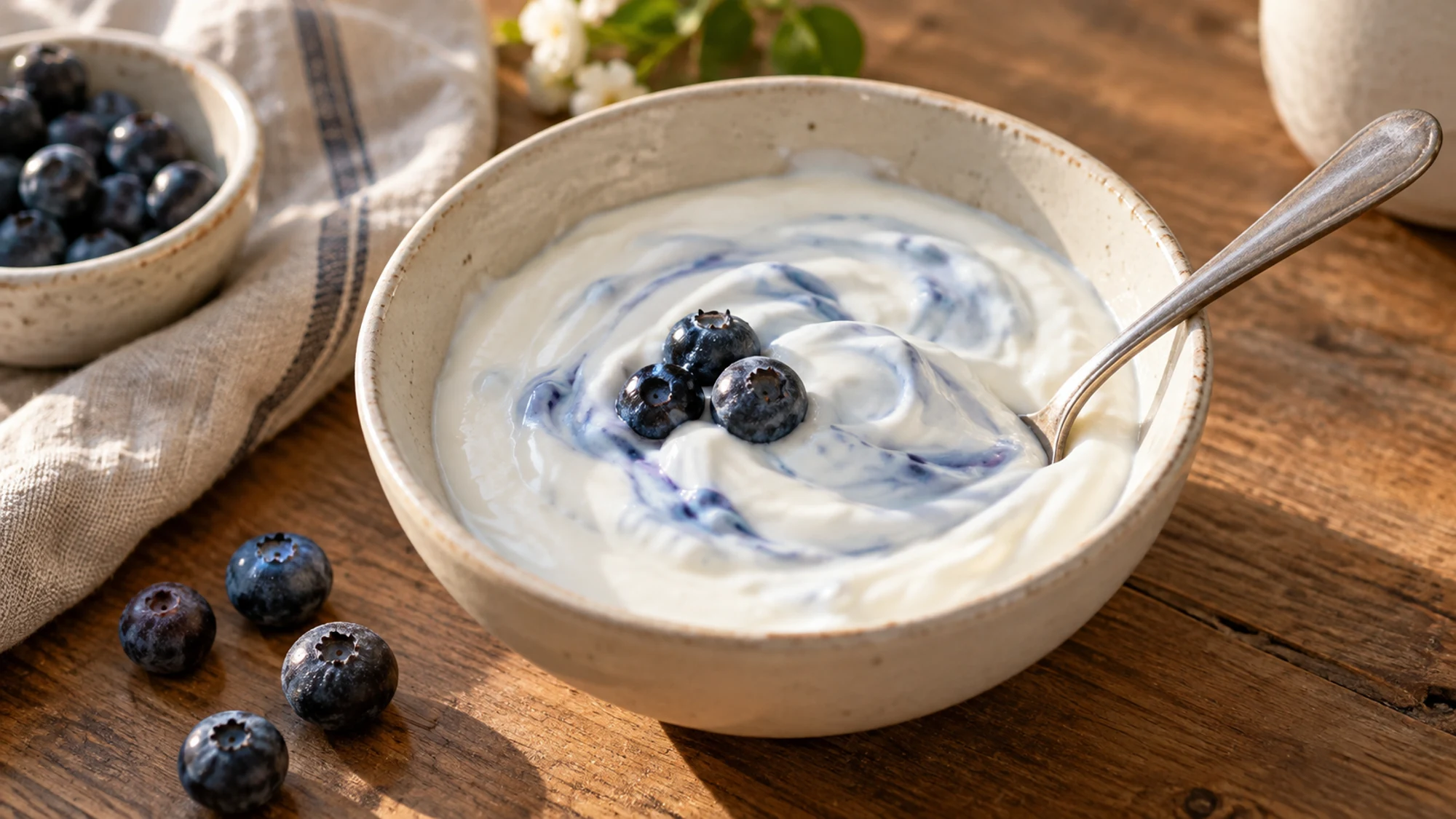
Use it for a realistic coloring job
The current U.S. regulation lists particular coloring uses, including yogurt, rather than serving as a general endorsement of wellness claims. If you are coloring food at home, choose an ingredient intended for eating and follow that specific product’s directions.
- Keep the purpose clear. A plain yogurt bowl can demonstrate the shade without a complicated recipe or a nutritional promise.
- Keep flavor in view. Read the ingredients for sweeteners or flavors that would change the food you are coloring.
- Respect the base food. Blue coloring does not remove the yogurt’s dairy, allergens or storage needs.
- Skip the powder if you prefer. Our yogurt biscuit cups offer another way to enjoy yogurt. That recipe does not require blue spirulina.
I’d choose the food first and the color second. The shade is an optional finishing choice, not the reason a meal has to be worthwhile.
Heat and acidity can change the result
A 2022 study of phycocyanin’s color stability examined temperature, acidity and stabilization in controlled preparations. It illustrates why the pigment’s behavior depends on its surroundings; it does not provide a universal home-kitchen formula for every retail powder.
- Read the manufacturer’s suggested food applications before choosing a hot drink or acidic mixture.
- If the label permits the use you have in mind, try a small food portion before coloring the entire batch.
- Follow storage instructions and keep the original product information, even if you transfer the powder to another container.
Avoid assuming that a bigger scoop fixes a disappointing color. Concentration, the base food and processing all affect the result, and more powder is not automatically a better choice.
What the human evidence can support
A small randomized study published in 2016 enrolled 24 adults and compared a particular phycocyanin-enriched extract with placebo over two weeks. It examined selected clotting and platelet markers, reporting no changes in several of those measures. The authors included a company affiliation.
That narrow, short study cannot establish long-term safety for every blue powder or prove broad claims about immunity, weight loss or disease prevention. Research on another spirulina preparation, and results from cells or animals, cannot simply be assigned to the ingredient in your shopping cart.
A food-coloring role and a demonstrated health benefit are different conclusions. I would want human evidence on the same preparation, amount and outcome before accepting a specific supplement claim.
Quality matters more than a “superfood” label
FDA’s microcystin guidance describes contamination concerns in blue-green-algae products, especially AFA products in its investigations. Those findings do not show that every spirulina extract is contaminated. They explain why sourcing, manufacturing controls and appropriate testing matter.
- Look for clear ingredient identity, traceable manufacturer details and lot information.
- Ask what contaminant testing covers and whether documentation actually matches the product or batch; a bright color cannot verify purity.
- For supplement use, FDA advises checking with a healthcare provider, particularly during pregnancy, nursing or with chronic conditions, and consulting a pediatrician before giving supplements to children.
Choose blue spirulina for an optional color effect, with a clear food-use label and credible quality information. Keep health promises separate from what the ingredient and evidence can actually show.
Sources
- eCFR: spirulina extract identity and coloring uses
- Food chemistry study: phycocyanin color stability
- 2016 randomized extract safety study
- FDA: algae products, quality and microcystins

Emily Parker is DISHORA’s recipe-writing persona, bringing a warm, practical voice to everyday cooking. Her focus is simple ingredients, comforting flavors and clear steps that make a dish feel approachable. From cozy dinners to something sweet, Emily’s recipes invite readers to try something delicious and make it their own.