
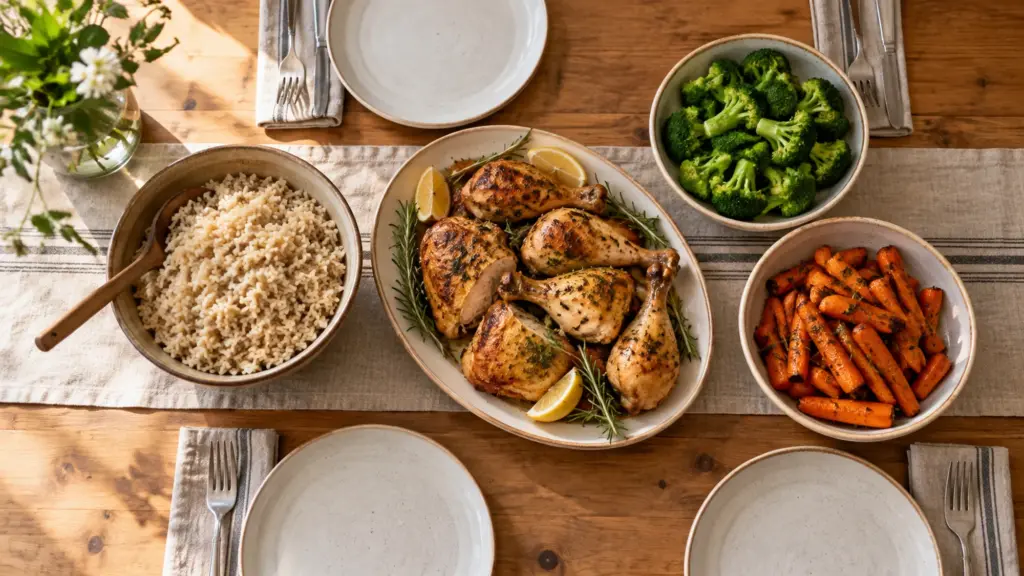
The hardest part of dinner can be deciding what to make while everyone is already hungry. Family meal plans work better when they account for that ordinary evening: the late meeting, the vegetables waiting in the drawer and the meal somebody wants to keep separate.
Start with your schedule, choose a few familiar meals and give leftovers a specific job. A useful plan includes flexible dinners and a backup option, rather than expecting seven ambitious cooking projects. Adjust portions, textures and ingredients for the people eating.
Build family meal plans around the week you have
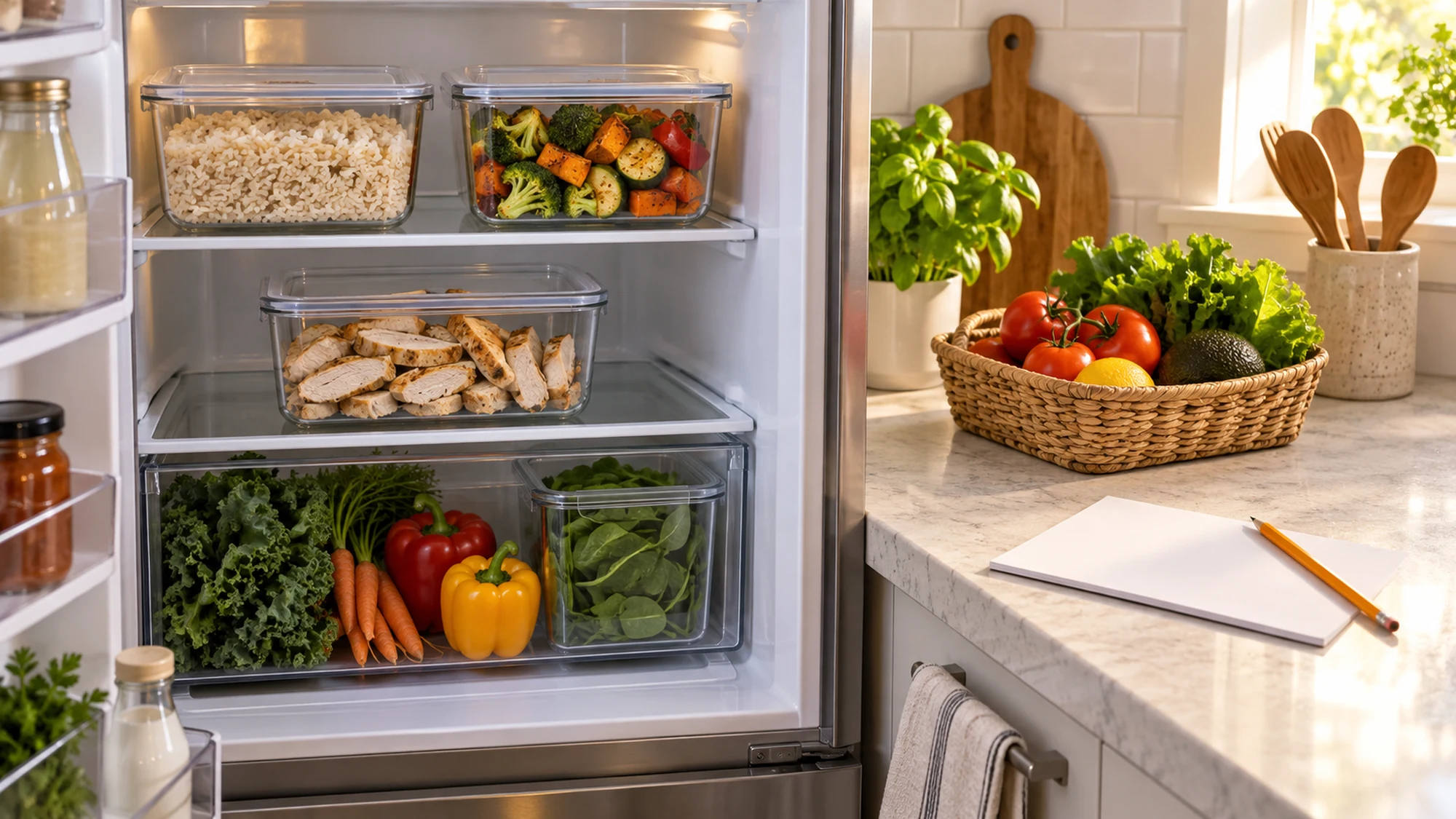
Before choosing dishes, mark the nights when cooking time will be short. Then check the refrigerator, freezer and pantry. The USDA MyPlate meal-planning guide recommends starting with food you already have, mapping meals and snacks, and writing a shopping list.
I’d put a familiar dinner on the busiest night. A beautiful plan that assumes extra time on Thursday is less useful than a simple meal you can actually get on the table. Keep one convenient option available, such as eggs, frozen vegetables and bread, or canned beans and microwaveable rice.
- Count the dinners you will eat at home.
- Check allergies, dietary needs and ingredients that need using.
- Choose one or two overlapping ingredients, then vary their role.
- Leave a flexible slot for changed plans.
A flexible seven-day dinner plan
This example is a planning framework, not a prescribed diet or a complete nutrition plan. Add breakfasts, lunches, snacks and drinks to match your household’s needs. Portions depend on age, appetite and individual requirements.
| Day | Dinner idea | Planning note |
|---|---|---|
| Monday | Roast chicken, rice and vegetables | Cook only the extra portions you can cool and store safely. |
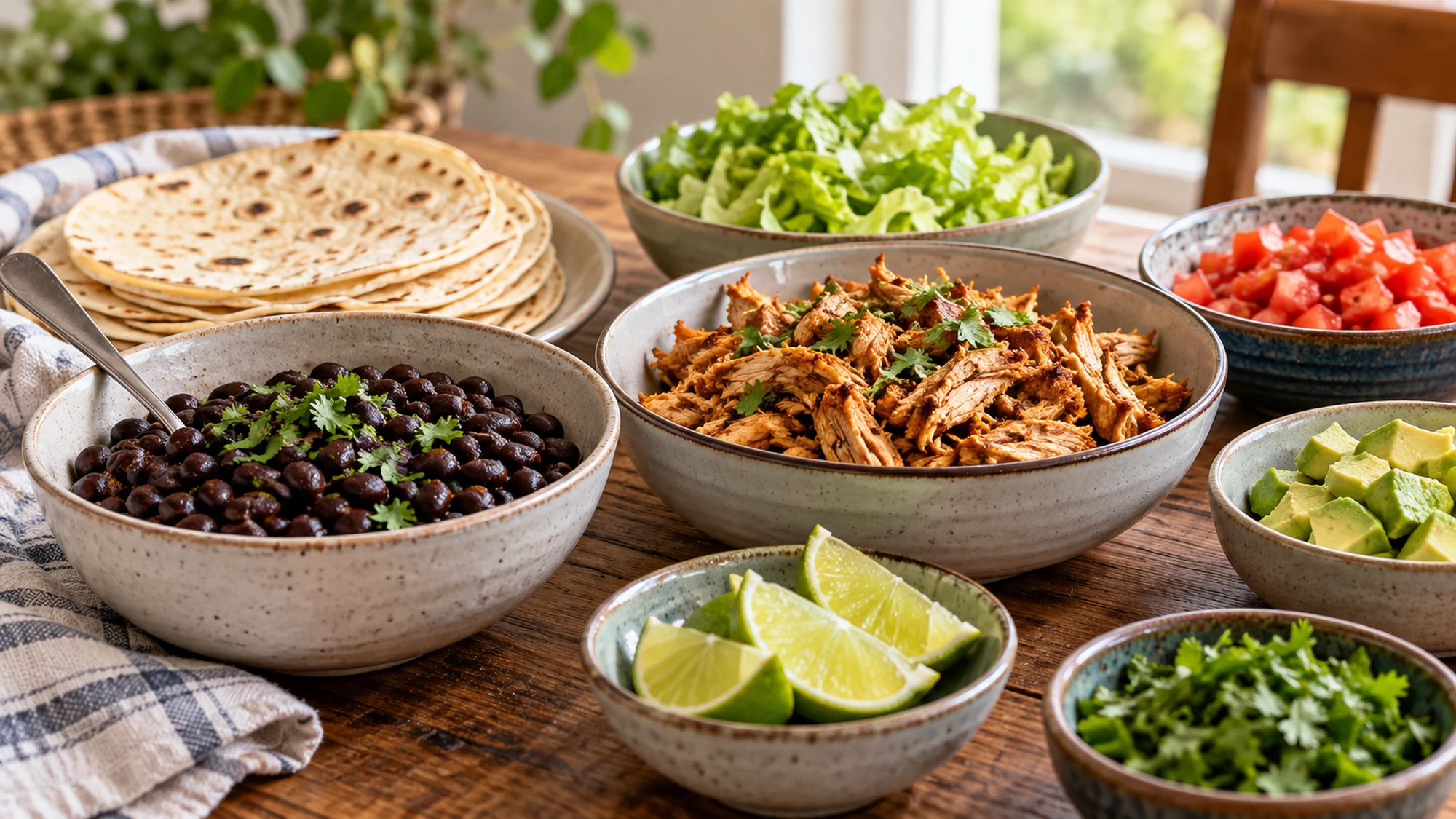
| Tuesday | Black bean tacos with separate toppings | Use lettuce and tomatoes again in lunch. |
| Wednesday | Vegetable pasta with a side salad | Choose a familiar sauce and frozen vegetables if convenient. |
| Thursday | Reheated Monday portions | Use within the safe refrigerated window; freeze earlier if timing changes. |
| Friday | Eggs, toast and cooked vegetables | Keep a simple backup meal available. |
| Saturday | Bean soup with bread | Freeze extra portions promptly for a later week. |
| Sunday | A flexible family choice | Check remaining food before making the next list. |
For a prepared lunch option, Dishora’s quinoa salad with chickpeas provides another way to use vegetables and grains. Choose recipes before shopping so the required quantities are clear; a meal name alone is not a grocery list.
Shop for ingredients that can do two jobs
Repeat useful ingredients without repeating an identical dinner. Roasted vegetables can accompany chicken one evening and go into a freshly assembled grain bowl another. Beans can fill tacos, join soup or make a convenient lunch. Keep sauces and toppings separate when different preferences share the table.
I prefer a short list with a clear purpose for each perishable ingredient. If a bunch of herbs appears in only one meal, decide whether the rest will be used, frozen appropriately or omitted. Compare unit prices, but buy the larger pack only when you have a realistic use for it.
- Produce: choose vegetables for two dinners and fruit for breakfasts or snacks.
- Protein: combine options your household eats, such as beans, eggs, poultry, fish or tofu.
- Staples: check rice, pasta, bread, cooking oil and seasonings before buying more.
Give leftovers a safe deadline
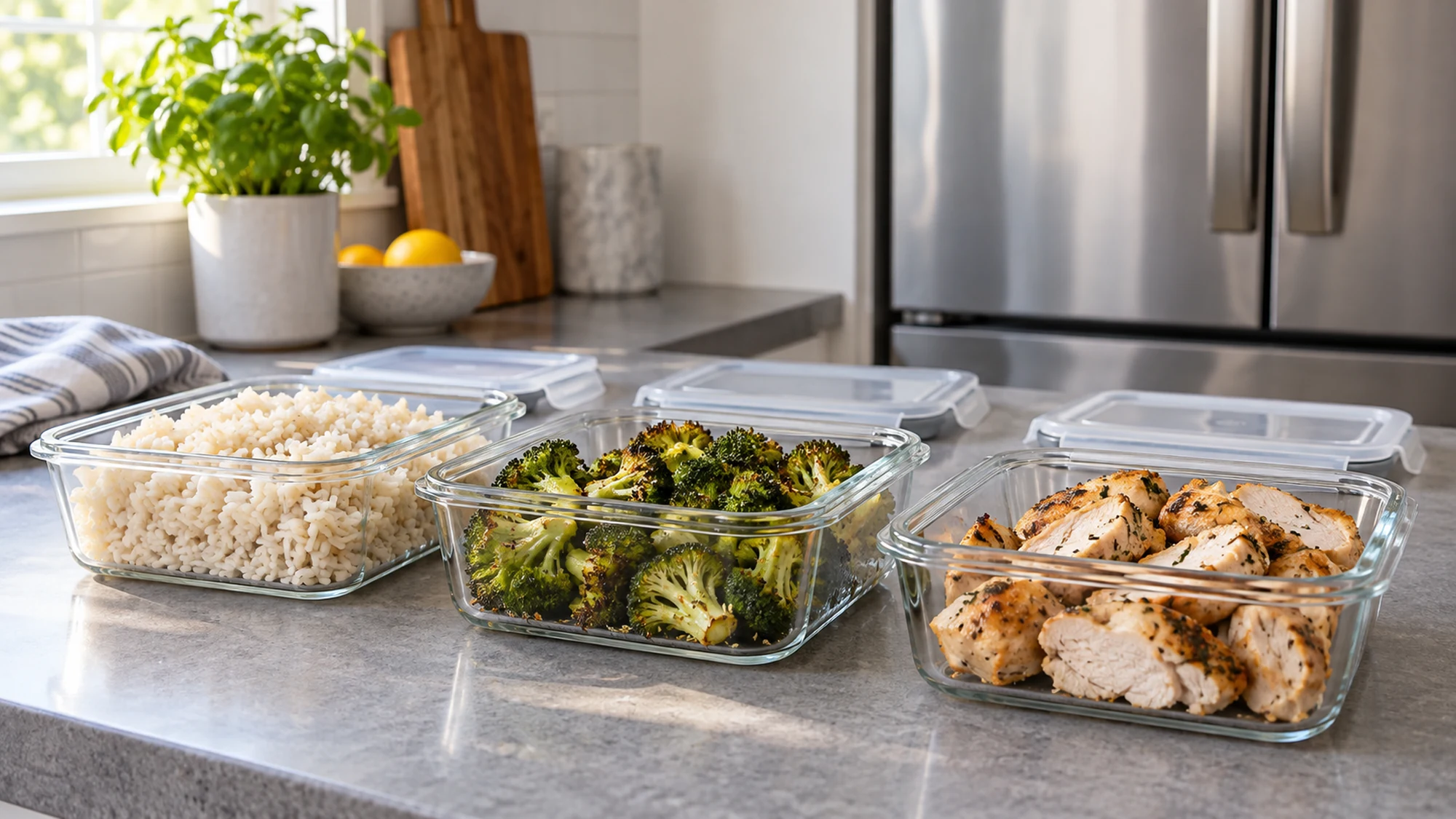
A seven-day plan does not mean seven days of refrigerated leftovers. FoodSafety.gov’s storage guidance says to refrigerate cooked food promptly in shallow containers, within two hours, or one hour when temperatures exceed 90°F. Keep the refrigerator at 40°F or below.
Use refrigerated cooked leftovers within three to four days. Freeze portions intended for later in the week promptly, rather than waiting until they are nearly out of time. Label containers with the food and date. Reheat leftovers to 165°F, checking with a food thermometer; stir microwave-heated food and check several spots.
Soup can be a useful planned second meal. Dishora’s sausage, white bean and kale soup is one dinner idea, provided you follow the same cooling, storage and reheating rules.
Keep the plan easy to change
Review what worked before choosing the next week. Was one dinner too involved? Did a vegetable remain untouched? Did the freezer meal save an evening? Those answers are more useful than trying to follow a menu perfectly.
Let family members choose between two workable options, and serve adaptable meals in components when helpful. Avoid promising that one menu will suit every child or dietary need. A favorite meal can return; the calendar does not need a surprise every night.
Start with three planned dinners, one purposeful leftover meal and one backup. Build from there when that feels manageable. Family meal plans earn their place by making the next decision easier, with enough flexibility for life to happen.
Sources

Emily Parker is DISHORA’s recipe-writing persona, bringing a warm, practical voice to everyday cooking. Her focus is simple ingredients, comforting flavors and clear steps that make a dish feel approachable. From cozy dinners to something sweet, Emily’s recipes invite readers to try something delicious and make it their own.