
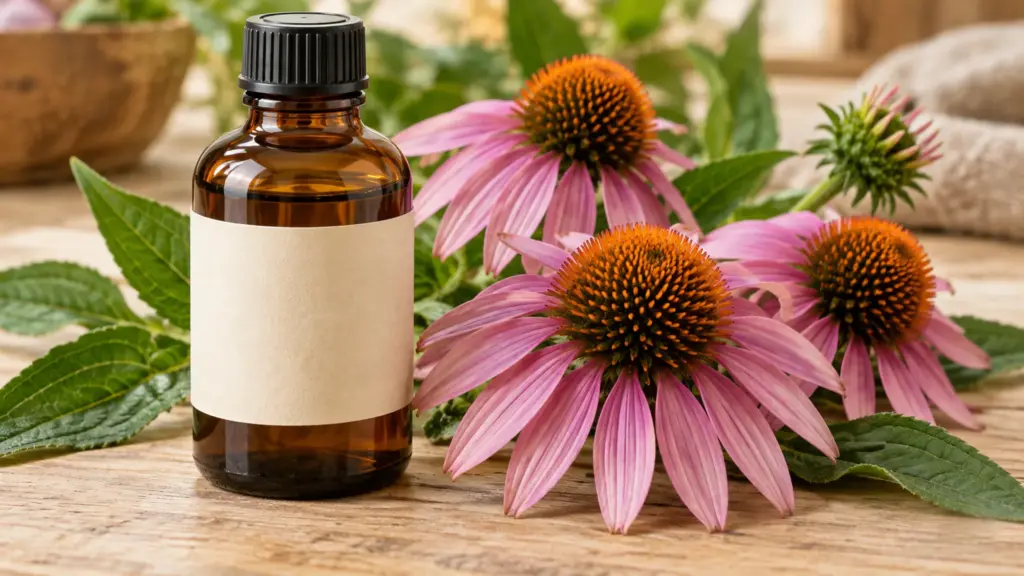
A scratchy throat can make the supplement shelf suddenly interesting. Echinacea benefits are often described in broad promises about immunity, but the useful question is narrower: can a particular product help prevent a cold or change one you already have?
Echinacea may offer a small benefit in preventing colds, but evidence that it shortens an existing cold remains uncertain. Products differ, and allergies or medicines can change whether one is suitable for you.
I’d give the actual preparation more attention than the biggest claim on the box. Here is how to read the research, compare product forms and decide which questions deserve an answer before buying.
Echinacea benefits: what the cold studies show
The National Center for Complementary and Integrative Health’s overview describes a possible small reduction in cold risk, while leaving cold duration unresolved. Preventing an illness and treating symptoms after it starts are separate questions.
| Question | Evidence | Useful interpretation |
|---|---|---|
| Preventing a cold | Possible small benefit | Protection is uncertain, not guaranteed |
| Shortening a cold | Inconsistent findings | No reliable promise of fewer sick days |
| Other health conditions | Much less research | Cold studies cannot prove unrelated benefits |
A 2014 Cochrane review of 24 trials involving 4,631 participants found weak evidence for clinically meaningful treatment effects. Its search covered evidence through July 2013; it is an important review, not a fresh verdict on every product sold today.
Why one bottle cannot stand in for another
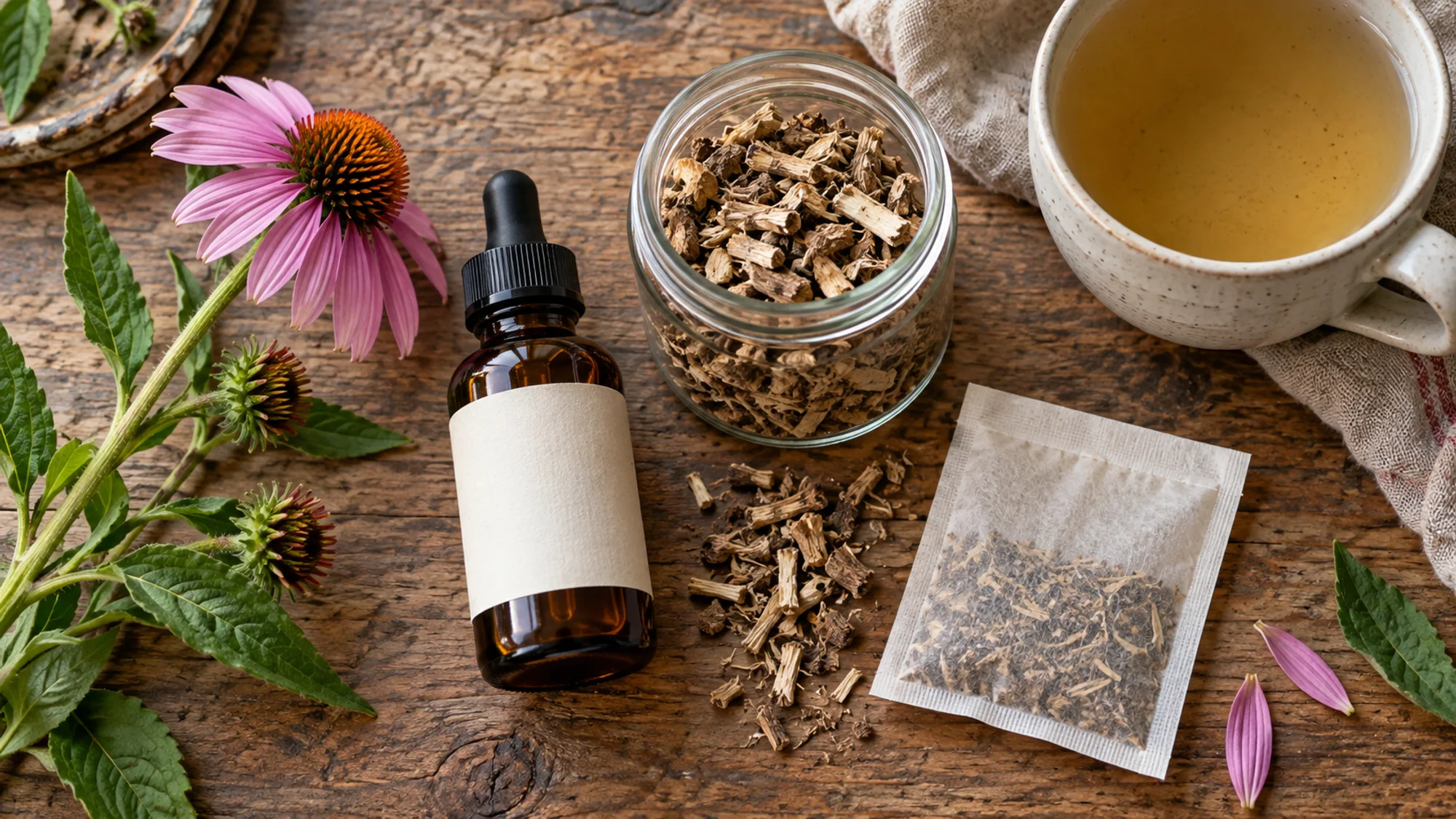
Echinacea is a group of plants, not a single standardized ingredient. The Cochrane review describes different species, plant parts and manufacturing methods. Those differences make a promising result for one preparation difficult to transfer to another.
- Species: Look for the botanical name, such as Echinacea purpurea or Echinacea angustifolia, rather than only “echinacea.”
- Plant part: Roots and above-ground material are not interchangeable descriptions.
- Preparation: Tea, pressed juice and concentrated extracts differ. A research dose is not a brewing instruction.
- Other ingredients: A multi-herb blend raises additional questions; evidence about echinacea alone cannot establish the blend’s effects.
In a 2010 randomized trial of 719 people aged 12–80, a particular root preparation did not produce statistically significant improvements in cold duration or severity over placebo. Participants were predominantly white, and the study evaluated that formulation, not all teas or supplements.
Check allergies, medicines and life stage first
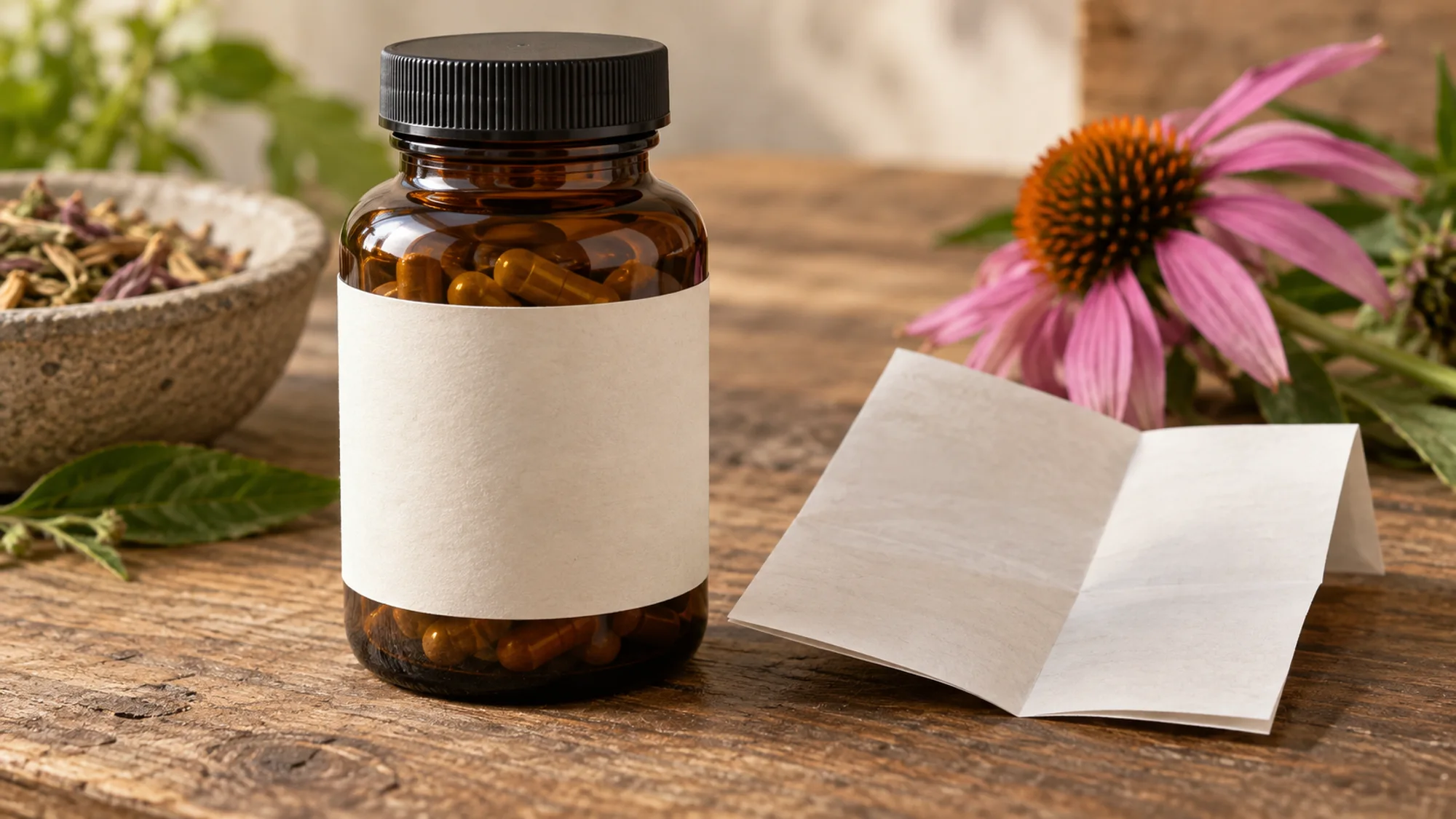
“Natural” does not settle the safety question. NCCIH reports digestive side effects and possible allergic reactions, including severe reactions. Short-term safety information for some adult preparations does not establish unrestricted long-term use.
- Medicines: Ask a pharmacist before combining products. Some interactions are uncertain, and immunosuppressant interactions are a particular theoretical concern.
- Children: Discuss the specific product with the child’s clinician; rashes and potentially serious allergic reactions are concerns.
- Pregnancy or breastfeeding: Seek individual guidance. Limited pregnancy observations do not establish general safety, and breastfeeding information is sparse.
If a product’s suitability is unclear, checking first is more useful than trying a smaller amount and hoping that removes the risk.
How to assess a product without chasing a dose
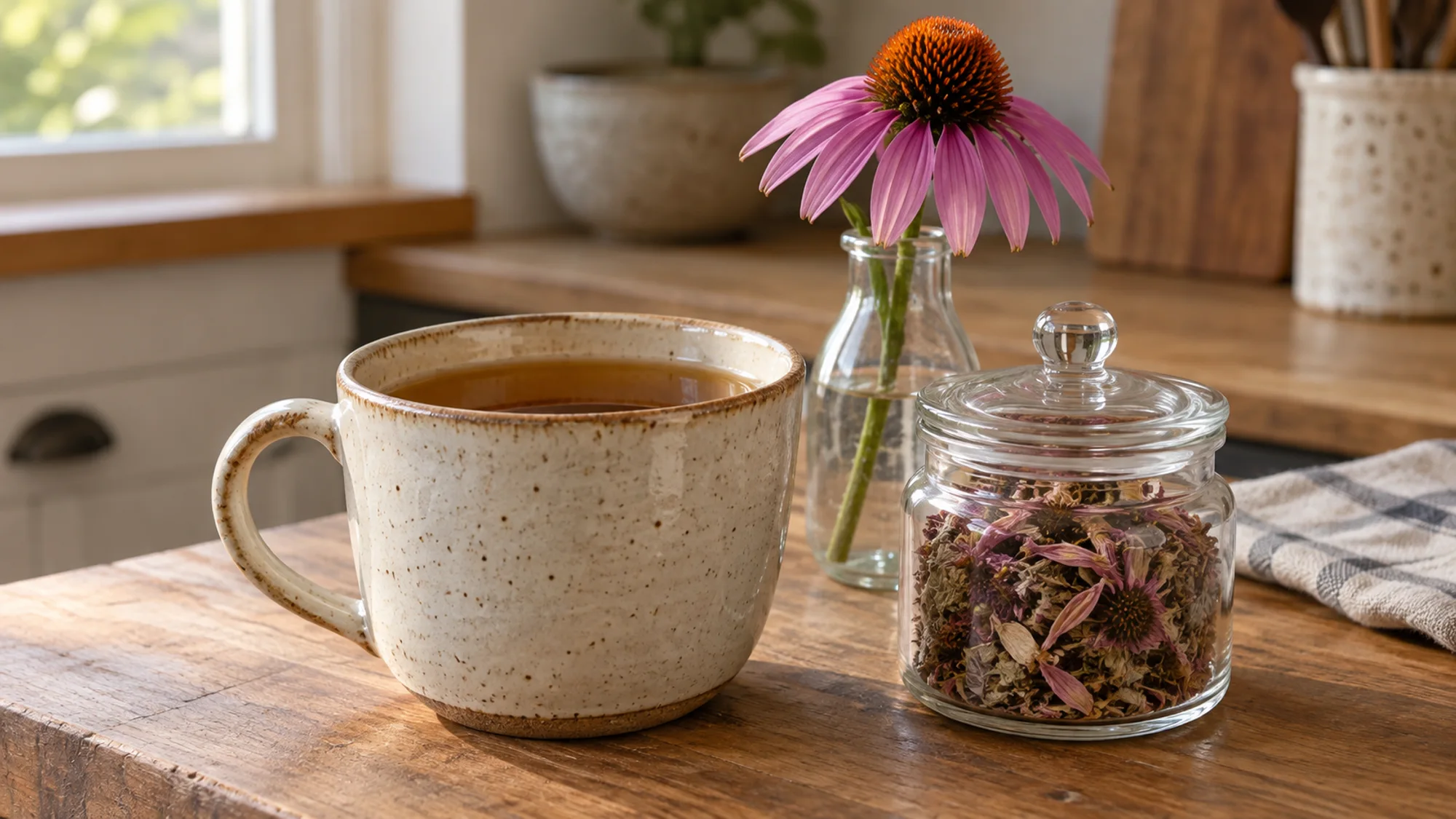
I prefer a label that makes comparison possible: named botanicals, identifiable amounts and a clear ingredient list. An impressive front label is a poor substitute for those details. There is no universal echinacea dose established by the mixed evidence summarized here.
- Identify the form: Check whether it is sold as a beverage or dietary supplement and follow the applicable directions.
- Read the complete label: Include serving size, other ingredients and cautions when discussing it with a pharmacist.
- Question approval claims: The FDA does not approve dietary supplements before marketing. A product being available for sale does not establish that it prevents or treats colds.
- Keep the question specific: Ask which preparation was studied, in whom, and for which outcome before paying for a claimed benefit.
For another example of why plant parts and preparations matter, DISHORA’s mullein tea guide explains the distinction between traditional uses and clinical evidence. The plants have different evidence; the useful common habit is careful reading.
A practical takeaway before you buy
You do not need to turn a modest, uncertain benefit into a daily obligation. For a decision about an existing cold, the large trial and review leave enough uncertainty to question promises of a rapid recovery. A more expensive bottle does not answer the evidence question.
Choose clarity over a sweeping immunity promise: match the evidence to the preparation, check relevant safety questions and keep expectations modest. Echinacea should not delay appropriate care for persistent or worsening symptoms.
Sources
- NCCIH: echinacea evidence and safety
- Cochrane: prevention and treatment review, 2014
- Barrett and colleagues: randomized cold-treatment trial, 2010
- FDA: dietary supplement questions and answers

Emily Parker is DISHORA’s recipe-writing persona, bringing a warm, practical voice to everyday cooking. Her focus is simple ingredients, comforting flavors and clear steps that make a dish feel approachable. From cozy dinners to something sweet, Emily’s recipes invite readers to try something delicious and make it their own.