
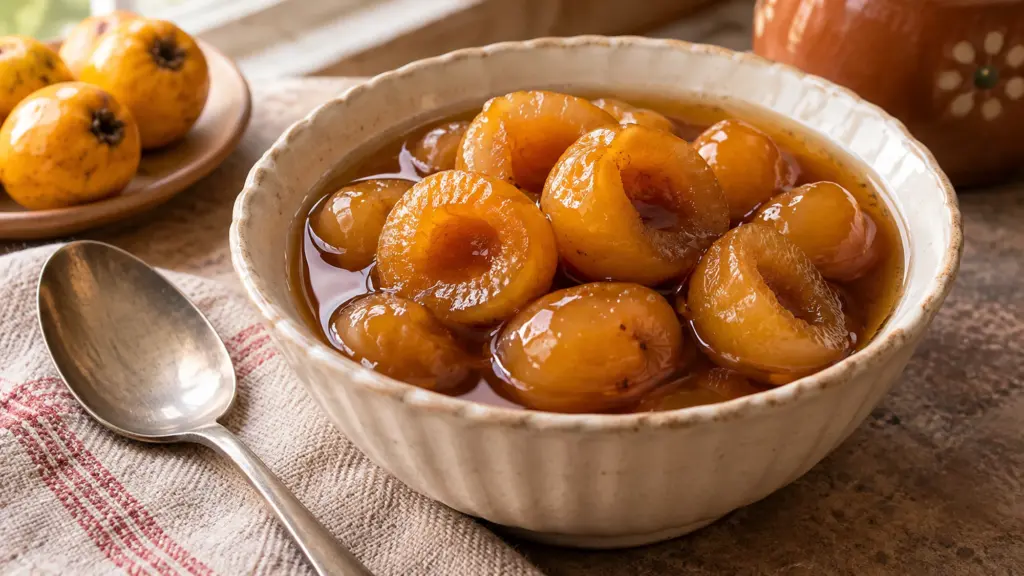
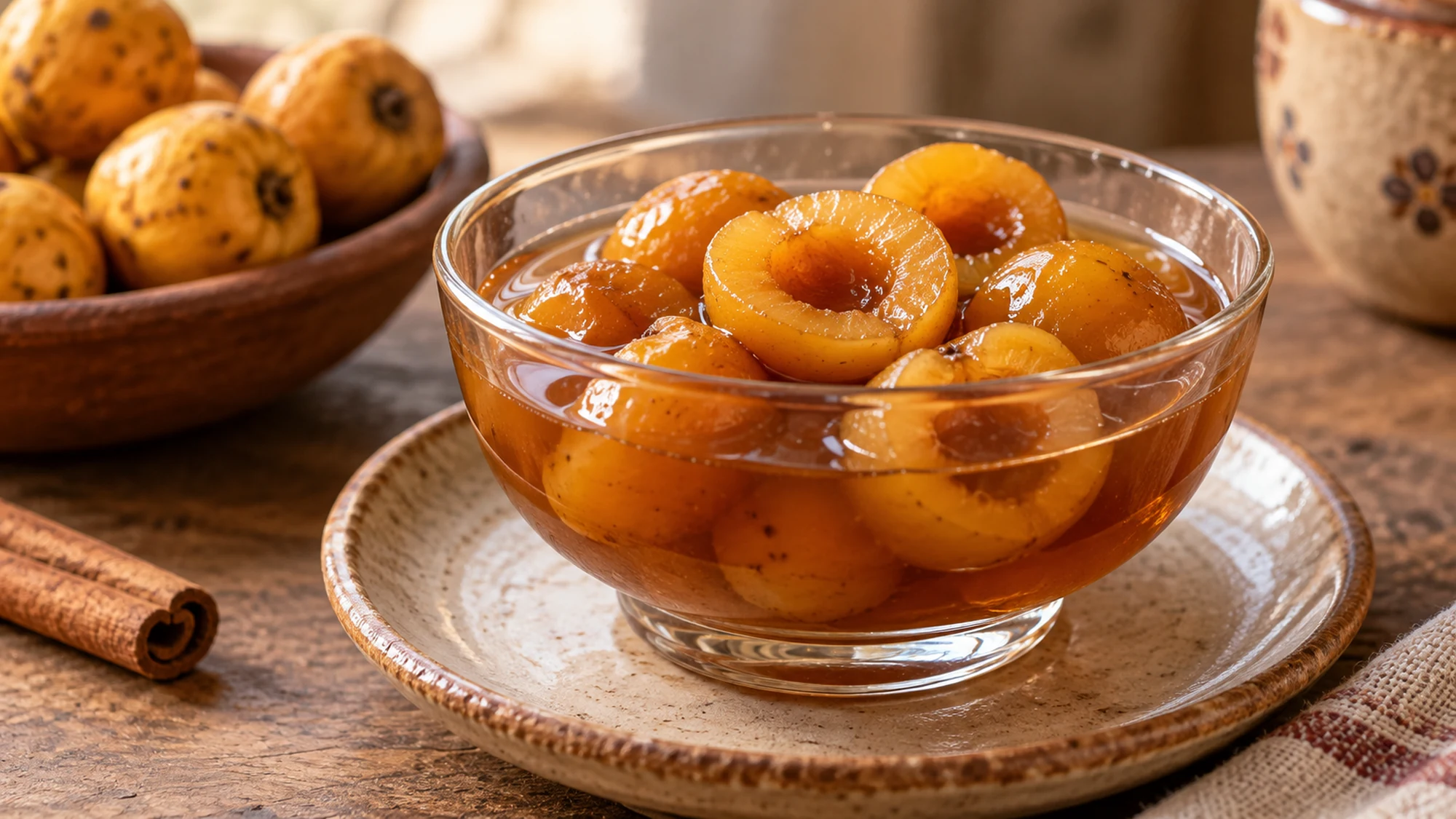
A small bowl of dulce de tejocote brings tender fruit, dark cane-sugar flavor, and cinnamon together in a simple spoon dessert. Tejocotes are small Mexican hawthorn fruits with firm flesh and hard seeds. This version peels and halves them before the final simmer, making the finished dessert easier to eat.
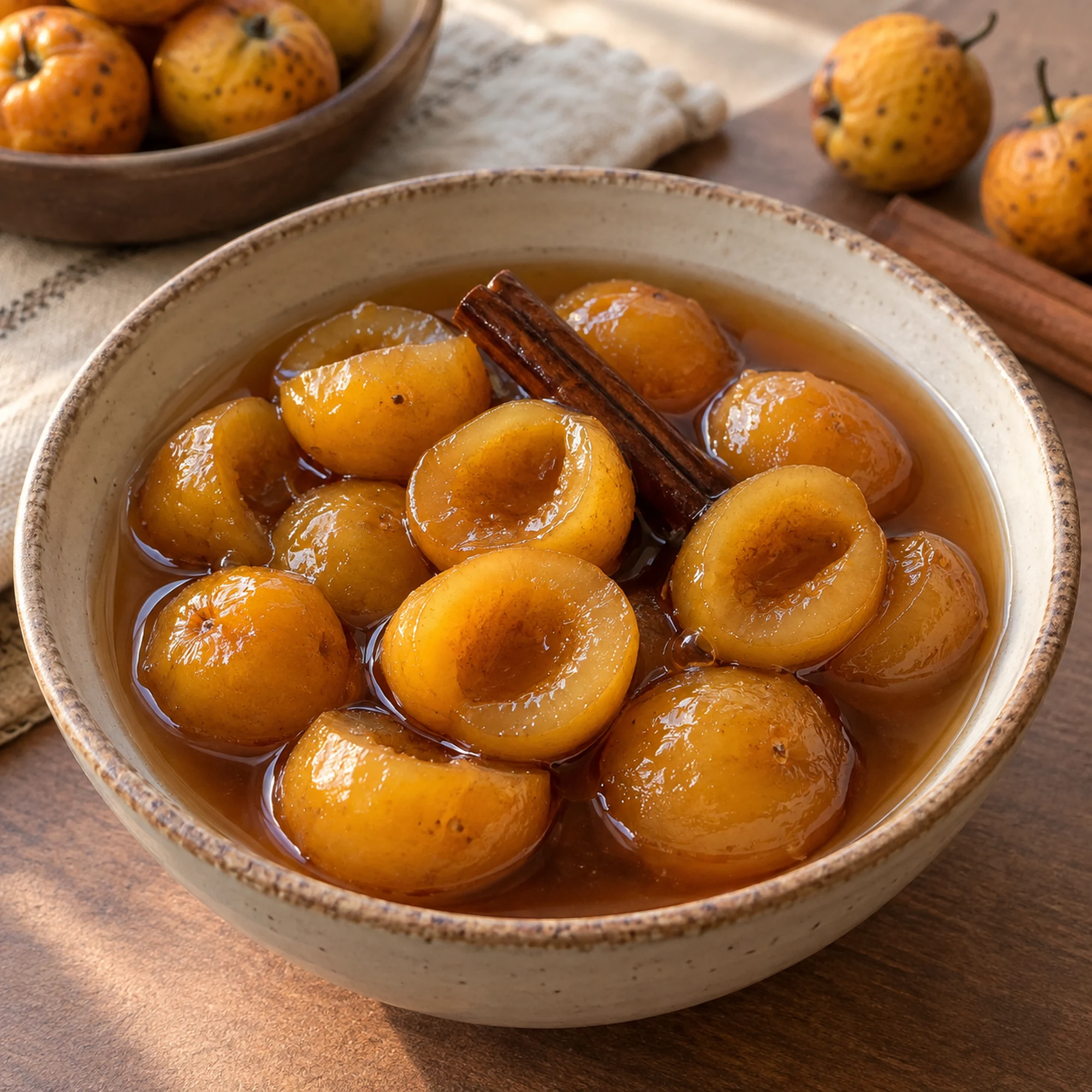
Loosen the skins with a brief boil, remove the hard seeds carefully, and simmer the prepared fruit gently in piloncillo syrup.
Look for fresh tejocotes rather than assuming a similar-looking fruit will behave the same way. Their yellow-orange color and small size are distinctive. I prefer serving them already seeded, even though whole fruits are also used in traditional preparations, because a spoonful should not come with a hard surprise.
Serving suggestions
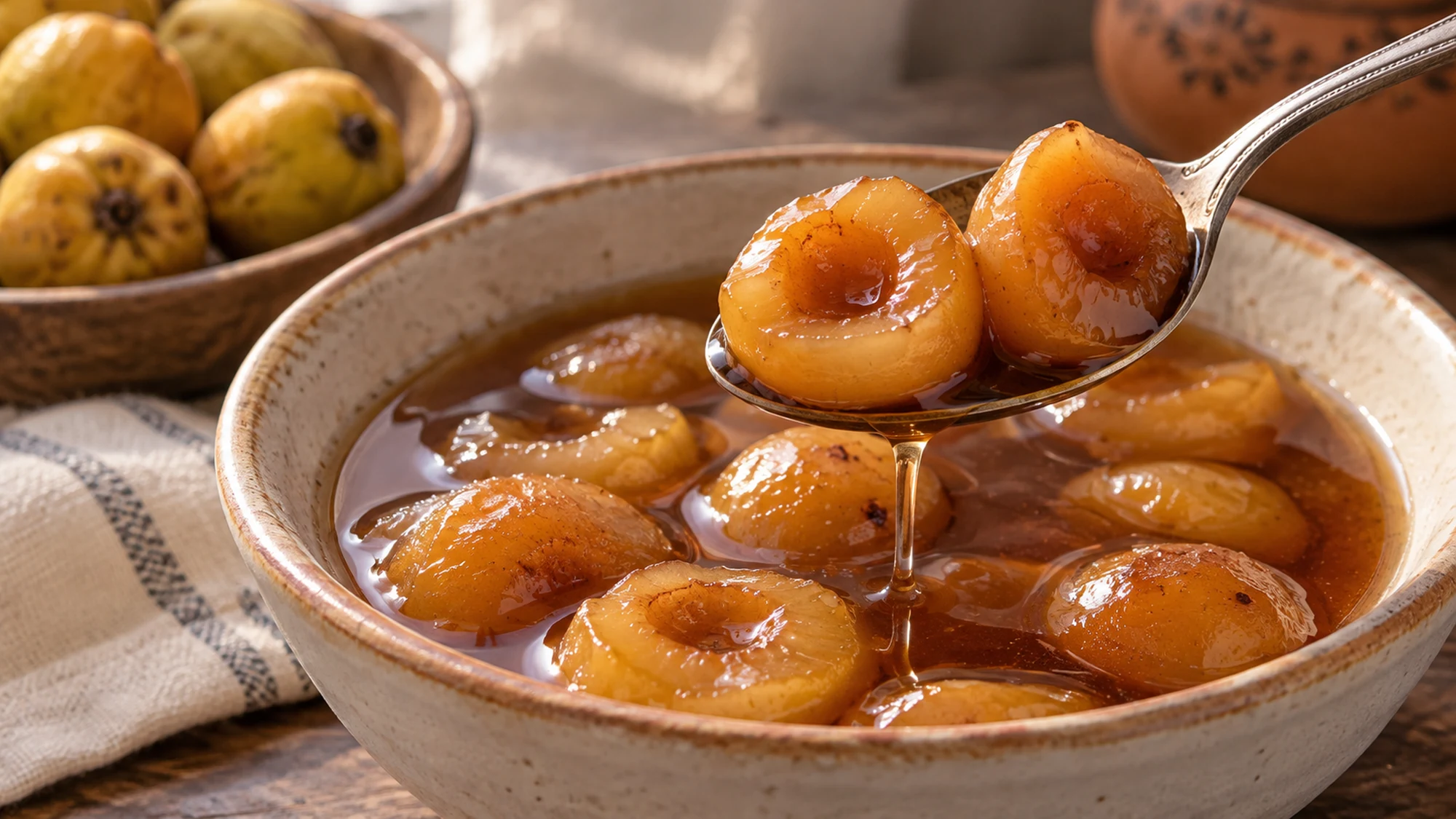
Serve a few fruit halves with a little syrup in small dessert bowls. They are pleasant warm or chilled, depending on the rest of the meal. Let the hot syrup cool before tasting or serving; sugar syrup can hold heat longer than its quiet surface suggests.
Plain yogurt is an optional accompaniment if you enjoy a tangy contrast, while a spoonful of cream makes a richer dessert. Keep either separate from the stored fruit. The card itself uses only fruit, piloncillo, cinnamon, and water, so the syrup’s flavor stays clear and uncomplicated.
For a Mexican-inspired meal, you could begin with sopa de lima and finish with a small portion of this sweet. There is no need to make every course rich. I would offer unsweetened coffee or tea alongside the dessert and let the cinnamon provide the aromatic finish.
Small bowls and a modest spoonful of syrup let the tender fruit remain the center of the dessert.
Variations
Piloncillo gives the syrup its deep cane-sugar flavor. Cone sizes vary, so weighing it is more reliable than counting pieces. Chop or grate a large cone carefully before heating, using a stable board and keeping your fingers clear of the knife.
Brown sugar can stand in when piloncillo is unavailable, but the flavor will be different. Keep the weight the same for a straightforward substitution. A small strip of orange peel is another optional variation; avoid the thick white pith and remove the peel before serving.
The recipe uses one cinnamon stick rather than ground cinnamon, which leaves the syrup clearer. If you want a gentler spice note, remove the stick earlier. Vanilla is possible too, but add only a little after cooking so it supports the fruit rather than becoming the main flavor.
Weigh the sweetener, keep the spice restrained, and make one small change before trying several at once.
Health benefits
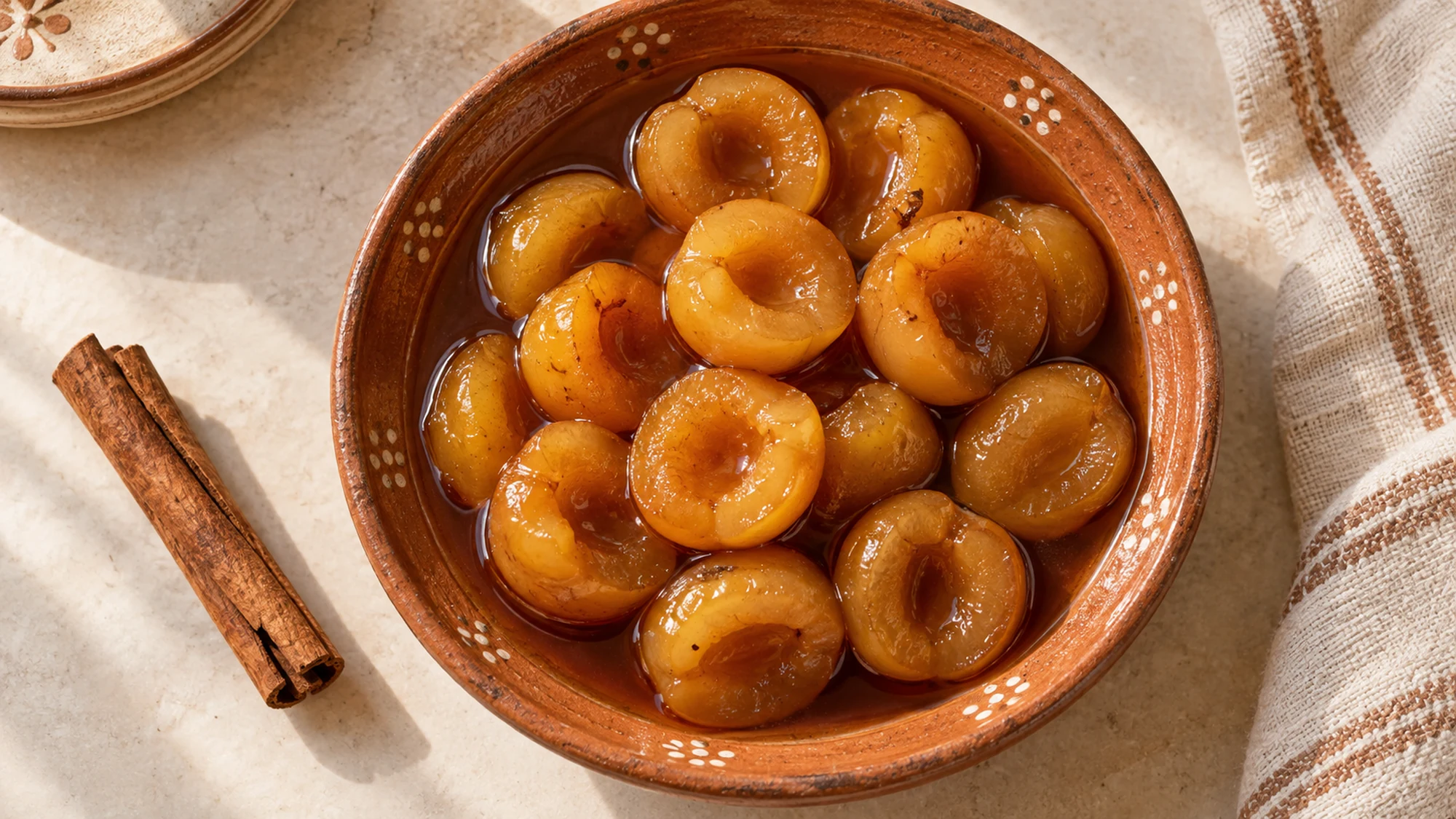
Tejocote is a fruit, but cooking it in a measured amount of piloncillo makes this a sweet dessert. Some of the fruit’s fiber remains in the flesh after peeling and cooking. That does not make the syrup a substitute for fresh fruit or a reason to promise a health benefit.
Piloncillo is still an added sugar, even though its flavor is more complex than plain white sugar. Portion the dessert according to your appetite and the meal. If you need to manage sugar intake for a personal reason, the actual sweetener quantity matters more than the traditional name.
Remove all hard seeds and any tough central pieces before the syrup simmer. Do not eat or grind the seeds. Keep the cooled dessert refrigerated in a covered container and use within three to four days. This stovetop recipe is not a tested method for preserving jars at room temperature.
Enjoy the fruit and cinnamon as a dessert, with careful seed removal and ordinary refrigerated storage.
Give the fruit a gentle simmer
The peeling stage is the hands-on part, so wait until the fruit is cool enough to handle comfortably. Work over a bowl, check each half for remaining seeds, and keep the tender pieces intact. A little patience here makes the serving stage much more relaxed.
Once the fruit reaches the syrup, lower the heat and move it gently with a spoon. You want tender halves and a light coating of syrup rather than a rapidly boiled puree. Let the finished dessert rest briefly so the flavors settle, then choose the bowls and serving temperature you like.
Careful preparation and a quiet simmer give dulce de tejocote its tender fruit and warm, aromatic syrup.
Dulce de Tejocote Recipe

Ingredients
- 500 g fresh tejocotes
- 4 cups water for loosening the skins; discard after boiling
- 2 cups fresh water for the syrup
- 200 g piloncillo chopped
- 1 3-inch stick cinnamon
Equipment
- 1 Medium saucepan
- 1 Colander
- 1 Bowl
- 1 Small paring knife and cutting board
- 1 Spoon
- 1 Kitchen scale
- 1 Measuring jug
Instructions
- Rinse the tejocotes under cool running water and discard any damaged or moldy fruit.
- Bring 4 cups of water to a boil in a medium saucepan. Add the fruit and boil gently for 3–5 minutes, until the skins loosen. Drain, discard this water, and cool until safe to handle.
- Peel the fruit with a small knife, halve, and remove all hard seeds and tough central pieces. Discard skins and seeds; do not eat or grind the seeds.
- In the saucepan, combine the 2 cups fresh water, chopped piloncillo, and cinnamon stick. Heat gently, stirring, until the sugar dissolves.
- Add the prepared fruit and simmer gently, partly uncovered, for 20–25 minutes, until tender and the syrup lightly coats a spoon. Turn the fruit gently rather than stirring vigorously. Remove the cinnamon stick.
- Cool for about 20 minutes before serving warm, or refrigerate promptly in a covered container to serve chilled. Divide among six small bowls with a little syrup.
Video
Notes
Tried this recipe?
Let us know how it turned out!Emily Parker is DISHORA’s recipe-writing persona, bringing a warm, practical voice to everyday cooking. Her focus is simple ingredients, comforting flavors and clear steps that make a dish feel approachable. From cozy dinners to something sweet, Emily’s recipes invite readers to try something delicious and make it their own.