
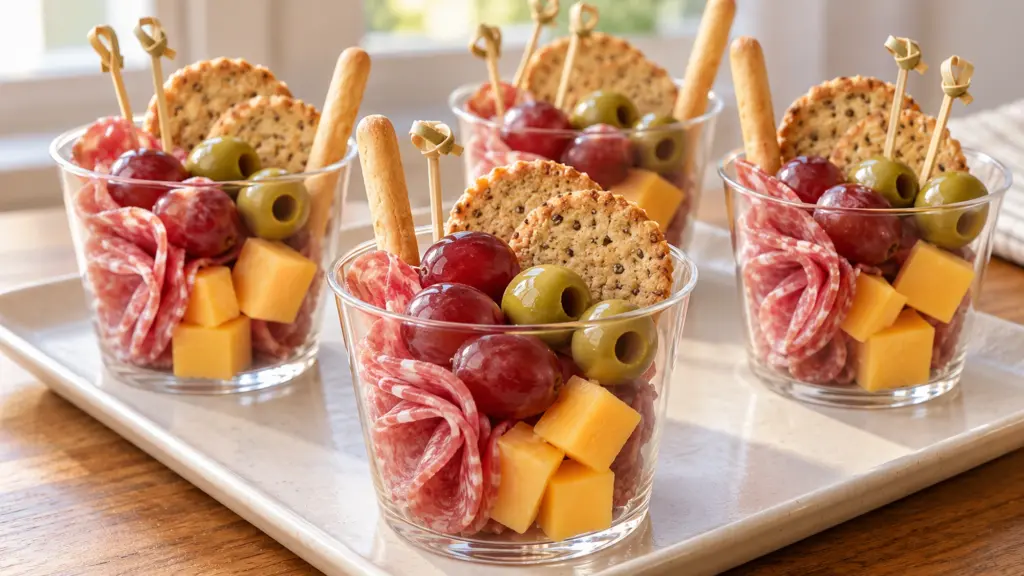
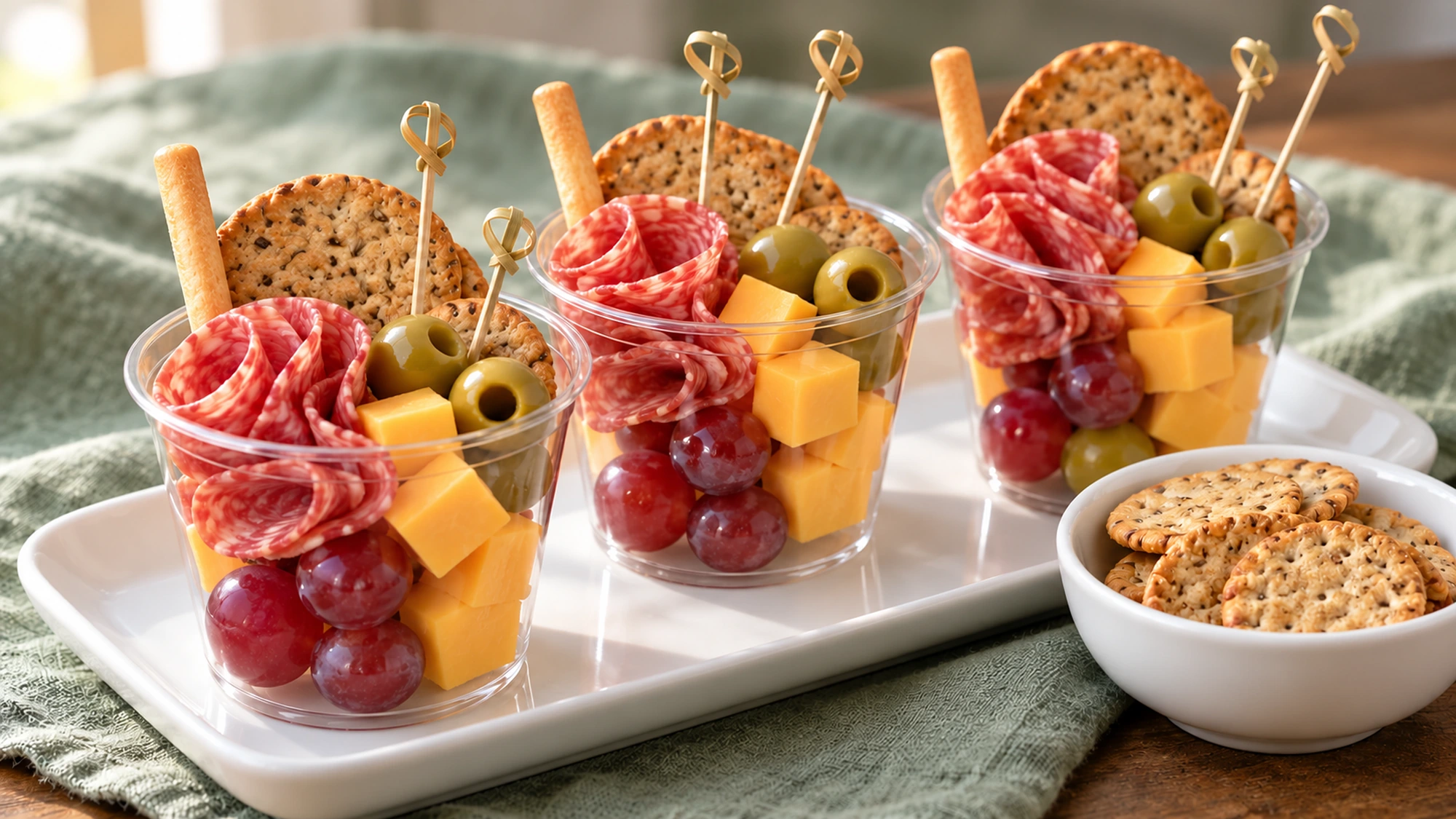
A party snack should be easy to pick up, but nobody wants a cup of softened crackers. These charcuterie cups keep the crunchy pieces out until serving time, while salami, cheddar, grapes, and olives wait together in the refrigerator. You get eight individual portions, a little salty-sweet contrast, and no oven to negotiate.
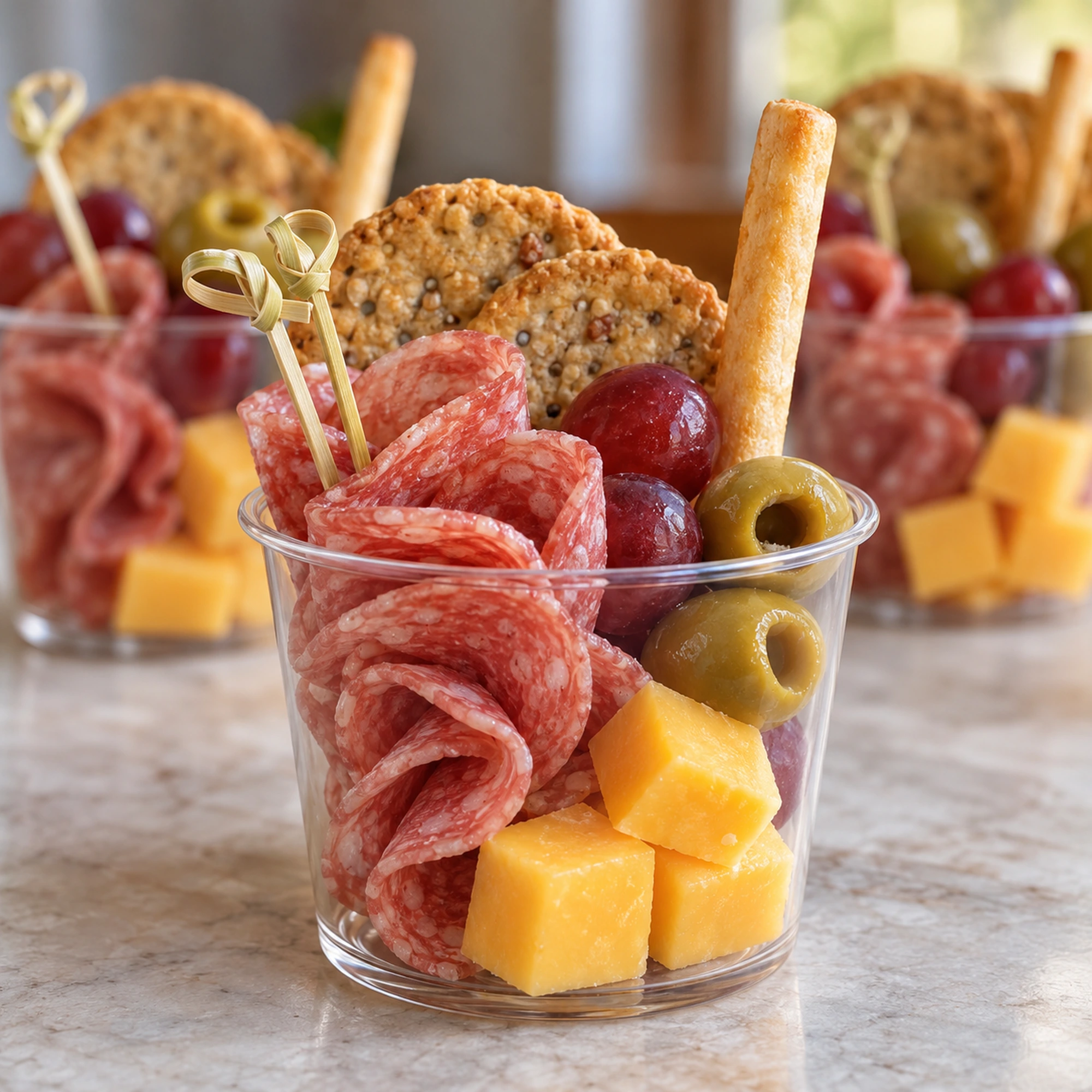
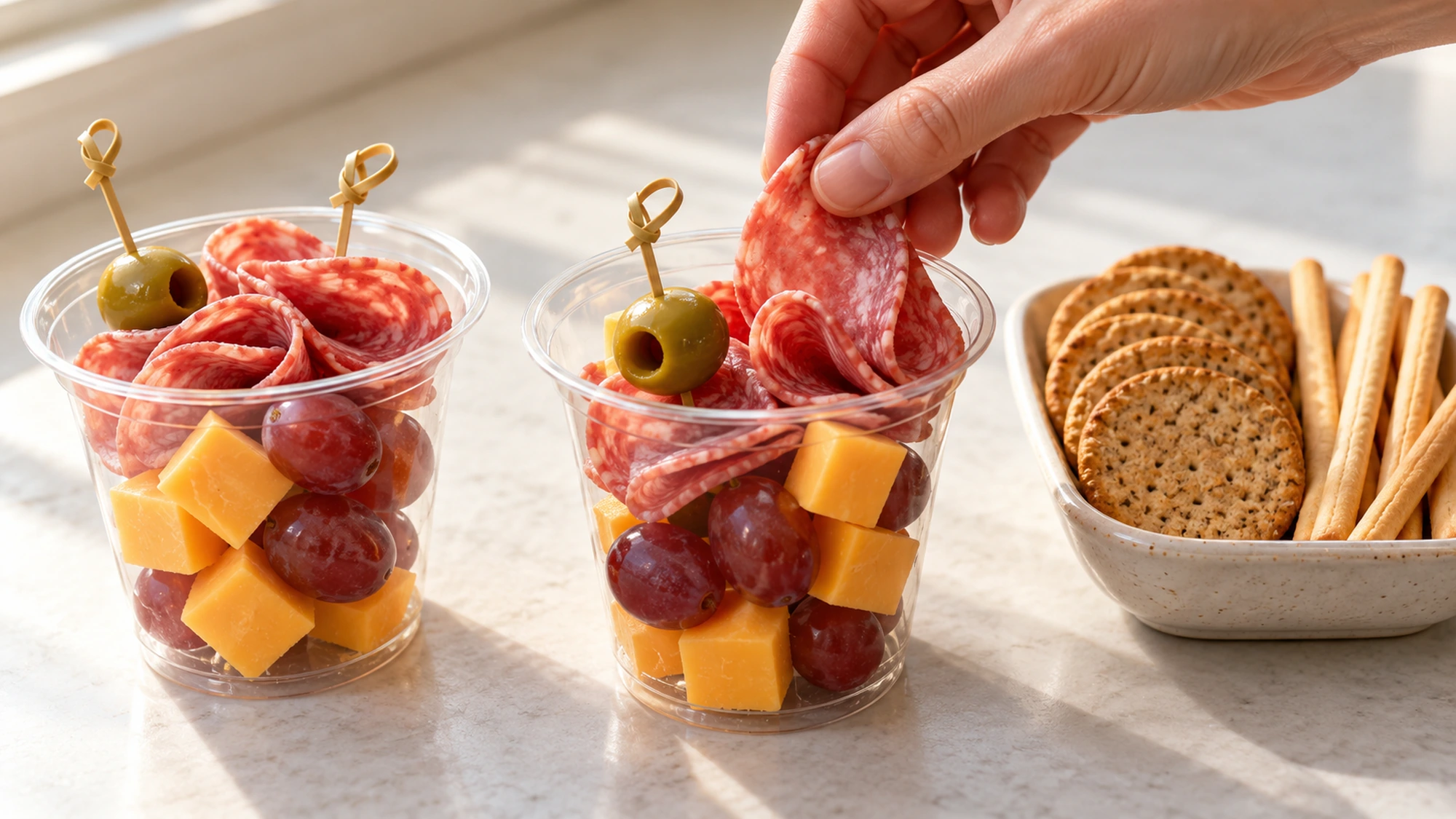
Build the chilled part first, then tuck in the crackers and breadsticks just before the cups reach the table. Dry fruit and well-drained olives help, but timing does the most useful work here.
I prefer one familiar cheese and one cured meat for this version. Sharp cheddar brings enough flavor without needing three specialty wedges, and thin salami folds neatly into a small space. A clear, straight-sided cup lets guests see what they are choosing before picking one up.
Serving suggestions
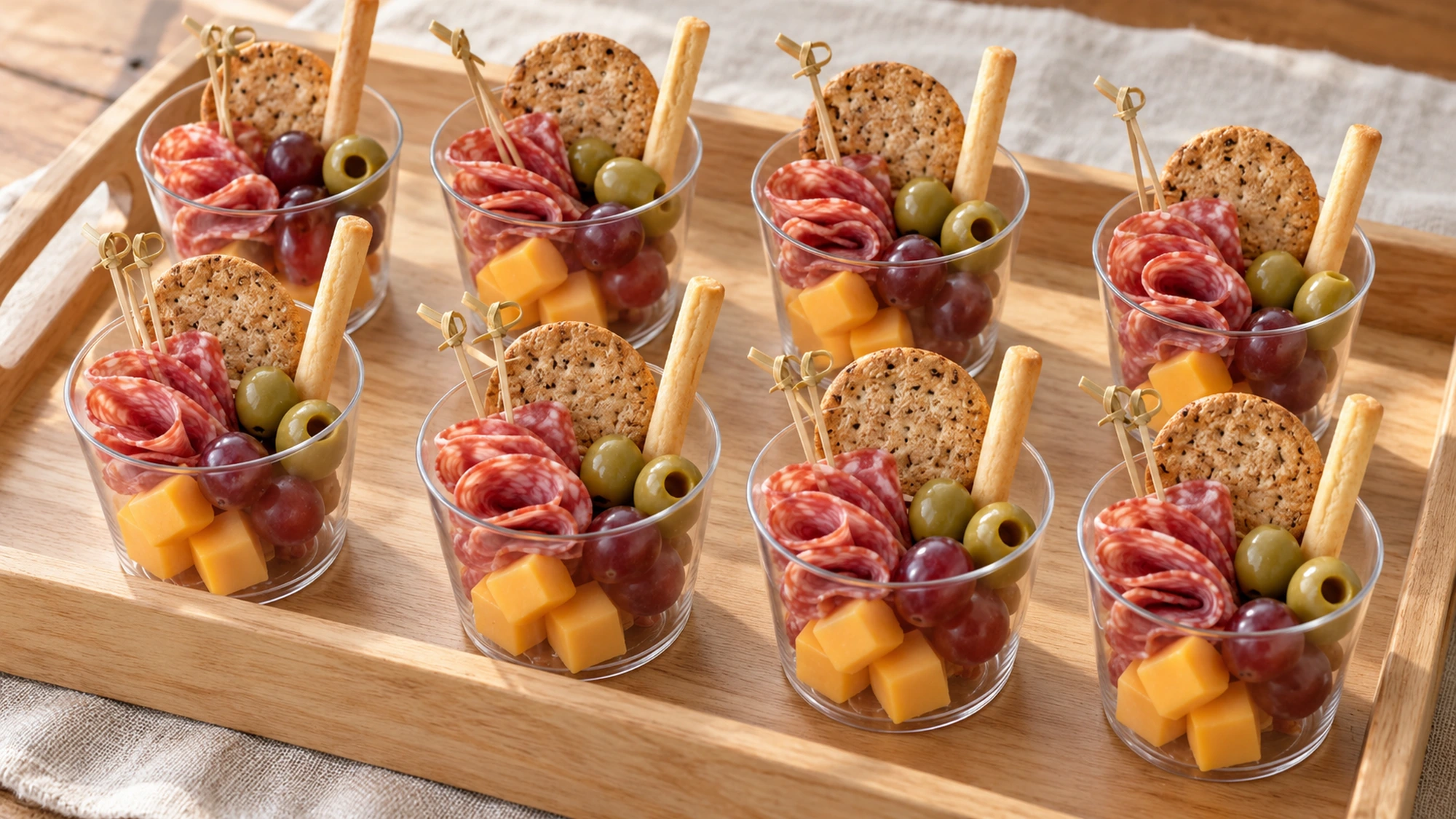
Plan on one cup per person alongside other appetizers. For a gathering with no main meal, offer something more substantial as well; an individual cup is a serving format, not a promise that everyone will be full. Set out napkins and a small dish for used picks. Offer sliced homemade baguette separately if you want another bread option.
- Keep them upright: a rimmed tray makes carrying the cups easier. Leave enough space around each rim for someone to grasp it without touching the food.
- Work ahead thoughtfully: assemble the meat, cheese, grapes, and olives up to 24 hours ahead, cover, and refrigerate at 40°F (4°C) or colder. Keep the crackers sealed separately.
- Serve in small batches: leave spare cups refrigerated. For longer service, use an ice-filled setup that actually keeps the food at 40°F (4°C) or below, checking with a thermometer.
- Watch the clock: discard perishable cups left unchilled for more than two hours, or one hour when the temperature exceeds 90°F (32°C). Refrigerating them later does not restart that clock.
The practical rule for keeping buffet food cold is simple: refill the table from the refrigerator instead of putting every cup out at once.
Variations
Think about texture before adding more ingredients. Firm cheese keeps its shape; wet additions need draining; delicate crackers need a late entrance. I would rather have six ingredients that fit comfortably than a miniature tower that requires structural engineering.
- Change the cheese: replace the cheddar with the same weight of Gouda or Monterey Jack. Cut small, sturdy pieces; very crumbly cheese is harder to spear and tends to disappear into the bottom.
- Change the fruit: use an equal weight of firm, dry strawberries instead of grapes. Trim them shortly before assembling, and avoid very juicy cut fruit when making the cups ahead.
- Make a meat-free version: replace the salami with extra cheese or cooked, chilled chickpeas. This changes both the flavor and nutrition; keep the same refrigeration rules.
- Accommodate gluten-free guests: use labeled gluten-free crackers and breadsticks, check every packaged ingredient, and assemble with clean utensils away from crumbs. A cracker swap alone does not prevent cross-contact.
Choose substitutions for the people eating, then keep the original balance: something savory, something fresh, and something crisp. There is no need to add a decorative ingredient nobody wants.
Health benefits
Cheddar contributes protein and calcium, grapes add fruit, and whole-grain crackers provide some fiber. Those are useful contributions, but cured meat, cheese, olives, and crackers also bring a meaningful amount of sodium. These cups are party food with nutritional trade-offs.
- Know the portion: one cup is estimated at about 350 calories, 15 grams of protein, and 2 grams of fiber. Brands and the weight of the crackers can change those numbers.
- Read the labels: choose crackers with a whole grain near the start of the ingredient list. Compare sodium across meats, cheeses, and olives rather than assuming a particular color or label means less salt.
- Keep allergies visible: the standard recipe contains milk and wheat. Check the salami and cracker packaging for additional allergens, and clearly identify any separately prepared variation.
Enjoy the combination for its flavor and convenience. If sodium is a concern, the package labels and your own dietary guidance matter more than a blanket healthy-snack description.
Motivation conclusion
You do not need elaborate salami roses or matching party supplies to make charcuterie cups inviting. Start with the food your guests enjoy, give everything a little breathing room, and save the crunchy pieces for the finish. I would put the extra effort into keeping the tray cold; the colorful ingredients already handle the presentation.
Charcuterie Cups Recipe

Ingredients
- 8 oz thinly sliced salami 227 g; about 24 slices, depending on diameter and thickness
- 8 oz sharp cheddar cheese 227 g; cut into 32 roughly 3/4-inch cubes
- 12 oz red seedless grapes 340 g; stems removed
- 16 pitted green olives about 80 g drained
- 16 round whole-grain crackers about 112 g; 2 per cup
- 8 thin plain breadsticks about 32 g; 1 per cup
Equipment
- 8 clear 9-ounce cups
- 16 cocktail picks, about 4 inches long
- Rimmed serving tray
- Knife and cutting board
- Colander and clean paper towels
Instructions
- Wash your hands and clean the work surface. Rinse the grapes under running water and pat them completely dry. Drain the olives and pat dry.
- Set eight clean 9-ounce cups on a rimmed tray. Divide the grapes evenly among them, about 1 1/2 ounces (42 g) per cup. Cut the cheese as directed.
- Divide the salami evenly into eight portions, about 1 ounce (28 g) each. Fold the slices loosely into quarters or ribbons and tuck them into the cups. Add four cheddar cubes and two olives to each cup. Place two 4-inch cocktail picks in each cup for serving, keeping the pointed ends inside the cup.
- If not serving immediately, cover the cups and refrigerate at 40°F (4°C) or colder for up to 24 hours. Keep the crackers and breadsticks in their sealed package at room temperature.
- Immediately before serving, tuck two crackers and one breadstick into the back of each cup. Keep spare cups refrigerated. Discard perishable cups after more than 2 hours unchilled, or 1 hour above 90°F (32°C).
Nutrition
Video
Notes
Tried this recipe?
Let us know how it turned out!Emily Parker is DISHORA’s recipe-writing persona, bringing a warm, practical voice to everyday cooking. Her focus is simple ingredients, comforting flavors and clear steps that make a dish feel approachable. From cozy dinners to something sweet, Emily’s recipes invite readers to try something delicious and make it their own.