
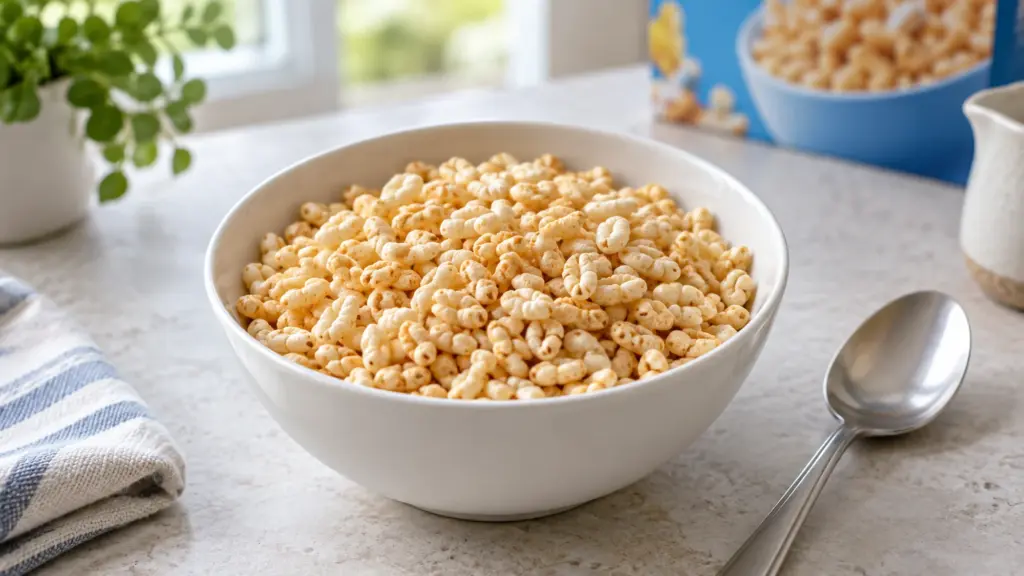
The box says rice, the cereal looks wonderfully simple, and a bowl takes seconds to fill. But if gluten matters at your table, the question “are rice krispies gluten free” needs an ingredient-list answer rather than a glance at the name.
Original Rice Krispies cereal sold in the United States should not be treated as gluten-free: the current manufacturer’s ingredient list includes malt flavor. Barley-derived malt is a gluten source. Formulas vary by country and product, so check the exact package rather than assuming all rice cereals are alike.
I prefer a clear answer before the milk goes in. A few label checks can keep breakfast straightforward, and the same checks help when choosing cereal for homemade marshmallow treats.
Are Rice Krispies gluten free in the United States?
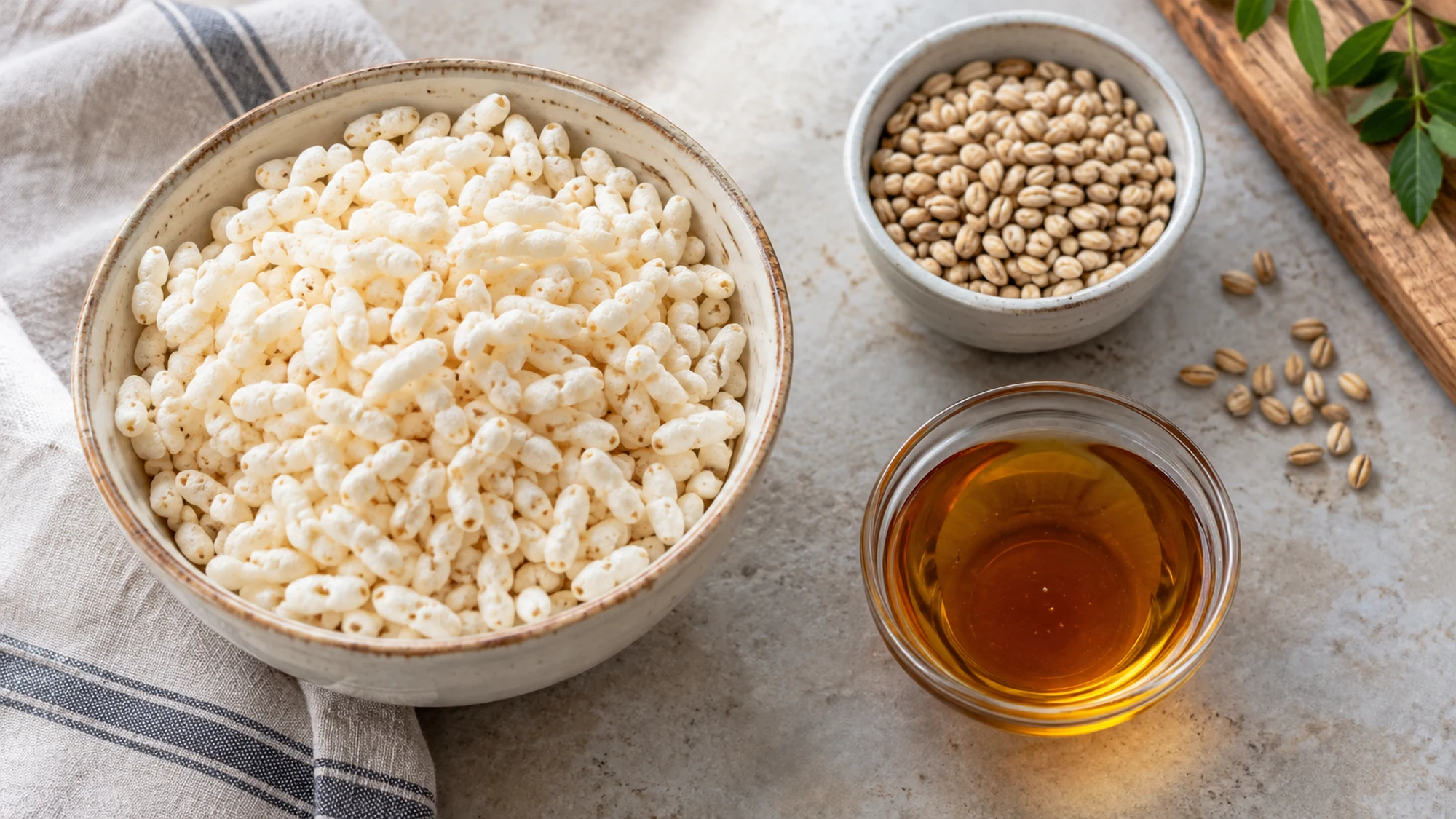
The current WK Kellogg U.S. Rice Krispies product page lists rice, sugar, salt and malt flavor before its vitamins and minerals. Rice itself is not the problem. The relevant distinction is between a naturally gluten-free grain and a finished cereal made with additional ingredients.
Malt flavoring ordinarily refers to barley malt; the American Gastroenterological Association’s label-reading guidance includes malt, malt flavoring and malt extract among ingredients to avoid. A small amount used for flavor is still an ingredient that needs attention.
Why the country and exact product matter
Do not transfer a verdict from one country’s box to another. The Canadian Rice Krispies ingredient list includes barley malt extract. The current UK manufacturer page lists barley malt extract and wheat gluten. These are specific product examples, not permission to rely on an old photo while shopping.
| Product | Relevant check | What to do |
|---|---|---|
| Original U.S. Rice Krispies | Malt flavor in current list | Choose a gluten-free alternative |
| Canadian Rice Krispies | Barley malt extract | Do not assume gluten-free |
| UK Rice Krispies | Barley malt and wheat gluten | Do not assume gluten-free |
| Other crisped rice cereal | Exact ingredients and claim | Assess the individual package |
| Packaged cereal snack bar | Its own finished-product label | Check separately from cereal |
Manufacturers can reformulate products. Read the package you will actually eat, including the variety, country information and ingredient sublists. I’d use a website to clarify uncertainty, then make sure its product matches the box in my hand.
Wheat-free is not the same as gluten-free
Under U.S. labeling rules, wheat is a major allergen; barley and rye are not among the nine named major allergens. That means an absent “Contains wheat” statement does not settle the gluten question. The FDA’s food-allergen guidance identifies the major allergens and explains gluten separately.
For FDA-regulated foods, a gluten-free claim has ingredient restrictions and requires any unavoidable gluten to be below 20 parts per million. FDA’s gluten-free questions and answers also explain that barley malt extract cannot be used in a food bearing that claim. Do not interpret the threshold as permission to add a little ordinary barley malt.
- Look for an explicit gluten-free claim on the specific cereal.
- Read the full ingredient list, including parentheses after flavorings or cereal components.
- Check malt flavor, barley malt extract and wheat ingredients carefully.
- If the information is unclear, ask the manufacturer before eating the product.
Choose cereal and treats as separate products
A packaged snack bar is a separate formula from the breakfast cereal, even when the branding looks familiar. A gluten-free claim on one bar does not make every product under that brand suitable. Equally, do not assume a current bar’s formula from an old article about the cereal.
For homemade treats, start with crisped rice cereal explicitly labeled gluten-free and check the marshmallows, flavorings and toppings too. The same careful shopping approach applies to choosing gluten-free bread: the finished product’s information matters more than a familiar appearance.
Keep gluten-free cereal separate in the kitchen
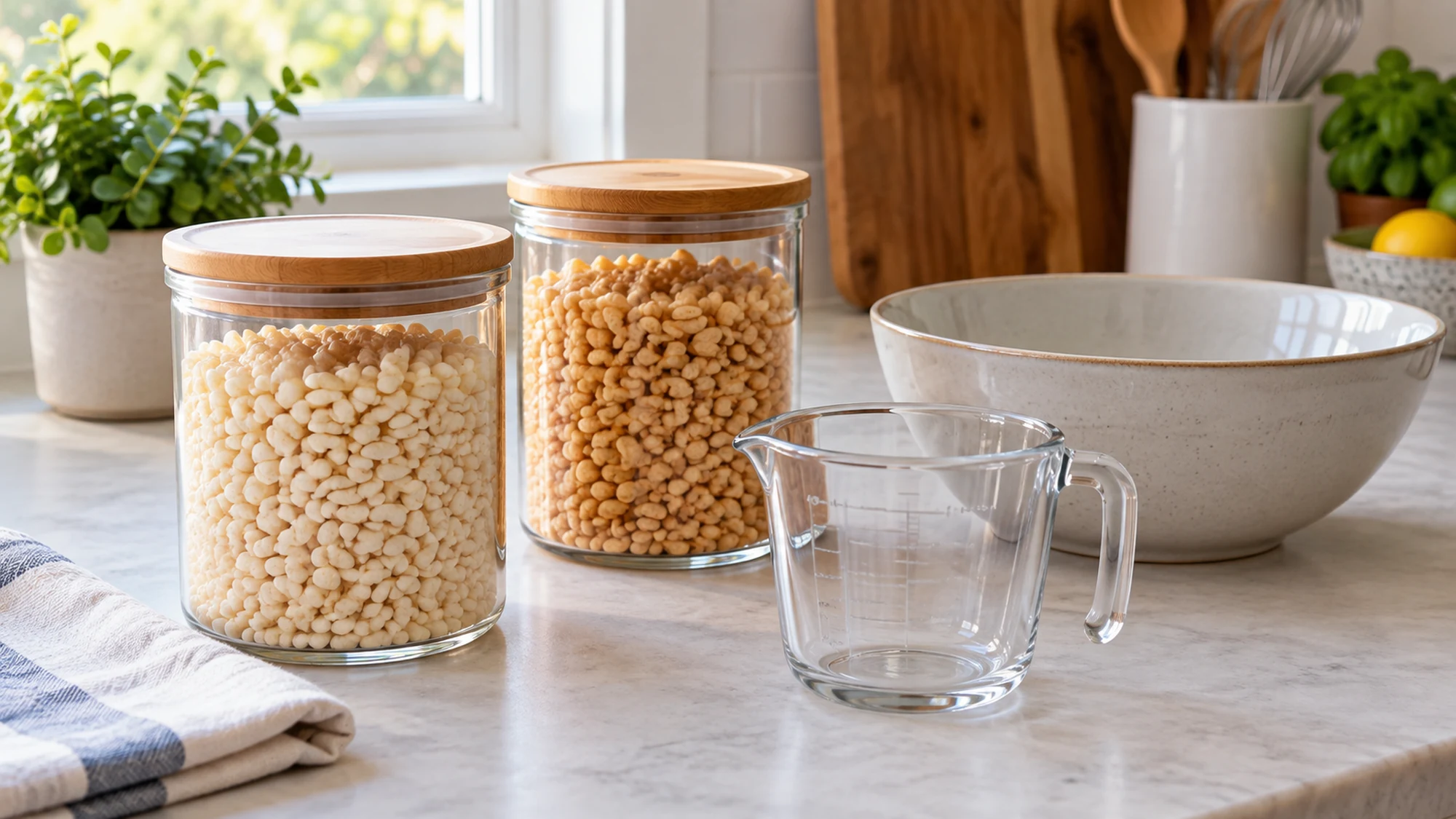
An appropriate cereal can still come into contact with gluten during preparation. NIDDK recommends separate storage and preparation for gluten-free food and avoiding foods with uncertain gluten content. Clean bowls, utensils and work surfaces are part of that practical routine.
- Use a clean scoop rather than one shared with a wheat-containing cereal.
- Keep open cereal away from bread crumbs and flour.
- Ask about both ingredients and preparation when someone else makes the treats.
I’d choose a clearly labeled gluten-free crisped rice cereal when gluten avoidance is required. Original U.S. Rice Krispies is not that choice. Check country, variety and finished-product label each time, and keep snack bars and homemade treats on their own ingredient-checking list.
Sources
- WK Kellogg: current U.S. Rice Krispies ingredients
- WK Kellogg Canada: Rice Krispies ingredients
- Kellogg’s UK: Rice Krispies ingredients
- American Gastroenterological Association: label reading
- FDA: gluten-free labeling questions and answers
- FDA: food allergens
- NIDDK: celiac disease food preparation guidance

Emily Parker is DISHORA’s recipe-writing persona, bringing a warm, practical voice to everyday cooking. Her focus is simple ingredients, comforting flavors and clear steps that make a dish feel approachable. From cozy dinners to something sweet, Emily’s recipes invite readers to try something delicious and make it their own.