
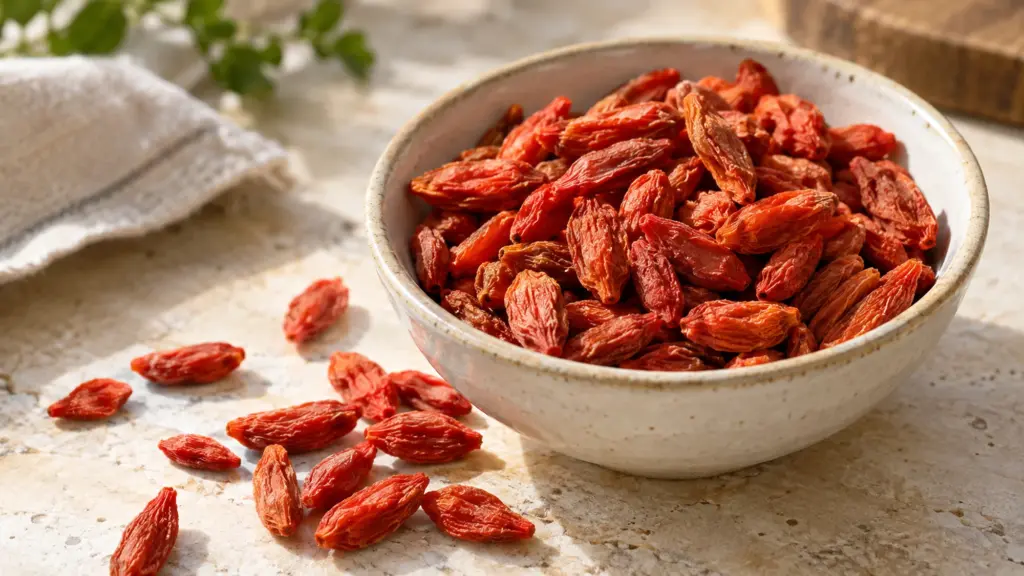
The small red berries in the dried-fruit aisle can look like a shortcut to a healthier breakfast. Goji berries do bring a distinctive chewy texture and tart sweetness, but the bigger health promises deserve a closer look.
Goji berry benefits include adding fruit variety and carotenoids such as zeaxanthin to meals. A small human trial found changes in an eye-health biomarker, but that does not prove goji berries prevent vision loss, treat disease or offer benefits everyone will notice.
I would choose them because I enjoy their flavor, with research as useful context rather than a reason to force down an expensive food. Their place in your cupboard depends on taste, budget and a few important safety details.
What are goji berries?
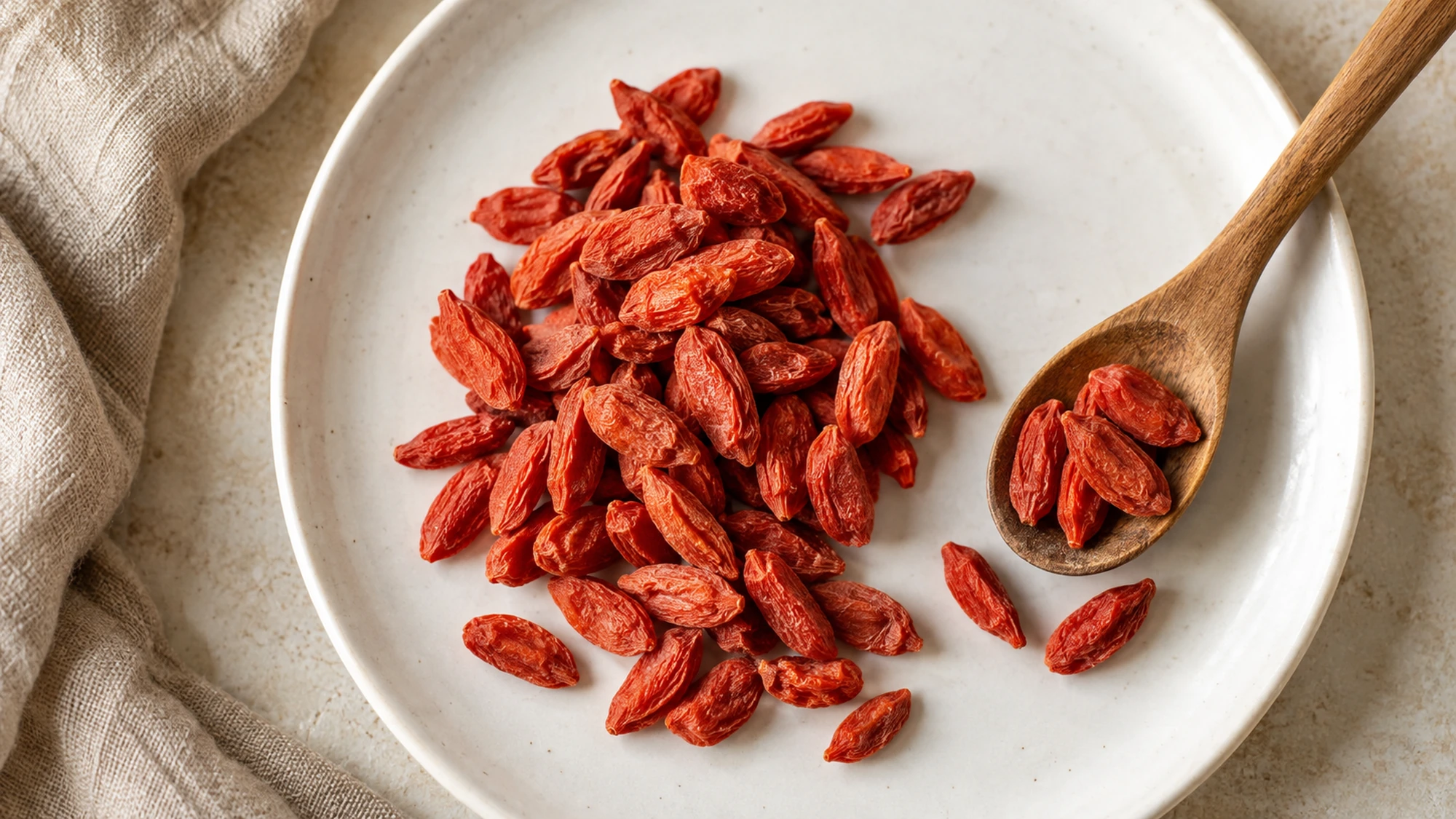
Goji berries, also called wolfberries, are fruits associated with Lycium species. The dried berries sold for snacking are usually orange-red, wrinkled and slightly chewy. Their sweetness has a tart, sometimes earthy edge that makes a small scattering noticeable.
They are one option in the dried-fruit family, rather than a necessary food group of their own. If you like raisins, chopped apricots or dried cranberries, you already have other ways to add contrasting texture. Goji berries earn their place when their particular flavor suits the meal.
- Eat the dried berries as a small topping.
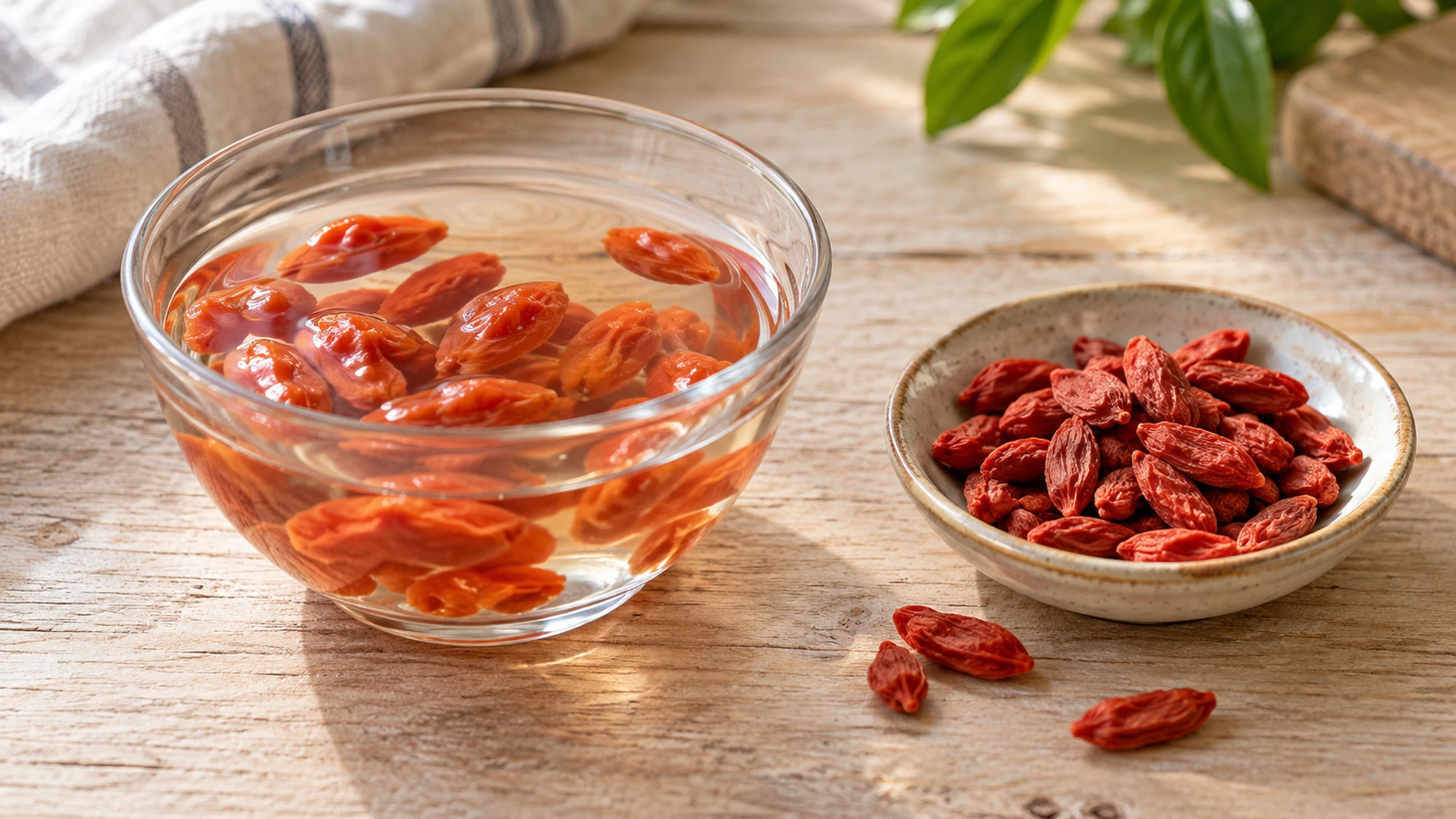
- Soften firm berries in a little water before adding them to food.
- Check the package for ingredients, serving size and storage instructions.
Goji berry benefits: evidence and product forms
In a randomized pilot trial published in 2021, 27 adults aged 45–65 consumed either 28 grams of goji berries or a lutein-and-zeaxanthin supplement five times weekly for 90 days. The goji group had increases in macular pigment optical density at certain measured retinal locations.
The trial was small and unmasked: participants knew which intervention they received. Macular pigment is a biomarker, not a diagnosis or a count of people protected from blindness. The study did not establish that berries prevent age-related macular degeneration, and its serving schedule is not a universal recommendation.
A whole dried berry, a sweetened drink and an isolated extract can differ in ingredients and concentration. Read the product you actually intend to use rather than carrying a claim from one form to another.
| Product | Useful label check | Practical consideration |
|---|---|---|
| Dried berries | Ingredients and portion size | Easy to scatter over a meal |
| Fruit blend | Other fruits and added ingredients | Goji may be only part of the mix |
| Goji juice | Added sugars and serving size | A drink differs from whole dried fruit |
| Extract or capsule | Exact ingredients and strength | Cannot be assumed equivalent to berries |
| Chocolate-coated berries | Full ingredient list | Treat as a different food product |
Make the flavor work in an ordinary meal
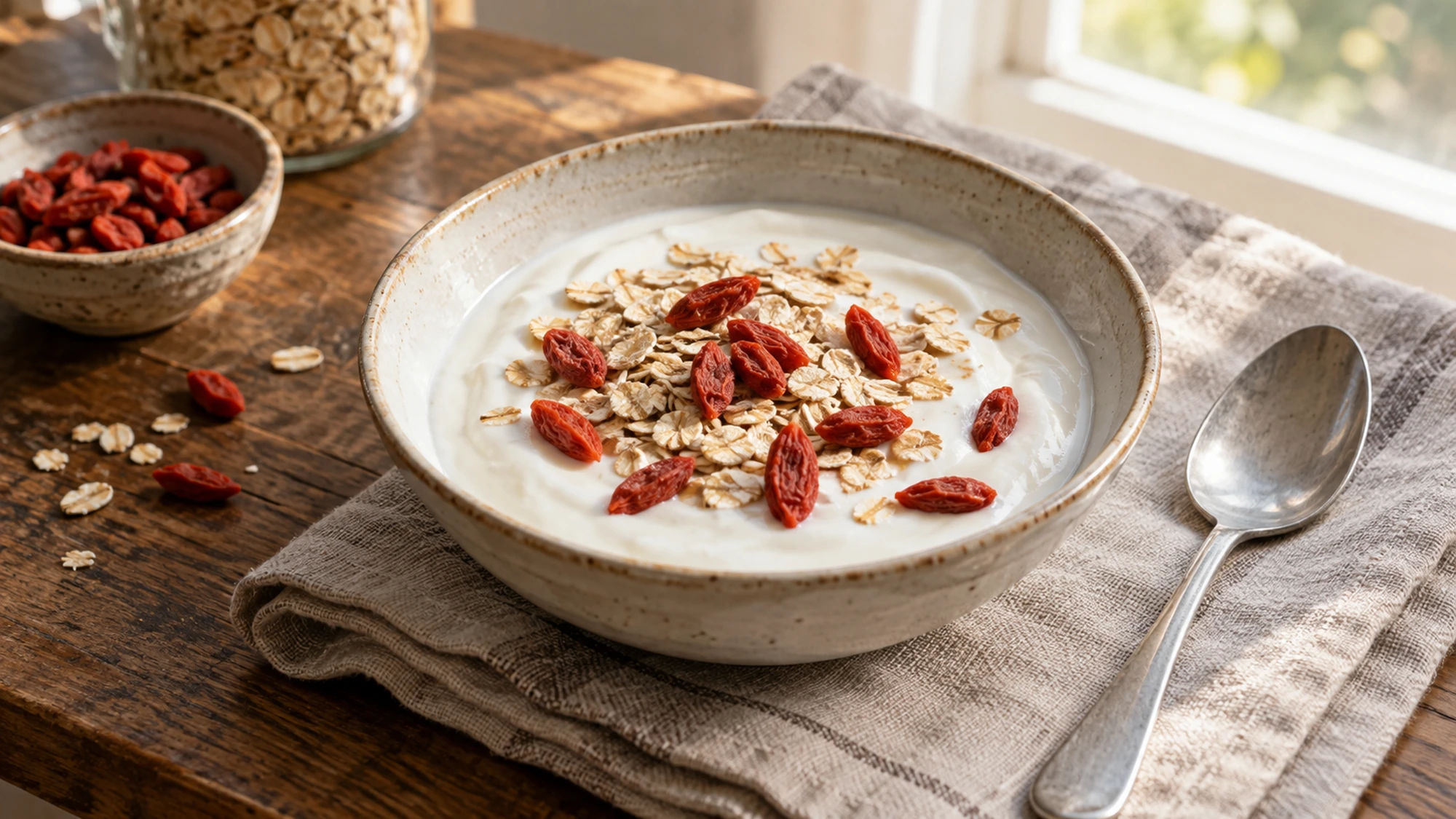
A little goes a long way in plain yogurt, oatmeal or a mixture of nuts and seeds. If the berries feel too firm, soften only the amount you plan to eat. Their tartness can be a pleasant contrast to creamy or mildly sweet foods.
For another flavor combination, Dishora’s tahini date bark guide discusses a related video variation with goji berries, nuts and honey. I would keep a topping modest so the berries add contrast without hiding the food beneath them.
- Scatter softened berries over warm oatmeal.
- Mix a few with nuts or seeds for varied texture.
- Use them in a savory grain bowl when a tart-sweet note fits.
- Compare package prices with dried fruit you already enjoy.
Check medicines and allergies first
The Memorial Sloan Kettering Lycium resource describes reported interactions with warfarin, including increased bleeding risk, and allergic reactions. If you take warfarin, talk with the clinician managing it before eating goji products; a fruit or herbal tea label does not remove that concern.
People with relevant food allergies should be cautious, and anyone considering a concentrated supplement should review it with a pharmacist or clinician. These cautions matter more than trying to match an amount from a study. For persistent symptoms or a vision change, seek appropriate care instead of trying to manage it with berries.
The practical takeaway on goji berry benefits
Goji berries can be an enjoyable ingredient, especially if you like chewy fruit and a little tartness. Keep them sealed according to the package directions, and avoid buying a large bag until you know whether you enjoy the texture.
Treat the research as preliminary and the product as food. There is no need to make every breakfast revolve around it. A varied eating pattern leaves room for goji berries, other fruits or a completely different topping that suits your preferences and budget.
Enjoy goji berries if you like them, keep the eye-health evidence in perspective, and check the warfarin interaction before adding them to your routine.
Sources
- Randomized goji berry pilot trial (2021)
- Memorial Sloan Kettering: Lycium, interactions and adverse reactions

Emily Parker is DISHORA’s recipe-writing persona, bringing a warm, practical voice to everyday cooking. Her focus is simple ingredients, comforting flavors and clear steps that make a dish feel approachable. From cozy dinners to something sweet, Emily’s recipes invite readers to try something delicious and make it their own.