
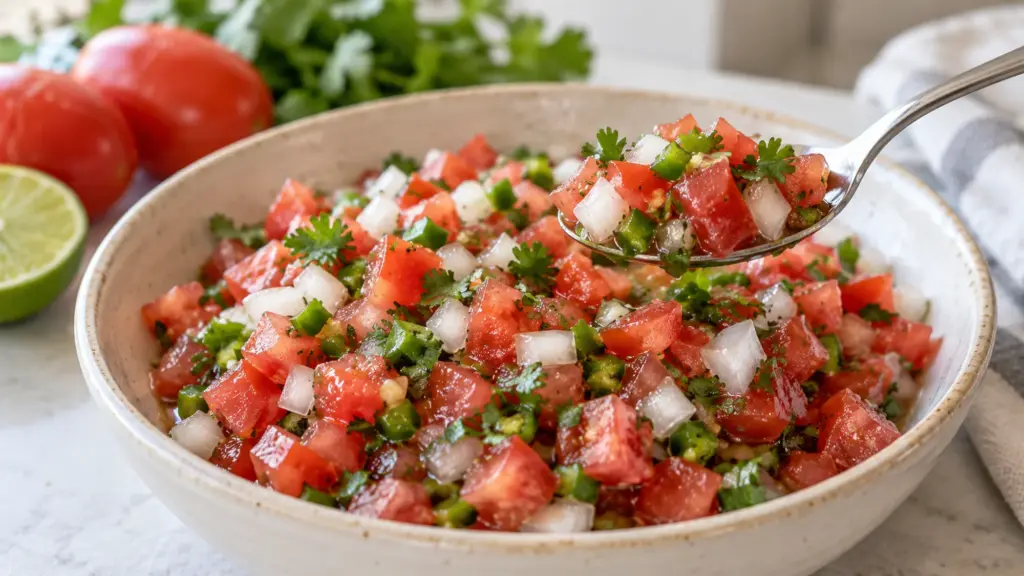
A spoonful of fresh salsa can rescue a plate that feels a little flat. Pico de gallo is the crisp, uncooked mix of tomato, white onion, fresh chile, cilantro, lime, and salt that does the job without a blender. Keep the pieces small enough to sit together on a spoon, then give the bowl a brief rest so the flavors meet.
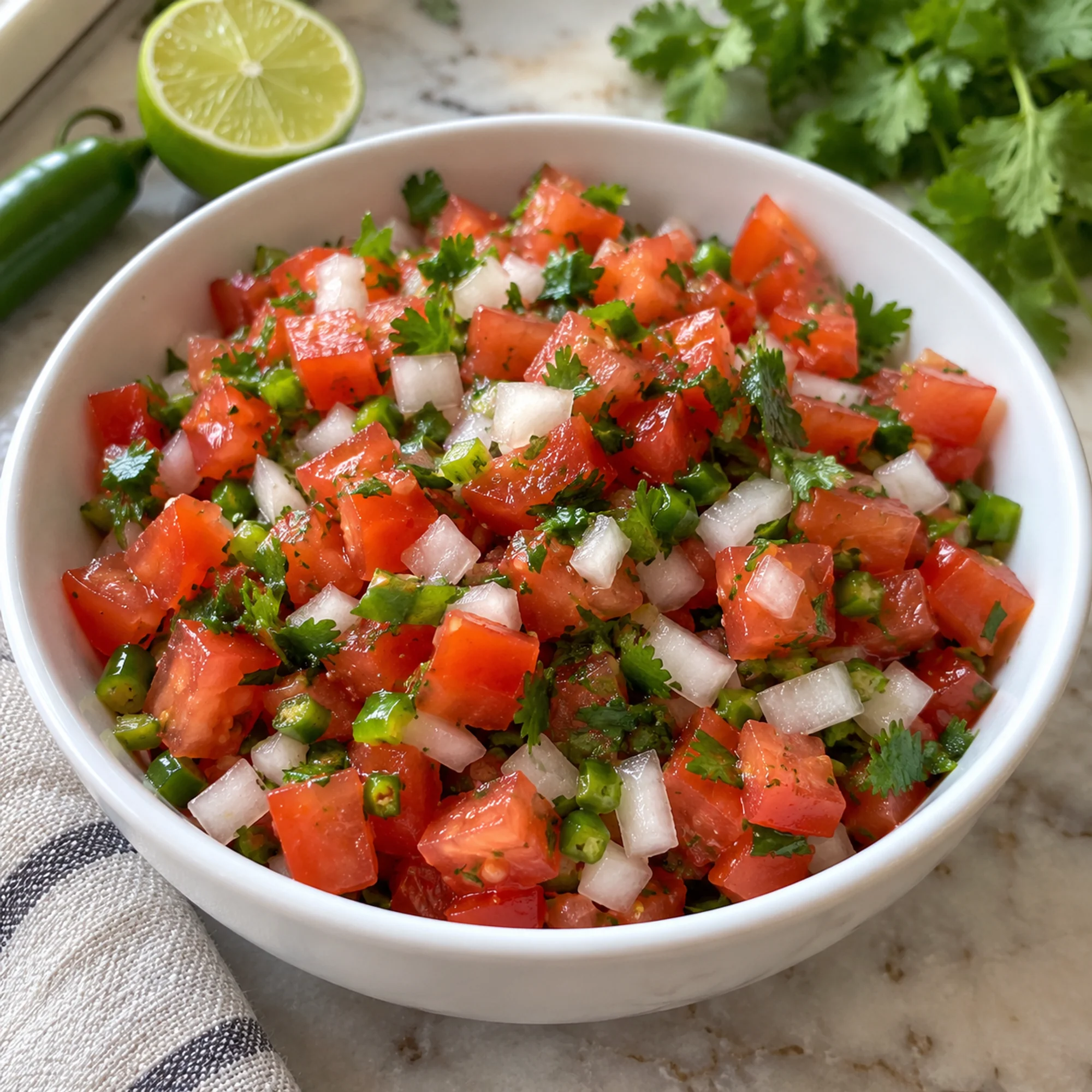
Use ripe but firm tomatoes, dice the onion smaller than the tomato, and add lime and salt just before a short rest. Spoon off excess liquid only when you need a drier topping.
I prefer a serrano for its clean heat, but a jalapeño works at the same measured amount. Remove the seeds and pale ribs if you want less heat; the exact intensity still varies by pepper.
Choose Roma or another firm tomato when possible. Juicy slicing tomatoes taste good too, but they release more liquid.
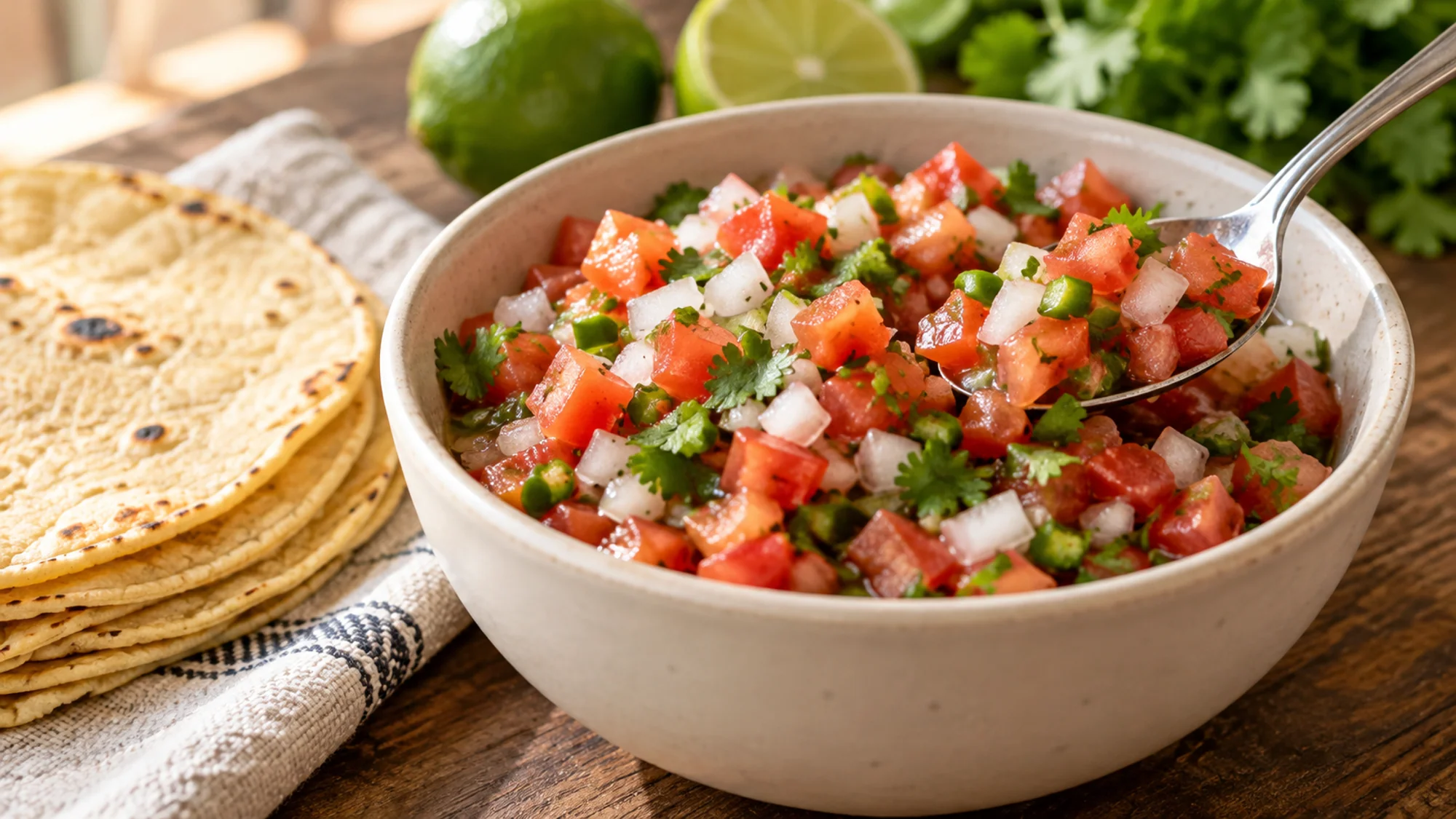
Serving suggestions that let pico de gallo stay crisp
Pico de gallo belongs wherever a cool, acidic bite will balance warm food. Spoon it over tacos, eggs, grilled fish, or beans just before serving. Add it to our sweet potato black bean enchilada skillet for a cool contrast.
- With chips or warm tortillas, keep a little of the tomato juice in the bowl so every scoop tastes lively.
- For tacos or a toasted sandwich, lift the salsa with a slotted spoon to avoid soaking the bread or tortilla.
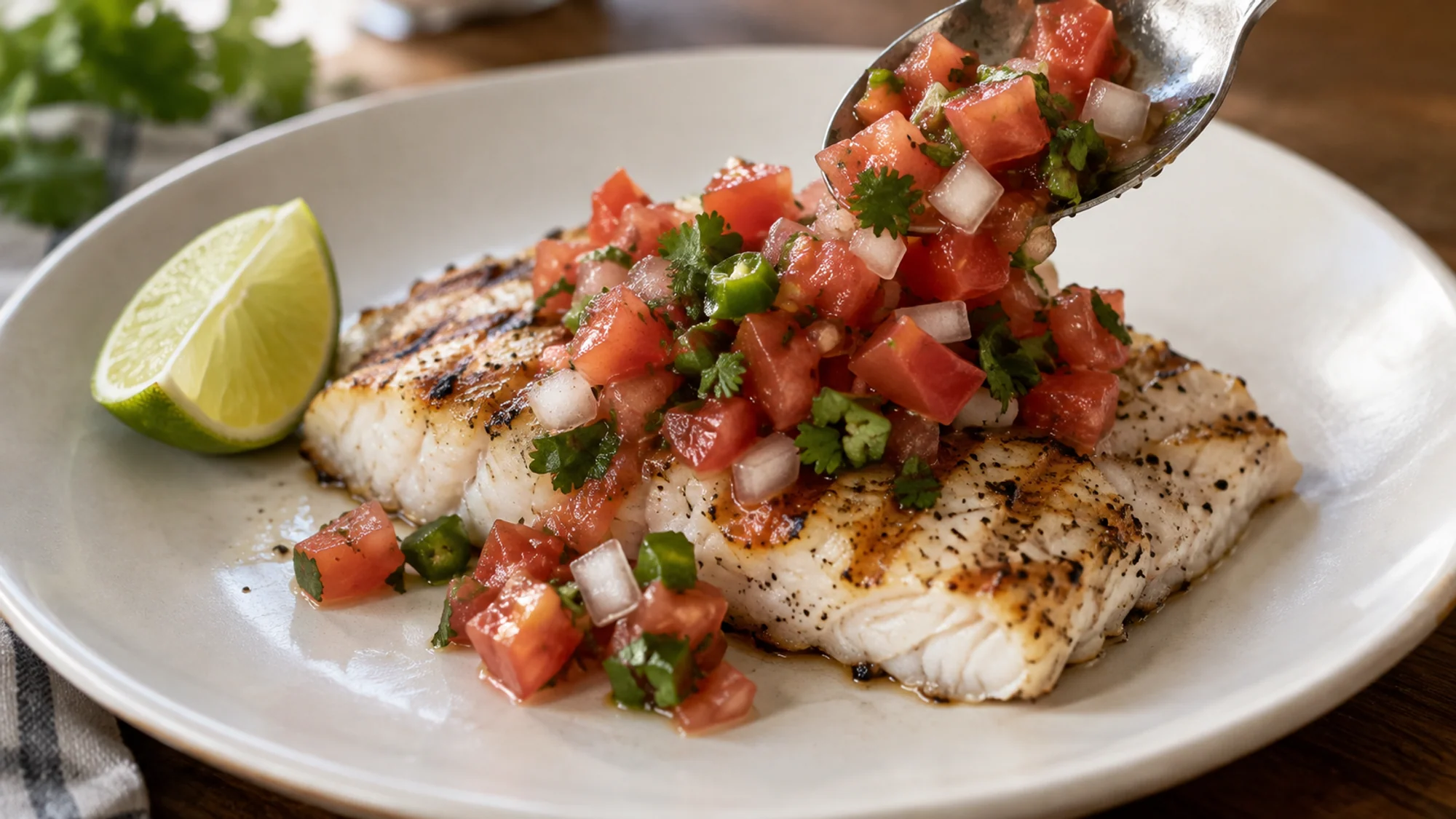
- On grilled fish, use a small spoonful after cooking, as shown in the serving image, so the herbs remain fresh.
A ten-minute rest is enough to soften the sharp edge of the onion. If you prepare components ahead, chop and refrigerate them separately, then combine shortly before eating.
Keep the juice for a dipping bowl; drain a spoonful for a crisp topping. The same salsa can serve both jobs without changing its ingredients.
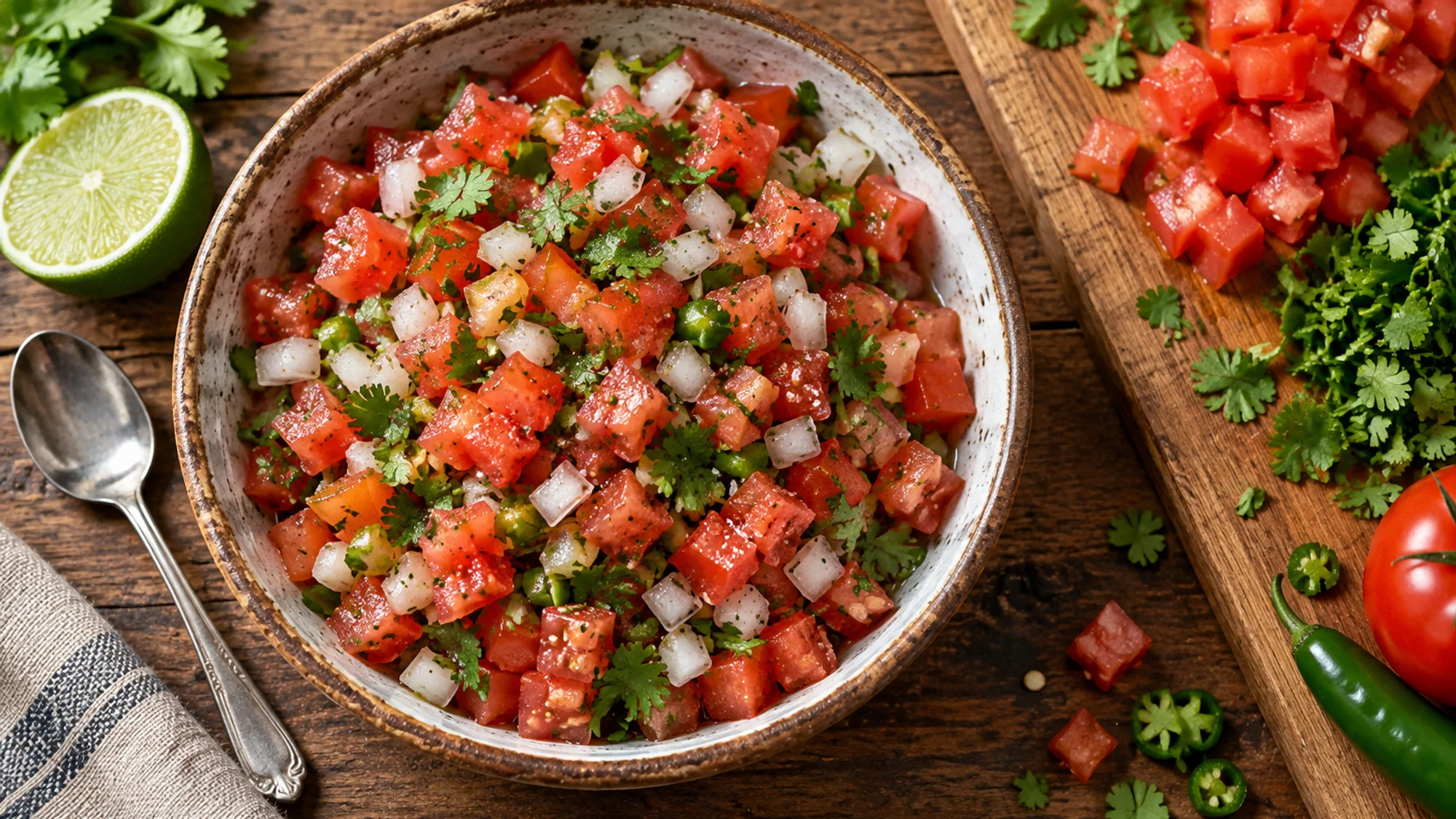
Variations without losing the fresh-salsa character
The useful changes are small. Pico de gallo should still look like distinct pieces of tomato, onion, chile, and herbs when it reaches the plate. Blending it makes a different salsa, which may be delicious but will not give the same crunch.
- Use jalapeño instead of serrano for a different pepper flavor; start with half and taste before adding more.
- Choose red onion if that is what you have, though white onion gives the cleanest traditional look and bite.
- Replace part of the cilantro with finely chopped scallion greens if cilantro is not for you; the result is a variation rather than a classic version.
A pinch more salt can make ripe tomatoes taste fuller, but add it gradually. Lime should brighten the bowl, not turn the chopped vegetables into a sour pickle.
Change the pepper or onion to suit the table, then taste for salt and lime after resting. Keep the vegetables hand-chopped for the defining texture.
Health benefits and sensible handling
This raw salsa adds vegetables, a little fiber, and fresh flavor for relatively few calories. Tomatoes also supply carotenoids, and the portion size matters when reading any nutrition estimate.
Because nothing is heated, wash the tomatoes, pepper, cilantro, and lime before cutting, and use a clean knife and board. The four food-safety steps are a useful reminder when raw vegetables share a kitchen with meat or fish. Refrigerate the finished salsa promptly and use it within two days for the best texture.
- Do not treat the lime juice as a preserving step; this is a fresh refrigerated salsa.
- Keep the salsa cold while waiting to serve and use a clean utensil for each refill.
- If you want shelf-stable salsa, use a tested canning recipe instead; the canning guidance explains why ingredient ratios matter.
Fresh pico de gallo brings color and crunch to a meal, but it still needs clean produce, prompt refrigeration, and sensible portions of what you serve with it.
Motivation conclusion: let the tomatoes lead
The appeal here is how little stands between the ingredients and the plate. A sharp knife, a bowl, and ten minutes of resting give you something brighter than a jarred sauce when tomatoes are good.
I would chop the vegetables evenly, keep the serrano small, and hold back a little salt until the final taste. Then the salsa can go straight to the table or over the warm dish that needs that fresh finishing spoonful. The card below keeps the quantities and sequence in one place.
Pico de Gallo Recipe
Pico de Gallo Recipe

Ingredients
- 4 medium Roma tomatoes about 650 g, ripe but firm, diced
- 1/2 medium white onion about 100 g, finely diced
- 1 serrano chile about 20 g, finely chopped; remove seeds for less heat
- 1/3 cup fresh cilantro leaves and tender stems chopped
- 2 Tbsp fresh lime juice about 1 lime
- 1/2 tsp fine salt or to taste
Equipment
- Sharp knife and clean cutting board
- Medium mixing bowl
- Spoon
Instructions
- Wash the tomatoes, chile, cilantro, and lime under running water. Dice the tomatoes into small even pieces. Finely dice the onion and serrano, and chop the cilantro.
- Add the tomatoes, onion, serrano, and cilantro to a medium bowl. Pour in the lime juice and sprinkle with the salt. Toss gently until everything is evenly coated.
- Let stand for 10 minutes, then taste and adjust lime or salt if needed. Spoon off some tomato liquid only if serving as a drier topping. Serve promptly or refrigerate covered.
Nutrition
Notes
Tried this recipe?
Let us know how it turned out!Emily Parker is DISHORA’s recipe-writing persona, bringing a warm, practical voice to everyday cooking. Her focus is simple ingredients, comforting flavors and clear steps that make a dish feel approachable. From cozy dinners to something sweet, Emily’s recipes invite readers to try something delicious and make it their own.