
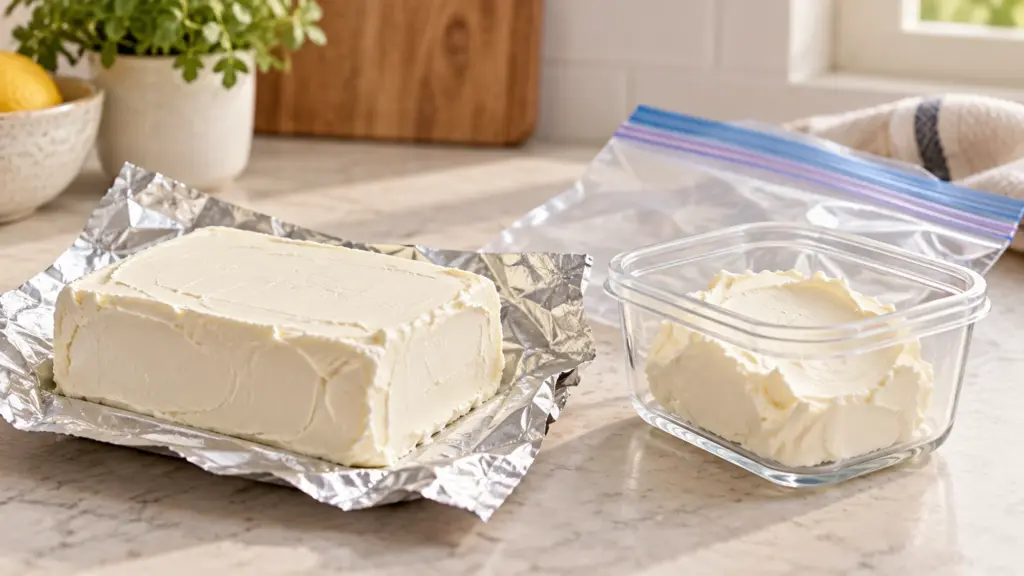
Half a block of cream cheese can feel too useful to waste and too much to finish today. Before tucking it into the freezer, think about the next job you want it to do. A silky bagel spread and an ingredient stirred into another dish ask different things of it.
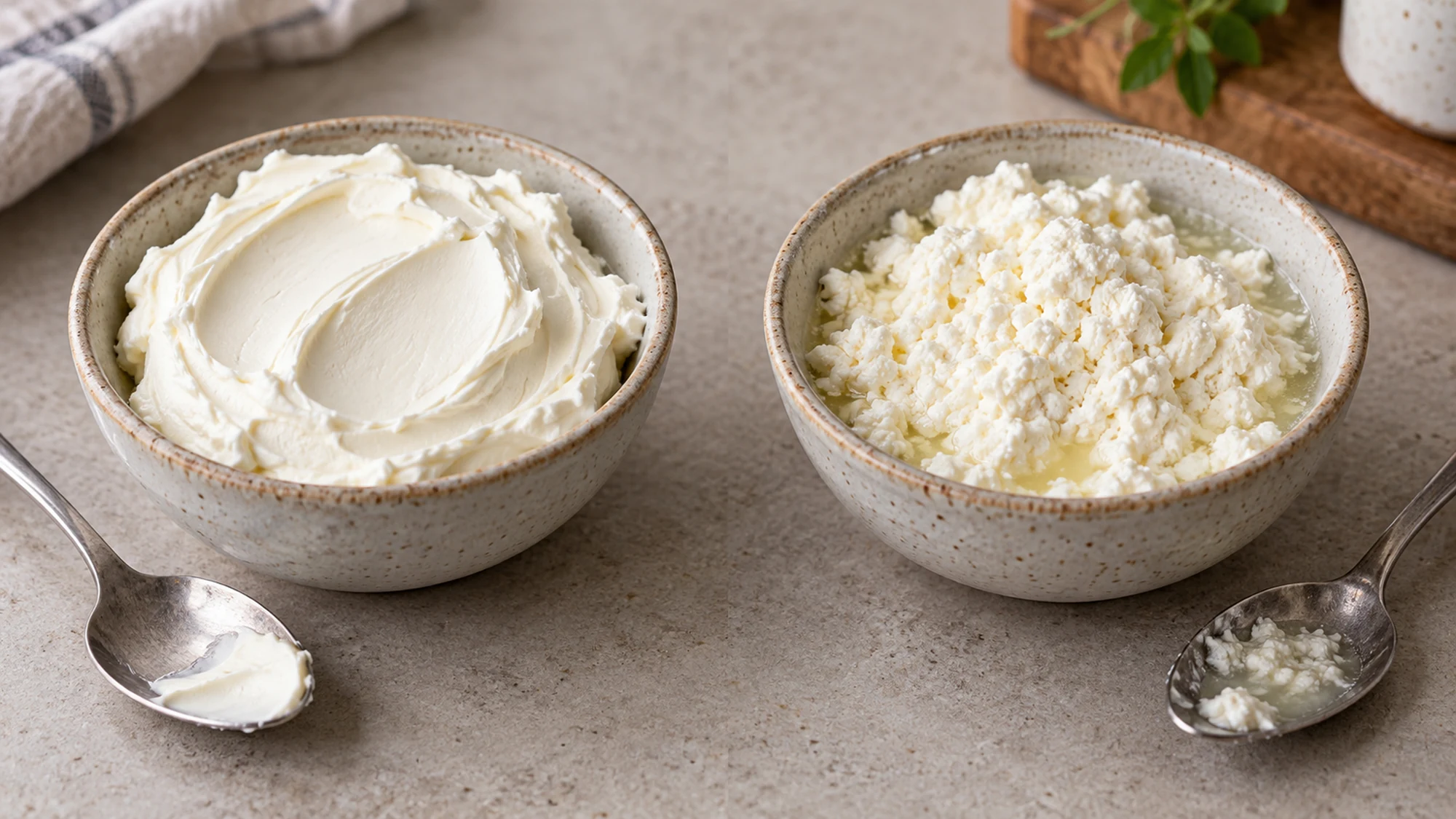
Can you freeze cream cheese? Yes, if it has been handled safely, but expect a possible grainy, watery or crumbly texture after thawing. Fresh cream cheese is the more dependable choice when smoothness is central to the finished food.
Why cream cheese does not freeze especially well
The National Center for Home Food Preservation’s cheese guidance explicitly says cream cheese does not freeze well. That is a quality warning, not a reason to assume every frozen portion becomes unsafe. Freezing and liking the thawed result are separate questions.
Ice formation can disrupt a smooth dairy mixture, leaving moisture separated from the thicker part. Stirring may bring some of that liquid back in, but it cannot guarantee the original spreadable texture. I’d judge the intended use before saving a large amount.
- For spreading: fresh is the more reliable option.
- For a texture-sensitive dessert: use the product specified by the recipe.
- For an experimental cooked use: try a small safely handled portion first and expect variation.
Can you freeze cream cheese for your next dish?
The deciding factor is usually how noticeable a texture change would be. This table is a practical decision aid, not a promise that heating or beating will repair thawed cream cheese.
| Intended use | Practical choice | Reason |
|---|---|---|
| Bagels or toast | Prefer fresh | A grainy or watery spread is readily noticeable. |
| Smooth cold dip | Prefer fresh | Separation may alter the expected consistency. |
| Frosting or cheesecake | Follow a reliable recipe’s product guidance | These preparations depend on texture and structure. |
| Mixed cooked dish | Consider only a small trial portion | Other ingredients may make changes less obvious; results vary. |
For instance, Dishora’s pickle dip relies on a creamy, scoopable base. I’d keep fresh dairy for that kind of texture-led dish. Do not replace its ingredients automatically with a thawed product and expect the same result.
Portion and package it before freezing
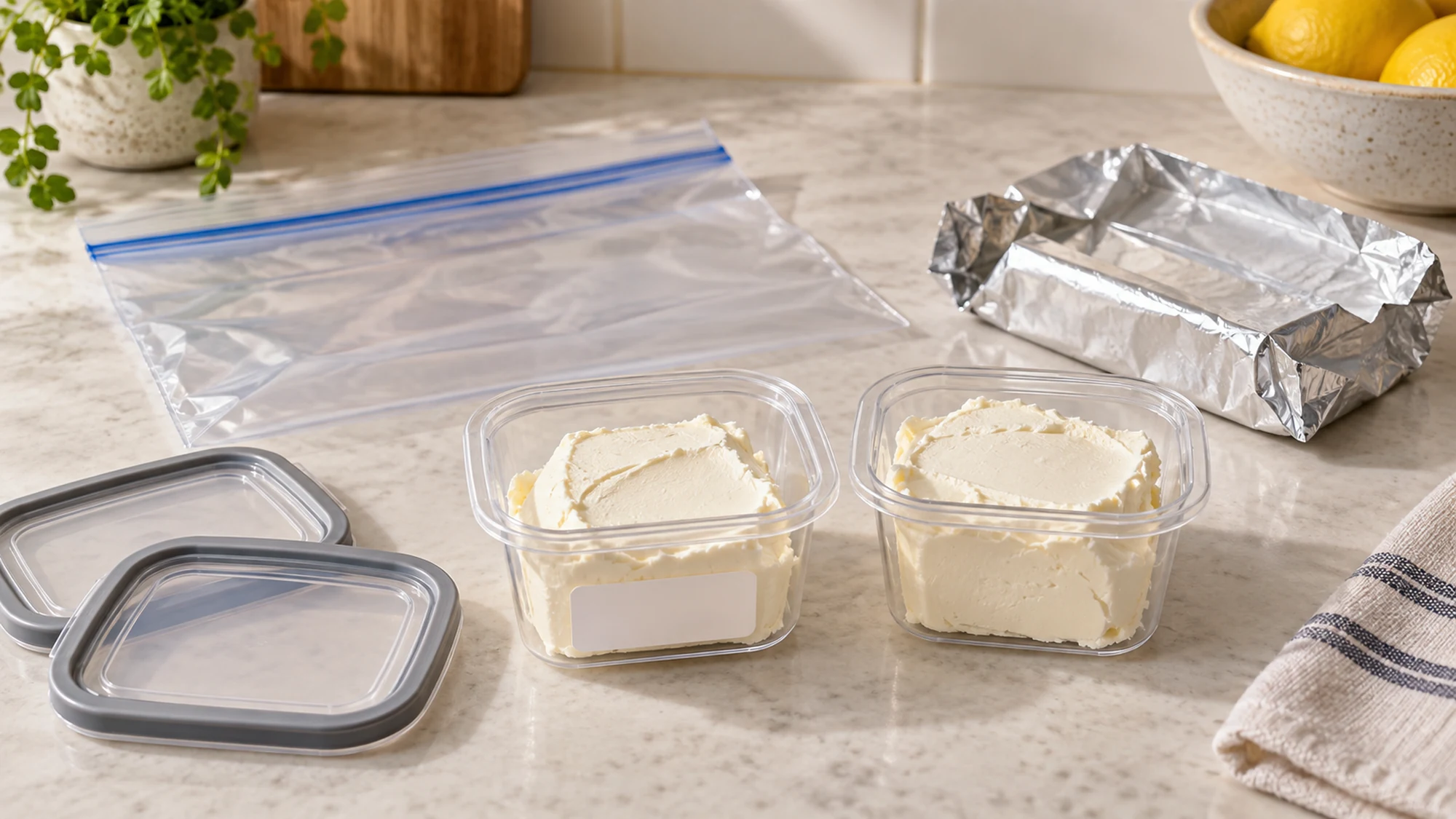
Start with cream cheese that is still in good condition and has stayed properly refrigerated. Freezing is a storage choice, not a rescue for dairy that has been mishandled. Use clean utensils and separate the amount you expect to use in one go.
- Check the package for any manufacturer-specific freezing or handling instructions.
- Divide into useful portions while keeping preparation brief.
- Put each portion in a suitable freezer-safe container or moisture-resistant freezer packaging, and close securely.
- Label with the product, portion amount, freezing date and any opening date you need to remember.
- Freeze promptly and keep at 0°F or below.
Small portions make later decisions easier and avoid repeatedly thawing the whole supply. Keep the product’s original information available, particularly if it contains flavorings or allergens. A whipped spread, a block and a reduced-fat product need not respond identically.
Thaw in the refrigerator and check its history
USDA freezing guidance recommends refrigerator thawing and explains that freezing does not reliably destroy microbes. Transfer the sealed portion to a refrigerator at 40°F or below, allowing enough time to thaw. Do not leave it on the counter to speed things up.
Follow the manufacturer’s directions for use after opening or thawing. Freezing does not give an already-open product a brand-new refrigerated life. If the package offers no applicable guidance, avoid inventing an exact number of days; ask the manufacturer about the particular product.
There is also no universal cream-cheese quality deadline established by the sources used here. General freezer charts for hard cheese are not cream-cheese instructions. Use a realistic near-term plan, date the portion and understand that a longer frozen stay cannot improve a texture-sensitive ingredient.

Know when to discard it and choose fresh
The FDA’s safe-storage advice limits time for foods requiring refrigeration to two hours at room temperature, or one hour above 90°F. Discard cream cheese that has exceeded those limits. Smelling or tasting it cannot establish safety.
If mold appears, discard the entire portion. USDA guidance for moldy soft cheese says to discard cream cheese, rather than trimming a spot as you might with certain hard cheeses. Keep graininess from freezing separate from signs of spoilage or an unsafe storage history.
For another example of how dairy products differ, read Dishora’s evaporated milk guide. With cream cheese, my preference is simple: save a small safely handled portion when it has a clear future use, and choose fresh when the dish depends on that smooth, creamy finish.
Sources
- National Center for Home Food Preservation: Freezing Cheese
- USDA: Freezing and Food Safety
- FDA: Are You Storing Food Safely?
- USDA: Molds on Food

Emily Parker is DISHORA’s recipe-writing persona, bringing a warm, practical voice to everyday cooking. Her focus is simple ingredients, comforting flavors and clear steps that make a dish feel approachable. From cozy dinners to something sweet, Emily’s recipes invite readers to try something delicious and make it their own.