
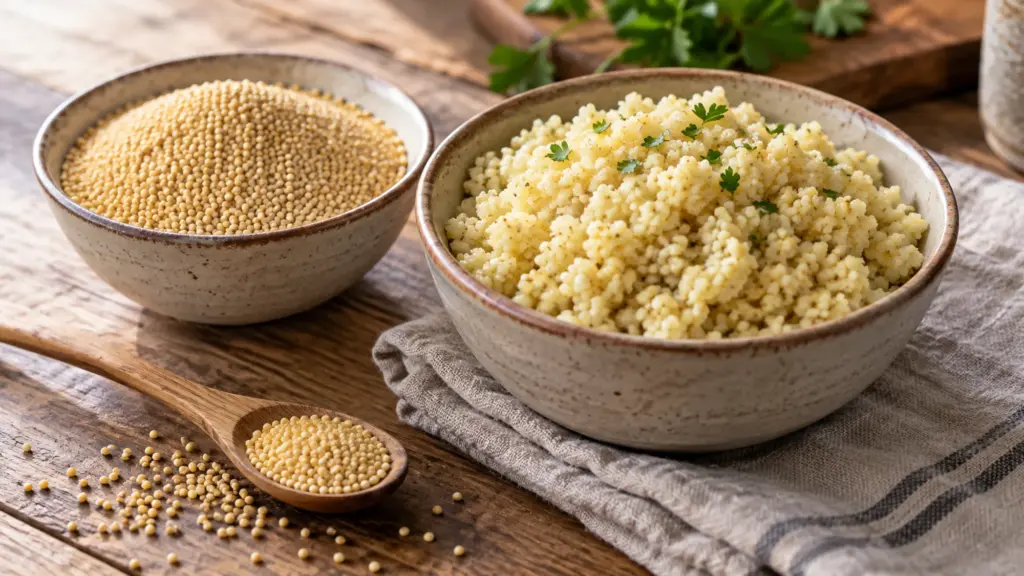
A bag of tiny golden grains can look like one more pantry assignment. Millet is easier to place once you stop asking it to be every other grain at once: it can make a gentle, fluffy side or settle into a soft breakfast bowl.
Millet is a group of small-seeded cereal grains. Hulled proso millet, a common U.S. grocery option, has a mild flavor and cooks into tender grains or a creamier texture depending on preparation. It is naturally gluten-free; check packaged products for cross-contact controls when needed.
I’d begin with the texture you want, then choose the cooking directions and accompaniments. That is a much more useful starting point than a grand promise on the front of a grain bag.
What millet is, and which kind to buy
Millet is an umbrella name rather than one identical grain everywhere. The FAO’s overview of millets describes a diverse group that includes proso, pearl, finger and foxtail millet. These grains have long food traditions, especially across parts of Africa and Asia; they are not a newly invented wellness ingredient.
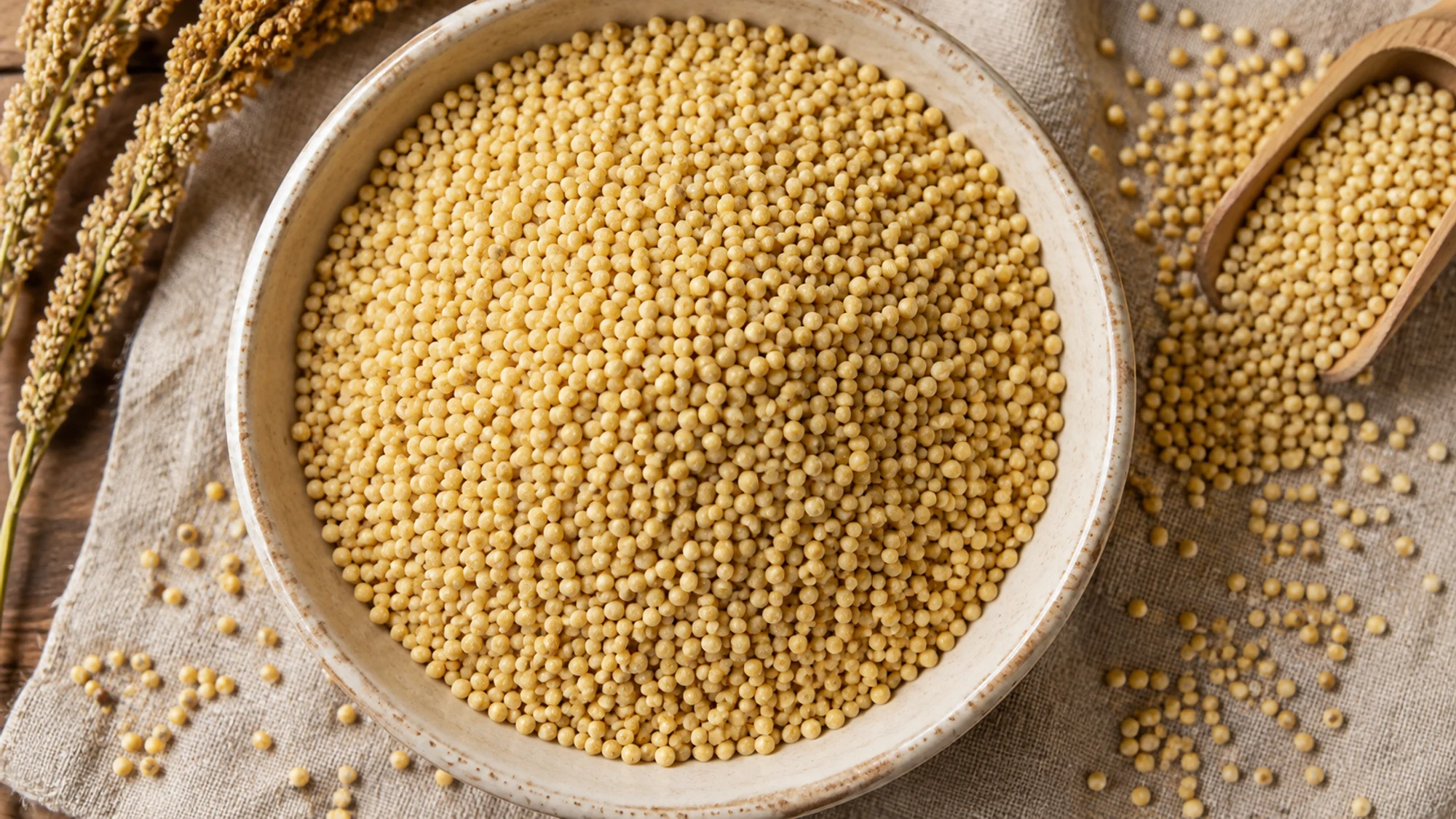
For the pale yellow grain often sold in U.S. natural-food aisles, look for hulled millet intended for human food. Bob’s Red Mill identifies its product as proso millet. Whole hulled grain, flakes and flour have different uses; buying the right form saves confusion before the saucepan even comes out.
Read the grain type and form on the package. Instructions for flour, flakes or another millet variety are not automatically instructions for your bag.
Choose a fluffy or creamy millet texture
Mild flavor gives millet room to work in both savory and sweet meals. The practical difference is texture: distinct tender grains sit comfortably under vegetables and beans, while a softer preparation belongs in a spoonable porridge. Choose a method intended for the result you want.
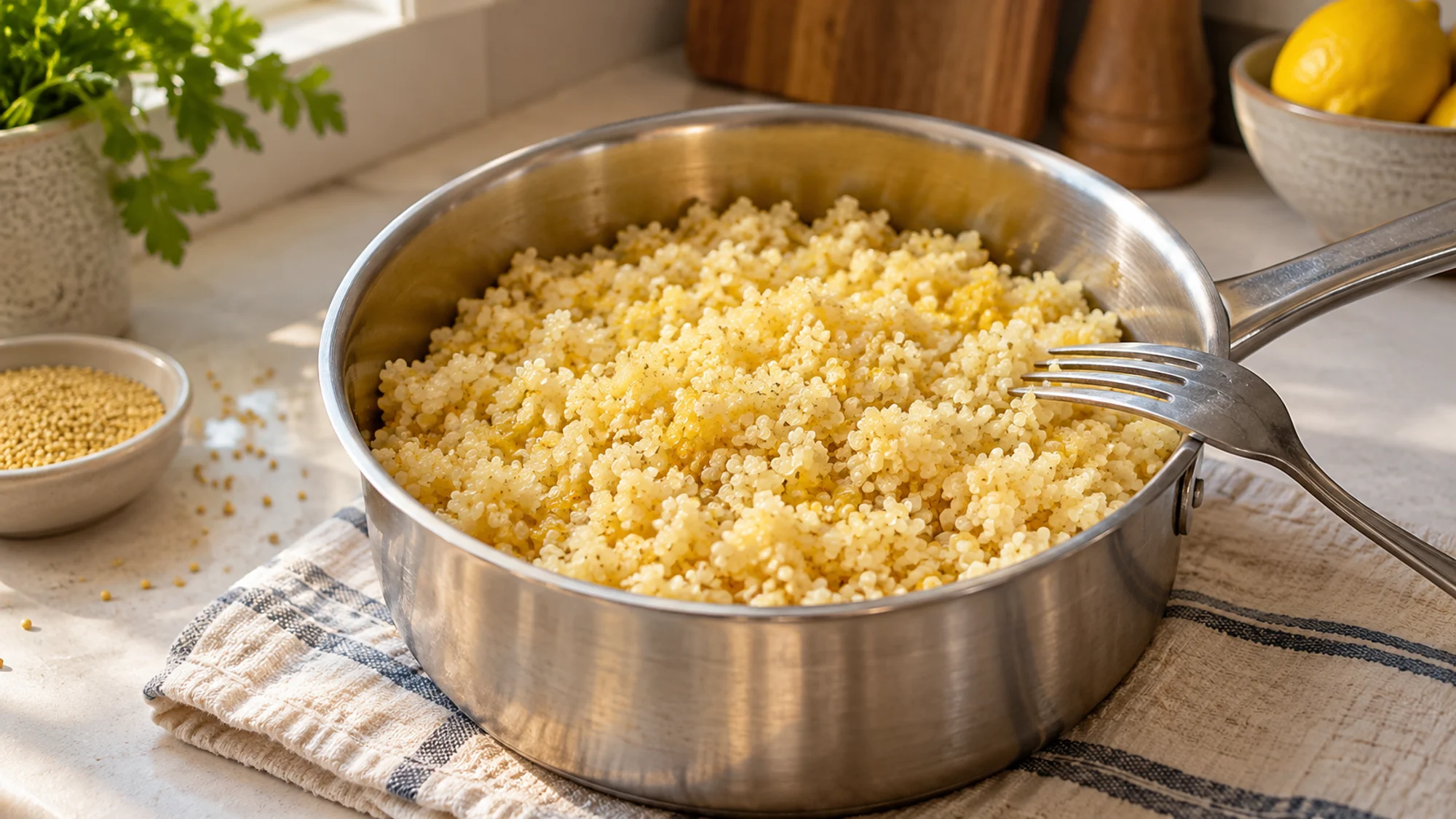
For a starting stovetop reference, Bob’s Red Mill’s hulled millet directions use 2 cups of water per cup of grain and about 20 minutes of covered simmering, draining any water left. Your own package remains the best reference for its product; appliance methods use different liquid and timing.
| What you have or want | Useful direction | Keep in mind |
|---|---|---|
| Whole hulled grain; fluffy side | Use a whole-grain stovetop method | Check tenderness rather than chasing a universal timer |
| Soft breakfast bowl | Choose a millet porridge method | A creamy result is a different goal from separated grains |
| Millet flour | Use a recipe formulated for it | It does not behave like cooked whole grain or wheat flour |
Decide on the destination first. Fluffy grains and creamy porridge are both useful outcomes.
Ways to use millet without rebuilding dinner
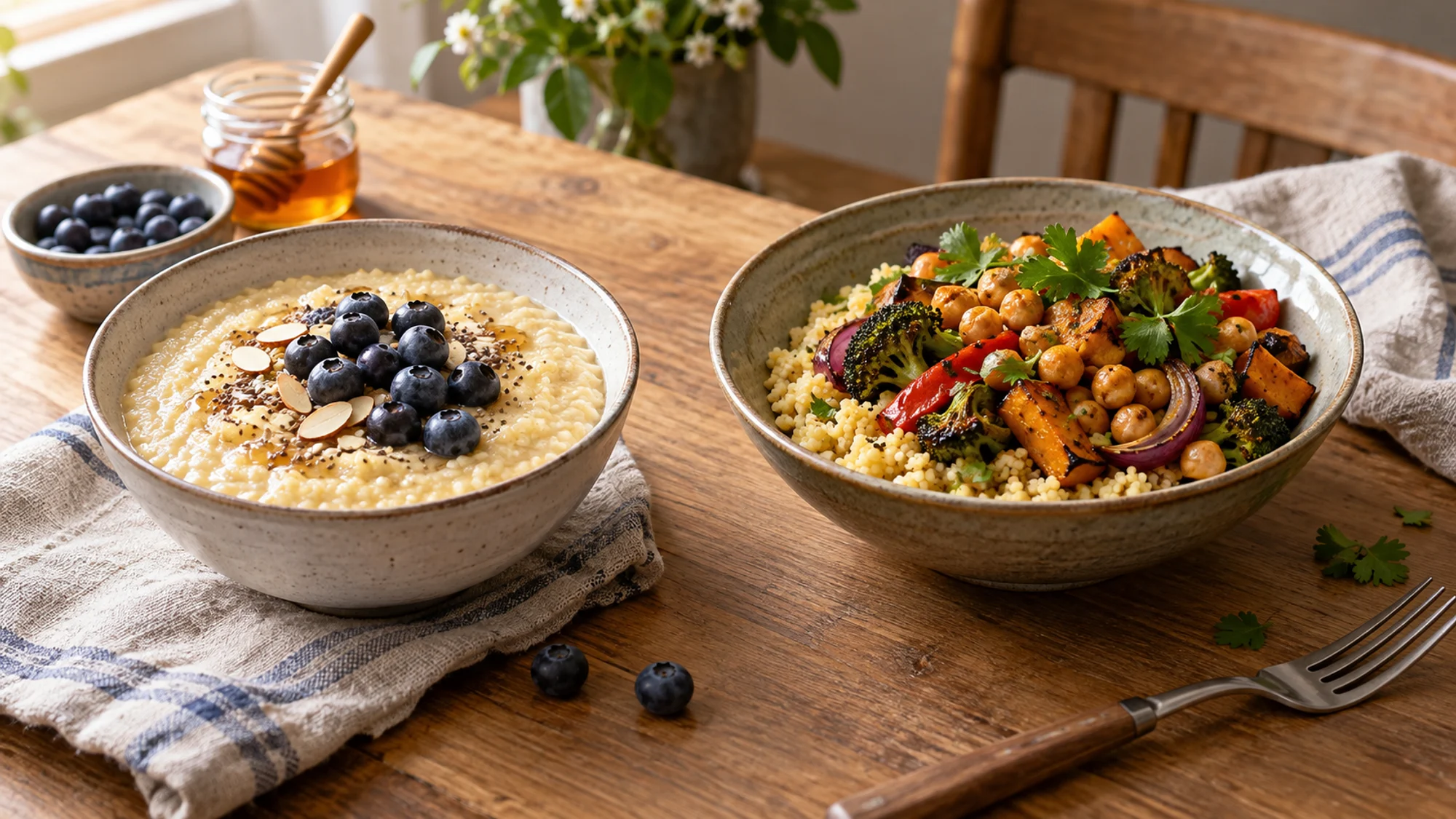
Start with a meal you already understand. Spoon cooked grain beside roasted vegetables and beans, or serve a softer preparation with fruit. I prefer a bright accompaniment, such as lemony vegetables, because the grain itself is deliberately mild.
A bowl can include millet in the place normally occupied by rice, although its texture and cooking directions change. Keep the rest familiar:
- Pair fluffy grains with roasted carrots, chickpeas, greens and a familiar dressing.
- Add fruit and a spoonful of yogurt to a soft breakfast preparation.
- For another whole-grain breakfast, try our apple cinnamon baked oatmeal.
Change one component of a familiar meal. You do not need a cupboard full of new ingredients to find out whether millet suits you.
Millet nutrition needs a specific serving
Nutrient amounts differ among millet varieties and processing methods. As one concrete example, the Bob’s Red Mill label lists 170 calories, 5 grams of protein and 1 gram of fiber per ¼ cup (45 grams) dry grain. Those numbers describe that dry serving, not an equal-volume scoop after cooking.
Water changes cooked volume and weight without creating extra grain nutrients. Compare dry with dry or cooked with cooked, and account for butter, milk, broth and toppings separately. Millet supplies carbohydrate and some protein and minerals; it does not need a disease-prevention claim to earn a place at dinner.
Use the actual product label and serving size. “Ancient grain” describes history, not a guaranteed fiber level or health outcome.
Gluten-free checks and leftover care
Millet itself does not contain gluten, but blends, milling and handling still matter for someone who needs strict avoidance. Choose an appropriately labeled product and check added ingredients such as broth or sauces. The FDA’s gluten-free label explanation describes the U.S. standard, including less than 20 parts per million of unavoidable gluten.
Keep dry grain sealed and follow its package storage advice. Treat cooked millet as a perishable leftover: refrigerate promptly in shallow containers, rather than leaving the pot on the counter. FoodSafety.gov’s chilling guidance calls for refrigeration within two hours, or one hour when temperatures exceed 90°F.
Start with the form, choose the texture, and build a balanced meal around it. That is enough reason to give millet a place in the rotation.
Sources
- FAO’s overview of millets
- Bob’s Red Mill identifies its product as proso millet
- Bob’s Red Mill’s hulled millet directions
- FDA’s gluten-free label explanation
- FoodSafety.gov’s chilling guidance

Emily Parker is DISHORA’s recipe-writing persona, bringing a warm, practical voice to everyday cooking. Her focus is simple ingredients, comforting flavors and clear steps that make a dish feel approachable. From cozy dinners to something sweet, Emily’s recipes invite readers to try something delicious and make it their own.