
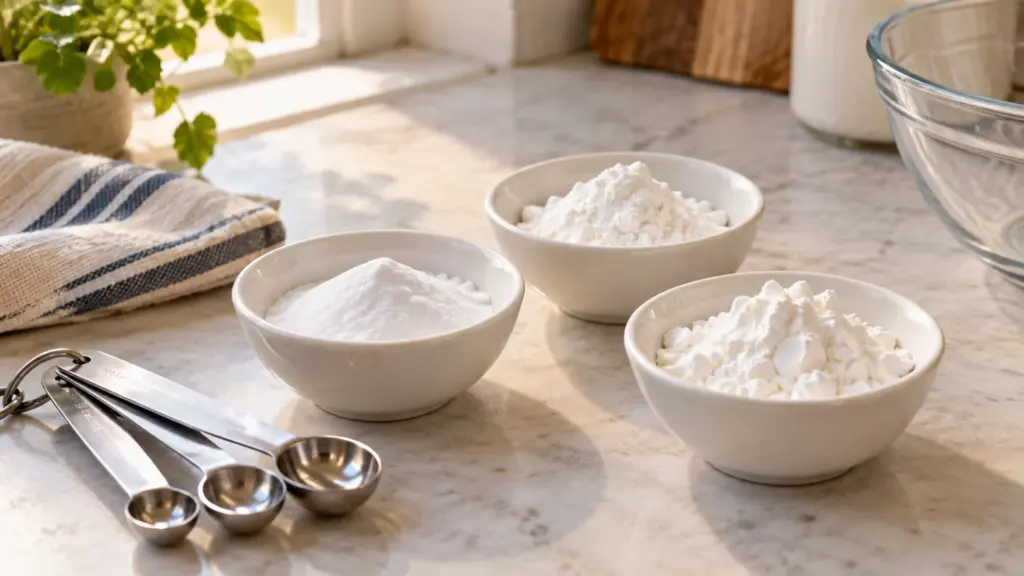
The flour is measured, the pan is ready, and the baking powder tin gives you one last dusty shake. A baking powder substitute can keep a simple bake moving, provided you replace the chemistry as well as the spoonful.
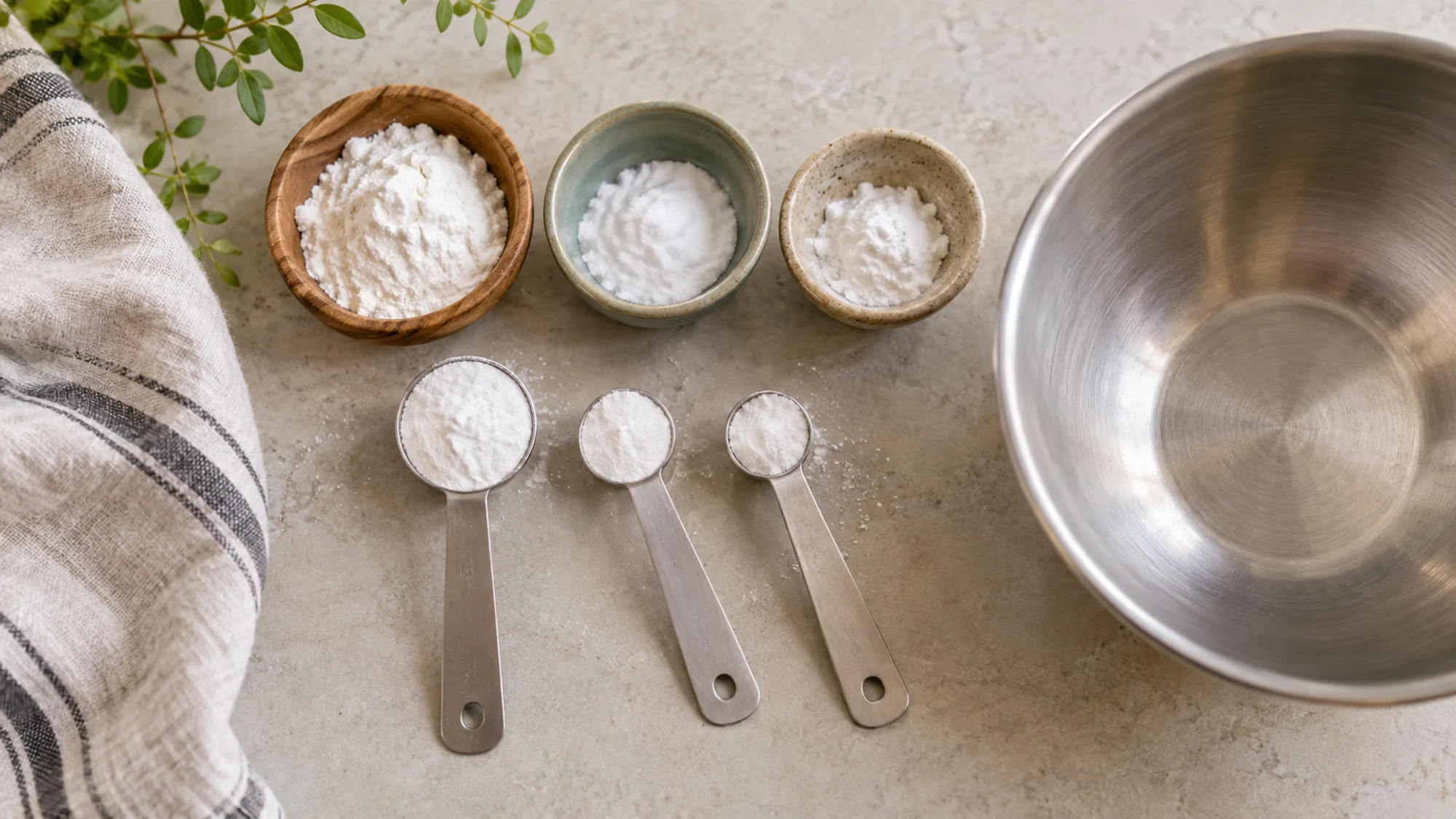
For each 1 teaspoon of baking powder, use ¼ teaspoon baking soda, ½ teaspoon cream of tartar and ¼ teaspoon cornstarch or tapioca starch. Blend the dry powders evenly, then bake promptly after adding wet ingredients. This mixture is single-acting.
I’d choose this measured dry combination before improvising with a splash of something sour. It keeps the liquid in your recipe unchanged and gives you fewer moving parts.
The baking powder substitute ratio
The dry blend above follows King Arthur Baking’s substitution guidance. Baking soda provides the base, cream of tartar provides acid, and the starch supplies the remaining dry volume. Use level measuring spoons; a heaped spoon is a different amount.
Scale every component together. The table is arithmetic from that one-teaspoon blend, rather than three separate formulas. If a recipe calls for both baking soda and baking powder, replace only the baking powder portion and retain its separately listed soda.
| Baking powder needed | Baking soda | Cream of tartar | Cornstarch or tapioca starch |
|---|---|---|---|
| ½ teaspoon | ⅛ | ¼ | ⅛ |
| 1 teaspoon | ¼ | ½ | ¼ |
| 2 teaspoons | ½ | 1 | ½ |
Write the full substitution down before mixing. Scaling only the soda or forgetting the acid changes the balance.
Why plain baking soda is not the same thing
Baking soda is sodium bicarbonate. It needs an appropriate acidic partner and moisture to release the gas that helps lift a batter. Baking powder already includes a base and acid components, usually with starch. Replacing a teaspoon of powder with a teaspoon of soda does not recreate that mixture.
Arm & Hammer’s comparison explains why the ingredients need different amounts and conditions. A recipe containing yogurt, lemon or cocoa is not automatically a reliable invitation to add extra soda: the amount and type of acid already have a job in that formula.
Keep the recipe’s original balance in view. The presence of one acidic ingredient does not establish a new substitution ratio.
A homemade baking powder substitute needs prompt baking
Most supermarket baking powder is double-acting, releasing gas after wetting and again during heating. The cream-of-tartar mixture reacts when moistened. King Arthur’s single-acting blend therefore works best in batters and doughs that go into the oven immediately, rather than being refrigerated or left to rest.
Preheat the oven, prepare the pan and finish the other measuring first. Mix your replacement into the dry ingredients thoroughly so it disperses evenly. Once the wet and dry parts meet, proceed with the recipe without an added waiting period.
Have the oven and pan ready before the batter is mixed. This substitute does not reproduce the second lift of double-acting powder.
Swaps I would approach more cautiously
Lemon juice, vinegar and cultured dairy can interact with soda, but they also change the recipe’s liquid, acidity or flavor. Published substitution measures differ. I would not stack several acid-based fixes together or guess a splash size while the batter waits.
Self-rising flour already includes leavening and salt, so it is a flour-level reformulation rather than a spoon-for-spoon replacement for baking powder. Whipped egg whites and yeast likewise belong to particular methods. If cream of tartar is unavailable, a recipe designed around the ingredients you have is often the more dependable choice.
- Avoid replacing baking powder with baking soda at equal volume.
- Do not combine multiple substitution formulas in one batter.
- For a rested batter or an important celebration cake, use the specified fresh leavener.
A useful rescue has clear limits. More bubbles in a bowl do not guarantee the right rise, crumb or flavor in the oven.
Check labels, freshness and the rest of the formula
Confirm that your ingredient is food-grade baking soda and that the other tin is baking powder. Keep powders dry and closed, and check their dates and the manufacturer’s freshness advice. A replacement made with ineffective ingredients cannot fix the original problem.
Other powder swaps deserve the same care. Our corn flour guide explains why similarly named ingredients may behave differently. And while checking a batter, follow the FDA’s raw flour advice: do not taste uncooked flour, dough or batter. Baking remains necessary even when the leavener substitution is correct.

Measure the soda, cream of tartar and starch together, preserve the rest of the recipe, and bake promptly. Treat the result as a practical substitute, with its own timing.
Sources
- King Arthur Baking’s substitution guidance
- Arm & Hammer’s comparison
- King Arthur’s single-acting blend
- FDA’s raw flour advice

Emily Parker is DISHORA’s recipe-writing persona, bringing a warm, practical voice to everyday cooking. Her focus is simple ingredients, comforting flavors and clear steps that make a dish feel approachable. From cozy dinners to something sweet, Emily’s recipes invite readers to try something delicious and make it their own.