
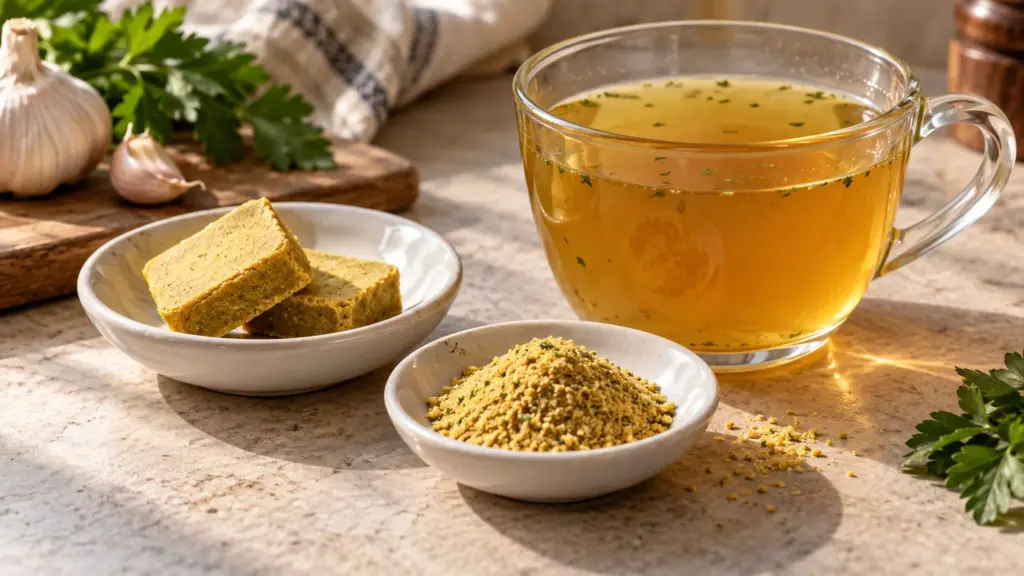
A pot of soup can taste underseasoned one minute and surprisingly salty the next. Chicken bouillon sits right in the middle of that transformation: a compact way to add savory flavor, with a concentration that deserves a measured spoon.
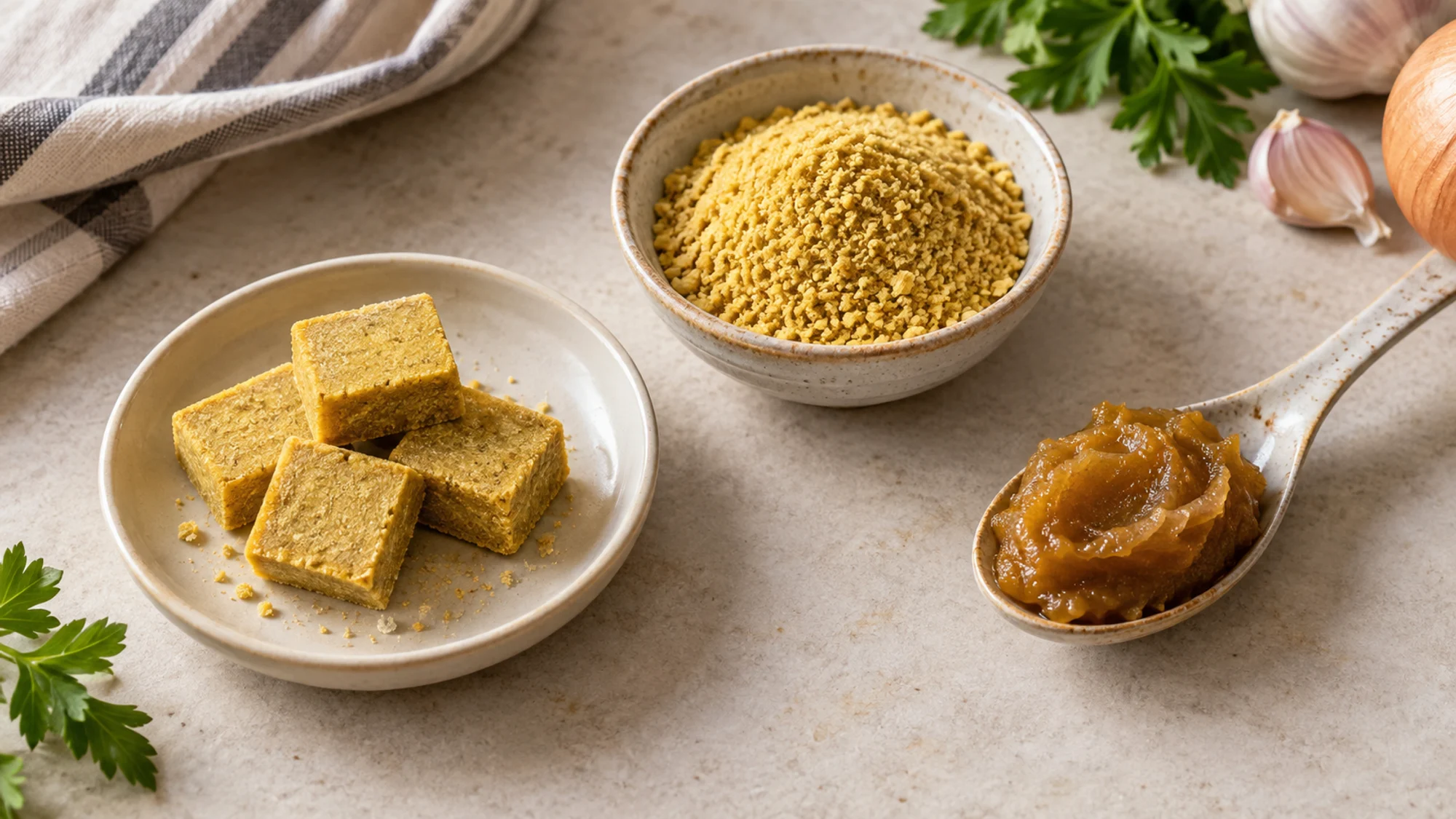
Chicken bouillon is concentrated chicken-flavored seasoning sold as cubes, granules or paste. Dilute it according to its own label to make broth, and count its salt before adding more. Different brands and formats are not automatically interchangeable.
I’d choose it for convenience, then let the finished dish decide whether it needs anything else. A little label reading is much easier than negotiating with an oversalted pot.
What chicken bouillon adds to a dish
In everyday American grocery use, bouillon usually means a concentrated product that makes broth when mixed with water. It can also season rice, sauces and vegetables directly. Chicken ingredients, salt, seasonings and flavor-enhancing ingredients vary by product.
It brings a savory backbone rather than a full serving of chicken. For example, Better Than Bouillon’s roasted chicken base label lists 1 gram of protein per teaspoon. Its contribution to dinner is mainly flavor; the chicken, beans or tofu you add supplies the more substantial protein.
Think of bouillon as a concentrated seasoning. It can support a meal beautifully, but it is not nutritionally equivalent to the chicken in the bowl.
Cubes, granules and paste compared
Choose the format that fits how you cook, then read that particular package. A cube from one range may be intended for a different water volume than a cube from another. The table describes handling, not equal-strength doses.
| Format | Practical advantage | Check first |
|---|---|---|
| Cubes | Easy to portion and keep in a pantry | Water volume per cube; crushing may help it dissolve |
| Granules | Convenient for measuring small amounts | The exact teaspoon measure for that product |
| Paste or base | Spoons into sauces and small batches | Refrigeration after opening and dilution directions |
I prefer granules when I only need a small adjustment, simply because measuring a fraction of a teaspoon is easier than dividing a stubborn cube. Paste can be equally practical; use a clean spoon and follow its storage label.
Convenience comes from choosing the right format, not assuming every cube or spoonful has the same strength.
How to use chicken bouillon instead of broth
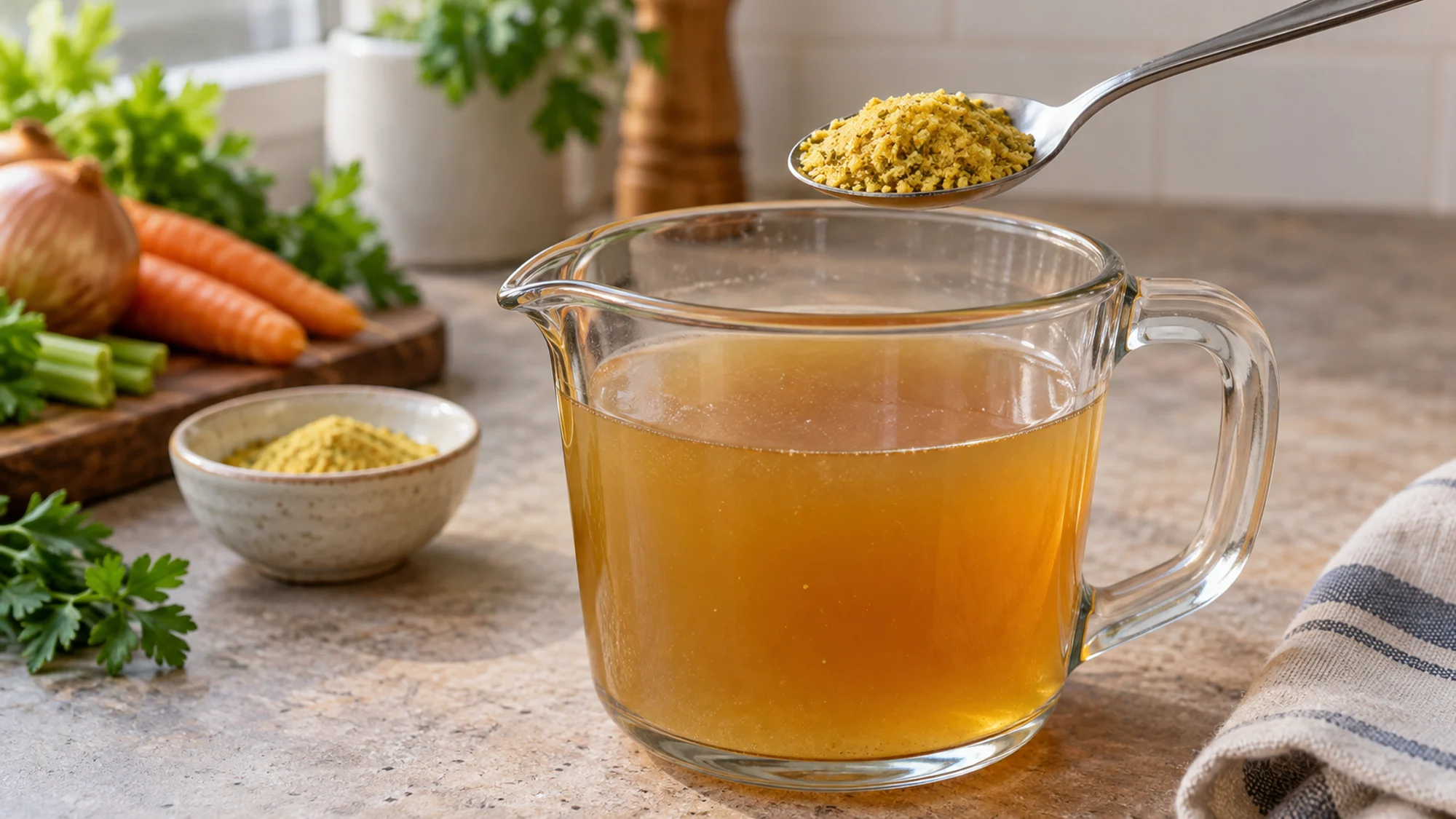
When a recipe calls for prepared broth, mix the bouillon with the amount of water its manufacturer specifies. Knorr’s reduced sodium granulated version, for example, directs ¾ teaspoon per cup of boiling water. That instruction belongs to that product, not the whole bouillon aisle.
For a soup such as cabbage dumpling soup, consider the dumplings and other salty ingredients before choosing the broth. If replacing an unsalted broth, an ordinary prepared bouillon may change the balance substantially. Keep extra salt out until the dish is cooked and safe to taste.
Match the prepared liquid volume, follow the bouillon label, and adjust the dish’s additional salt separately.
Read sodium and allergy information
Compare products at the dilution you will actually use. A teaspoon of concentrate and a cup of ready-made broth are different serving measures. The roasted chicken base example above lists 680 milligrams of sodium per teaspoon; the amount in your portion depends on how much enters the whole dish and how many portions you serve.
The FDA’s Daily Value reference sets sodium at 2,300 milligrams, with 20% Daily Value or more considered high per labeled serving. Reduced sodium does not automatically mean low sodium. Also check ingredients and allergen declarations: that same roasted base lists soy protein and whey, a milk ingredient.
- Check the label every time a product or formula changes.
- Do not assume chicken bouillon is gluten-free, dairy-free or vegetarian.
- Compare sodium for equivalent amounts of prepared broth.
The useful question is how much sodium and which ingredients reach your actual serving, not whether the jar looks more wholesome.
Substitutes and safe storage
Ready-made chicken broth is the closest convenient alternative when you need liquid, although its salt and flavor may differ. Unsalted broth gives more seasoning control. Vegetable broth changes the flavor and may suit a meat-free dish, provided the remaining ingredients do too; plain water is another option when the recipe already has enough flavor.
Keep dry bouillon tightly closed and dry; follow the package for opened paste. Once prepared broth becomes soup with vegetables or meat, use ordinary leftover precautions. FoodSafety.gov’s storage chart gives soups and stews three to four days in a refrigerator at 40°F or below. Divide large amounts into shallow containers for prompt chilling.
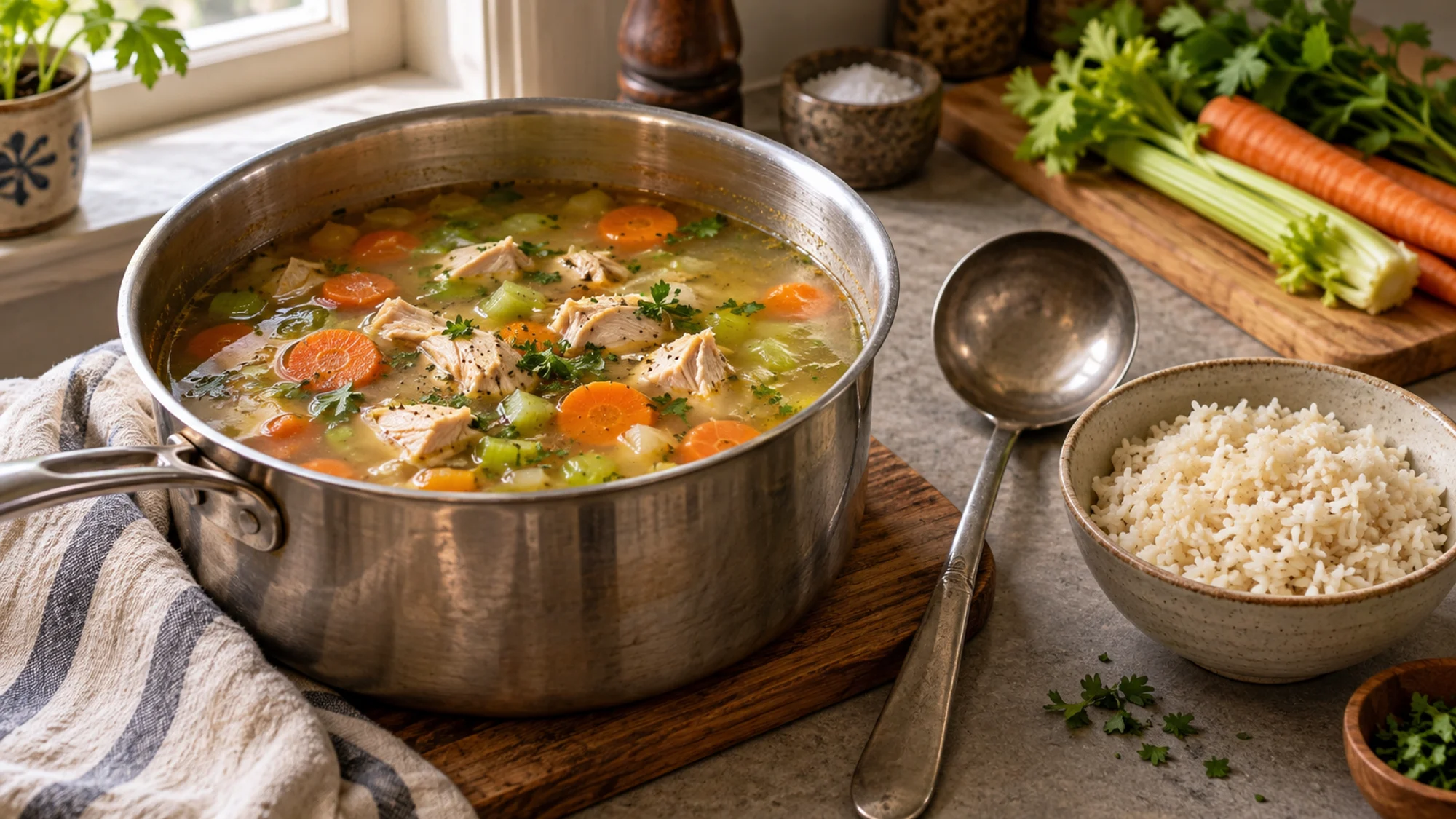
Start with the package, finish with the dish. Measured bouillon adds convenience without taking over dinner.
Sources
- Better Than Bouillon’s roasted chicken base label
- Knorr’s reduced sodium granulated version
- FDA’s Daily Value reference
- FoodSafety.gov’s storage chart

Emily Parker is DISHORA’s recipe-writing persona, bringing a warm, practical voice to everyday cooking. Her focus is simple ingredients, comforting flavors and clear steps that make a dish feel approachable. From cozy dinners to something sweet, Emily’s recipes invite readers to try something delicious and make it their own.