
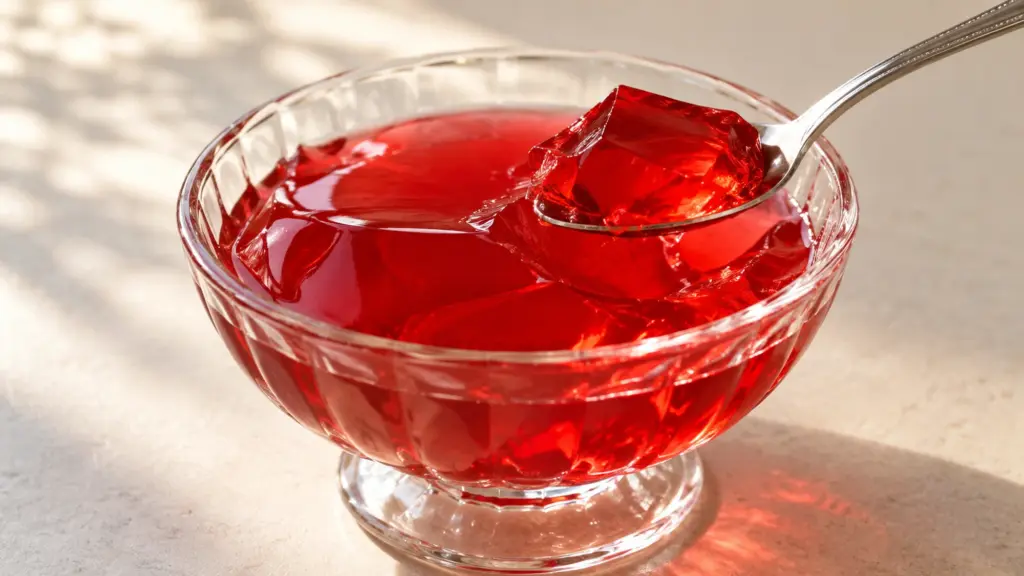
The bright, wobbly dessert looks simple enough, until the front of the package starts doing all the talking. Sugar free jello is a sweetened gelatin dessert, and checking the portion, ingredients and nutrition panel tells you more than the large claim on the box.
Sugar free jello can be a low-calorie dessert, but the exact product and serving size matter. Read the sweetener list and nutrition panel rather than treating “sugar free” as a complete description of the food.
I’d choose it for a dessert I enjoy, not because a label promises to solve the rest of a day’s eating. There is room for a cheerful spoonful without turning it into either a miracle food or a dietary villain.
What does sugar free jello mean?
In the United States, the FDA’s sugar-free definition includes less than 0.5 gram of sugars per reference amount customarily consumed and per labeled serving. It is a defined labeling claim, not a guarantee of literally no sugar molecules or a complete nutrition verdict.
- Sugar free does not automatically mean calorie free.
- The serving size belongs with every number on the panel.
- Total carbohydrate and total sugars are separate lines; read both.
- A flavored gelatin dessert is different from pudding, even when the brand name is the same.
Keep the exact flavor, format and country in view. A powdered mix, ready-to-eat cup and different brand may use different formulas. The examples below are current U.S. strawberry Jell-O products, not a promise about every gelatin dessert on the shelf.
Read the portion before comparing calories
Kraft Heinz lists 10 calories for one prepared ½-cup serving of its 0.3-ounce Zero Sugar Strawberry mix. The box makes four of those servings, so the per-serving figure does not describe an entire prepared bowl.
| Label detail | Question to answer |
|---|---|
| Serving size | How much prepared dessert does this number cover? |
| Servings per package | Am I eating one serving or several? |
| Total carbohydrate | What does my actual portion contribute? |
| Ingredients | Which sweeteners and gelling ingredients are present? |
| Storage directions | Does this exact product need refrigeration? |
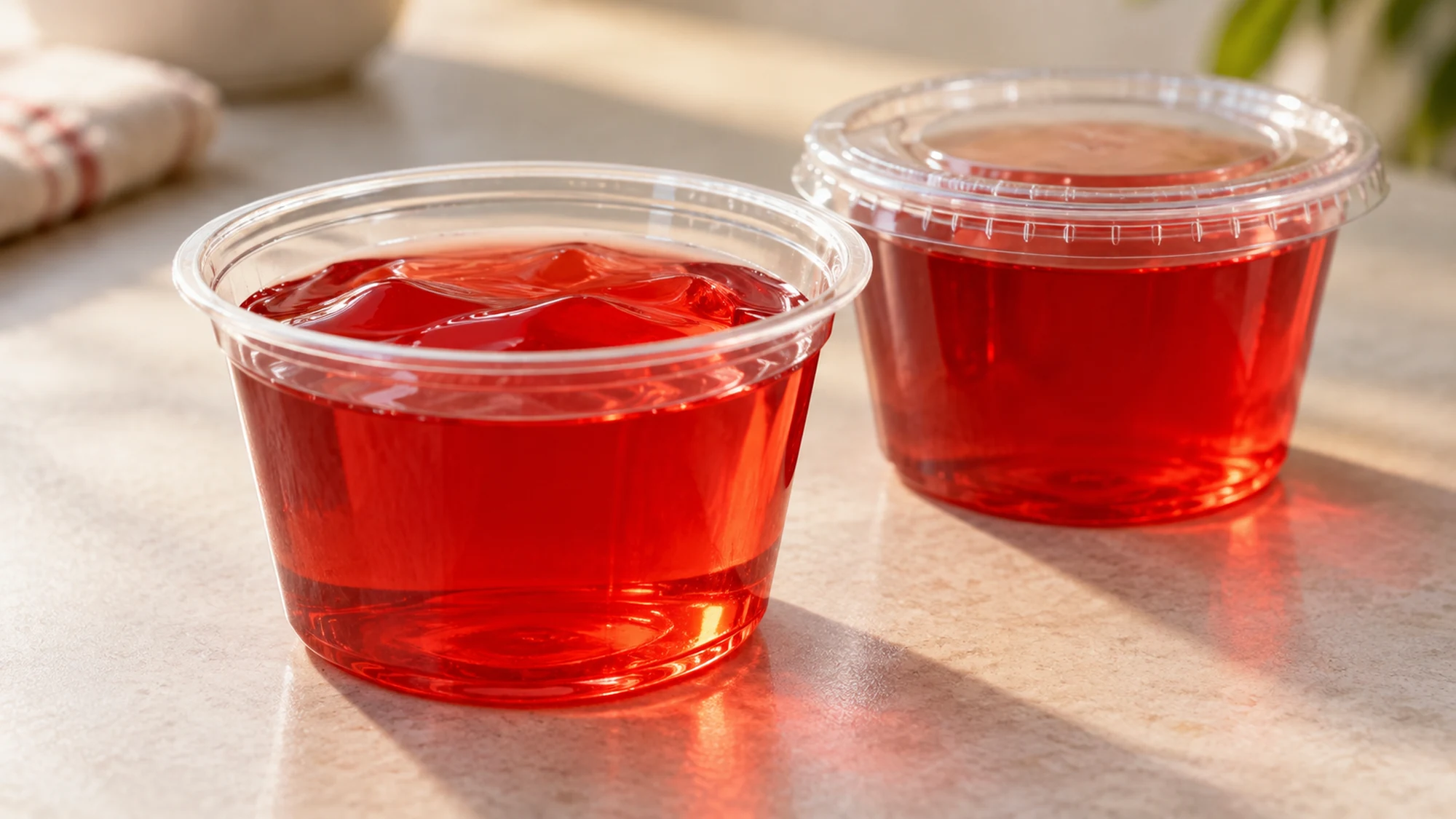
The ready-to-eat strawberry cup also lists 10 calories, but its labeled portion is one 89-gram snack. Those are two separate label readings, not equal-weight test results. I prefer comparing products on the same portion basis rather than assuming two containers hold the same amount.
Which sweeteners are in the strawberry examples?
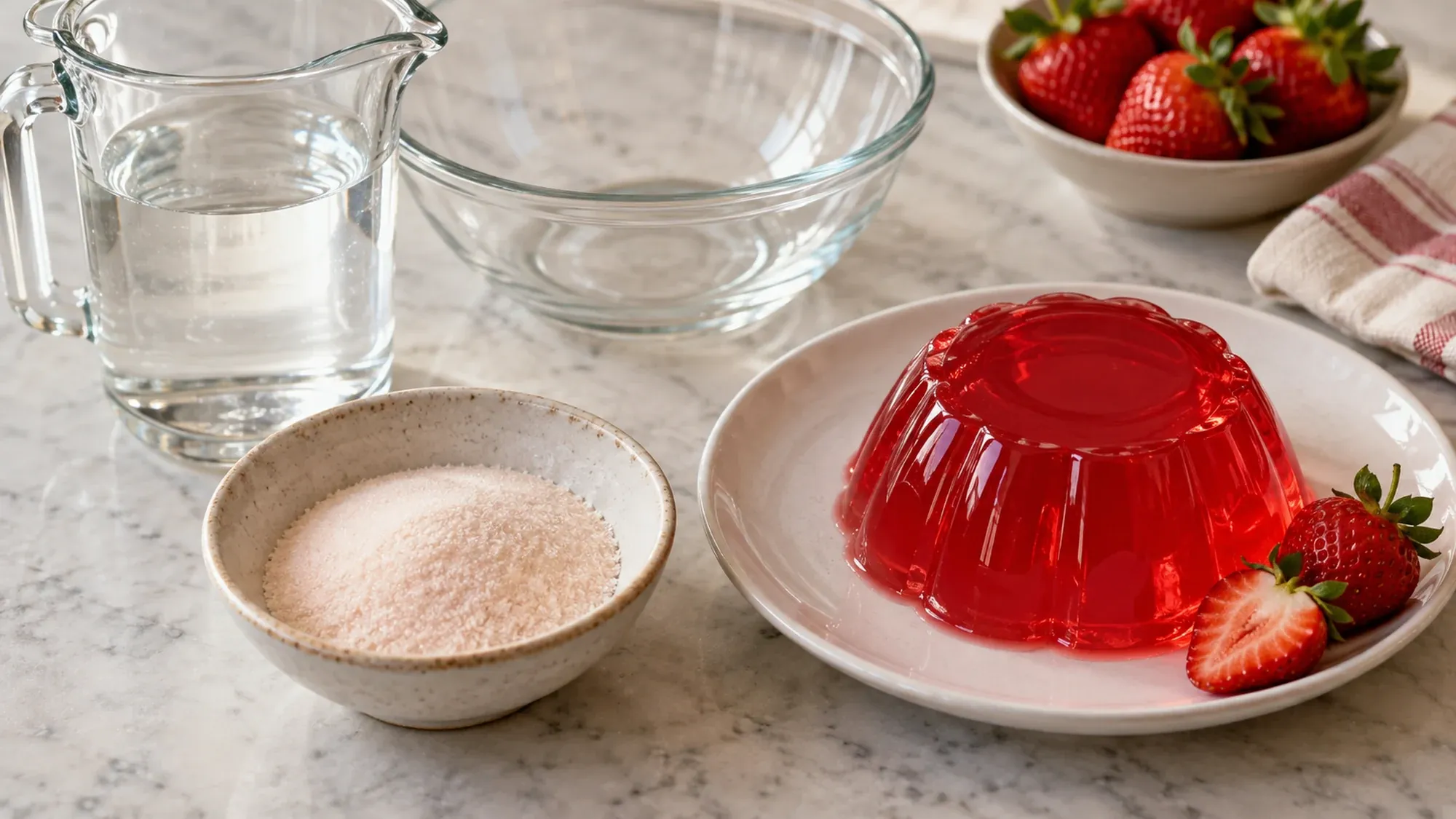
Both manufacturer ingredient lists include aspartame and acesulfame potassium. They also include gelatin, acids, flavoring and Red 40; the powdered mix lists maltodextrin, while the cup starts with water. A strawberry flavor name does not mean the dessert supplies a serving of strawberries.
- Read ingredients on the package you buy, because formulations can change.
- If you avoid a particular sweetener or color, check for its actual ingredient name.
- For vegetarian, religious or other dietary requirements, verify the exact product and any certification rather than relying on “sugar free.”
The FDA considers approved sweeteners safe under their specified conditions of use. One specific exception matters here: people with phenylketonuria, or PKU, need to avoid or restrict aspartame because it supplies phenylalanine; both strawberry labels carry that warning.
Match the ingredient list to your own requirements; the front-of-pack claim cannot do that check for you.
Think about the whole snack
Both strawberry products list 1 gram of protein and 0 grams of fiber per labeled serving. That makes them light desserts, not substitutes for a meal or a substantial protein food. Low calories describe energy, not how well a food covers every nutritional need.
- Want a simple dessert? Keep the portion clear and enjoy the gelatin as it is.
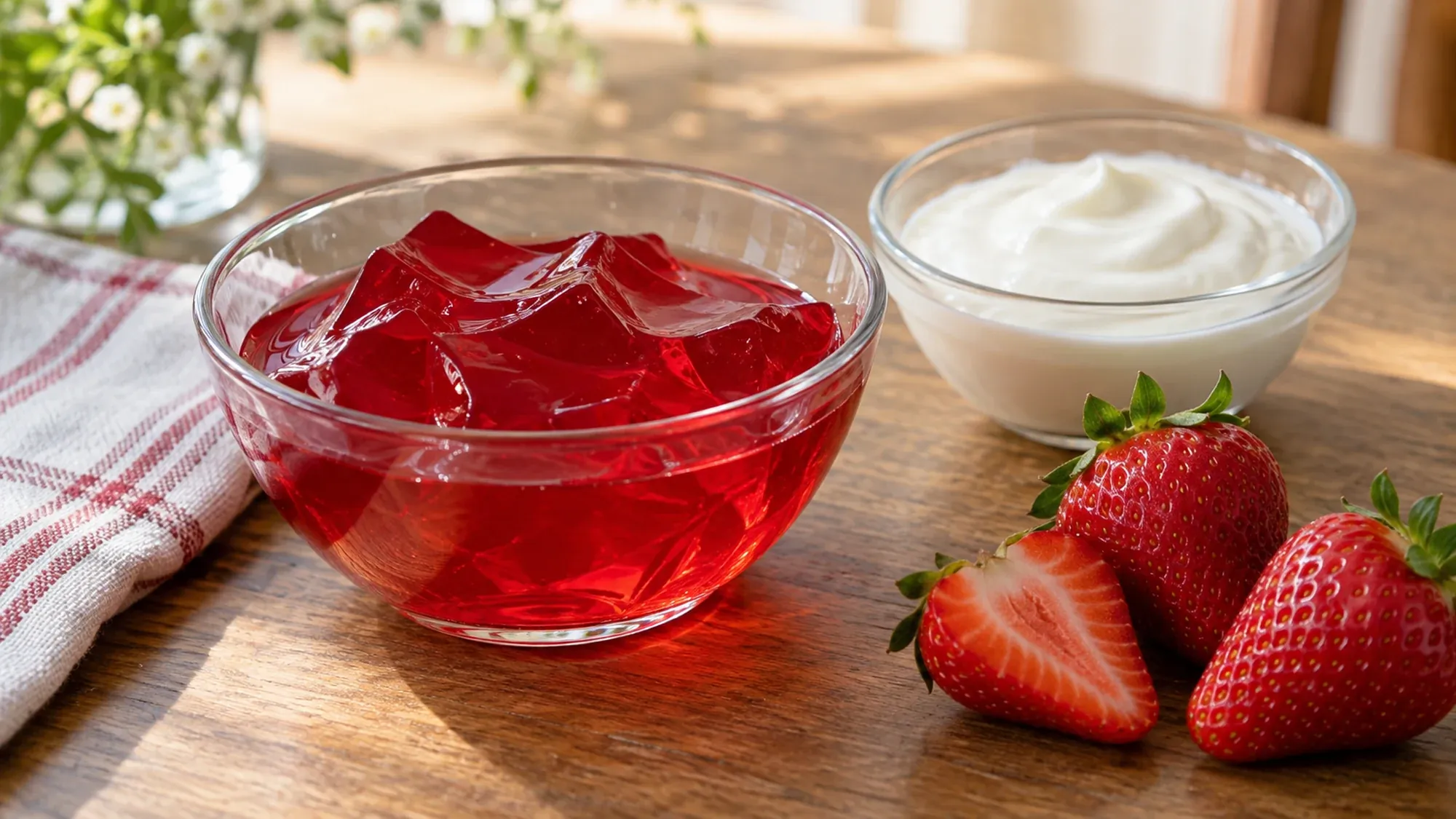
- Want fruit or yogurt alongside? Count those as additional foods with their own ingredients and nutrition.
- Counting carbohydrates for a health plan? Use the current package and your actual portion, including toppings.
- Want a different frozen dessert? Our strawberry Greek-yogurt dessert explains its own portion-based estimate.
Follow the package for preparation, refrigeration and use after opening; a dry mix and a ready-to-eat cup do not share one universal storage rule. Keep prepared dessert covered as directed, and do not invent extra shelf life just because it contains no added sugar.
Choose the dessert that fits your day
My practical approach is to decide what I want from the snack first: a small sweet finish, something more filling, or a food that meets a particular ingredient requirement. Then the label becomes a useful tool instead of a verdict on whether the choice is good or bad.
Enjoy sugar free jello for what it offers, check the portion and sweeteners, and let the rest of your meal supply what this dessert does not.
Sources
- Kraft Heinz: Zero Sugar Strawberry mix
- Kraft Heinz: Zero Sugar Strawberry snack cups
- FDA: aspartame and other sweeteners
- FDA: sugar-free claim requirements

Emily Parker is DISHORA’s recipe-writing persona, bringing a warm, practical voice to everyday cooking. Her focus is simple ingredients, comforting flavors and clear steps that make a dish feel approachable. From cozy dinners to something sweet, Emily’s recipes invite readers to try something delicious and make it their own.